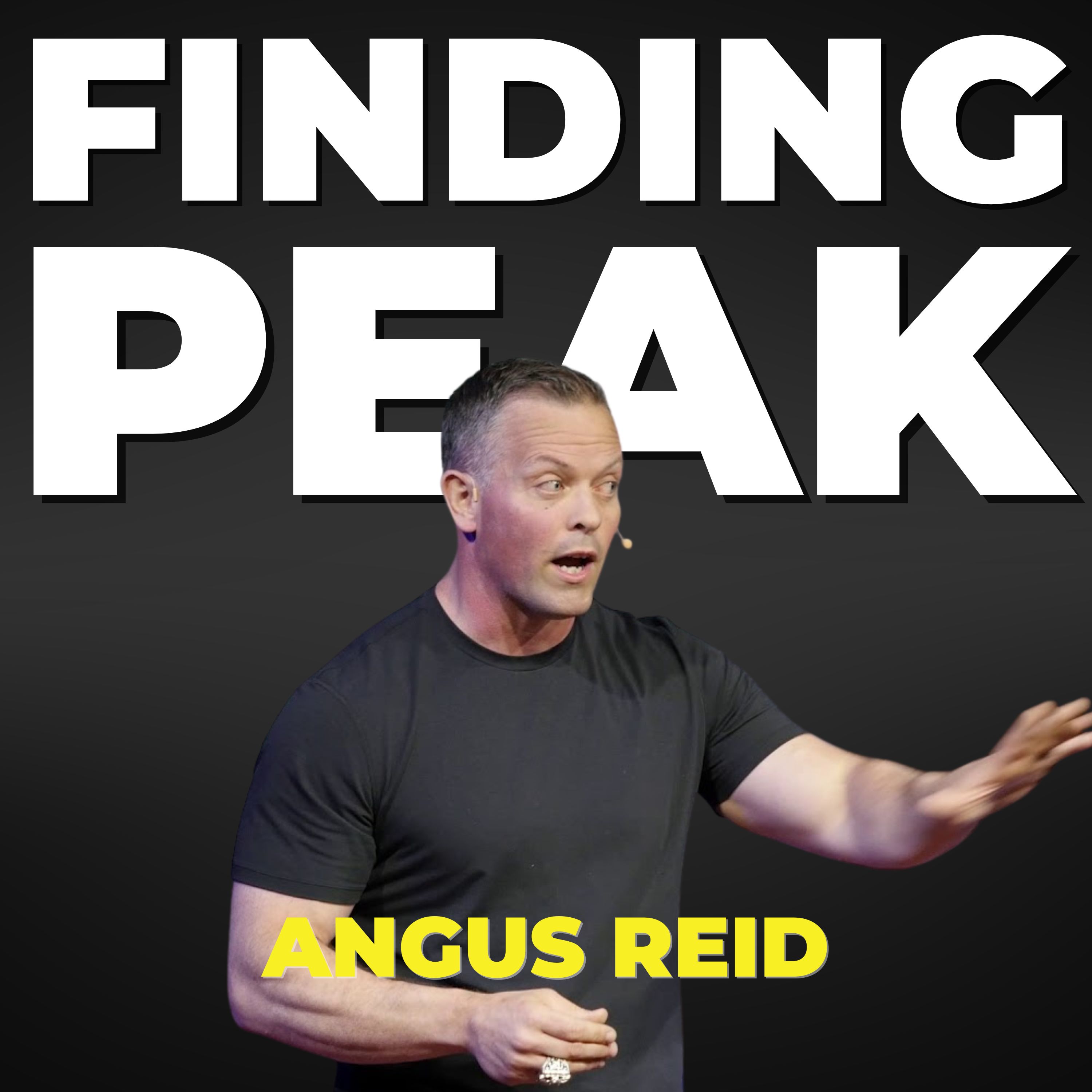
RHS 097 - Brian Keating On How to Think Big
Episode Highlights:
Brian shares how he sees the world differently. (8:57)
Brian mentions why some people see science as a zero-sum game. (14:46)
Brian mentions some of his guests on the show. (16:34)
How does Brian approach big ideas? ? (19:24)
Brian explains the motto in his YouTube channel. (22:16)
Does Brian think that his openness and candor are inspiring other people? (23:07)
Brian shares why he cares about artificial wisdom. (38:42)
Brian shares why wisdom is significant. (40:46)
Key Quotes:
“I truly believe that if you don't examine the biggest questions, then you're kind of wasting this most precious gift that will soon be over. Your job is you to be an expert in minimizing risk and reducing rogue wave impacts, and so forth.” - Brian Keating
“There's nothing you guys can do to prevent the ultimate destination. We're all born to die. So we must make use of the time we have to live. And to me, living is nothing if you don't ask questions with deep and passionate curiosity.” - Brian Keating
“From my perspective, what I really want to do is bring together this multiverse of minds and assemble. Now, thanks to technology, we can do it. There's no excuse not to do it. And, so I'm trying to do it.” - Brian Keating
Resources Mentioned:
Brain Keating LinkedIn
University of California San Diego
Brian Keating Podcast
Reach out to Ryan Hanley
Press play and read along
Transcript
Speaker 1 This episode is brought to you by Progressive Insurance. Do you ever think about switching insurance companies to see if you could save some cash? Progressive makes it easy.
Speaker 1 Just drop in some details about yourself and see if you're eligible to save money when you bundle your home and auto policies.
Speaker 1
The process only takes minutes and it could mean hundreds more in your pocket. Visit progressive.com after this episode to see if you could save.
Progressive Casualty Insurance Company and affiliates.
Speaker 1 Potential savings will vary, not available in all states.
Speaker 2
Thursday night football is on, and it's only on Prime Video. This week, the Buffalo Bills and the Houston Texans collide in an AFC showdown.
Coverage begins at 7 p.m.
Speaker 2
Eastern with football's best party, TNF Tonight, presented by Verizon. Not a Prime member, not a problem.
Simply sign up for a 30-day free trial. It's the Bills and the Texans Thursday at 7 p.m.
Speaker 2
Eastern, only on Prime Video. Restrictions apply.
See Amazon.com/slash Amazon Prime for details.
Speaker 4 When your company works with PNC's corporate banking, you'll gain a smart and steady foundation to help you carry out all your bold ideas.
Speaker 5 But while your business might not be shaky, you might still experience shakiness in other ways.
Speaker 5 You might be outbid on the perfect summer house, your kid might not attend your alma mater, or your yacht might be jostled by stormy waters.
Speaker 5 No amount of responsible banking can prevent these things, except maybe the yacht, because we tell you boats are generally a bad investment. PNC Bank, brilliantly boring since 1865.
Speaker 4 The PNC Financial Services Group Inc., all rights reserved.
Speaker 6 In a crude laboratory in the basement of his home.
Speaker 8 Well, everyone, and welcome back to the
Speaker 6 show.
Speaker 7 Today, we have a tremendous guest, Brian Keating.
Speaker 7 Now, you may not have heard of Brian Keating before if you're not super geeky like I am, but I came across Brian Keating and his work on James Alster's podcast, who, as you know, if you listen to the show all the time, we had James on a few episodes ago, and it was a tremendous conversation.
Speaker 7 And James is a tremendous guy, and
Speaker 7 I heard Brian on his show, and they're doing this series about uh the origin of the universe uh you know really so brian is the chancellor's distinguished professor of physics at the center for astrophysics and space science and the department of physics at the university of california of san diego so brian is completely legit he wrote a book called losing the nobel prize he has done all kinds of incredible work um on the universe um everything from You know, he's a cosmologist.
Speaker 7 I mean, he's a dude is smarter than probably all of us listening to this podcast together.
Speaker 7
Brian is that smart. And I heard him, and he's having these really awesome conversations, but it wasn't just about cosmology because you got to be into that stuff to listen to it.
I mean, I'm into it.
Speaker 7 I love it. But, you know,
Speaker 7 what I was really enamored by was the way that Brian.
Speaker 7
formulates thoughts, thinks about things like truth. And, you know, we go a lot of places in this episode.
It's, it's a very eclectic episode in terms of the topics that we address.
Speaker 7 But Brian is just someone who I really wanted to put you guys, I wanted to put him into your ecosystem. And if you're into this stuff, if you like the nerdy stuff,
Speaker 7 Brian is a great guy to follow because he's like one of the, he's like a cool nerd, right? Like he's super interesting, super fun.
Speaker 7
He makes the topics digestible, but at the same time, at any given moment, he can drop down into the ones and zeros of... cosmology.
And he also has a tremendous podcast.
Speaker 7 He also has a tremendous podcast called Into the Impossible, where he interviews like Nobel Prize winners and
Speaker 7 just people doing and thinking about things that will absolutely bend your brain.
Speaker 7 So it is a great pleasure to bring another show kind of outside the industry to you because I think this stuff is really fun and it helps us, you know, and what's great about a lot of these guests that aren't in the insurance industry is they try very hard to pull back some of the concepts to what we do every day.
Speaker 7 And I think that cross-pollination is important.
Speaker 7
So it's, I think you're going to like this one. But before we get there, I want to give a big shout out to my man, Mick Hunt, at Premiere Strategy Box.
Premiere Strategy Box is a no-brainer solution.
Speaker 7 I haven't had anyone who I've referred over to Mick, like, you know, like back channel, like on the DMs, text and Facebook Messenger or whatever, who hasn't worked with him.
Speaker 7 Like he just, what they're doing, the
Speaker 7 producer training, the producer coaching, the producer managing,
Speaker 7 all the different things that they're doing at Premiere Strategy Box are game changers for agencies because we all have strengths and weaknesses.
Speaker 7
I have, I would like to believe, a few tremendous strengths. I also have an incredible number of weaknesses.
And having someone like Mick and his team who can come in and not just be doers,
Speaker 7 but be managers, be people who are making sure that things are getting done and holding your team accountable coaching them at the same time is invaluable. And it's just a great honor.
Speaker 7 Mick's become a very good friend. I've talked about him in the past and just honored that Mick wanted to be a sponsor of this show.
Speaker 7 And I always love when it's his turn in the rotation for the reads because I love giving shout outs to Premiere Strategy Box.
Speaker 7
So if you want to know more about Premiere Strategy Box, go to, well, first, catch up with Mick on any of the socials and then go to mystrategybox.com. That's mystrategybox.com.
My strategybox.com.
Speaker 7 All right, on to Brian.
Speaker 6 Is this going to be video only or I mean, video?
Speaker 8 Yeah, I only produce the audio.
Speaker 6 Okay, cool. That's fine because I otherwise did put on a three-piece suit and tie.
Speaker 8 Yeah, but no, you look great either way, man. So don't worry.
Speaker 6
Thank you, my friend. Yes, yes.
It's been tough with the COVID 90 pounds,
Speaker 6 but I'm doing my best.
Speaker 6 So where are you? Are you in LA?
Speaker 8 No,
Speaker 8 I'm in upstate New York.
Speaker 6 Oh, okay. Which part?
Speaker 9 Albany.
Speaker 8 Well, just outside of Albany, but yeah.
Speaker 6 Oh, okay. I was born on in Long Island.
Speaker 7 Yep.
Speaker 6 So,
Speaker 6 yeah, so I'm an intimately familiar New Yorker. And I lived.
Speaker 6 I lived more kind of in Westchester County after that, mostly.
Speaker 8 Which for me is downstate, but for you, Long Islander would be upstate.
Speaker 6
Exactly. And people talk about it.
They're like, Putnam
Speaker 6 is Putnam is the border of upstate. You know, I'm like,
Speaker 6 I don't know if I believe that.
Speaker 8 Yeah, it is funny when people, people, whenever I tell someone, you know, I'm from New York, they just immediately assume the city.
Speaker 6 Yeah, exactly.
Speaker 8
And you're, because, because, you know, Long Islanders, you can hear the accents. You're like, ah, maybe he's from Long Island, maybe.
But as an upstate New Yorker, you know, I could be from anywhere.
Speaker 8 I have like the most.
Speaker 6 It's a different state. It's basically a
Speaker 6 different state, different values, different everything.
Speaker 8 Everything is different.
Speaker 6
Cool. So, yeah, so I got until 10, 10 before the hour.
Perfect. Your time.
And then I got to go pick up some of the kids. So no doubt.
Speaker 8 Yeah.
Speaker 6
No doubt. And your friends with James, I don't know if I remember right.
Yeah.
Speaker 8 Well, yeah. He.
Speaker 8
He, I just recorded. His episode actually comes out on Thursday.
I recorded with him last week.
Speaker 8
Awesome. Yeah.
Yeah. So that was, that was really cool.
And, um
Speaker 8 you know so this this show just so you know this we do uh this is probably well i'm not this isn't going to sound humble though i it is what it is it's okay we're i am in a constant competition with a buddy of mine to who has the biggest podcast in the insurance industry so
Speaker 8 we you know up and down some of the biggest carriers in the in the in the country um all the way down to you know single person retail insurance shops that just started up last week.
Speaker 8 We run the gambit of everyone in between there.
Speaker 8 And we focus a lot on, you know, issues impacting our industry specifically.
Speaker 8 But I particularly like to bring in people from outside the industry because the cross-pollination of ideas is very important to me and my own development. So I like to share that with the audience.
Speaker 8 So
Speaker 8 I was, I became familiar with your work through James's show and then started listening to your podcast and then started listening and to some of the other shows that you've been on.
Speaker 8 And the group of people that you seem to hang with, your dark web buddies, are some of my favorite thinkers, you know,
Speaker 8 in our, you know, in the world today, I guess.
Speaker 8 And I've just, I was, I guess, as a broad sweeping stroke, what I'm most interested in, I have a whole shit ton of random notes that I want to walk through, but
Speaker 8 are questions, I guess, topics.
Speaker 8 I really enjoy
Speaker 8 how you wrap your brain around a thought.
Speaker 8 And in particular, that series of four episodes that you did with James, where you were talking through the origin of the Big Bang and the theories that made sense, the theories that didn't make sense, why they didn't, you know, all that kind of stuff.
Speaker 8 And by make sense, you know, I mean, varying degrees of where you both personally or the scientific community fell on them.
Speaker 8 I was intrigued by by by some of these things, what, you know, this idea of which one is the truth and what does the truth mean?
Speaker 8 And how do we get there and how do we examine it and i guess my first question for you in this very long and probably technically terrible first question um is
Speaker 8 what is it about you that you look at the world this way like
Speaker 8 not everyone does very few people examine things or are willing to examine them from as many angles as you seem to be willing to do where does that come from
Speaker 6 well you know for me I truly believe that if you don't examine the biggest questions, then you're kind of wasting this most precious gift that will soon be over.
Speaker 6 Your job is, you know, to be an expert in minimizing risk and reducing rogue wave impacts and so forth.
Speaker 6 But my feeling is if I can have that insurance in place, literally, figuratively, et cetera, then I should take those risks.
Speaker 6 In other words, if you just think about insuring your life or insuring against certain occupational hazards, for example, as I have to,
Speaker 6 if you only think about that, then you're not actually taking full advantage. You're sort of like wasting it.
Speaker 6
It's not to say, you know, because I have car insurance, I drive recklessly, but I leave my house. You know, what's the safest way to operate your car? Leave it in the garage.
But obviously,
Speaker 6 that's not a really full life.
Speaker 6 And so for me, I want to answer all these questions because there's 100% chance there's nothing you or anyone else from from you to Patrick Bette David, who's been on my show as well, who's probably a competitor of yours.
Speaker 6
I don't know, I'm joking, but there's nothing you guys can do to prevent the ultimate destination. We're all born to die.
So we must make use of the time we have to live.
Speaker 6 And to me, living is nothing if you don't ask questions with deep and passionate curiosity. And it sounds like you really resonate with that.
Speaker 6 So I'm very, I'm very appreciative of people who think the way that you do, because actually it turns out, right? Most of my colleagues don't think this way.
Speaker 6 Most of my colleagues see it as a job, unfortunately, and don't approach it with the passion, with the curiosity, with the intensity that lay people such as yourself or our mutual friend, James Altiter, approach it.
Speaker 8
Yeah, I agree with you. And I think that certainly, that certainly transcends the academic or the scientific community.
You know, I think, you know, I've said this many times.
Speaker 8 The people who listen to this show in particular are who continue to listen are ask bigger questions, not just about our space, but about our entire lives.
Speaker 8 And the people that don't listen to the show are the people that show up every day. And it's just a thing that you do.
Speaker 8 And, you know, really, you're kind of just waiting to be told what's the next, you know, what should I do today?
Speaker 8 Just someone tell me what to do because, God forbid, I got to crack into like the next percentage of consciousness in my brain. Like, you know, what if I had to turn on like 2% of my brain today?
Speaker 8 That would be awful, you know, and then I, then what if I made the wrong decision and people would judge me? And then on down this spiraling path of awfulness that
Speaker 8 feels like it's, it's manifesting in its worst variety today in our, in our society.
Speaker 8 You know, but so so one of the things that I found.
Speaker 8 So, okay, so I have a whole, this is going to be as random as a thing because I've, I listened to, you know, in prepping and just getting involved in your content.
Speaker 8 Like I said, I came into it, what was that about a month and a half ago, maybe three months ago? I, yes,
Speaker 6 last fall. That's right.
Speaker 8 Yeah.
Speaker 8 And that really kind of like so maybe four months ago whatever that grabbed me and then that kind of got me into your space and then um i you know i i heard you in i listened to your interview with eric weinstein who i love i listened you know um
Speaker 8 uh
Speaker 8 uh you on shapiro and i i have a couple things from that here this is a random question about your interview with shapiro what
Speaker 8 What was it like when he's in mid-sentence speaking to you and then all of a sudden he turns and does a promo like right over your shoulder?
Speaker 6 are you like trying as hard as you can not to make faces at him it's pretty funny because they don't know what the ads are i don't know if you do this on your podcast i just started doing you know dynamic ad insertion well they have fixed ads so they just you know they somebody purchases ads this is the bench appear of something special which i was on about a year uh or so ago year and a half ago now and uh and then he doesn't know what the ad will be so he goes uh but to hear the answer to that you'll have to come back and now a word from our our sponsor and then it's like and he just sits there he goes rolling fake sponsor now and he's just it's like he doesn't know what the ad's going to be could be for like you know erectile dysfunction uh menopause products or you know hair plugs or or whatever he gets the big money for i'm just getting you know simple simple requests for for uh you know kind of um or organic organic coffee filters or something uh yeah and i shouldn't disparage it i'm actually i'm actually going to be doing some ads for linkedin if you can imagine that so yeah yeah you know these are in the middle middle of the, of the episode.
Speaker 6
People can fast forward if they don't like it. But the funny thing is, like, you can't advertise for our competition.
I'm like, is there a competitor? You guys are worried about.
Speaker 8 Who can compete against?
Speaker 6
And exactly right. But then I started thinking, look, you may wonder, who does Brian Keating compete against? I'm an astrophysicist.
I'm looking for cosmic origins.
Speaker 6 I'm looking for the composition of the universe, the structure of the, who could compete with me?
Speaker 6 But there are more people floating above your head right now on the International Space Station than there are cosmologists who have won the Nobel Prize in Physics, which is the ultimate accolade in what I do.
Speaker 6 There are more people in the NBA that even do the kind of astronomy that I do, broadly speaking, that are professors at research universities as I am at the University of California, San Diego.
Speaker 6 So from that perspective, there is competition on all realms and it's kind of foolish to uh you know kind of maintain that we're all in this together.
Speaker 6 We're not all in this together, even in things like, you know, podcasting, you know, there's Ben Shapiro has a different audience, but every minute that your audience is listening to Ben Shapiro or me on the Into the Impossible podcast is a minute that, you know, unless they split their earbuds up, as I have, they can't listen to your podcast, right?
Speaker 6
And so, you know, from that perspective, life is a zero-sum game. But what worries me is when people see science as a zero-sum game.
Science is actually not a zero-sum game. There's competition in it.
Speaker 6 But that's kind of a byproduct of what James and I have talked about, kind of the nature of finite games versus infinite games.
Speaker 6 So finite game is usually like a zero sum game where there's a winner and a loser.
Speaker 6
I guess you could tie in certain things like chess, but on the same token, there are infinite games and science is an infinite game. You can't win science.
You can't win business.
Speaker 6
You can't win podcasting. So these are all skills that I find very much in harmony with one another because you can't win them and because the game goes on forever.
You ever read a book? I hope that
Speaker 6 you get a a chance someday to read my book, Losing the Nobel Prize. And I hope that when people come to the end of it, you know, they kind of don't want it to end.
Speaker 6 I had that experience with many books in my life, from Moby Dick to On the Road by Jack Kerouac and other books like that.
Speaker 6
I wish I didn't read them because then I could have the pleasure of reading them for the first time. I hope that's the case for this.
But science is like always like that, Ryan. It never ends.
Speaker 6
There's no winning science. There's no ending science.
And so therefore, I really love what I get to do.
Speaker 6 And it's kind of the most ambitious thing for me personally that i could do and i want to share that appreciation with others because so many scientists keep their discoveries to themselves and hoard it and i feel like that is not only you know kind of a a dysfunctional way to behave I actually think it's immoral.
Speaker 6 And I could talk more about that if you want.
Speaker 8 Yeah. So there's a few things in there.
Speaker 8 It feels like it's not an infinite game or
Speaker 8 an infinite game
Speaker 8 until someone figures out time travel and then they can just go back and take out all their competition and then they win. So, that's basically until some of my guests talked about that.
Speaker 6 Some of my guests from I've had nine Nobel Prize winners on my show. I've had a couple of aspiring Nobel Prize winners, one who even talked about the possibility of humans going into wormholes.
Speaker 6 This is a member of the Institute for Advanced Study.
Speaker 6 Obviously, our mutual kind of mentor in some sense, Eric Weinstein, thinks about these things very deeply. He's due any day now to come out with his
Speaker 6 dropping of his publication on geometric unity, which he promised me on my show on New Year's Eve he would release by April 1st, which is coming up soon. I hope it wasn't a joke.
Speaker 6 But yeah, you're right. Time travel would be kind of the ultimate, as I told James Altitcher when he was on my show, that's the ultimate in skipping the line.
Speaker 6 You know, lines are one-dimensional curves in space and time, but there's nothing that says you can't take the other dimension and go into another dimension, the second dimension, third dimension, fifth dimension, and bypass the line altogether.
Speaker 8 Yeah.
Speaker 8 I, um,
Speaker 8 you know,
Speaker 8
I was a scientist until thermodynamics, and then I decided that I wasn't smart enough to be. Well, let me just put my priorities were not aligned enough to be a scientist.
I, I was, right.
Speaker 8 I was, I said that, I can't remember who I was talking to the other day about it. And they were like, you know, what did you go to school for? And I ended up getting a math degree, but
Speaker 8
the only reason I got that was I got to a certain point. I was like, nope, thermodynamics is beyond me.
And I can either
Speaker 8 chase women, drink beers, and I played baseball in college, or I can continue on this science path that I'm on. And
Speaker 8 I chose the liberal arts version of that path. Let's just put it.
Speaker 8 So, you know, one of the things that
Speaker 8 I guess this, I would like to go back to your thought on the pursuit of big ideas, of its
Speaker 8 big ideas are a worthy pursuit. And
Speaker 8 what I hear a lot
Speaker 8 is I feel like people often question
Speaker 8 whether they're worthy of approaching big ideas, right? I see it even in my own industry, which is which is a relatively
Speaker 8 benign example compared to the things that you're studying in terms of
Speaker 8 growing a business or selling someone something. But
Speaker 8 we tend to minimize or
Speaker 8 question whether we're the ones that could, that could attack that, attack that big idea.
Speaker 8 You seem to, at least from what I've heard, either overcome that sensation or you never had it.
Speaker 8 Which is it? And maybe how could you help someone or
Speaker 8 what allows you to open yourself up to approaching those big ideas?
Speaker 6
Yeah, those are really good questions. And, you know, I can't say that I've fully overcome them.
I think that
Speaker 6
only question that is a bad question is when you don't ask. I think to have questions early is great in life when you're young and you're still young.
And, you know, I do this with my kids.
Speaker 6 I'm blessed to have children. And I'm blessed to have graduate students and undergraduates and postdocs that work for me and with me.
Speaker 6 And I'm blessed to have mentors. And those are the people that made me who I am.
Speaker 6 You know, I just talked to my PhD thesis advisor on my podcast last week for an episode I'll probably put out on Father's Day because he is kind of like a father to me.
Speaker 6 I mean, he's not that much older than me, but, you know, maybe he's like a young, cool uncle. This is Professor Peter Timby of the University of Wisconsin.
Speaker 6 And Peter was my mentor in graduate school and got my PhD with him. And I look at him like a father.
Speaker 6 Last year I had on Jim Simons, who is the world's smartest billionaire and the top 20 wealthiest people in America and a scientist of great renown and a philanthropist of amazing accomplishment.
Speaker 6 And I had him on my podcast on Father's Day because he's also been a mentor to me, a father figure. So here's a billionaire on one side, and then here's a public university school teacher.
Speaker 6 It couldn't be more different in many ways. One comes from a Judeo background like I do, one is not, like
Speaker 6 my mentor. And it just goes to show that there is a meaning in the word scientist in the Russian language.
Speaker 6 And I know you know Russian fluently, right? So
Speaker 6 I'm not going to say that this is news to you, but the word scientist in Russian means someone who was taught. It means a per, probably a man who was taught, but that doesn't matter.
Speaker 6
I've got, you know, half my students are women and half my mentors are women. So the point is, you have to be taught to be a scientist.
That means if you want to be a scientist, you have to teach.
Speaker 6 So obviously
Speaker 6 you start at a point where you know nothing compared to your teacher. and you hopefully move up the ladder.
Speaker 6 And that's part of James's philosophy that I really resonate with, is that you need someone someone who's above you in terms of intellect or where you want to go in your career, or it could be in your hobby, chess, in podcasting.
Speaker 6 I'm looking for mentors. These are people, you know, who don't even have bachelor's degrees, and I'm learning from them about how to grow my YouTube channel, how to grow my.
Speaker 6 And I feel like it is a game, and it's an infinite game, too.
Speaker 6 And then you need somebody who's your equal, someone that you can kind of sharpen each other's minds with. And then someone who's
Speaker 6 at a level, you know, underneath you
Speaker 6 in a figurative sense that you can teach because only through teaching do you become a scientist, do you become
Speaker 6 a conveyor of this wonderful, awesome branch of knowledge that we call the scientific tradition.
Speaker 6 So from all those perspectives, I do believe that I have to be humble, but I am a good teacher because I was a good student.
Speaker 6 My motto on my YouTube channel is I'm creating the university that you wish you went to, that has no tuition. that you can go to school in your pajamas and
Speaker 6
and you uh and you get graded on a curve. So, you know, from my perspective, what I really want to do is bring together this multiverse of minds and assemble.
Now, thanks to technology, we can do it.
Speaker 6 There's no excuse not to do it. And so I'm trying to do it.
Speaker 8 Do you feel like your
Speaker 8 openness and candor to these ideas on a platform like the YouTube is inspiring others? And I know there are others, but is helping to exp.
Speaker 8 inspire and build more nodes in the sharing of these concepts and ideas and break down some of the barriers
Speaker 8 in the scientific and academic space
Speaker 8 where people hoard information. Do you see that?
Speaker 6
Absolutely. Yeah.
No, and it's not just because of me. I mean, it's because of this technology.
It's because of the guests that I get on my show.
Speaker 6 I've had on people from Ben Shapiro to Noam Chomsky, as opposite as they could possibly be ideologically. And then I've had on people, you know, from Nobel Prize winners to graduate students.
Speaker 6 I've had on
Speaker 6 a woman
Speaker 6
from Egypt who's like a devout Muslim. And here I am, a practicing Jew.
And we have just the most wonderful conversations. And I get emails and,
Speaker 6 you know, comments. I can't respond to all of them, but, you know, how much it's helped them, how it's gotten them through difficult times from people saying they want to be my unpaid intern.
Speaker 6
Some say they would pay me. to be their their mentor.
And so those rates start at $860 an hour. I'm happy to charge.
No, I don't charge, but
Speaker 6 I'm building up this.
Speaker 8 Just toss your Venmo name out at the end, and I'm sure you'll get some.
Speaker 6
It's in, I got my Patreon, I got some patrons out there. Thank you all.
Uh, but the but the important thing for me to realize is that, you know, it's kind of leveraging.
Speaker 6 You know, I'm doing the hard work, I'm reading all the books, I'm following up on research, I'm animating their work.
Speaker 6 You know, we put hours and hours of work into each video on YouTube and each audio episode on iTunes and elsewhere. And that hopefully shows, you know,
Speaker 6 we're doing what we can to pay back the world, you know, pay back the United States taxpayer, you know, pay back you and your customers and clients, et cetera. You guys pay your taxes.
Speaker 6 In part, you're supporting my dream. So why should I not give back? If I don't give back, if I don't put out, as 99% of my colleagues don't, sadly.
Speaker 6 And so, and let me put a pin in that for one second. Let me just say, if I don't do that, if I don't pay it back, I feel like I am not living up to the meaning of the word scientist on one hand.
Speaker 6
I feel like I'm a mooch off society on the other hand. I feel like I'm a taker and I feel it's immoral to do that.
Personally, immoral.
Speaker 6 Now, what other people feel they can do, that's besides the point. Look, I'm not joining the army.
Speaker 6 I'm wearing my buddy's shirt that he got in Afghanistan when he was serving his third tour of duty in special forces. I didn't have the courage, bravery to do that.
Speaker 6 So, but, you know, but I have, it doesn't take much courage to put out a video. about, you know, reality featuring Don Hoffman of the University of California.
Speaker 6 I just have to read his book, ask him some good It doesn't.
Speaker 8 It doesn't.
Speaker 6
It does and it doesn't. But, you know, look, I have tenure.
I have a certain amount of privilege, as the kids say, in many ways. And I am, you know, blessed.
Speaker 6
And I'm not going to make apologies for it. But what I am going to do is take advantage of it.
So I have tenure. I'm the Chancellor's Distinguished Professor of Physics at UC San Diego.
Speaker 6 I can, you know, do pretty much any form of research that I want. I involve people from all races, creeds, colors, genders, whatever, and everything I do.
Speaker 6
And I like it because I get exposed to the most diverse and interesting opinions. And if life is not interesting, it's meaningless.
So from that perspective, I'm doing what I can do.
Speaker 6
It doesn't take much courage. Now, coming back to that pin that I said that, you know, everybody should do some outreach.
I do believe that.
Speaker 6 I do believe that if you're getting government money, as we all are, I, especially because I work at a state university.
Speaker 6 I'm an employee of Gavin Newsom, you know, at some level at the state, at the University of California. And I'm honored and privileged to be here.
Speaker 6 Now, I'm not going to get, you know, win, you know, extra accolades or the Nobel Prize or something for doing the podcast, but by the same token, it's so much fun to share these ideas, creating those new neural nodes that you mentioned in your original question.
Speaker 6
And to me, if I can, there are very few ways to grow your brain, my friend. As you know, it's very difficult.
You're in good shape physically, I can tell. I try my best.
Speaker 6
You know, I put on the COVID-90, as I said, no, no. But, but, and I said, anyone who comes out of COVID with a six-pack, I'm going to beat down.
So, you know, look out, Eric Weinstein.
Speaker 6 But, but the point is, I, you know,
Speaker 6 I'm growing my brain in one of the few ways that you can apply time, energy, and effort and get out something. And for me, that's like doing things in neuroscience.
Speaker 6 It's totally alien to me as a cosmologist and trying to bring universal scientific
Speaker 6
approaches to these great questions. So for me, it's as much self-interested as otherwise.
But when I hear my colleagues say, oh, I'm not good at that. I'm not good at public speaking.
Speaker 6 I've had kids, not kids, I've had students in my lab that came from Thailand, from China, from Uganda. These people didn't speak English as their native language.
Speaker 6
And it showed, or it sounded, however you want to say it. But guess what? They're brilliant people.
They took the effort. I paid for them to go to Toastmasters to learn how to speak.
Speaker 6
I don't care what it is. If you can learn quantum field theory in 10 dimensions, Ryan, and you say it's too hard for you to learn how to do a YouTube video.
I think that's sad. I do.
Speaker 6 And I think it's dishonest.
Speaker 6 I think to say that I'm not saying everyone needs to be Neil deGrasse Tyson, you know, who's one of my heroes, but on the same token, you know, because he's not a scientist, he's not doing active scientific research.
Speaker 6
And that's fine. He admits and acknowledges as much.
But if you're going to not take any effort because it's too hard, I think that's fraudulent. Because guess what?
Speaker 6 None of them, as brilliant as they are, as many Nobel Prizes as they've won, perhaps, they never were born knowing quantum field theory. They had to spend time, energy, effort, and do the work.
Speaker 6 And that, if not done, I feel like it's somewhat fraudulent, if not immoral. And, you know, I'll probably get not invited to as many, you know, faculty club dinner parties as possible.
Speaker 6 But you know what? I think it's worth it.
Speaker 7 What's up, guys? Sorry to take you away from the episode, but as you know, we do not run ads on this show. And in exchange for that, I need your help.
Speaker 7 If you're you're loving this episode, if you enjoy this podcast, whether you're watching on YouTube or you're listening on your favorite podcast platform, I would love for you to subscribe, share.
Speaker 7
comment if you're on YouTube, leave a rating review if you're on Spotify or Apple iTunes, et cetera. This helps the show grow.
It helps me bring more guests in.
Speaker 7 We have a tremendous lineup of people coming in, men and women who've done incredible things, sharing their stories around peak performance, leadership, growth, sales, the things that are going to help you grow as a person and grow your business.
Speaker 7 But they all check out comments, ratings, reviews. They check out all this information before they come on.
Speaker 7 So, as I reach out to more and more people and want to bring them in and share their stories with you, I need your help. Share the show, subscribe if you're not subscribed.
Speaker 7 And I'd love for you to leave a comment about the show because I read all the comments, or if you're on Apple or Spotify, leave a rating review of this show.
Speaker 7
I love you for listening to this show, and I hope you enjoy it listening as much as I do, creating the show for you. All right, I'm out of here.
Peace. Let's get back to the episode.
Speaker 8 Yeah, I, you know, immoral or not, it is certainly dishonest because it not being like you said, I don't care what you do.
Speaker 8 I don't care if you're studying quantum field theory or you want to sell an auto policy or you're, or you're working at Starbucks as a barista, you can learn how to communicate something you're passionate about in the digital space.
Speaker 8 You can certainly do that.
Speaker 8 That is, and frankly, out of all, out of all the things we just mentioned, I'd much rather create a YouTube video than have to put someone's chai latte together when they're in a rush.
Speaker 8 You know, have you ever been in that line? People are a-holes. So,
Speaker 8 you know, the pressure of that, of the, the, the amount of cinnamon that you put on top, God forbid. Um,
Speaker 8 so, you know, it's funny. Um,
Speaker 8 so I've been part of the insurance industry for 15 years, every little boy's dream, right?
Speaker 8 To be an insurance agent, just I couldn't growing up, you know, I just want to hawk some home and autos, you know,
Speaker 6 not everyone gets to achieve their dreams, right?
Speaker 8 But it's funny, and this is something that, um, this is something you, so I'm an enormous uh fan of Jordan Peterson's. His 12 rules for life uh was a game changer for me as an adult.
Speaker 8 I wish that I had found it earlier in my life, but uh, and then diving all the way back in his archive as far as I could, um, his
Speaker 8 um
Speaker 8 breaking down Genesis,
Speaker 8 whatever it is,
Speaker 8 18 hours of YouTube videos, whatever it is,
Speaker 8 is some of the best
Speaker 8
work in that area that I've ever come across. It doesn't matter.
One of the things that I subscribe to is it's not.
Speaker 8 You become passionate about the things that you give passion to, that you give interest to, right?
Speaker 8 This whole concept of, you know, I'm not passionate about this, so I'm going to underachieve and blame my lack of passion on the thing as a reason for underachieving is,
Speaker 8 I think, complete horseshit.
Speaker 8 And, you know, to the reason I asked the question about, you know, are you helping create a node and more nodes in the sharing of your field is that in 2016, we had this happen in our industry. So
Speaker 8 fat old. white guys dominate insurance, just absolutely dominate insurance.
Speaker 8 And, you know,
Speaker 8 broad sweeping stroke here.
Speaker 8 Good thing I'm talking about white people, but, you know, not the most open to new ideas or technology, tend to tend to enjoy the fruits of the standard hierarchies that everyone is fighting so hard against today.
Speaker 8 And thus, what they did was they created these little fiefdoms.
Speaker 8 And anytime they would figure something out, they would put a moat and they'd put sticks and they'd have fire arrows and murder holes and, you know, vats full of oil around those ideas to protect them.
Speaker 8 And in 2016,
Speaker 8 technology, YouTube, podcasting
Speaker 8 absolutely broke those barriers down. And now we have people who operate in the same town sharing
Speaker 8 techniques for either helping serve customers better or prospecting customers in a way that you would have never seen.
Speaker 8 I mean, these are people who actually compete against each other head to head, day to day, and they're having coffee and telling each other what they're doing. And,
Speaker 8 you know, not everyone, but as a widespread,
Speaker 8 it's, it's, the cultural barrier has been pretty much taken down.
Speaker 8 And the organizations that aren't open to sharing are act are actually failing today. And
Speaker 8 my hope is, and I've heard, you know, I heard you talk about on James's show and some of the others that I listened to you on and even your own. And my hope for your field is that
Speaker 8 it
Speaker 8 that will come down for you as well because we need it to.
Speaker 8 The things that you're talking about, you know,
Speaker 8
I know as much about quantum theory as you and Eric Weinstein have shared on podcasts. So that's the depth of my understanding.
But to that extent and
Speaker 8 the concepts and the way that you start to look at it and the questions that it brings up, particularly about the impact of science on religion, on society, on how we treat each other, on how when you start thinking about the origin of the Big Bang,
Speaker 8 it feels really hard to be a racist. Like, it's like, when did, when did, you know what I mean? Like, when did the, when did all this start? Are we alone? How did we get here?
Speaker 8 You know, you know, and then I'm going to like worry about, you know, what someone's religion is or skin color. So I think it's important that these ideas spread because they, they make us,
Speaker 8 they make, hopefully make us humble enough to not care so much about some of these physical, more shallow issues that I think we're dealing with.
Speaker 6 Yeah, that's right. I do believe that, you know, to have a,
Speaker 6 you know, an element of, you know, ignorance about the, you know, the history of science and its potential
Speaker 6 impact and harm that it caused on many different communities
Speaker 6 is almost as bad as being ignorant of the benefits of having a true safe space, a space that is politics free, that you don't have to think about someone's skin color or sexual orientation when you're ascertaining their papers or you're thinking about their ideas or seeing them on YouTube.
Speaker 6 Look, you know, I might not be able to get something published in the preeminent journal Nature. You know, maybe I'm not smart enough or can't, you know, don't have the connections or whatever.
Speaker 6 And that's true, but I can make a YouTube channel that has 23,000
Speaker 6 rabid subscribers. And that's totally, technology is totally democratized and flattened in a good word, lowercase D, obviously.
Speaker 6 The playing field for creators, for thought leader you know for people that want to contribute and allows you to do that other thing that james advocates for which is to skip the line uh and that's not only skip the line but to choose yourself when you skip the line now you're still subject in academia to all sorts of hurdles that you can't skip the line and that's actually the origin of this multi-10 part series that james and i are doing where we're jokingly trying to get him a phd in physics because i said you know in my field you first have to get selected to go to college um you have for you know to get to college you have to do well in high school.
Speaker 6 So there's gatekeeping in high school, then your graduate, not your graduate,
Speaker 6
your guidance counselor has to provide you letters of recommendation. Then you go to college, then you go to graduate school.
You have to get letters from professors.
Speaker 6 Then for graduate school, you have to get a postdoc, then you go to postdoc, I gave a faculty job. And all these things, Ryan, you mentioned baseball, you played baseball.
Speaker 6 When I think about how many people are doing what I do, again, it's like, it's like the square root of the number of people in the
Speaker 6 MLB.
Speaker 6 But what happens right before the MLB is AAA baseball in academia is called being a postdoctoral fellow or scholar.
Speaker 6 So after your PhD, before you become a professor, and that, I don't know, how likely it is in baseball to get into AAA ball. I imagine it's pretty damn hard.
Speaker 6 But to get a postdoc position, it's almost easy.
Speaker 6
It's almost like almost anybody who wants one. I've never had a student.
wanted to be a postdoc.
Speaker 6 In other words, didn't want to go into industry, didn't want to take your, follow your footsteps and go into the insurance industry, you know, despite their parents' depression over them not following in Ryan's footsteps.
Speaker 6 But nevertheless, they could always get a postdoc. But then imagine like it's easy to get into AAA ball, and then it's impossible, as impossible as it is now to get into MLB.
Speaker 6
That would be a weird kind of industry to be in. And yet, that's my industry.
It's easy to get into the analog of AAA. It's impossible to get to the majors.
Speaker 6 So, you know, I feel it both my duty and my late, lately, I've been saying a lot like this, and it's related to a Prager University video that I did that's coming out in April and it's about the difference between knowledge and wisdom and following in my hero Jocko Willing's footsteps and other Sandy Egan
Speaker 6 he he said you know discipline equals freedom my you know video is like knowledge is not equal to wisdom in that science the word science means knowledge it doesn't mean wisdom and wisdom is requires knowledge but knowledge is not sufficient we all know people and i can name dozens of them who I wouldn't trust, you know, with my kids in the backseat of their car, you know, because I don't think they're wise enough to drive, even though they're the most brilliant people in the world, some of whom have Nobel Prizes.
Speaker 6 And so knowledge and wisdom are very different things. And it's almost easier to get, you know, even the notion of knowledge is easy to attain versus wisdom as impossible to attain.
Speaker 6 Almost exactly that same analogy I made with MLB versus AAA in the following sense. We can have a computer that has great deal of knowledge.
Speaker 6 Wikipedia has way more knowledge, even about physics, even about cosmology than I'll ever have. Instant recall, processing, working memory, connectivity, nodes, galore.
Speaker 6
And in fact, that's how we make artificial intelligence. We have machine learning algorithms that scour the web.
This includes GPT-3.
Speaker 6
I'm working a little bit with that, experimenting with it, as James would admonish me to do. So I'm doing all these things.
And I'm thinking, I don't care so much about artificial intelligence.
Speaker 6 If, you know, next year they're going to have a computer instead of GPT-3, which knows what 10% of the content of the World Wide Web is. In two years, we'll have something that has 20%,
Speaker 6
you know, just following Moore's Law. So in two years, it'll have surpassed everything GPT-3 did.
Let's call it GPT-4. We'll do everything that GPT-3 did and doubled it.
Speaker 6 So the sum total of all human knowledge doubled will be available.
Speaker 6
Does that mean it'll be any more wise? I don't think so. I don't think making somebody twice as intelligent gives them twice as much wisdom.
So I care about artificial wisdom.
Speaker 6 And I'm on a mission to see, is that even possible to attain? Because it's certainly not by modeling the human brain.
Speaker 6 It kind of requires a different kind of coprocessor that is uniquely represented by human beings. And that is part of the gift that I spoke about in answer to your very first question.
Speaker 6
We have this knowledge. In fact, the word Homo sapien means, you know, man that knows he knows.
It's really Homo sapien sapien. And sapien is Latin for wisdom.
Speaker 6
So it's like we are wise, we know, we understand that we are going to die. Say what you want about reality, say what you want about animals being conscious.
Certainly they feel pain, et cetera.
Speaker 6
But are they conscious? Do they know what reality is? Are they aware of their own death? Certainly not. So we are aware of it.
We must protect against it.
Speaker 6 We must buy policies from Ryan, left and right, to ensure those left behind are taken care of. I actually feel that is a moral obligation in all seriousness.
Speaker 6 I am reading a book by a friend and colleague, Sarah Seeger, at MIT, called The Smallest Lights in the Universe. She'll be on my show soon.
Speaker 6 And she writes about losing her father and her husband, you know, as a 40-year-old new professor. Unbelievable pain thinking about that.
Speaker 6 And, you know, I couldn't help but think, like, I hope that they had some life insurance, you know, I hope they had something, some way to protect themselves and their kids.
Speaker 6 And so, but anyway, let's not get into that. But if you don't suck the marrow out of life, then I think
Speaker 6
you don't need kind of a wisdom insurance policy because you're not really making use of it. You're just passing the time.
And guess what? Animals pass the time much better than humans do.
Speaker 6
They have a ton more fun than we do. They're not subject to any laws.
They can do whatever they want.
Speaker 6 Maybe some of them get eaten. But the point is,
Speaker 6
they don't have the awareness that we're given. That's a gift.
But like every gift, it comes with responsibilities.
Speaker 8 Wisdom is knowledge plus experience mashed up with a few other things?
Speaker 6 Wisdom is a lot of things. It's learning from others.
Speaker 6 It's being a historian. It's understanding your place in the timeline of the universe.
Speaker 6 When we talk about physics, we talk about things called light cones, light like the speed of light and cones looking like a cone.
Speaker 6 And if you think about it, the only signals that can get to you, the only information you can get has traveled at most at the speed of light and it's reached your perception, you know, after traveling from the event that created it.
Speaker 6
Say it's the screen in front of you. It's traveled one foot between your eyes and the screen in one nanosecond.
So you're actually seeing the past when you see me.
Speaker 6
And it's even worse than that because you're in New York, I'm in California, we're almost as far apart as possible. And that's by design because we can't stand each other.
No, no, we love each other.
Speaker 6 But the point is, there's a delay in that. You know, how many feet are there in the United States? You know,
Speaker 6 There's 2,900 miles between us. So that's roughly
Speaker 6 1, 100th of
Speaker 6 the distance light travels in a sec. So it's
Speaker 6 10 milliseconds, something like that. You can start putting all these things together and you're only able to see what's going to happen at a certain distance away from you.
Speaker 6 You can't see infinitely far back, but you can see back further in time than your eyes can perceive if you understand history.
Speaker 6 And that's part of why I wrote my book, because book is a way to store wisdom and knowledge as well. And my experiences and other people's experiences.
Speaker 6 I have all these dead mentors ranging from, you know, Aristotle, Plato, Galileo, Newton, Emmy Noether, you know, et cetera, et cetera. Jane Goodall influenced me a great deal.
Speaker 6 Isaac Asimov influenced me a great deal.
Speaker 6 And putting those all together. And then you have these living embodiments, people that you can talk to, modern day philosophers like James Altitcher, like Eric Weinstein,
Speaker 6 like
Speaker 6 Sarah Seeger, I just mentioned.
Speaker 6 All these people that I get to talk to and and synthesizing their experiences look i hope to god i already lost my father so i don't have to lose my father again uh but but you know uh thank god you know there there's pain that that i have been spared and i hope i'm i'm forever spared that because i don't know if i could handle it with the strength that she did um so how do i learn from that she's a scientist at the top level i want to synthesize it if you could only relate to somebody getting back to your question about racism and diversity if you could only appreciate something if you are of that exact same racial ethnic sexual gender orientation then it's hopeless it's absolutely hopeless because then i have nothing to teach you unless you're me and i even have young twins and they're just different as humanly possible they're completely different you wouldn't even know that they're twins they don't look like each other and they're they spent nine months together in a enclosed environment that would make give me claustrophobia they're totally different we're all different and that's what makes us so beautiful as philip morrison said you know more is not better more is different More is wonderful.
Speaker 6 Difference is wonderful.
Speaker 6 If you are discriminatory, and I know that you're not, I'm just saying, if somebody is, they're the biggest effing idiots.
Speaker 6 I'm not going to curse, but I feel like racist and so they're the dumbest human beings that could possibly exist because they think something so trivial is meaningful.
Speaker 6 And what I worry about is that people obsessing about that, trying to eradicate it, which will never ever happen,
Speaker 6
you know, is kind of undoing the, trying to undo the basic human project, which is that those people are punished. They are punished.
Their lives are impoverished.
Speaker 6 They're mental midgets for whatever, you know, I probably shouldn't say that either, but the point is their punishment is their ignoramuses and they will be forever cursed, in my opinion.
Speaker 8 Yeah, that's
Speaker 8 our current
Speaker 8 environment, I'll say, certainly the one in which the story is being told. I mean, living in New York, just think about what happened with Cuomo, right? With
Speaker 8 how
Speaker 8 he wrote a book about solving the pandemic in August.
Speaker 8
Come to find out he was lying the whole time. I can tell you firsthand, he didn't solve anything.
I lived here. And, you know, on and on and on it goes.
My point, and I think you hit it on the head.
Speaker 8 And this goes for all the things that we're fighting about today, not just racism or whatever, but in general that we're fighting about.
Speaker 8 And why I wish we, you know, and again, this is this, I'm pandering to your immense intellect at this point,
Speaker 8 but why I wish that we spend more time on some of these bigger issues and the brain power and the energy on issues that, like you're talking about, instead of,
Speaker 8 I'm a firm believer in the high level Darwinistic idea of survival of the fittest.
Speaker 8 And if you are using and if you're making decisions based on these shallow, shallow topics in that we shouldn't, they shouldn't even be topics, though I do know they still exist.
Speaker 8
And so I don't want to diminish them as a whole. That's, that's not what I'm trying to say.
But if this is how you're making your decisions, you are going to get cut out of the herd.
Speaker 8
That was happening. I felt like that was happening in general.
Like, I felt like we had solved this problem. You'd meet someone and they'd say something.
You kind of look at them and you'd be like,
Speaker 8 you, you stay over here.
Speaker 8
I see you, but I'm not really into that. That seems ridiculous.
So you just hang out over there by yourself. And those people were getting cut out.
Speaker 8 And then all of a sudden sudden, it was like, wait, no, no, everyone is like that. And you're like,
Speaker 6 what?
Speaker 8 What are we talking about? And my only reason for even bringing up that topic is I feel like that, it dumbs us down in general.
Speaker 8 And there's a lot of things, not just, again, not the idea of racism, because I do know it exists. And it is a problem that I don't want to exist because as
Speaker 8 a... purely capitalistic person, right?
Speaker 8
I believe in capitalism. Yeah.
Self-everything that comes from it, the good and the bad. And
Speaker 8 as a capitalist, what are you going to do? You're, you're going to hire someone who, who's going to give you half the production because they're a certain skin color or they're a certain religion.
Speaker 8 Like, that would be a stupid friggin idea. Like, if you want to grow your business, you need the most talented people.
Speaker 6 So, same thing with the, you know, I've had this conversation with Jim Gates, who's the father of string theory, supersymmetry theory, first black PhD from MIT
Speaker 6 and
Speaker 6
the president of the American Physical Society. He is an amazing amazing intellect.
And
Speaker 6 he has made these statements to me that
Speaker 6 it punishes the racist.
Speaker 6 In other words, their lives are living hells. To think that that is significant is one of the most
Speaker 6 asinine things.
Speaker 6 It's almost not even worth discussing, except that there's been such a backlash to it that we now have to be very, very, you know, very, very alert to it to avoid this cancellation culture where
Speaker 6 there's something that somebody might have said in physics,
Speaker 6 and then, you know, but then outside of physics, you know, they might be outspoken or whatever. I feel like, you know,
Speaker 6 it's a little bit, it's kind of like a tax. And I agree that, and I had this conversation with many scientists of different colors, races, whatever.
Speaker 6 And they've said, you know, for, say, African, they do pay a tax. They pay a tax that I don't have to pay.
Speaker 6 You know, but on the other hand, they are, you know,
Speaker 6 they love the the science that they do and and that i think things are changing you know it's like 20 years ago we uh we had you know one female faculty member when i started at ucsd in my group now it's like half my group are female professors that's wonderful i mean if you like there have been studies people on the right who i criticize just as much as the left i always say you know there's no republican constellation there's no democratic comet you know astronomy is for everybody but you know people on the right say oh you know diversity is just and i say no there are actual studies i mean as opposed to like implicit assessment tests and things that have been shown to be completely useless scientifically there are scientific studies that show if you have a racially diverse jury you will get on average better outcomes now why wouldn't you want like why would you actively work to do not that in science you know have a less diverse so now we we spend a lot of time on it's just frustrating to me ryan because I have, you know, some of my, you know, kind of deepest hope.
Speaker 6
And I've worked with the National Society of Black Physicists. I'm actually an honorary member of that amazing organization.
I've spoken at their galas. I'm a contributor to them.
And
Speaker 6 my feeling is that I want physics to be, to be, to recognize that we succeed when we do welcome this diverse perspective, but not necessarily diversity for its own sake, but to be welcoming, to have a safe space for it.
Speaker 6
also means not to talk about the politics so much. I have so many conversations like, I don't want to talk about politics.
I want to talk about science. I don't have time.
Speaker 6 Am I going to solve it?
Speaker 6 Am I going to solve race relations as a freaking astrophysicist? No.
Speaker 6 But can I give a summer internship program opportunity to a brilliant physicist who happens to be Black when she is at a historically Black college? Absolutely freaking lootly.
Speaker 6
And we did just that with the Simons Observatory. And so that's what I'll do.
And I'll do that.
Speaker 6
And I'm going to stick my nose out to do as much of that as possible and as little in politics as possible. And I'm afraid, Ryan, I got to run.
But
Speaker 6 I'd love to chat again, maybe in the spring as these different videos and productions come out.
Speaker 6 And I really appreciate talking to you, my friend. Yeah, I just
Speaker 8
want to say thanks, man. This went a whole bunch of places.
I know in the world of interviewing, you're supposed to stay on Target, but I just,
Speaker 8 I appreciate you. I appreciate the way you think, sharing your mind.
Speaker 8 And my hope for this interview is that everyone who's listening, find a way to inject yourself into what Brian's doing, whether it's his book, the podcast is tremendous.
Speaker 8 Look into the other shows that you've been on, Ben's show, James's show.
Speaker 8 I think just having your thought process, the way that you think through things, the way you talk through things, is going to help people, regardless of what space you're in and what you're trying to do day to day.
Speaker 8 So, thanks, man.
Speaker 6
I really appreciate that. Congratulations on all your success, too, my friend.
It's really impressive. Thank you.
All right. Take care.
Bye, Wow.
Speaker 8 Bye-bye.
Speaker 7
Close twice as many deals by this time next week. Sound impossible? It's not.
With the one-call close system, you'll stop chasing leads and start closing deals in one call.
Speaker 7 This is the exact method we use to close 1,200 clients in under three years during the pandemic. No fluff, no end-less follow-ups, just results fast.
Speaker 7 Based in behavioral psychology and battle-tested, the one-call closed system eliminates excuses and gets the prospect saying yes, more than you ever thought possible.
Speaker 7 If you're ready to stop losing opportunities and start winning, visit mastertheclose.com. That's mastertheclose.com.
Speaker 9 Do it today.
Speaker 10 It's Black Friday at Paragold, the destination for luxury home. Save up to 30% on the largest ever selection of design's best brands.
Speaker 10 Shop the sale in-store and online at paragold.com only from November 25th through December 2nd.
Speaker 3 What can 160 years of experience teach you about the future?
Speaker 3 When it comes to protecting what matters, Pacific Life provides life insurance, retirement income, and employee benefits for people and businesses building a more confident tomorrow.
Speaker 3 Strategies rooted in strength and backed by experience. Ask a financial professional how Pacific Life can help you today.
Speaker 3 Pacific Life Insurance Company, Omaha, Nebraska, and in New York, Pacific Life and Annuity, Phoenix, Arizona.
Speaker 3 When your company works with PNC's corporate banking, you'll gain a smart and steady foundation to help you carry out all your bold ideas.
Speaker 5 But while your business might not be shaky, you might still experience shakiness in other ways. You might be outbid on the perfect summer house.
Speaker 5 Your kid might not attend your alma mater, or your yacht might be jostled by stormy waters. No amount of responsible banking can prevent these things.
Speaker 5 Except maybe the yacht, because we tell you boats are generally a bad investment. PNC Bank, brilliantly boring since 1865.
Speaker 3 The PNC Financial Services Group Inc., all rights reserved.
Speaker 11 At Capella University, learning online doesn't mean learning alone.
Speaker 11 You'll get support from people who care about your success, like your enrollment specialist, who gets to know you and the goals you'd like to achieve.
Speaker 11 You'll also get a designated academic coach who's with you throughout your entire program. Plus, Career coaches are available to help you navigate your professional goals.
Speaker 11 A different future is closer than you think with Capella University. Learn more at capella.edu.
Speaker 7 This is the story of the one.
Speaker 12 As head of maintenance at a concert hall, he knows the show must always go on. That's why he works behind the scenes, ensuring every light is working, the HVAC is humming, and his facility shines.
Speaker 12 With Granger's supplies and solutions for every challenge he faces, plus 24-7 customer support, his venue never misses a beat. Call quickgranger.com or just stop by.
Speaker 12 Granger for the ones who get it done.