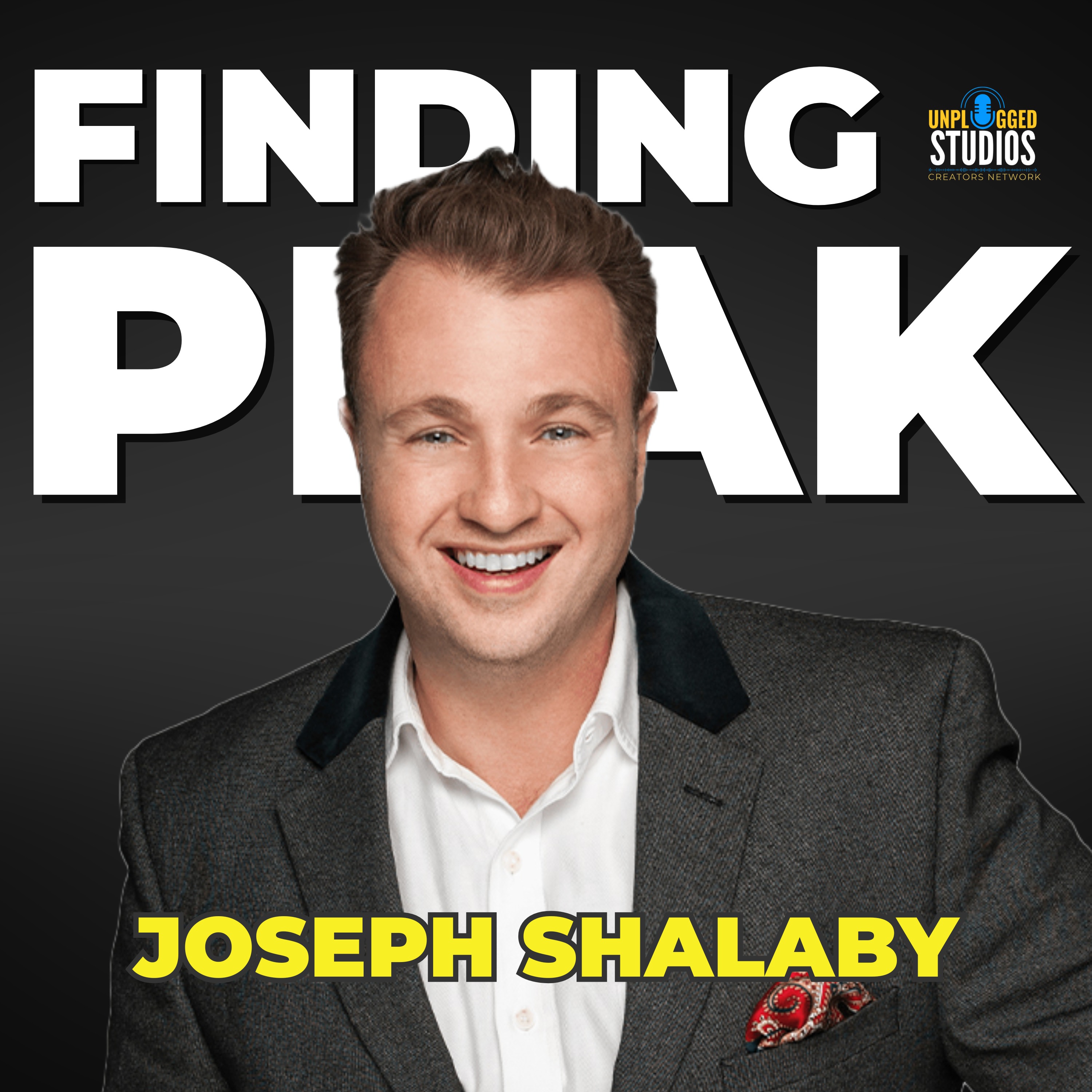
How Seven Weeks Coffee Turned Pro-Life Beliefs Into $1M Impact | Anton Krecic
Press play and read along
Transcript
Speaker 1 This episode brought to you by Progressive Insurance. Do you ever find yourself playing the budgeting game? Shifting a little money here, a little there, and hoping it all works out?
Speaker 1 Well, with the Name Your Price tool from Progressive, you can get a better budgeter and potentially lower your insurance bill too.
Speaker 1 You tell Progressive what you want to pay for car insurance and they'll help find you options within your budget. Try it today at Progressive.com.
Speaker 1
Progressive Casualty Insurance Company and Affiliates. Price and coverage match limited by state law.
Not available in all states.
Speaker 3 Anyone can take the plunge into entrepreneurship. It's like the only thing in life where you can step up to the plate and take a swing and score a thousand runs.
Speaker 3 Anything else in life, you know, you're stuck playing by the rules and the most you can hit is four runs.
Speaker 3 But in entrepreneurship, like you have this ability to score a thousand runs because you get to control, you know, your output, your work ethic, and when you 10x your business, you 10x your income versus you 10x someone else's business, you get a 1% raise.
Speaker 4 I found it very intriguing that being
Speaker 4 a faith-based person, that you engaged in politics and there was immediate friction. So maybe we can start with like,
Speaker 4 what was the first experience when you went to DC and you came into that environment that you looked around and you said, something doesn't feel right.
Speaker 4 Like something is misaligned with how my values of how I want to live and what I'm experiencing on a day-to-day basis.
Speaker 3
Yeah, you know, it's funny. So Washington, it's like, I mean, it's the center of all power in the U.S.
It really is.
Speaker 3 You know, everything revolves around what happens, you know, between the Senate and the bureaucracy.
Speaker 3
And there's so much, you business around that. And, you know, some of it's goods.
But the main thing I learned is that there is such a gate-kept feeling in Washington.
Speaker 3 It's about who you know.
Speaker 3
It's about the money you have. And a lot of it's about the money you can make off of it.
So there's a, to me, it was a kind of a disheartening feeling moving to Washington, wanting to
Speaker 3 You know, see if I can affect change with the political process, bring biblical values into government, you know, really advocate for,
Speaker 3
I believe, you know, it's a pro-life worldview. That's what we're doing now at Seven Weeks Coffee.
But
Speaker 3 how would you actually live that out? And it's sad, but because a lot of it is truly status quo on both sides of the aisle.
Speaker 3 And so that was probably the most disheartening thing. It's like, you know, we think
Speaker 3 politics is the easiest way to affect change, but sometimes you have to take a step outside of that into the real world and the private sector to actually have the impact that you want to have.
Speaker 3
It is truly a stagnating place. And I still live in the area now.
And I don't, I'm not saying don't engage in the political process, but it's not what we all think of it is where
Speaker 3 you just can come here and just make an impact, make a difference per se.
Speaker 3 It's pretty gatekept.
Speaker 4
Yeah. As an outsider to that world, now I lived in Washington, D.C.
for four years, but not, I wasn't in the political arena. I worked for a major accounting firm there.
Speaker 4 So I got like a tangential taste of that. Some of my friends were in that world.
Speaker 4 And what I think, though, as an outsider looking into the political arena,
Speaker 4 you can almost tell the people who came to Washington with a purpose to make change because they seemingly are the ones who get pushed out to the side, called out, considered crazy.
Speaker 4 And even inside of their own party, right? Like they, you know, it's like, oh, wait, you came here to actually do things. We're going to put you over here until you're willing to kind of play.
Speaker 4 Like when you're willing to play, maybe we'll let you back in and you can get some of your stuff done.
Speaker 4 But if you just thought you were going to come here and like make positive change, you're, you got a couple things to learn. That's the feeling that I get looking from the outside.
Speaker 3
Yeah, 100%. I mean, that's how the political process works.
There's, you know, party leaders on both sides of the aisle.
Speaker 3 And unfortunately, whatever the party leaders say is really what you're supposed to get in line with. I mean,
Speaker 3 I'm a fan of, you know, Thomas Massey and Rand Paul. And they're Republicans that are political outsiders that
Speaker 3 have a lot of enmity from other Republicans because they're very principled and there are certain fiscal policies. And if you don't get in line with what the party leaders say,
Speaker 3 you are definitely on the outside and outcast. And that's so sad because it's like this never-ending revolving door of compromise.
Speaker 3 Like there's never a point where you feel like people have a unifying stance and say, this is enough. Like red line here, we're not crossing it.
Speaker 3 It's just like an incremental compromise perpetually in the wrong direction. I mean, that's what it just has seemed to, you know, look like over the last, you know, you know, 20, 30 years.
Speaker 3 Like we're always moving in this, you know, whether it's fiscal policy, whether it's, you know, family policy,
Speaker 3 conservativism in the sense of social conservatism.
Speaker 3 It's just like incremental compromise
Speaker 3
in the wrong direction. And that's sad because at that rate, you just are essentially on the slow bus to, you know, a more progressive society.
You're not actually taking a stand.
Speaker 4 Do you think that it's always been that way?
Speaker 4 Do you think that's a new thing and that we just hear about it more because we have a 24-hour news cycle and you have reporters and now independent journalists tucked in every corner and every conversation?
Speaker 4 Or do you think that over the last
Speaker 4 in our lifetime, right, 20, 30, 40 years, et cetera, this has become this policy creep kind of, I'm only going to scratch your back if you scratch my back, regardless if it's better for the country or not, kind of mentality
Speaker 4 is a relatively new thing.
Speaker 3
It feels more relatively new. And here's why, because the amount of money in politics is just astronomical at this point.
So from the private sector, from,
Speaker 3 you know,
Speaker 3 the private sector working on within government contracts, from, you know, the regulatory sector,
Speaker 3 kind of the back channels with these large conglomerate companies that have like very financial interests.
Speaker 3 So you have the policy leaders that are, you know, know, either coming from the private sector that are then regulating, you know, the very companies that they used to work for or are going to work for.
Speaker 3 So, it is such a money demand system where, you know, I just think that's where it's relatively new.
Speaker 3 And you don't actually see people who move to Washington and have like a strict view on certain policies. They usually end up getting compromised.
Speaker 3 And what I mean by compromise, I mean like you end up in situations where your financial benefit is so outlandish to like just give in on either certain issues or policies that you end up probably just, you know, saying it's okay in your head.
Speaker 3 And that's where, you know, most of Washington ends up where they just, you know, incrementally creep because of the financial incentives. And I think that's the biggest thing.
Speaker 3 Like we definitely, you know, this is a different conversation, have to figure out how to remove the financial, you know, incentives of just being in this area.
Speaker 3 Like it is truly, you know, a pay-for-play scheme in a sense from your policies that you put forth in Congress to your relationships in the private sector. And it's very, you know, reciprocal.
Speaker 3 So, you know, the people that, you know, try to take a stand to that are very much, you know, outcast instantly.
Speaker 4
It's funny. I have previous guest that I had on the show.
His name's Adam Allard, a very good guy,
Speaker 4 advocate for men's mental health and masculinity in general and kind of reclaiming our position in families and in the world, et cetera.
Speaker 4 He was on a show and he sent me a clip from it just because of something we had talked about on the side where one of the other guests on the show talked about how she had been, she signed up for a service that basically tracks trade for trade, Nancy Pelosi's trading.
Speaker 4 Literally, when she buys,
Speaker 4 this portfolio buys and when it sells, it sells. And she said she's up 58% above the SP in the time that she's been invested in this program.
Speaker 4 And while I know that her husband is the greatest trader in the history of the world many times over, and you know, you know, he's very lucky for having that skill and being blessed with that talent.
Speaker 4 To me, it's very hard to
Speaker 4 look at something like that and think that that individual and the individuals of that ilk. I don't just, she's not like she's the only only one who is doing this.
Speaker 4 How do we then trust people to make decisions on the things that impact our life on a day-to-day basis, like the cause that's so important to you, pro-life, pro-choice, et cetera, right?
Speaker 4 Like we're supposed to believe that
Speaker 4 they are taking in data points, opinions,
Speaker 4 studies, et cetera, and then making honest,
Speaker 4 both recommendations and votes for what's what's on our best interest when we know that they're like they, it's like they want us to separate from reality.
Speaker 4 They want to say, look, I'm always making what I believe is the best decision over here, but then I'm also doing all this stuff over here that is super, at best, super shady.
Speaker 4 Whether illegal or not illegal is a different discussion and kind of above my legal pay grade, being that I am an armchair lawyer, not an actual one.
Speaker 4 And I find that just, that's part of some of these big issues that is so disheartening, I think, just as a standard run-of-the-mill American, that how do you know who is actually, whether you agree with their opinion or not?
Speaker 4 It's almost impossible to know who is making, who's making
Speaker 4 a good faith decision or a good faith judgment and who isn't.
Speaker 3 Yeah, I mean, that's the toughest one. I really think like the financial transparency has got to get fixed.
Speaker 3 There's been some proposals to, you know, put, you know, congressmen on essentially a probation where they can't invest or do day trading or do any type of stock equity trading during their time in office right fully support that um yeah you're right nancy plusy is the greatest stock trader of all time obviously she has no idea about trading stocks and on its own she obviously has insider information that relates to certain industries which she's able to then take heavy bets on um with her capital it's crazy to me that you can build such an immass amount of wealth from politics.
Speaker 3 You know, that's the whole thing.
Speaker 3 Politics and civil service, the idea of, you know, elected representation, that was supposed to be like a service, something you were sacrificing for to do on the behalf of your, you know, your town, your area, your constituent to advocate for that.
Speaker 3 And it's just totally captured by, you know, financial interests.
Speaker 3 You know, so whatever we can do to promote transparency, and if that's term limits, if that's locking up, you know, people's ability to trade, you should have to sacrifice to be in Washington.
Speaker 3 That's the whole idea. It is a privilege
Speaker 3 to do that and and to serve. And it is a sacrifice, not a, you know, a life-changing, you know, generation-changing wealth-building machine, which obviously that's what it is now.
Speaker 3 And so, yeah, that's again, that's why it comes back to you.
Speaker 3 You just see this incremental, you know, progression and just in a, in a, this uniparty direction where we kind of wave the flag of like, oh, we fixed this or we kind of tweak that.
Speaker 3 And really no true fundamental change happens because it's just, it's the uniparty agreement just moving forward and until we kind of disincentivize the financial aspect it's just going to maintain that way yeah you know it i'd even be okay
Speaker 4 with
Speaker 4 uh
Speaker 4 with our political leaders kind of getting theirs if we could believe that they were trying in everything they did to do what was best for the country right so if they're like look this this thing that this program or this bill that I'm putting in place, like it's, this is the best for the country.
Speaker 4
I'm going to get my little piece over here, right? Like, but I got, but this is going to help us. It's going to lower the debt.
It's going to, you know, whatever, you know, you know, create a
Speaker 4 safety net for this, you know, whatever, whatever we need to do. But
Speaker 4 it's like
Speaker 4 they're getting theirs
Speaker 4 and it's, and it doesn't seem to be always what's in our best interest. And that's the part that, that kind of bothers me.
Speaker 4 It's like, I, it's almost like we were okay with the mafia before they went into drug.
Speaker 5
This episode is brought to you by Progressive Insurance. You You chose to hit play on this podcast today.
Smart Choice. Progressive loves to help people make smart choices.
Speaker 5 That's why they offer a tool called Auto Quote Explorer that allows you to compare your progressive car insurance quote with rates from other companies.
Speaker 5 So you save time on the research and can enjoy savings when you choose the best rate for you. Give it a try after this episode at progressive.com.
Speaker 5
Progressive Casualty Insurance Company and affiliates. Not available in all states or situations.
Prices vary based on how you buy.
Speaker 4 Right.
Speaker 4 So if you think pre-drugs mafia where they're keeping the streets clean and they're doing this and hey, you got to peel them off a little vig and they're getting theirs over here, whatever, but like you can kind of walk down the street and not worried about getting shot, you're like, eh.
Speaker 4 I'm okay with that.
Speaker 3 You're getting something out of it.
Speaker 4 Yeah, yeah, because
Speaker 4
you feel like you're actually getting something out of it. Okay, but it's all this like backroom bullshit.
So kind of spinning that back to you, you're in this environment, you see this. And
Speaker 4 to the point that you made in the green room about entrepreneurship, politics aren't the only way to make change.
Speaker 4 And I think in our world today, maybe being an entrepreneur and business actually could be a more powerful way to leverage real true change. So you go into coffee of all things.
Speaker 4 So talk to me about that transition, that kind of idea and how you went from being in that arena into the world of entrepreneurship.
Speaker 3 Yeah, so I mean, I moved to Washington, D.C.
Speaker 3 I spent a couple years fundraising for Republicans, and candidates, PACs, non-profits, you know, truly, you know, believing, you know, everything we were doing in terms of raising money for stuff that I thought would really, you know, impact the political system.
Speaker 3 And again, it's not to say these organizations are bad or anything or the people that it's just, it's just like, it's so hard to see like the long tail result because like, again, everything in the the political system is gatekeeped.
Speaker 3 If you have the most honorable intentions and the, you know, for me, a pro-life worldview and you're trying to push that through in Washington, it just gets, it seems to be blocked and blocked over and over again.
Speaker 3 And so, you know, I had the idea, you know, instead of asking people for money, what if we provide people a gooder service and
Speaker 3
support the pro-life cause. So again, I was, you know, super passionate about it.
I wanted to support the pro-life movement.
Speaker 3 Years ago I got to visit a pregnancy center and just see what the work they did. I was so moved by the life-saving work.
Speaker 3 And when you think about like what does it actually mean to be pro-life, what does it actually mean to like live out a pro-life worldview? Pregnancy care centers are doing that day in and day out.
Speaker 3 They're in all cities, you know, they have a local
Speaker 3 community that they serve, and they are there for women who face unplanned pregnancies. So like, what does it mean to actually help save lives?
Speaker 3 Well, it might not actually be, you know, the law in Washington, which we obviously want to pass pro-life legislation. And it's just very difficult.
Speaker 3 But in the more literal sense, it can just be supporting a woman facing an unplanned pregnancy and doing that through a pregnancy resource center.
Speaker 3
So I had that, you know, experience of seeing what they do. And I was like, that's who we want to support.
Like, give dollars, you know,
Speaker 3 take dollars from like this, you know, corporate entity level, like the government where it's like dollars are all funneled the top and give those down to like local people and so that's what seven weeks coffee does I started it with the idea of donating back 10% of it every sale to our local pregnancy resource center we sold $8,000 that first month I dropped off a check for $800 said here here you go we sold coffee and this is for you from our from our customers so that started with one local center now we support over a thousand across all 50 states and we've raised if you can believe it a million dollars in funding and so that's what I'm talking about where the private sector, you know, it's all thanks to our customers who just made the decision to switch to Seven Weeks Coffee, we're able to give dollars, give real resources to moms who are facing unplanned pregnancies.
Speaker 3 all without dealing with you know any government you know bs we just give locally we give to those local centers and they're able to use that money to really help save lives and so you know that's what i'm talking about like you know entrepreneurship and business can truly be a ministry opportunity and you don't have to wait for some policy or some legislation to like bring about the worldview.
Speaker 3
Like, you can start living that out, you know, immediately with what you're doing and work. So, that's what I'm super passionate about.
That's why I love what we do at Seven Weeks Coffee.
Speaker 3 And, you know, my biggest thing is like, what other businesses are out there that people want to start or you know, build that can advocate for, you know, a world view that they believe in, a conservative worldview, a Christian worldview.
Speaker 3 That's what I believe in. And we need more of that, not less.
Speaker 4 I completely agree with that.
Speaker 4 I got in trouble on X the other day. And by trouble, I don't feel like I was in trouble, but certainly people had different opinions when I just posted the world needs more Christians, right?
Speaker 4 I just had this, you know, sometimes
Speaker 4 there's probably some, I have no problem posting that thought. I have no pausing posting what I honestly believe in, who I am.
Speaker 4 I'm a major believer
Speaker 4 and share probably many of the same worldviews that you do. But what was funny was the reaction was just the polarized nature of the reaction to that.
Speaker 4 Like one guy literally said, like, why do you hate Islam? And
Speaker 4 I was like, well, I didn't say all I said was the world needs more Christians.
Speaker 4 I didn't think there was like a zero-sum game, which meant that, you know, there needed to be less people of Islamic faith, certainly less
Speaker 4 jihadists, but you know, true.
Speaker 3
I think it's okay, Ryan. I mean, I'm just sorry, like, it's okay to advocate for, you know, what we believe is true.
Like, I'll go out and say that we need more Christians in this country.
Speaker 3
And I'm happy to say we need less Islam because, like, this is a Christian country. That's originally what we were founded on.
So, you know, I totally agree with you. Like, count me in on that tweet.
Speaker 3 And I guess we want more people to speak up.
Speaker 4
Yes, and I completely agree. And my point was more like, because we're in lockstep on the idea.
And I think more people need to be vocal about what they believe.
Speaker 4 And I actually was at a mastermind group with about 60 people the other day. And
Speaker 4 I brought up the topic in this, in a discussion around,
Speaker 4 they were talking about, you know, what to share, how to share around your business. It was a business-oriented mastermind group.
Speaker 4 And I said, I think we need to be more vocal about our belief structures. Like, what is it?
Speaker 4 Who are we as people? It doesn't mean we have to wear every single thought we have on our sleeve. However,
Speaker 4 bad ideas spread when good ideas remain quiet, right? And I think, unfortunately,
Speaker 4 there are certain modernized versions of Christianity in which we have been taught, or people have been taught, not me, that, you know, our role is to always, is to always concede, to always step back, to always turn the other cheek, which is a very misunderstood verse in the Bible.
Speaker 4 And, you know, somehow always placating others and always, you know, kind of
Speaker 4
stepping aside for others is a virtue. And when the idea is bad, that is not a virtue.
It is not a virtue to allow bad ideas to go unchecked.
Speaker 4 It doesn't mean people should not have the right to have those bad ideas, but we certainly shouldn't have them be able to vocalize them and we remain quiet and then sit in our house and ask like, well, I'm living my Christian virtue by sitting here in silence.
Speaker 4 That's not actually, in my opinion, a virtue at all. It's cowardice.
Speaker 4 And when I use that word in front of that group, that I felt that it was cowardice to remain quiet in the face of bad ideas, you should have seen the freaking reaction. It was like,
Speaker 4 it was, it was, it was like I gut punched 59 other people simultaneously. And the reaction was very like, well, you know, this is my business.
Speaker 4 And what do I, you know, what if someone doesn't do business with me because of what I believe?
Speaker 4 I go, if someone doesn't believe, and I know you believe this and I'm kind of preaching to you, but whatever, you got me all fired up here.
Speaker 4 If someone doesn't do business with you because you're a Christian or you believe in pro-life or you believe in whatever the hell you believe in, right? It could be the other side, right?
Speaker 4 It could be the, the, if you believe in liberal views in someone in a, in a conservatism,
Speaker 4 who cares? That person wouldn't have been a good client or a good, you know, customer of your business anyways. Like, why do you feel today
Speaker 4 so many individuals and particularly businesses are unwilling to stand up for the things that they ultimately believe in, like the business that you've built?
Speaker 3
Right. You know, it's so true.
Like, just in spinning that on its head of the idea of like, what have we seen the last, you know, five years post-COVID is radical, you know, corporate
Speaker 3 political ideologies being advanced.
Speaker 3 Like corporate America and like, you know, Fortune 500 companies have have taken a hardline political stance, you know, a very leftist, a very, you know, progressive worldview. They're not silent.
Speaker 3 Like there's this idea of like bipartisanship in business where business owners just kind of sit back and don't have any like outspoken beliefs. That is definitely gone.
Speaker 3 Like we've seen the direct opposite of that. So like, yeah, I'm all about having more believers and Christians stand up for what they believe.
Speaker 3 And it's not about, it's not necessarily about putting it on the front of your website, like how we do it. It's about as an owner, having
Speaker 3 direct influence on the people that work for you and the people you you engage with in so that you're promoting everything you truly believe.
Speaker 3 Like, yes, compromising to this like degree of just silence is like the death sentence of believers because we will just compromise and agree with the very people that want to see our worldview shut down and extinct.
Speaker 3 And it's so sickening to me.
Speaker 3 Like be there to stand on the line that says, this is what I believe as a business owner, as a CEO, and how we're going to live out our values, you know, whether that's who we work with or how we work with people.
Speaker 3 It's okay to be confrontational in that way because beliefs are by nature confrontational.
Speaker 3 Just, yeah, I can't agree with more. Like, we need more people that are just like okay with standing there on their beliefs and letting the results like fall as they may.
Speaker 4 And what happens?
Speaker 3 Like for us, like we've saw so much success over the first, you know, three and a half years of our visit. We're four years into this now.
Speaker 3 I mean, it's grown wildly
Speaker 3 in terms of growth as an e-commerce company and just like this idea that there's so many people that you actually don't realize who support your worldview and are just dying for like you to say something so they can support you like we're so quiet but once you actually do stand up like there's a rally of people behind you um it just takes the courage to do it yeah i agree and i'll give you a microcosm of that uh Right before the last election, I bought a new house, moved into a new neighborhood, and I put out in August before
Speaker 4 the 2024 election, a Trump sign on my front yard.
Speaker 4 And I also, I will also say, mostly because I'm cheeky, about 20 feet away, I put a Wu-Tang, presidents are temporary, but Wu-Tang is forever sign as well, mostly because I just have a humor, a sense of humor like that, and Wu-Tang is forever.
Speaker 4 But
Speaker 4 I had no idea. I live in New York, right?
Speaker 4 I live in Albany,
Speaker 4 maybe the second largest liberal cesspool after Washington, D.C.
Speaker 4 And
Speaker 4 I had no idea what the reaction was going to be to a T.
Speaker 4 I had almost every neighbor.
Speaker 4 No one said anything negative. No one egged my house, right? I was a little worried, you know, hey, the new guy moves in, puts a Trump sign out.
Speaker 4 But the number of people that walked by while I'm playing wiffle ball with the kids in the yard or whatever and said, I love your sign.
Speaker 4
I wish I had the balls to do that, or I wish I had the guts to do that. And I would look at at them and I'd go, it costs $24 on Amazon.
Like they'll bring it right to your house.
Speaker 4 Like it's not really that hard to get one.
Speaker 4 If you want one, I'll pay the $25. I'll drive it down and stick it in your yard.
Speaker 4 And to your point, like they're walking around and they're trying to fit in because they don't want to deal with any of the perceived flack that they would get.
Speaker 4 Yet they believe exactly the same thing. And it's like,
Speaker 4 That made it made me like at first I was happy that my house wasn't getting egg and all my neighbors hated me because not that I would necessarily care, but no one wants that.
Speaker 4 But it was more sad when I really thought about it and so much as, man, you are just so willing to be quiet when the local public high school has
Speaker 4
13 furries. They have litter boxes in the bathroom.
The janitors had to go on strike because they wouldn't change the fucking litter boxes.
Speaker 4 And you have boys, you know, playing in girls' sports and all this crazy shit going on in the high school. Like, these are the kids who are going to take care of you when you get older.
Speaker 4 Like this generation, and you're letting them know that it's okay for people to walk around with dog tails and dog ears and speak and bark at people as a way of communicating in sixth grade, sixth grade.
Speaker 4 And you think you're willing to accept that, but then you'll go to church on Sunday. Like, I don't know how those things coordinate.
Speaker 4 Like, I can't be quiet about the fact that I think it's bananas that we allow things like that to happen.
Speaker 3
Was that happening in Albany? Yeah, yeah. That's crazy.
I mean, we had the transgender stuff here in Loudoun County, like with some boy in a girl's bathroom, and it caused, you know, it was national.
Speaker 3
It was like the controversy behind it. But yeah, that's insane.
That's, I mean, that's the whole thing. It's like
Speaker 3 if your religion, if your Christian faith is just within the four walls of the church, like you are literally not living out your faith. Like you were like failing miserably, in my opinion.
Speaker 3 Like if your faith is just comfy enough to just like enjoy a nice, quiet Sunday morning, come home and just go about the rest rest of your life while you watch like literally the world around you go to hell.
Speaker 3 And you sit there and say, I'm okay with what I believe. Like, I'm not worried about anything else.
Speaker 3 Like, you are a failure, in my opinion, like, not to put it more bluntly than that, but that's exactly, it's like you were called to be like the most outspoken person.
Speaker 3 Like, if you believe, like, the biblical worldview that Jesus is Lord and this idea that like his ways are the most, you know, transcendent truth that we have, we should be wanting to promote that at every stop we can.
Speaker 3 And if we're not, it's like, what were you, then, like, what is your calling at that point? You, you're calling at the most fundamental levels to live out this worldview, a biblical worldview.
Speaker 3 And so, if you're not doing that, like, you're just like failing miserably in like your in your faith. And I just think that's like the biggest thing: is like, church, wake up.
Speaker 3 Everyone who believes, if you actually claim to believe this, like, get it, like, believe it in public, believe it, you know, in conversation, believe it as you're engaging with your neighbors.
Speaker 3 Like, tell people about this. Like if you just tell each other, like you're getting and accomplishing nothing.
Speaker 4 Well, I actually don't think, I think far fewer people actually have faith that call themselves Christians. Right.
Speaker 4 And I think, you know, I, so much of the nonsense that we are dealing with on a day-to-day basis today,
Speaker 4 to me, is secularism and the loss of God. It's, it's that I may present myself as a Christian if asked, but I'm not even sure that I really believe, right?
Speaker 4 Like that's that, I think, is a much more predominant position than people want to let on. Because as you said, if they did actually believe, there are things that they would not stand for.
Speaker 4 Just point blank. If you actually believed that God exists,
Speaker 4 that you are connected to him, that faith is real, that Jesus was the son of God, if you actually believe these things in the teachings inside the Bible, then there are things that you just absolutely 100% would not stand for.
Speaker 4 And when you let those things happen, what you are saying is, I don't actually believe. I'm not actually truly connected, or I would not be able to be silent.
Speaker 4 And that, that, that, that lie that, that we've started to, I think, accept
Speaker 4 just through, through, through creep, right? Through this, this idea of creep is that, hey, maybe, maybe God doesn't exist. Maybe, maybe this, maybe, maybe this secular bullshit is all there is.
Speaker 4 Maybe, you know, now we can start believing things like, like, like fucking socialism. Like, we're going to elect.
Speaker 1 This episode is brought to you by Progressive Insurance. Do you ever think about switching insurance companies to see if you could save some cash? Progressive makes it easy.
Speaker 1 Just drop in some details about yourself and see if you're eligible to save money when you bundle your home and auto policies.
Speaker 1 The process only takes minutes, and it could mean hundreds more in your pocket. Visit progressive.com after this episode to see if you could save.
Speaker 1
Progressive casualty insurance company and affiliates. Potential savings will vary.
Not available in all states.
Speaker 4 A jihadi socialist as it who wants to, who literally has said out loud that he wants to take away property rights, that he's going to, you know what I mean?
Speaker 4 Like the things he is saying are so much the antithesis to everything that we know is actually practical and real.
Speaker 4 I just
Speaker 4 believe believe it.
Speaker 3 It's like this idea that, like, as believers, we don't believe we're allowed to be biased to our own beliefs.
Speaker 3 It's like we have to be compromising in everything, agreeable with everyone, and have no bias to our own beliefs.
Speaker 3 Like, this idea of like, I am right because I believe that, you know, what the Bible says is true. Therefore, when I promote what the Bible says, like, that is what is the truth.
Speaker 3 And that is what I believe is right. That is what I believe should be the default
Speaker 3 worldview that everyone should accept. And, you know, we want everyone to accept the relationship
Speaker 3 like we believe we're right which means automatically you believe someone else is wrong when you have a competitive worldview and so it's like that means you should embrace this idea you can have a bias towards your own beliefs like you can actually say like like this is why we think what's right and like that let that propel you to action but it's this idea that like we're just like deference at all costs and have no like you know, conviction within your own heart.
Speaker 3 Or people even, I mean, that's the, yeah, I agree.
Speaker 3 So many people probably don't don't even actually believe what they say they believe and but then there's like this percentage of people that do believe it but believe they're not allowed to actually have like influence with it or
Speaker 3 like a bias towards everything they think and speak around it like they're just like this idea of like we'll just compromise with everyone to maintain the peace which ultimately never maintains the peace and just brings and seeds evil like every time like like you said earlier like when when good people do nothing like just evil will persist Well, they've been guilted into believing that somehow being faithful is bad and evil and wrong.
Speaker 4 And that because
Speaker 4 that you're a Bible beater or you're this. And look, there are.
Speaker 4 The beauty, in my opinion, of faith is that you get to have your relationship with God. If you are, if, in my opinion, if you're truly connected.
Speaker 4 Now, you could choose Catholicism, you could choose whatever part of that spectrum works for you, but you get to have that faith. But however, or not however, when
Speaker 4 your belief,
Speaker 4 you don't have to be guilty for that. There's like this guilt
Speaker 4 that, like, somehow, if I, if I believe in God, that, like, I'm, I'm, that because somebody else who also believed in God did something bad in the past, I need to feel guilty as a Christian for a Christian who did something bad in the past, or because a pope, which I'm like half Catholic, I was raised half Methodist, half Catholic, whatever.
Speaker 4 But I feel zero guilt for
Speaker 4 the absolute abominations in the Catholic Church who did despicable things, but I feel zero guilt for going to Catholic Mass.
Speaker 4 That was a human
Speaker 4 who made a deal with the devil and did a horrible, awful thing. And the people that protected them, they're in the same boat.
Speaker 4 But I don't need to feel guilty because someone else who's white or, and the same thing goes for any race, right?
Speaker 4 No black person should have any guilt for any act that any other black person ever did no white person should feel guilt for some act that any other white person did we all are our own individual units and should be able to voice our individual feelings without that sense of guilt or anxiety or fear that that
Speaker 4 Because I'm part of some group, I am then responsible for every other single human who's in that group. And
Speaker 4
I think that's why we stay quiet. I think the other part is, and I'm interested in your take on this as well.
Like, I also think the world today is very hectic.
Speaker 4 And where in the past we had brain cycles to spend on some of these things,
Speaker 4 we are spending so many brain cycles on things that don't matter or
Speaker 4 take up our time throughout a day that then these really important intrinsic core value type items, they don't get the brain cycles that they need or deserve or warrant. Does that make sense?
Speaker 3 Yeah, no, it totally does. I mean, it's just like this idea of, yeah, where does our attention and focus go to?
Speaker 3 Have we, as individuals, come to like the fundamental beliefs and the most important things, like the view of family, the view of money, the view of the sanctity of life,
Speaker 3 how we view government, how we view our relationship with others, and how we view our relationship with the Lord.
Speaker 3 Like all those have a very like a deep, you know, universal truth that I believe, you know, is ultimately found in the Bible.
Speaker 3 And so if you don't actually have a concrete worldview on those different topics, you will just flounder in every single direction possible. And that's what happens.
Speaker 3 You just get co-opted by whatever is the secular culture of that time and you just fall down the rabbit hole of whatever they're promoting,
Speaker 3 which is exactly what's happening right now.
Speaker 4 Yeah. I know someone asked me the other day
Speaker 4 why
Speaker 4 like my faith was so important to me. And it was a very honest question.
Speaker 4 And they're struggling with their faith, right? They were raised christian and were like kind of quasi atheist for a while and now they're considering coming back and
Speaker 4 you know whatever and we're just having a conversation very very honest very open conversation and i said look even if you don't believe the lindy effect is true right the longer something has existed the longer it will exist.
Speaker 4 So if you think about the Bible as nothing more than the best self-help book that has ever been created in the history of the world, right?
Speaker 4 And just operate like, like, I think Jordan Peterson does this best, right?
Speaker 4 He says, when he first started talking about the Bible specifically and the public forums, people would ask him, do you believe in God?
Speaker 4 And I honestly think he was toying with the idea at that time, you know, he was playing with it. And he said, I act as if, right? Now, when you ask him,
Speaker 4
he'll say he does. And my point is the...
the act of following the word brings you into
Speaker 4
God. Like you don't have to believe before you start following the word.
You can follow the word and then allow yourself to be brought into it over time.
Speaker 4 And like I said to my buddy, I was like, dude, if nothing else, it's just the best self-help book that's ever been written.
Speaker 4 So just do the things in there and you'll probably be happier than you are today. And that's kind of the way I've always approached it with people who are struggling.
Speaker 3 And you can't convince, you know, those things, like you can't convince someone of God. Like, I can't prove to you, God.
Speaker 3 I can't prove to you that I have, like, what does it mean to have a relationship with the Lord personally?
Speaker 3 I can't say, this is, this is conclusively how, like, you can know, like, you know, God is real. It's like, this is an act of faith.
Speaker 3 Like, I believe that there's the most evidence that God is real through the Bible. And I'll say this: like,
Speaker 3 life
Speaker 3 has unanswered questions from the moment you enter the world. You know, what am I doing here?
Speaker 3 And what happens when I die? Like, those are the most fundamental questions that no matter what, you're born with and have to answer.
Speaker 3 And the Bible has the most conclusive answers to life's most difficult questions.
Speaker 3 Now, whether you accept those or not, but there's no other way around it to say, like, yeah, the Bible answers those the best way possible.
Speaker 3 So you can struggle with them on your own, or you can accept what I think is, you know, clear, which is these are the best answers to life's most difficult questions.
Speaker 4 Yeah, the only other acceptable answer comes from the Hitchhiker's Guide to the Galaxy, and that's 42. So
Speaker 4 it's one of those two. I don't know that one.
Speaker 4
It's a, it's a, um, it, I don't know. So if you've never, it's a book, it's a great book.
They also made a movie out of it. And
Speaker 4 it's got a ton of biblical overtones. And like, there's like their whole point of the movie is, and I know we're off topic, but this is just interesting.
Speaker 4 The whole point of the movie is they're searching for this like mega intelligence, which is essentially God, right?
Speaker 4 And they, they get, they finally make it to the mega intelligence and they're standing in front of this big orb thing and you get, you know, you get a, you get one question and you know what's what's the secret to life what what's the point and the machine starts cranking and whatever and just responds 42 that's it that's all that's it so you know it's just it's just funny we got on that
Speaker 4 so okay so you um on you know back on onto the entrepreneurial path um you uh go with coffee and you're giving to specifically pro-life organizations. I'm interested in both of those decisions.
Speaker 4 Why coffee versus any other product? And why pro-life organizations versus any other type of charitable organization or enterprise that you could possibly focus on?
Speaker 3
Yeah, you know, coffee was interesting. I didn't have like a background in coffee except I liked it.
You know, I had some like base knowledge of it, but I didn't come from.
Speaker 3 you know, some type of like specific background in it.
Speaker 3 It's just, you know, like it's like anything, it's actually funny, like anything in business, like the most successful businesses find, you know, where there is an open opportunity and then you provide a quality good or service where that opportunity lies and then there's a lot of success so i literally googled pro-life coffee thinking oh there's got to be someone doing this you know there's a lot of values-based coffee companies you know black rifles this very large second amendment you know kind of angle um but there i was like okay so there's got to be something like for like believers someone who's like a biblical worldview christian i'm like for my mom for my dad like who what what coffee would they drink right right?
Speaker 3
And so I googled pro-life coffee. Nothing comes up on Google.
I'm like, that's it. I'm going to start, you know, a pro-life coffee company
Speaker 3 and like provide it.
Speaker 3 And so, you know, I'd started the search, we ended up finding, you know, we work with an amazing coffee, you know, importer and we have, you know, some of the best coffee on the market.
Speaker 3 And that's a really important caveat is like, you know, what's been successful for us is like, you know, you can't just slap pro-life on a bag of coffee.
Speaker 3 Like, we have a superior good or service that's 10 times better than anything mainstream out there. It's the highest, high-grade specialty coffee, you know, mold-free, pesticide-free.
Speaker 3 You're getting a better product on its own. And then you have this amazing mission on top, which
Speaker 3
has led to a lot of our rapid growth. So there was just no one doing it.
And that's just like the amazing thing.
Speaker 3 There's so much opportunity out there when you look for and providing goods and services. Obviously, you have to provide those goods and services well.
Speaker 3
But once you do, like, you know, people are going to resonate with it immediately. And that's what happened with us.
And so you mentioned giving back to centers.
Speaker 3 Yeah. So
Speaker 3 that's the heart behind it. It's like, okay, what does it mean to be a pro-life coffee company, right?
Speaker 3 And so instead of just saying like, we give back a portion of our sales or, you know, part of the proceeds, an ambiguous kind of amount, which just means we could donate as little as we want at the end of the year and say we honor that commitment.
Speaker 3
For us, we said, let's be as transparent as possible, donate back 10% of every sale. This is not 10% of profits.
This is 10% of every sale, which means it can be upwards of 50% of our profits.
Speaker 3
You know, like simple idea: move the decimal place over after you buy. That's how much we're giving back.
And so we started doing that and just like posting each month.
Speaker 3
You know, we've raised $800 this month. There's another thousand dollars next month, a few thousand the next.
And so it kept going up and up and up.
Speaker 3 And every month we just update the total on our website to show how many dollars we've donated. And, you know, now it's been over a million, like I mentioned.
Speaker 3 And that all goes to local pregnancy resource centers. So this idea of like giving money back to the people that need it the most, you know, for me,
Speaker 3 local PRCs, the more money you can get into like the actual hands of people that are doing the ministry or work, the better.
Speaker 3 And so when you think about donations in general or charities in general, you know, the larger organizations have a more of a corporate structure.
Speaker 3 So the dollars have to funnel down before they actually get into the people's hands that need them.
Speaker 3 And so when you donate to like local organizations, it's literally like the three people that work at that center that are using the funds to provide, you know, assistance to a mom in need.
Speaker 3 Like it's very direct impact. So that's what's been, you know, awesome is like we give hyper locally,
Speaker 3 you know, throughout the U.S. And that I think has been, you know, why people just love our cause and allows us to really make a direct impact.
Speaker 4 Yeah, I love that because one, it's probably way more work for you to find these individual centers and dig it down versus just picking some big umbrella company.
Speaker 3
Write one check at the end of the year. We write like 40 checks, maybe 100 checks a month, basically.
Like literally like every month, you know, they sign up.
Speaker 3 So we have a lot that obviously reach out to us. How do they receive support? We have a kind of a quick vetting process just to make sure they're 100% pro-life.
Speaker 3 And then we get them enrolled and say, hey, you know, pick a month you'd like to receive funding from us. We get them signed up.
Speaker 3 And then, you know, we're cutting them a check, you know, the next month so they can receive funding immediately and continuously.
Speaker 4 Yeah, that's fantastic. I think a lot of people who haven't like spent any time in the nonprofit world or sat on boards or give a ton don't realize that oftentimes, and this is a broad stroke,
Speaker 4 but oftentimes the larger the organization, the less of each dollar that you give actually goes to the credits. And some of that is in good faith.
Speaker 4 It just large organizations take more headcount, more overhead to distribute funds, et cetera.
Speaker 4 And I think there's a place for the large organizations, especially, again, the ones that are operating in good faith.
Speaker 4 But you have some organizations where, you know, I know there was a big, a big story that came out with like the goodwill where only something like, it was like sub 70% of every dollar was going to actually help people who needed clothes, etc.
Speaker 4 And like, I think that that shocks people.
Speaker 4 So, so you're not just like giving money as a show, you're you, when you're putting it in the hands of those boots on the ground people, you are truly changing lives, right?
Speaker 4 Um, so, and that's phenomenal. Yeah, yeah, did you find anything about growing a truly mission-driven business
Speaker 4 like seven weeks different from, say, a normal entrepreneur?
Speaker 4 Like, were there, were there any obstacles that were maybe different or or that maybe unseen that a standard maybe tech entrepreneur or someone who's just starting a another kind of product-based retail D2C business wouldn't have to face that you guys did?
Speaker 3 Well, you're definitely, you know, for us, you're cutting your customers in half immediately.
Speaker 3 You know, like you think about it, you know, half the country, maybe probably even less is like pro-life aligned. So you're definitely eliminating, you know, a handful of potential customers.
Speaker 3 But I would say it's been nothing more than on the positive side.
Speaker 3 Like, it's so cool to see that like we provide a good and service that literally reson resonates now with over a hundred thousand americans that like love what we're doing and then get to empower them like the idea like they're a part of this which they are because they're helping fund it you know through every order they are like supporting these centers um so i think it's been nothing more than positive like that's what's so cool is like you can really use your business as this like tool this ministry tool for um you know a cause that you really champion for us is the pro-life cause and you know, it's been nothing more than just amazing support from people all over the country.
Speaker 3 Like, we're empowering people every single day to make a difference and to help save lives.
Speaker 4 Why pro-life?
Speaker 3 You know, you think about like what's the most, you know, fundamental
Speaker 3 travesty
Speaker 3 and important cause in our country. And I can't get over that the right to life is the most.
Speaker 3 important cause of all time.
Speaker 3 Like the idea that like right now, every single day, you know, thousands of babies in the womb are going to lose their life and never be able to like breathe on their own, have a future,
Speaker 3 love a family, love their parents, enjoy like
Speaker 3 being snuggled in their mother's arms, like all these like most basic human
Speaker 3 emotions and needs are never going to get met because we don't believe like life is a human right from conception.
Speaker 3 And so if you don't have that fundamental worldview, like how can we actually build upon all the other humanitarian crisis if we can't just agree upon that?
Speaker 3 And so to me, it's just the most important thing.
Speaker 3 Like let's solve this first and then we'll move on to, you know, the other, you know, obviously important needs as well and, you know, protecting human dignity and
Speaker 3 all of that. But yeah, how can we not just agree that like the right to life is just not a
Speaker 3
given? It's still not, you know, in this country. And so sad.
So that's why it's so important to me. You know, we need to change that before we, you know, move on to other human rights issues.
Speaker 4 Yeah. Have you seen this guy?
Speaker 4
He's a kid. I seen him say guy.
He's a kid. He's in his 20s.
Speaker 4 Nate Lieberman, I think is his name.
Speaker 4 I'll double check on that. And for everyone, anyone who's interested, I'll have him linked up.
Speaker 4 You can find him on Instagram, but he goes to some of these like human rights rallies and they tend to be more leftist, liberal
Speaker 4 rallies.
Speaker 4 Irony there yeah and he's got the cameras and he's he's asking them about human rights and uh you know he'll say like hey human rights are important yeah yeah and he'll say all human rights are important he'll be like yeah yeah yeah that's why we're here and then he goes what about unborn babies and people literally turn their back on him and walk away and um and some of them said and and and look i i well the listeners of this show understand who i am like my issue with leftism is not even so much the things that they believe because if the things that they believed worked, I would be willing to consider them, right?
Speaker 4 But there's no receipts for the value structure that they operate in that show long-term success in really any metric, right?
Speaker 4 Outside of my own selfish need for gratification and aggrandizement, right? So
Speaker 4 outside of my own intrinsic need to feel like I am important,
Speaker 4 there's no long-term societal benefit to really any of the
Speaker 4 philosophies or policies that they espouse.
Speaker 4 So that's kind of my general take on leftists. While I also think some of the shit is completely bananas,
Speaker 4 you know, at a very practical level, if you could present me
Speaker 1 this episode brought to you by Progressive Insurance. Do you ever find yourself playing the budgeting game? Shifting a little money here, a little there, and hoping it all works out?
Speaker 1 Well, with the name your price tool from Progressive, you can get a better budgeter and potentially lower your insurance bill too.
Speaker 1 You tell Progressive what you want to pay for car insurance and they'll help find you options within your budget. Try it today at Progressive.com.
Speaker 1
Progressive Casualty Insurance Company and Affiliates. Price and coverage match limited by state law.
Not available in all states.
Speaker 4 With a receipt that said, hey, this society...
Speaker 4 right, was completely gender fluid and they were also incredibly prosperous and successful and happy and it just doesn't exist. It's literally a trigger for the downfall.
Speaker 4 It's one of the triggers or leading indicators of the downfall of every great society is gender fluidity.
Speaker 4 So, you know, you can say what you want about it and rights and all this kind of stuff, but at the end of the day, it is in terms of Roman, Russian, Greek, and those are just the ones that I've looked into.
Speaker 4 all of a uh as soon as uh gender fluidity is entered into the culture it is literally a leading indicator for the downfall of that society so okay, so it's hard for me to believe that that's something.
Speaker 4 Okay. So when you think about the fact that then moving into this idea of
Speaker 4 pro-life versus pro-choice, I don't know that there's anything that causes my heart more pain than when you see women on videos and in interviews bragging about the number of abortions that they've had.
Speaker 4 and acting as if this is somehow a badge of honor that they are they are look at how look look at how um i don't even know what they're going for like my brain can't even wrap around like what what badge they get to wear in in some group by talking about seven ten i heard i heard one woman talking about 15 abortions 15 abortions crazy like we're not talking about miscarriages abortions and it's like i'm like what
Speaker 4 What is the prize that you win for that? I just, I can't get my head around it. And, and it comes back to this idea of where is the receipt?
Speaker 4 Show me the receipt where in a society, the mass abortion of human life has yielded positive societal change or growth or prosperity over any given period of time. I just, I can't wrap my head around.
Speaker 4 There's no logic to this idea.
Speaker 3 Yeah, I mean, it's so sad. I mean, it's like, it's the oldest form of like the devil's,
Speaker 3 the devil's influence, which is
Speaker 3
which is child sacrifice. Like the oldest forms of pagan traditions were child sacrifice and this idea of like killing the most vulnerable.
Like that's that that's the ultimate like goal of
Speaker 3 evil, of the devil, in my opinion, like attacking the most vulnerable, which obviously at its core will be a child in the womb. Like that is the most vulnerable state we could ever possibly be in.
Speaker 3
And that's what the worship industry does. And they want to promote it, not just, you know, allow it, but celebrate it.
And it's a form of, you know, child sacrifice, in my opinion.
Speaker 3 That's as clear as I can be with it.
Speaker 4 Yeah.
Speaker 4
I want to ask you a very honest question. You can answer it any way you want.
I'd say there's two scenarios that I struggle with.
Speaker 4 I know where I stand from a faith perspective, but I also living in kind of the world that we live in and just not, I can't, I struggle to wrap my head around it, which is right which is
Speaker 4 young rape and and incest in minors right right it's struggle with those scenarios it's terrible yeah I mean it's
Speaker 3 the whole problem with that argument is first of all it's used to
Speaker 3 it's the one percent of the time that's used to justify the 99%
Speaker 4
of the time. Completely agree.
So no justification for the rest of it.
Speaker 3
Right. So yeah, exactly.
Exactly. So people always end up like, what about, you know, rape or incest? And it's like used to justify.
Speaker 3 It's like, okay, how about we agree that the 99% of elective, I just want to get an abortion because I don't want to be pregnant is the reality of the situation.
Speaker 3
Now, obviously, there's a lot more influence around there. And there's people that pressure people into abortions.
Again, that's terrible. This is not like a women's empowerment thing.
Speaker 3 These are people that are getting like pressured or financially, you know, struggling where they feel like they have no other option.
Speaker 3 Like, that's, again, what we're doing, providing all resources we can so people never have to make that decision.
Speaker 3 Then you come down to this awful, you know, 1% issue, even less than 1% issue of rape and incest. And, you know, the answer to it is that there's no answer that's ever going to make it right.
Speaker 3 And so, this is like the ultimate fallacy with it:
Speaker 3 someone who experiences, you know, rape,
Speaker 3 you can't undo that. You can only be, you know, receive God's grace to have healing, but you can't undo a rape.
Speaker 3 And
Speaker 3 there is so little talk about the rapists in this situation that it just infuriates me.
Speaker 3 Like, the idea that like, why aren't we using all the resources possible to punish any sick and twisted person who commits a violent act of rape to the nth degree to where that unspeakable thing is not a part of our society anymore?
Speaker 3 Like they are, they are automatically not in the conversation anymore. And so going back, like, you can't.
Speaker 4 Anton, it's not their fault. They're minor attracted.
Speaker 3 Yeah, exactly. So it's sick people that then justify it, which perpetuates this even more.
Speaker 3 And so why not bring them into the conversation, hold them accountable? You can do whatever you want to them, you know, chemically castrate them, not innocent children,
Speaker 3
which is happening now. So it's like they need to be brought into it.
We have to understand you can't ever undo a rape. You can't fix it.
And an abortion is never going to essentially
Speaker 3 bring any type of healing process or undue process to, you know, what happened.
Speaker 3 And so at that point, like, why not see how we can provide every resource possible so if that ever happens that there is financial stability there is a counseling and emotional support because at the most base level an abortion the violence of an abortion
Speaker 3 being taken against the child and also in the woman's body is never going to solve or undo a rape. It's just, it just doesn't.
Speaker 3 There's no evidence that promotes or suggests that that's like like emotionally beneficial to go through the horror of rape and then to go through the horror of abortion right after that as some type of solution.
Speaker 3 So I'm all for holding the people responsible, way more accountable, providing all resources possible for moms who, if they are in that situation, so there is like complete and total support financially.
Speaker 3 Whether that means,
Speaker 3 you know, abundance of like, you know, financial support for the child, financial support for the mom, and everything we need because there's no no solving and there's no undoing it.
Speaker 3
And like, that's the whole point of like the idea of like, we're fighting a battle against evil. Like we want to stop rape.
And the saddest part about it is the abortion industry covers it up.
Speaker 3 It is a perpetual cycle of more violence against women because of the abortion industry, not less.
Speaker 4 Yeah.
Speaker 4 I know I look at these things like
Speaker 4 I look at these things like when we talk about poverty.
Speaker 4 We want to give people money, right?
Speaker 4 But we don't, no one talks about how do we actually help them find prosperity in their lives, right? Like I came from a very downtrodden area.
Speaker 4 I was one of the few lucky to get out of the community that I was born in.
Speaker 4
I mean, we used to say, and I've said it before on the show, you could leave the doors open at night because the criminals lived in our town. They didn't rob in our town.
And, you know,
Speaker 4 What no one wants and many people that I know, some of which were friends, especially early in my life, didn't make it out and went all different paths, many of which were not good.
Speaker 4 And what we don't talk about in these scenarios is we talk about, well, how can we get them money so they can survive? But that's just a, we, we forget that that's a control mechanism.
Speaker 4 That's a control mechanism versus how do we develop the programs, maybe short-term safety nets? How do we develop the systems that allow people to pull themselves out or be guided out, right?
Speaker 4
There's always just pull yourself up by the bootstraps. I get why some people would be, would get frustrated by pull yourself up by the bootstraps.
All good advice.
Speaker 4 I get why some people would be frustrated by that, but why can't we guide them out? Take their hand, take their hand and help walk them out, right?
Speaker 4 So that they can live whatever life they want to live, but it's their, it becomes their choice.
Speaker 4 And instead, we just wanna, we just wanna gloss over the actual problem, throw things at people, which ultimately just becomes a control mechanism.
Speaker 4 And then we find ourselves in a country which has an unsustainable birth rate and we're we're essentially decimating our civilization and this world that we think that this amazing country that so many people have come behind and built, we are going to run it right into the side of the mountain because we're simply not going to have enough people to sustain it.
Speaker 4 And
Speaker 4 it's just, you know,
Speaker 4 you and I may never solve either one of these problems in its entirety, but I'll tell you what, man, I'm glad that there are people out there like you who
Speaker 4 are
Speaker 4 seemingly taking this who are taking this challenge on and doing it in a very pragmatic thoughtful and faith-based way and i dude i love the fact that you are going right to the source and and like you said cutting 40 to 100 checks and and giving it to the people who are actually gonna put this money to work and and help people and um you know god bless you for that my friend Thanks, man.
Speaker 3
I appreciate it. You know, it's funny.
I never like to say like, we're out to change the world. It's like that's kind of like a hyperbole of Lace.
Speaker 3 Like, no, we're here to make a tangible impact, supporting life-saving services at pregnancy care centers. It's a very defined niche of good that we're doing.
Speaker 3 And I think if everyone just finds their defined niche of good, we are going to change the world. But it's not just me.
Speaker 3 It's going to be a collective effort of everyone finding their niche of what they believe they're called to and using it for the glory of God. And that's how we make impact.
Speaker 4 While giving people delicious coffee.
Speaker 3
That's true. They get to enjoy that along the way.
Exactly.
Speaker 4 So if people are interested in your journey and they are interested in the coffee, where do they go both for the coffee?
Speaker 4 And I don't know if you have any uh specific content veins around your journey with the business, etc., that you'd like to send them. Uh, let them know where to go.
Speaker 3
Yeah, just our website and stuff, that's where we post all our content. But sevenweekscoffee.com is how you can find us.
We're on Instagram as well. You can keep up with our content there, too.
Speaker 4 Dude, appreciate the hell out of you. Thank you so much for coming on.
Speaker 3 Yeah, enjoyed it.
Speaker 6 Don't let a cold or flu slow you down. For fast, multi-symptom relief, pair Alka-Celsur plus FizzyChues with Afrin Nasal Spray.
Speaker 6 Alka-Celsur plus Fizzy Chews provide fast, chewable relief from headaches, body aches, fever, cough, and sore throat. And Afrin unblocks nasal congestion in seconds.
Speaker 6 Together, they provide relief from nine cold and flu symptoms. Next time cold or flu strikes, pair Alka Selser plus Fizzy Chews with Afrin Nasal Spray, the dynamic duo for fast relief.
Speaker 6 Use as directed.
Speaker 7 Comcast Business can help turn your small business into a connected, secure, modern business. It's how restaurants become reliably up and running neighborhood favorites.
Speaker 7 How healthcare offices become the data-protecting caregivers that we all depend on. And how wealth management firms become cyber-securing guardians of your information.
Speaker 7 With reliable connectivity, enhanced cybersecurity, and Wi-Fi backup, your business can stay connected and get threat ready with Comcast Business. Powering possibilities.
Speaker 4 Call today to learn more about our great offers.
Speaker 2 When your company works with PNC's corporate banking, you'll gain a smart and steady foundation to help you carry out all your bold ideas.
Speaker 2 But while your business might not be shaky, you might still experience shakiness in other ways. You might be outbid on the perfect summer house.
Speaker 2 Your kid might not attend your alma mater, or your yacht might be jostled by stormy waters. No amount of responsible banking can prevent these things.
Speaker 2
Except maybe the yacht, because we tell you boats are generally a bad investment. PNC Bank, brilliantly boring since 1865.
The PNC Financial Services Group Inc., all-rights reserved.