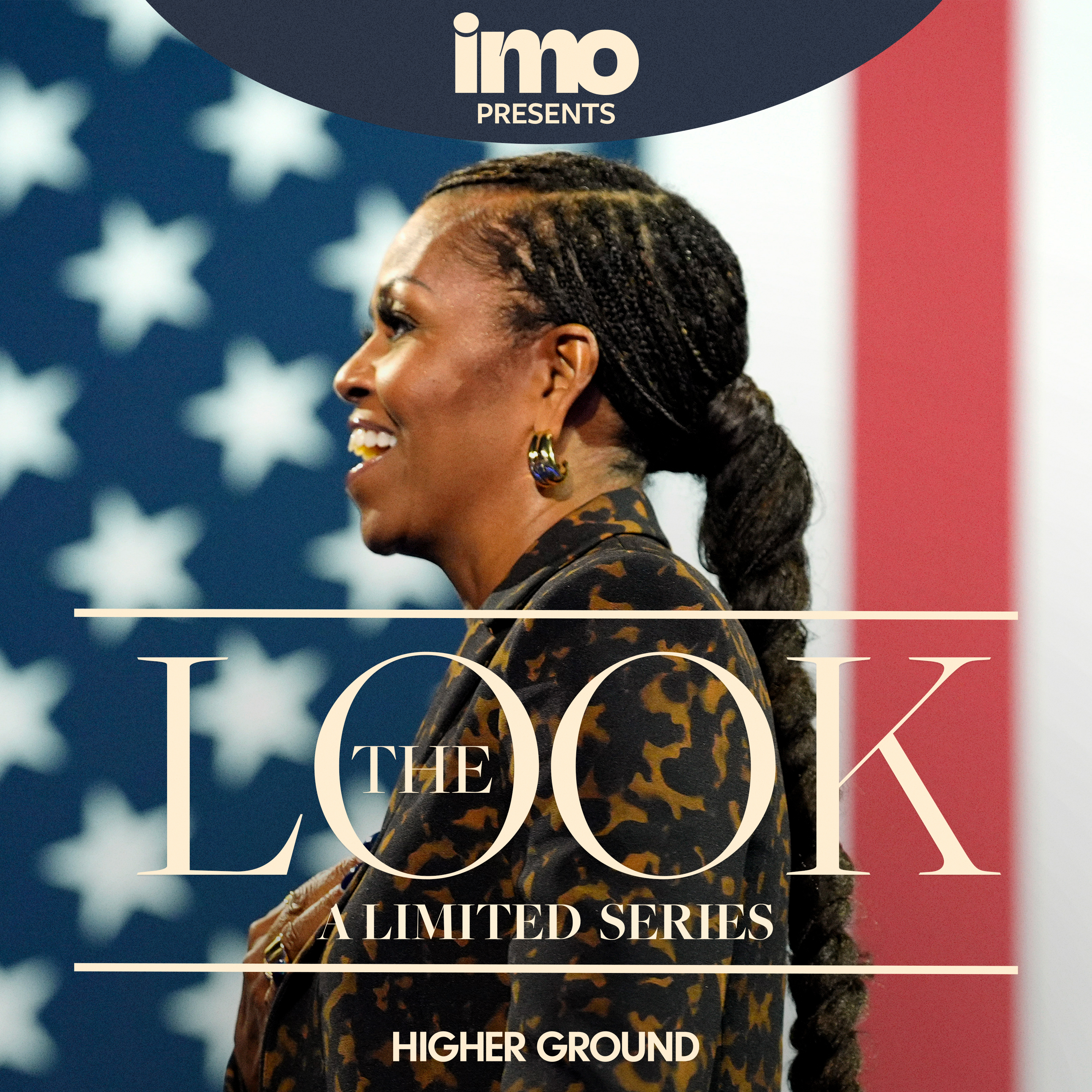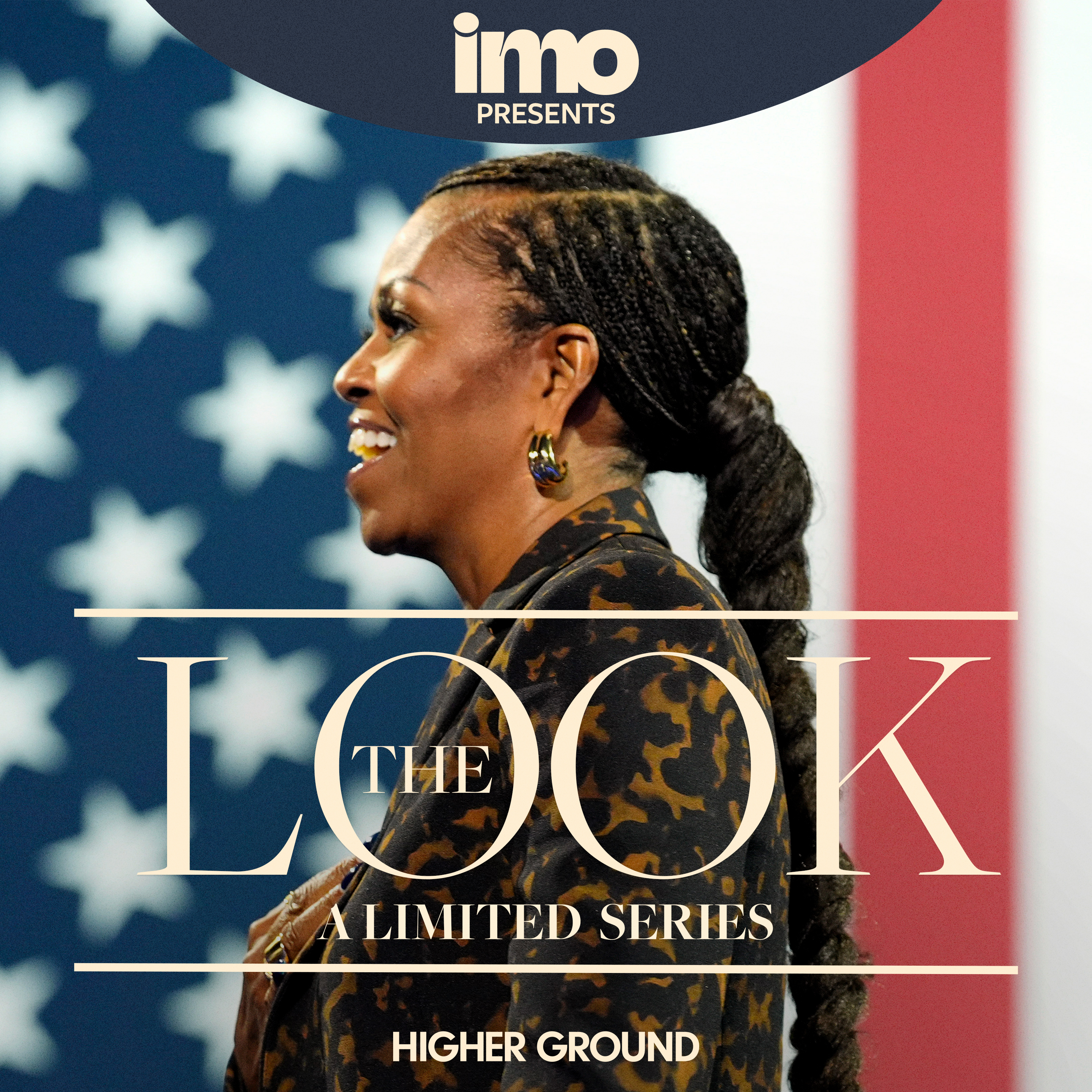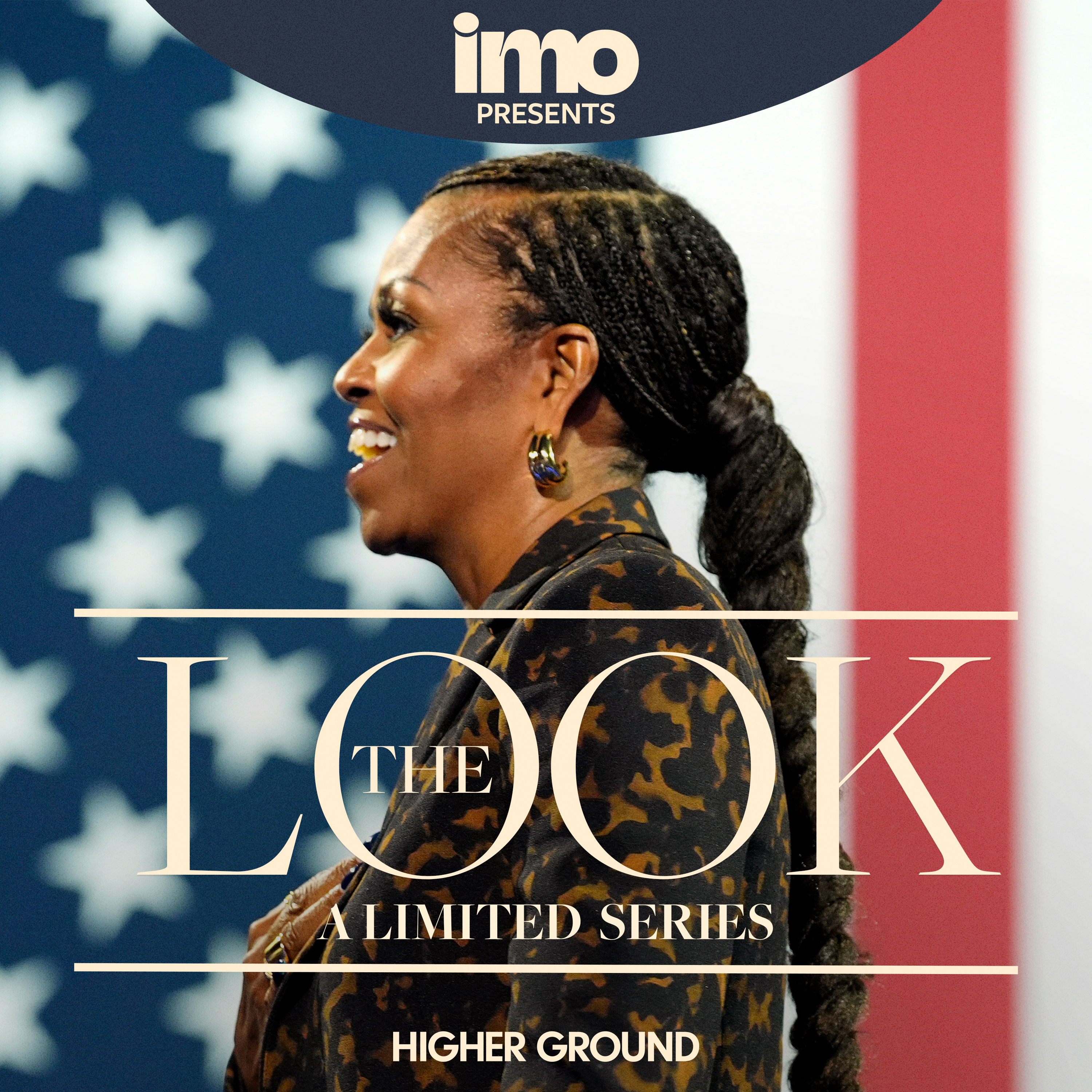
IMO Presents: The Look Live with Tracee Ellis Ross
On this special live episode of IMO, actress, founder and CEO Tracee Ellis Ross joins Michelle Obama at the Brooklyn Academy of Music to discuss Mrs. Obama’s latest book, The Look. Together, they talk about why Michelle has chosen to finally talk openly about her fashion journey, the team behind her most memorable looks, and how she has stayed true to herself throughout the White House years and beyond.
Learn more about The Look here
See Privacy Policy at https://art19.com/privacy and California Privacy Notice at https://art19.com/privacy#do-not-sell-my-info.
Press play and read along
Transcript
Speaker 1 knew immediately, and I knew this coming in as First Lady, that I was in charge of my story, my narrative. I had to be smarter than them.
Speaker 1 I had to outsmart everyone, and that came to everything I did, including what I wore.
Speaker 1 This episode is brought to you by Alloy Women's Health.
Speaker 1 Can people people hear Mike's on? Mike's on?
Speaker 2 Are the mics on?
Speaker 1 Mike's on. Are the mics on?
Speaker 2 The mics are on.
Speaker 1 It's about fashion, y'all. It's about fashion, y'all.
Speaker 2 And you are fashionable.
Speaker 1 We brought a little fashion along.
Speaker 2 You look gorgeous. So do you, babe?
Speaker 1 Thank you. Thank you for being here.
Speaker 1 Thank you all. Thank you all for coming out.
Speaker 2 Thank you for being you. Thank you for being you.
Speaker 2
This is really a wonderful moment. Hello, everybody.
Thank you for being here.
Speaker 2 That wonderful applause, I really appreciated it.
Speaker 2 Wasn't for me.
Speaker 1 Okay,
Speaker 2 so I have been lucky enough to have many conversations with you through the years, most of them personal, but some public.
Speaker 2 And one of the consistent things about our conversations and our connection is our curiosity.
Speaker 2 about how to navigate life, no matter what kind of life it is that you're living, with care and joy, while being fully yourself and how you connect yourself to a larger purpose.
Speaker 2 So coming together to talk about the look,
Speaker 2 your latest book that chronicles your style and your beauty journey feels particularly special for me because we get to have yet another conversation about your groundbreaking significance as First Lady.
Speaker 2 and the
Speaker 2 extraordinary woman that you are, but this time through a new lens, through the lens of fashion and hair, fashion as a language that can facilitate purpose.
Speaker 2 I am a believer in the agency and opportunity that fashion can offer, how we express ourselves through what we wear, can tell people how we want them to regard us.
Speaker 2 It's not always about the what, sometimes it's just about the how. Our clothes can be a tool for creativity and joy, an expression of freedom.
Speaker 2 They can connect us to our history and message the future. It can seem like an unimportant and frivolous topic and for a black woman who is our first black first lady, it is certainly not.
Speaker 2 During your years, I swear I'll get to a question.
Speaker 2 During your White House years,
Speaker 1 You used what you wore as a language.
Speaker 2 You used what you wore as an opportunity to tell the world who you are and what you believe in.
Speaker 2 And honestly, this book, this book could have just been a bunch of beautiful pictures, and we would have eaten it up and we would have loved it. But in perfect Michelle Obama fashion,
Speaker 2 you did more.
Speaker 2
So up until this point, you've not spoken publicly about fashion. You let your clothes do their own talking, and they've talked really well.
But now you've decided to publish this book.
Speaker 2 So why this book and why now?
Speaker 1 Thank you, Tracy. Thank you all.
Speaker 1 Why this book? Why this book now?
Speaker 1 During the eight years that I was First Lady, I purposefully avoided talking about fashion because I thought it would be a distraction from everything else that I did.
Speaker 1 I realized very early on that as a woman in the public eye, and I write about this, is that we are often reduced to what we look like.
Speaker 1 We are often attacked for what we look like, and I experienced that during the first campaign. I realized that I could give a passionate, substantive speech,
Speaker 1 and it would be covered well in person, but in the press,
Speaker 1 invariably it would start out with, she was wearing a blank.
Speaker 1 as if I had said nothing at all.
Speaker 1 So that experience kind of shook me to think, I don't want to be solely defined by how I look, what I wear. I want my work to speak for itself.
Speaker 1 But now that we're almost 10 years out of the White House and I've written two books,
Speaker 1 I think, yes, y'all,
Speaker 1 it has been a while.
Speaker 1 We are that former part is real.
Speaker 1 Former.
Speaker 2 We don't want to believe it.
Speaker 1
It is true. It's been almost a decade that we have been in the White House and I've written two books and I really do feel like the world, the country knows who I am.
So now it's time to talk about
Speaker 1 the how of fashion, because I knew it was always important.
Speaker 1 I wanted to wait until it felt like it was time. And I think now is a good time.
Speaker 1 As you said, the book is a collection of beautiful photographs. It is a lovely walk down memory lane, but I want everybody who gets the book to read the essays as well.
Speaker 1 We have a wonderful forward by my dear friend Pharaoh Griffin, who I think is here.
Speaker 1 There she goes.
Speaker 1 And I take you through the journey, the process.
Speaker 1 I want you to meet the team. So this book is as much an homage to the people who helped me be me in that period of time, my trifecta.
Speaker 1 You're going to learn about them, their stories, their journeys.
Speaker 2 And you allow them to tell their own story, which is beautiful
Speaker 1 through their own voices.
Speaker 1 Their stories are amazing. They were all kids when they started out.
Speaker 1 I mean, I'm literally talking, Yane, my hair stylist was 19 years old when she came to the White House and was working under Johnny Wright.
Speaker 1 But this team is amazing.
Speaker 2 One of the things, so I'm going to brag and say Michelle and I are friends and I can actually call her Michelle after all these years. It took me a really long time.
Speaker 1 It's like Tracy, come on girl. It was weird.
Speaker 2 It was hard though because you know there's so much reverence.
Speaker 2 But one of it's weird. You don't want to curtsy when you see your friends for dinner.
Speaker 1 It's weird. No, no.
Speaker 1
Gets old. It's like, get up, girl.
Get up.
Speaker 2 But one of the things that's really special about you and your husband is your teams have remained the same. So since, because I campaigned early, it was 2007 when I met you guys.
Speaker 2 And
Speaker 2 the team is the same, so many of the same people, and it's a really beautiful testament to who you are.
Speaker 2 And even the fact that you would write a book and allow not just to talk about your team, but to allow them to use their own voice, is such an expression of who you are and how you were first lady and how you are as a human being.
Speaker 2
And so, it is wonderful to read in that sense, even though it is a picture book, it's wonderful to read. So, thank you.
Mine's all marked up.
Speaker 1 And fashion is a it's a it's it's real business. It's a job.
Speaker 1
Yes. You know and that's what you learn especially as a woman.
I don't know about you men, you know,
Speaker 1 but it takes a lot of work to show up in a way that we're expected to show up.
Speaker 1 And my team has worked tirelessly behind the scenes with no fanfare, no acknowledgement, because that was important because we didn't talk about fashion. And now I want to give them some shine.
Speaker 1 And I also want to give some shine to
Speaker 1 all of the incredible designers who supported me all throughout the years. I don't know if any one of them are here,
Speaker 1 but fashion is meaningful. And
Speaker 1 there are a lot of people who worked.
Speaker 1 They made dresses, they sewed buttons, they did all the things, not even knowing whether I would put on the thing that they made.
Speaker 2 And also, during the time that you were in the White House, you gave platform to so many designers that didn't have a voice or weren't, that's not true, everyone has a voice, that weren't in the light in that way.
Speaker 1 I can think of a whole bunch of different names, Toccun and they've left me now, Jason Wu, Philip Lim and Tracy Reese, and
Speaker 1 on and on and on.
Speaker 1
Because when you go to Washington, there are a lot of, this is how we've always done it. that is thrown at you, the expectation.
And when it came to fashion,
Speaker 1 there were a limited number of designers who had an expectation that they would be able to dress the first lady.
Speaker 1
And some people got a little attitude about it. It was an expectation.
But if you recall, our administration was about opening up opportunities for more people. It was always about
Speaker 1
expanding opportunities for people who otherwise wouldn't have it. those opportunities.
Talented, qualified, diverse people.
Speaker 1 And now is the time for us to be reminded of the power, the influence, the contribution of immigrants, of women, of minorities, of people of all races.
Speaker 1 And it is particularly true when it comes to the fashion community.
Speaker 1 So this book is a big warm hug to that community as well. So.
Speaker 2 Thank you for saying it that way and for reminding, again, bringing it back to purpose.
Speaker 2 I have a friend who told me a story about ladies in the first pew at church and what she learned as a little girl, that the hats and the clothes she wore told her how they wanted to be regarded.
Speaker 2 And I remember how my mom got dressed for life and for stage and told me that, and it told me that how you clothe yourself is something that can give you agency.
Speaker 2 And one of the things my mom did that I noticed is that the clothes that she wore were not about look at me, they were about this is me.
Speaker 2 And it's something that
Speaker 2 this is me.
Speaker 2 So what was your relationship with fashion when you were growing up? What messages did you receive from the way the women in your life dressed when you were young?
Speaker 1 You know, I grew up poor,
Speaker 1 working class, because poor is a different kind of mindset. And we always had enough, but we lived with a certain amount of scarcity and you know there was always the dreaming about fashion for me
Speaker 1 because I came from the kind of mother who made your clothes and you know I got to the point where it's like please just let me have some Glorie Verdebille jeans my God stop sewing for me I just want what the other kids have
Speaker 1 So
Speaker 1
there was a lot of looking around me that was part of that inspiration. And there was a lot to see.
You know, I grew up on the south side of Chicago.
Speaker 1 There was nothing but style and grace and elegance all around me.
Speaker 1 Even right in front of me as a little girl, it was the teenage girls right in front of me, how they wore their hair and a number of bangles on their arms.
Speaker 1 And, you know, you sort of covet that look when you see somebody older than you showing up, looking what I didn't realize was maybe a little sexy, but there was just something that said, I like that.
Speaker 1 And then there was just like soul train I mean you know just watching all of that magic happening every Saturday morning so I knew what I wanted I knew what beauty and grace and style was I just couldn't afford it
Speaker 1 so I think that made it even more special when I started slowly developing my own agency, even having my own little babysitting money to go to the Evergreen Plaza or Water Tower place where you could see the nice clothes.
Speaker 1 A lot of window shopping was going on.
Speaker 2 Do you remember the first like look, like your first, did you, by the way, did you lay your clothes out for school?
Speaker 1 Yeah, I did when I was really young. I write about my favorite dress when I was like six.
Speaker 1 It was a Sears and Roebucks special because that's where you got everything.
Speaker 1 And it was this plaid bottom, one dress, kind of like the typical Jan Brady dress with the plaid on the bottom and the brown on the top, and you just zipped it up in one zip.
Speaker 1
It was polyester, so it didn't wrinkle. And I love that dress.
I mean that dress I would lay out because it was probably one of the few things at that age that I could do on my own.
Speaker 1 It was very efficient and I love that dress for that reason.
Speaker 1
The efficiency of it? The efficiency of it, the practicality of it. It didn't wrinkle.
I mean, I don't know what my little mind was thinking, but I also like the agency of doing it for myself.
Speaker 1 So, but I was also kind of a tomboy. You know, when I was little, little, because my older brother, I was always following him around.
Speaker 1 So there was also that period where I thought I was going to be Jose Cardinal, the first baseman of the Cubs, and I would wear my fro puffed up like him with a baseball cap on, and I'd be ready to go.
Speaker 1 So there were all these different iterations of myself.
Speaker 1 And I think it wasn't until high school that I saw a broader influence than what was in my neighborhood. I saw kids from, because I went to a magnet school, Whitney Young, go dolphins.
Speaker 1 And it attracted kids from all over the city,
Speaker 1
kids of all races. And it was really the first time that I saw black wealth.
You know, I was like, dang, your hair is bouncing and behaving.
Speaker 2 I was going to say, what did it look like?
Speaker 1 What did it look like? It was just, it was polo eyesod.
Speaker 1 It was the, I grew up in the age of the preppy look with the you know and there was a difference between the Jack Leg sweater and the Ralph Lorenz sweater I started learning that and there was the K-Swiss shoes that were pristine and white the Stan Smith with the green and all of this stuff was so expensive but the kids wearing it just looked cool
Speaker 1 but I couldn't afford that stuff until I
Speaker 1 could I never was able to afford that stuff but I would look for the sales and I would try to figure something out and if I got one sweater I'd be like okay I got the sweater now I got to get the polo I get that in months you remember layaway oh layaway
Speaker 1 layaway was a thing we used
Speaker 1 I was I was like
Speaker 1 remember remember layaway
Speaker 2 there's a version of that now
Speaker 1 it's called credit
Speaker 1 There's a version of that, which means you owe everybody.
Speaker 1 I'm definitely not the one that has on that.
Speaker 2 I was trying to really participate. I was like, yeah.
Speaker 1
Yeah, Tracy doesn't know. Tracy was one of the girls.
I'd be like, where'd you get those?
Speaker 1 You don't know nothing about my life, girl.
Speaker 1
I was literally like. You were trying to tell, yeah, I remember.
That's right. I remember.
Speaker 1 I was like,
Speaker 1
Embarrassing. Okay.
All right. Well, you were you.
Yeah, well, you know, I wasn't, you know, my mother was not Diana Ross. I was definitely not modeling my style
Speaker 3 after her.
Speaker 1
In fact, I love my mother, but my mother was the opposite of Diana Ross. My mother was dying in her own hair.
I was begging my mother, go to the hairdresser. Lady, we know you love us.
Speaker 1
We know you're frugal. Just buy a new dress.
That was my mother. So I learned from my mother what I didn't want to do.
Speaker 1 And And I loved her, but when I got a hold of her, when she was living in the White House, I was like, we are going to kill it for you, lady.
Speaker 1 So Meredith was styling her. And in all honesty, I spent a lot of time with your mom.
Speaker 2 You sure did. Whenever I would visit them at the White House, I was by myself.
Speaker 1 And so,
Speaker 2 which is how I got close with the team.
Speaker 1 That's it.
Speaker 2 I was always with mom.
Speaker 1 Because you didn't get a plus one. Nope.
Speaker 1 Okay, okay. Okay, all right.
Speaker 2 I remember when I realized that clothing, my hair, and how I spoke could actually protect me from the microaggressions of racism. I was in my early teens.
Speaker 2 Do you remember when you realized that clothing could be a tool or when you began to understand the power of how to present yourself within the context of protection or armor?
Speaker 1 I think it was always there. I mean, because the truth is, you know, you're growing up in the city.
Speaker 1 The magnet high school that I went to to was on the west side, and to get to it, we had to cut through downtown.
Speaker 1 So we were commuting with business people, with the folks downtown on North Michigan Avenue, and we would have a half day.
Speaker 1 We would go to the nice stores and go to the McDonald's and water tower place. I mean, so there was a level of exposure to the high end of Chicago.
Speaker 1 And to access those places and not be accused of stealing, you realized very early on that you better let them hear you talk or, you know, come in with the right LASAC case or else you would be watched.
Speaker 1 And, you know, so I think I learned then that how you show up, especially when it comes to white folks looking at young black kids, that how you present can sometimes save your life.
Speaker 1 So yeah, I think I was learning that all throughout.
Speaker 2 my youth. That's an interesting thing, right? So my mom was Diana Ross, but I wasn't protected from that because of her.
Speaker 2 The color of my skin is the color of my skin.
Speaker 1 But you look just like her, girl.
Speaker 2 Not, not what she is.
Speaker 1
I'd be like, nah, nah, nah, nah, Michelle. Not with my glasses and my braces, girl.
Yeah, you wore a little bit of
Speaker 2 skinny little girl who's trying to talk really nice and steal my mom's clothes.
Speaker 1 So I start walking, and nobody was looking at me. Oh my goodness.
Speaker 4
Hi, I'm Carl Ray, and I'm Michelle Obama's longtime makeup artist. I've been on many of these sets, but I'm so excited to be in front of the camera.
My first client was my mom.
Speaker 4 I would always watch her apply her makeup. When I was around 14 years old, I asked her if I could do it for her because I thought I could do a better job.
Speaker 4 She obliged and soon after, she started asking me to do her makeup a lot.
Speaker 4
I never knew makeup was a career until I was an adult. Now my work has introduced me to so many interesting experiences.
I've worked in film, TV, print, fashion, and beauty all around the world.
Speaker 4
I've also had the pleasure to work with many celebrities and dignitaries along the way. And I'd love to work with you.
So the next time you're booking on Airbnb, click on the services tab.
Speaker 4 You'll find professionals like me and my team. We can help make your next special occasion even more memorable.
Speaker 4 Weddings, galas, birthdays, headshots, or anytime you just want to feel and look your very best. You can find me at Airbnb.com/slash services.
Speaker 3 This episode of IMO is brought to you by Progressive Insurance, who help people move forward and live fully. Owning a home can be one of the most powerful ways to build financial security.
Speaker 3 But for many, especially first-generation buyers, it can feel out of reach. That's why I appreciate what Progressive is doing.
Speaker 3 In 2024, they contributed over $7 million to help help individuals and families break the cycle of renting by providing support, offering educational resources, and developing tools to build long-term financial stability through home ownership.
Speaker 3 Their work goes beyond just insurance. They're opening doors.
Speaker 3 Through their newly created up payment program, Progressive is helping first-generation homebuyers move closer to the dream of home ownership by offering eligible applicants a chance to receive a down payment assistance grant.
Speaker 3 You know, owning a home for me made me feel grounded and also set me up for the future.
Speaker 3 And as a coach, when your life is dependent on wins and losses, it's really important to have the comfort of a really nice home to come home to, especially for your family.
Speaker 3 Home ownership is one of the biggest investments you'll ever make, and Progressive wants to help more people take that life-changing step. Learn more today at progressive.com/slash open the house.
Speaker 3 This episode of IMO is brought to you by Cologuard, a non-invasive colon cancer screening test.
Speaker 3 The American Cancer Society now recommends that if you're at average risk, you should start screening for colon cancer at age 45.
Speaker 3 During my visit to the Cologuard lab in Madison, Wisconsin, I learned that there are an estimated 60 million adults over 45 who aren't up to date with their current screening. That's way too many.
Speaker 3 And I got to see firsthand how Cologuard is committed to changing that.
Speaker 3 And what really stood out to me is how their commitment goes far beyond the lab, from hosting community events and local health fairs to educating on prevention, sharing screening options, and providing access to preventive care.
Speaker 3 The Cologuard test is designed to help you feel more in control of your health and your screening process.
Speaker 3 The test is delivered right to your door and you can collect your sample comfortably at home on your own schedule.
Speaker 3 Then you just ship it back to the lab and your results are ready in about eight to 10 days. Simple as that.
Speaker 3 And the best part, you can start screening for colon cancer without all the hassle of preparing for a colonoscopy. No fasting, no drinking that prep liquid, no requesting time off work.
Speaker 3 Most insured patients even find they pay nothing out of pocket.
Speaker 3 That's why 20 million cologuard tests have been used and hundreds of thousands of healthcare providers across the country prescribe it for their patients. There's no excuses.
Speaker 3 Get screened for colon cancer. So if you're 45 or older and at average risk, ask your healthcare provider about screening for colon cancer with the cologuard test.
Speaker 3 You can also request a colour prescription today at cologuard.com slash podcast. The cologne test is intended to screen adults 45 and older at average risk for colorectal cancer.
Speaker 3 Do not use a Cologuard test if you have had adenomas, have inflammatory bowel disease, and certain hereditary syndromes, or a personal or family history of colorectal cancer.
Speaker 3 The Cologuard test is not a replacement for colonoscopy in high-risk patients. Cologuard test performance in adults ages 45 to 49 is estimated based on a large clinical study of patients 50 and older.
Speaker 3 False positives and false negatives can occur. Cologuard is available by prescription only.
Speaker 2 There is a quote in the foreword by Gwendolyn Brooks that reads, conduct your blooming in the noise and whip of the whirlwind. And then Farah Jasmine said in the foreword,
Speaker 2 that you and the nation blossomed in the whip of the whirlwind. And I think about what it must have been like for you with the whole world watching.
Speaker 2
I think about you being the first and the narrow, subjective public expectation that had zero margin for error. And then I think about you as a person.
And a human being.
Speaker 2 How did you stay connected to yourself and your self-worth while balancing lofty expectations on one side and being expected to fail on the other?
Speaker 1 Yeah,
Speaker 1 I think my motto has always been throughout my life, because that is a battle as a black woman in the world, as women in the world that we always face is
Speaker 1
surpassing other people's low expectations of us. So I was practiced in it.
I was practiced in being doubted and underestimated.
Speaker 1 And so my approach was focus on the work.
Speaker 1 Focus on getting the A, focus on getting to college, focus on finishing the paper, focus on doing the job right in front of me well, and let that speak for itself.
Speaker 1 Because as my mother told me and my brother, you can't control what other people think and say about you. You have to find that strength from within yourself.
Speaker 1
And I also benefited from having two parents who loved me and my brother deeply. I write about this in Becoming.
I talk about it in the light
Speaker 1
that the seeing that they did for us fortified us. You know, I always talk about the fact that every child is born with light.
And I was too.
Speaker 1 I was born knowing that I was smart and capable, not just in my own sense, but how I showed up in the world. I saw, you know, people who were smart and people weren't.
Speaker 1 And I was among the smart people. But I also saw people expect me to be less.
Speaker 1
So you either fuel that light that's in a child or you snuff it out. And that is what happens to every child all over the world.
And I was fortunate enough to have parents that fueled me.
Speaker 1 So I think that helped me stay focused because my truth in my head was totally different from anything else anybody could say to me.
Speaker 2 Were there times
Speaker 2 when it felt hard to hold that? Well, I mean, your mom was with you.
Speaker 1 Yeah.
Speaker 2 Was it hard to hold that at certain times
Speaker 1 you know what what is always hard for me is hypocrisy and ignorance you know i mean that would just
Speaker 1 i mean it wouldn't it wouldn't hurt me it would anger me you know it when it was so obvious and so blatant that it's like wow these people you know there are a certain set of people who refuse to see the humanity in people who don't look like them And it's just like, wow.
Speaker 1 It wasn't personal. It was like, oh my goodness, you're so limited.
Speaker 1
You were so afraid. You were so small.
And that, that wound up, I was the kind of kid who didn't get hurt. I got mad.
Speaker 1 And I had to find a way to direct that anger.
Speaker 1 And for me, when it was turned on me, It's like, which happened, as I said early on in the first campaign, it was very clear that when when I got really effective on the campaign trail and started attracting huge crowds and big rallies, sometimes bigger than the candidates that we were
Speaker 1 battling, and this happened in the Democratic primary. Let me be clear: these were our people who were going after me because this started when we were running against our party.
Speaker 1 The beginning of turning me into an angry shrew who
Speaker 1 diminished her husband who was who didn't love her country, who was unpatriotic. And it's like, there is absolutely no way that people who are actually seeing me in the world are seeing that.
Speaker 1 These people are lying. They are making some stuff up because they're trying to win.
Speaker 1 So I understood that and knew that I had to quickly define myself so quickly.
Speaker 1 I was like, if I let them define me, I won't even recognize myself and I and I didn't even feel like I had the support of the campaign in that because they were white folks too primarily I don't think they even knew what to expect or to understand how to navigate that understand how to navigate that so I knew immediately and I knew this coming in as first lady that I was in charge of my story, my narrative.
Speaker 1
I had to be smarter than them. I had to outsmart everyone.
And that came to everything I did and said, including what I wore.
Speaker 1 So I just, I just, I just controlled my narrative and did the work.
Speaker 2 Yeah,
Speaker 2 I feel like what that applause is and what I wanted to say is thank you. Because the
Speaker 3 your,
Speaker 2 I don't know if it's courage, but your sense of, your embodied sense of self. that continued with grace and dignity, I get chills, to just keep
Speaker 1 being you.
Speaker 2
We all were mirrored back in that. It was, I mean, there's standing up.
Yeah, it was, it was, and is,
Speaker 2 so important.
Speaker 1 Um,
Speaker 2 and with you in that position, it was just like
Speaker 2
all the time. It just felt like, and I feel like that's part of what I saw in looking at the book.
It's like, it became so much, that's just who you are,
Speaker 2 that I almost forgot.
Speaker 2 And looking back, you're like, page after page after page and yes the dresses are beautiful yes the clothes are appropriate and respectful and all of the things and brought in other designers but we see you
Speaker 1 standing there
Speaker 2 with your heart open hugging people talking to people and connecting with people in a way that was just so incredibly important for all of us so thank you thank you thank you it was an honor let me say this let me just be clear it was the honor of my life.
Speaker 1 And it was easy to do it for the bigger cause. And we were, Barack and I were built for it, you know,
Speaker 1
and we were capable of handling it. Didn't know it.
Didn't know it. But this is what I want everybody to know.
Like, you know when you can do a thing.
Speaker 1
You know, you know when you can handle some mess. And and we had prayer and a lot of support.
So through it all, all, you know, I felt people, I felt like we were all doing it together.
Speaker 1 I never felt alone in this process. So thank you all for being there for us.
Speaker 2 You stepped into a role that carried a preconceived idea of femininity and wifedom that was founded on the landmines of racism and misogyny.
Speaker 2 What the First Lady wears is one of the main ways, which you've already said, that a First Lady is talked about. It comes with so much historical expectation.
Speaker 2 How do you feel about the fact that the First Lady is an archetype for wifedom and femininity?
Speaker 1 Yeah, I don't agree with that.
Speaker 1 I don't agree with that.
Speaker 1 It is a completely throwback. on
Speaker 1 it's it's a it's a definition that has no current current status in how women actually show up in the world today.
Speaker 2 Do you think that that impacts the room that we've made for a woman to be president?
Speaker 1 Well, as we saw in this past election, sadly, we ain't ready.
Speaker 1
That's why I'm like, don't even look at me about running because you all are lying. You're not ready for a woman.
You are not. So don't waste my time.
Speaker 1
You know, we got a lot of growing up to do. And there's still, I'm sadly, a lot of men who do not feel like they can be led by a woman.
And we saw it.
Speaker 1 What was the question?
Speaker 2 I just said, mm-hmm.
Speaker 1 We don't need to ask it again.
Speaker 2 You answered it.
Speaker 1 So,
Speaker 2 femininity, wife, don't be afraid.
Speaker 1
Yeah, yeah. I mean, I think we still have growing to do in that regard.
And,
Speaker 1 you know, we can see how progress can be made and things can be snatched back
Speaker 1 when it comes to us owning our power as as women
Speaker 1 but yeah I was
Speaker 1 Barack and I our marriage to me feels more traditional that we are partners we are equals we are
Speaker 1
have always been. That's how our relationship was defined at the very beginning when we first met one another.
We were both Harvard law students. He was my advisee.
I was at the firm before he was.
Speaker 1 But I also recognize his brilliance and ambition and the things that he can do that I cannot.
Speaker 1 There's just
Speaker 1 an excellent intelligence in him that I just can't keep up with sometimes.
Speaker 1 But I think that helped me
Speaker 1 understand
Speaker 1 that I had to do the work with him to make it work.
Speaker 1 And he knew that.
Speaker 1 He knew that we would be doing this together or we wouldn't be doing it at all.
Speaker 1 But with that said, I felt like I worked and supported the commander-in-chief.
Speaker 1
Yes, he was my husband, but when our team, whenever we did anything, my motto was Let us not block the work. Let us never do anything that's going to get in the way of getting things done.
All right.
Speaker 1 And that came to how I dressed and what I said.
Speaker 1 This is why it's like, you know, I was very cautious to make sure that we matched high-end designers with low-end designers because they would have dinged the heck out of me had I shown up in some Chanel and some Louis Boutones every day.
Speaker 1 You know, if I was trying to walk in the garden in some high-heel shoes, they would have come, they would have ate me alive as being
Speaker 1 disconnected and you know,
Speaker 1
but I was also not that woman. I was a working woman, you know, with a strategic mind and ideas about what I needed to do.
And I didn't want the clothes to talk louder than the work that I did.
Speaker 1 So we were also working to balance that. And I had to have a team of people in Meredith Coop, who was my stylist, who quickly understood the pitfalls of what we had to deal with.
Speaker 1 She had a steep learning curve, too.
Speaker 1 So all of that was a part of being
Speaker 1 a partner. You know,
Speaker 1 the first spouse is not elected. I did not try to become him.
Speaker 1 I tried to use the power that I had to support him and to elevate the issues that I cared about.
Speaker 1 And fashion, whether the West Wing understood it or not, as I used to tell them, it's like all the stuff we do on the East Wing, from the clothes I wear to Bo and Sonny and Malia and Sasha and Grandma,
Speaker 1 those were five approval points that he got, extra approval points that he got
Speaker 1 because we provided a balance, right? I mean, you don't want to just see the commander-in-chief as this stodgy dude in the Oval Office. He needs to be humanized, right?
Speaker 1 And we help to humanize him, to show the light part of the, when we talk about the East wing it is the heart of the work you know and to denigrate it to tear it down to pretend like it doesn't matter it is like it can just be representative of you know it is how you think about that role I think that plays as much a part in being able to make that kind of decision when you're renovating
Speaker 1 We didn't, we just didn't have that kind of relationship and it starts at the top. And it starts because I'm married to a man who wanted an equal.
Speaker 1 He wanted somebody who was his partner.
Speaker 2 You know, as you're talking about that, I've never heard it expressed that way, but there's something I talk about also in Hollywood and the industry around cultural currency.
Speaker 2 There is, it's hard for all industry and people to understand the importance of it and the balance that it offers. And there's no dollar amount.
Speaker 2 and there's no real box to check but it is a part it is the heart of it and so I'm glad you expressed that that way I think it's incredibly important you mentioned Meredith
Speaker 2 so you wrote this book in collaboration with Meredith Coop she started as an assistant stylist in 2008 and took over as your primary stylist in 2010 I do kind of want to read a little bit of what she can read okay so
Speaker 2 one of the things that Meredith wrote, she said, I thoroughly educated myself on the details of each event, absorbing information as though I was studying for a test.
Speaker 2 I kept abreast of current news and politics that would inform tone.
Speaker 2 What was the event generally and has it happened before? What is the historical significance? Has the first lady attended in the past? If so, what did she wear? Who else is participating?
Speaker 2 Who is the audience? What time of day does it take place and where? Is there an outdoor component? What are Michelle's movements exactly? Is she speaking? Is there a podium? On and on and on.
Speaker 2 Events abroad would amplify this research exponentially, requiring additional collaboration with state departments to navigate delicate cultural relations.
Speaker 2 Once I understood, once she understood the landscape of the upcoming events, then she would begin to strategize and envision a fashion narrative. People just thought you were looking for dresses.
Speaker 1
That's really. I mean.
This is why I I wrote the book, y'all. Yeah, and it's like, you know, like I'm just putting on some dress.
Oh, that's a nice dress. Look at that.
Purple or blue?
Speaker 2 Should we go with pants or a skirt?
Speaker 2 You know, like, but I think the reason I found that so wonderful and also staggering, number one, is in the culture that we're in now, so often we don't understand the magnitude of process.
Speaker 2 The depth of process, what it actually takes to make something look effortless, to make something look exceptional. And
Speaker 2 what was so beautiful to me is the care
Speaker 2 to understand all of the context so that not only could you go and show up and do what you do, but so that the narrative is on the right thing.
Speaker 2 And it takes all of that care. It's not something that happens, you're like, I don't know.
Speaker 2 And then as Meredith continued in the position with you and in that role, learning how to communicate with designers and say, that's not gonna work.
Speaker 2 There was one little tidbit that really was so beautiful. She was like, Michelle was wearing a wrap dress, but she can't sit in a wrap dress, but it was a wrap dress, but she had the thing sewed up.
Speaker 1 She had Diane von Furstenberg redo the wrap dress for me so that there was a panel
Speaker 1 because the wrap dresses were perfect, they were elegant, they were easy to wear. But yo, ladies, you know the wrap dress you just sit down and it's just woo hey looky here
Speaker 1 um you know but to have be that young and have the confidence to go to a designer and go this is not gonna work you're gonna have to cut that in half that needs to become that sleeve is coming off I'm sure she made if you all are here I know she made some of you mad right
Speaker 1 because she you know she was like I know what is going to work for
Speaker 1 Michelle and it is it is this is the interesting thing of the first lady is famous but but as I said, I am not a starlet. I'm not a celebrity in the traditional sense.
Speaker 1 I have to show up ready, but I still have to be connective.
Speaker 1 And the work was more important than that.
Speaker 1 And the fact that I had somebody as smart as Meredith, it allowed me any authenticity that you see meant that once I put something on, I was like, I can't even think about it.
Speaker 1 Just like back there in this dress, I was like, you know what? I don't know.
Speaker 1 I hope things lay well but my team knows don't touch me because i am not here for the hair to be right in the right place i want to be here for the person that i'm talking to i want to be present in the moment and if i can't trust that you guys have done that work i will be self-conscious and i was never self-conscious i was always like you know what meredith is gonna make sure it's right that my you know nothing is hanging out and I can do the work, you know, and it was also because I was a different kind of first lady.
Speaker 1
I was completely active. I mean, you didn't know, and this got Meredith.
Yeah,
Speaker 1
she'd be like, you know, she, oh, she's going to get on the floor with those kids in that dress. And I'm like, yes, I am.
So,
Speaker 1
and I'm always game. It's like, okay, I have caught footballs.
I mean, I have run relay races. I played with puppies on the south lawn.
I mean,
Speaker 1
we have broken the jumping jack world record. I've jumped double Dutch.
I have,
Speaker 1 ah, Lord, if it was a thing to do, we were moving, let's move.
Speaker 1 And you couldn't show sweat while you were doing it.
Speaker 1 And that gets the hair because that meant, ooh, and you know, Johnny, Yane, those people be like, Lord, she's gonna sweat that out. And I'd say, yes, I am.
Speaker 1 And you better have your flat iron ready to redo everything.
Speaker 1 So
Speaker 1 good segue.
Speaker 3
Hey, everybody, Craig Robinson here. Amazon has everything for everyone on your list, like my sister Michelle.
Now, let me tell you, shopping for her has always been a thing.
Speaker 3 When we were kids, she'd circle everything she wanted in the Christmas catalog, but now it's impossible to find something for her other than books.
Speaker 3 She doesn't even wear those little fluffy slippers that everybody likes. But now, with Amazon, I don't have to run around to a dozen stores to find the perfect gift for her.
Speaker 3 Amazon's got it all in one place.
Speaker 3 Books, fitness products, even the latest gadgets she likes to play with when she's cooking for the family.
Speaker 3 And with Black Friday and Cyber Monday deals, I can save big while making sure Michelle's got everything she wants and maybe a few things she didn't know she wanted. So yeah, this year it's easy.
Speaker 3 Amazon's got her covered. And that makes me the favored big brother.
Speaker 3 Well, I'm the only big brother, but still, shop Black Friday Week deals now because with Amazon Black Friday Week starting November 20th, you can save up to 40% on the gifts everyone wants, like the latest fashion finds and the hottest electronics.
Speaker 3 Amazon's got you covered.
Speaker 5 This episode of In My Opinion is brought to you by Alloy Health. Aging happens to all of us, but that doesn't mean you have to live with hot flashes, brain fog, poor sleep, or weight gain.
Speaker 3 These changes aren't random, they're hormonal.
Speaker 5 At Alloy, everything starts with science. Their mission is to make evidence-based menopause care accessible with real doctors who specialize in perimenopause and menopause.
Speaker 5 Here's how it works: go to myalloy.com, answer a few quick questions, and within hours, you'll be connected to a board-certified menopause-trained physician who will create a personalized treatment plan for your hormones, mood, sleep, sex life, weight, hair, and skin.
Speaker 5 Five years ago, my friend Michelle Obama invited me on our podcast to talk about menopause, and that conversation actually led me to Alloy.
Speaker 5 The founders heard it, reached out, and now I'm proud to be their chief medical advisor. After nearly 30 years in private practice, I get to share what I've learned with women everywhere.
Speaker 5 So join the 95% of women who tried alloy and saw relief in the first two weeks. Head to myalloy.com and tell them all about your symptoms, and you'll get a fully customized treatment plan.
Speaker 5 And you'll get $25 off your first order today when you use code IMO25.
Speaker 3 Head to my
Speaker 5 LOY.com and enter code IMO25 to get $25 off your first order.
Speaker 3 Let's talk about the hair. Okay.
Speaker 2 You wrote, in a way, being first lady,
Speaker 2 being first lady, was just another professional experience where I had to conform to a white environment of appropriateness.
Speaker 2 And you said that you kept your hair straight throughout the White House years so it would not be a talking point.
Speaker 2 Your journey is much like that of many of us black women who have felt that we have had to conform to beauty standards that we didn't see ourselves in.
Speaker 2 How did you keep your hair healthy with all that heat? What day was wash day?
Speaker 2 Did you sleep in rollers or a bonnet?
Speaker 2 And how did you keep your edges?
Speaker 1 All answered in the book.
Speaker 1 All answered in the book. Growing up in Chicago at the time that I did extensions, wigs, all of that, that wasn't a thing.
Speaker 1 You went to your hairdresser every week and mine was Ronnie Flowers at Van Cleef. I had a relaxer like everybody else did because I was a professional.
Speaker 1 And so I wasn't in the world of hair and what celebrities were doing. So for the first couple of years, that was me wearing my hair, getting it done two, three times a day.
Speaker 1 And Johnny Wright, who is my stylist throughout the White House years, with Yenay as his assistant, you know, they knew, girl, you're not going to keep, you're not going to have your hair if we keep doing this.
Speaker 1 And I was like, well, what am I supposed to do?
Speaker 1 And that's when he finally convinced me to start using extensions and wigs and things like that.
Speaker 1 But I had to tell them, look, I cannot show up with my hair my length and then down my back the next day. You know, I said,
Speaker 1 we can't live in that world, so just settle down, partner, you know.
Speaker 1 Because they wanted to
Speaker 1 and I was like, uh-uh, uh-uh.
Speaker 1 I'm about to go into a school with children. I can't have all this,
Speaker 1 you know.
Speaker 1 So the deal was, okay, we'll do this, but it has to be exactly my hair.
Speaker 1 So that
Speaker 1 was the plan. And that saved my hair because this, you want to talk about it, I wanted to come out of the White House with my sanity, my children intact, and my edges.
Speaker 1 Together.
Speaker 1
That was really the directive. So hair health was a big part of that.
And then I realized, well, that's what everybody's doing in Hollywood and, you know, for women and black women.
Speaker 1 And things in, you can talk about this because the hair journey for women in TV has changed significantly because there weren't people who knew how to do textured hair at all.
Speaker 2 No, we all, I mean, we're not talking about me.
Speaker 1 I'm like, okay, I'm like, why are you looking at me?
Speaker 1 But it's also
Speaker 2 a journey for all black women, whatever industry you're in. And in Hollywood, it is a thing, and now they're finally having hair stylists that are trained to be able.
Speaker 2
But what that was is that you had to learn how to do your own hair. Exactly.
And that's part of where pattern was born from. Because the
Speaker 2 pattern beauty.
Speaker 1 Get it. Get it.
Speaker 1 For curly coilion, tight text. The drugstore near you.
Speaker 2 Yes, we exceed the needs of the curly, coiling, tight,
Speaker 1 we're going to charge you for sponsorship.
Speaker 1 Question number 11.
Speaker 2 So,
Speaker 2 but yeah, I think I can't imagine.
Speaker 2 I'm grateful that you were able to leave with your sanity, your family, and your edges intact. That's right.
Speaker 2
And that you were able to find a solution that would allow you to continue doing what you do without that being a thing that was going to damage part of you. That's right.
That's right.
Speaker 1 And I also grew my relaxer out, people. I mean, that was,
Speaker 1
that became, that was the thing. It's like, I don't even really need a relaxer.
What are we doing? My girls, we had that little relaxer for a minute. I stopped relaxing their hair.
Speaker 1 So we learned about hair care. We learned about hair health because I had two technicians that cared.
Speaker 1
And the truth is, the bangs, you know why I wore bangs? I read about it to give my edges a break, y'all. That was the one thing.
It was like to stop pulling my hair back, we put the bangs in.
Speaker 1 I mean, it was a practical
Speaker 1 and i had no idea it would be all that you know well bangs have a lot of um connotation what do what bangs are you're going through a change like is that what you had a breakup when you oh she cut bangs is that really i don't know i mean
Speaker 1 i don't know i don't know okay i mean but that's people say
Speaker 1 that what people thought that i was going through a breakup i just thought you look great
Speaker 2 i don't think anyone thought that i think you look great that's what it was they were like oh she looked great
Speaker 2 I thought this was so interesting because I didn't realize, again, you say it's 10 years since you guys have been out, which is like, what?
Speaker 2
The Crown Act was not introduced until after you left the White House. Fascinating.
The natural hair movement began to take off during your White House years, but you stayed with straight hair.
Speaker 2 It was two months after you left the White House that the world saw your natural hair and some pictures of you on vacation.
Speaker 2 Can you talk about the freedom that you've experienced post-White House, both with your hair and in your style?
Speaker 1 I love having a team, but I have to learn how to live without a team because that's the other thing that we become captive to our teams, to our hairstylists.
Speaker 1 Like, don't act like you don't know what I'm talking about. You know, they're people that won't pay the rent because they are going to go get their hair done, right?
Speaker 1 And
Speaker 1 I couldn't solely rely on having these young people fly around everywhere with me coming on vacation. It's like, we didn't have it like that.
Speaker 1 So I always had to be able on vacation when they weren't going to be around to be able to do my own hair.
Speaker 1 So that was, it was a, those decisions were decisions of control for me.
Speaker 1 And I didn't, I, you know, I didn't grow up with a team, even though I had a team. I am a person that feels like you should do this stuff on your own, right?
Speaker 1
So I never wanted to feel captive. So I always, I learned how to do my own makeup.
I learned how to put a lash on.
Speaker 1 I learned how to do my own hair in the same way that you've said, because you can't have people with you all the time.
Speaker 1 And I knew that there was going to be life post-White House, even though my team still works with me. Part of that was control.
Speaker 1 And the decision to get my hair braided was primarily a continuation of that freedom. You know, it's like a lot of people want to know, well, what do braids mean? What does she mean? Look, y'all.
Speaker 1
We actually mean it's not. what you know, I mean that's how white folks are.
It's like what does that mean? What are you saying?
Speaker 1 We're saying nothing except
Speaker 1 I just don't want to have to do my hair every day.
Speaker 1 And I want to
Speaker 1
I want to go swimming. I don't want to have to worry about it.
Let me explain something to white people.
Speaker 1 Our hair comes out of our head naturally in a curly pattern. So when we're straightening it to follow your beauty standards, we are trapped by the straightness.
Speaker 1 That's why so many of us can't swim and we run away from the water. People won't go to the gym because we're trying to keep our hair straight for y'all.
Speaker 1 It is exhausting and it's so expensive and it takes up so much time.
Speaker 1 Braids are for y'all so we can work harder and focus on the work. So why do we need an act,
Speaker 1 an act of law to tell white folks to get out of our hair?
Speaker 1 Don't tell me how to wear my hair. Don't wonder about it.
Speaker 1 Don't touch it.
Speaker 1 Just don't.
Speaker 1 It just is. So
Speaker 1 braids for me was part of
Speaker 1 the freedom. of like I just I wanna I want to work out and play tennis and I don't want to have to to have a team, and braids are beautiful, and they're versatile, and they protect your hair.
Speaker 1 They're a protective style, and I love them.
Speaker 1 I love wearing my hair and braids.
Speaker 1 So I knew I was always going to go back to braids,
Speaker 1
which I have done. And I knew it was important, even though I couldn't, I didn't feel like I had the leeway.
to wear braids as first lady because look anything different that we did,
Speaker 1 a fist bump, my arms out, y'all, come on, you could pretend like I could wear braids, but this is where you just have sense. It's like, I didn't have time to explain this to the world.
Speaker 1
It was just like, I'm trying to get people healthy and protect military families. I just didn't have the time to explain these braids.
So I just didn't do it.
Speaker 1 It's like, that's just one fight I'm not going to take on. I'm doing a lot.
Speaker 1 So there was, it was a decision, but I knew that I wanted to make that statement at some point.
Speaker 1 And wearing my hair and braids when we unveiled our official White House portrait to me was the chance, because that was really the first and only time we went back to the White House since we've left to unveil those portraits.
Speaker 2 That was plenty.
Speaker 1 And so,
Speaker 1 as the first black first lady, I thought it was important to be part of this growing movement to say, for anybody who's wondering whether braids or locks or anything else we do, our natural hair, our short hair, is appropriate,
Speaker 1
stop asking. If we're wearing it and we're doing the job in it, it is appropriate.
Trust me, just worry about the product.
Speaker 1 So, yes, I wanted to make that statement
Speaker 1 in the White House.
Speaker 2 Thank you for that. Yeah.
Speaker 3 Hey, folks, here's something that kind of blew my mind. You know, for every human cell in your body, there's a microbe doing its own work, helping you digest, think, sleep, and even feel balanced.
Speaker 3
But most vitamins only support the human half of that equation. So really, we've all been supplementing for half our health.
That's what makes SEED's new cobiotics so different.
Speaker 3 They're daily supplements made to support both your body and your microbiome because the two are constantly working together to keep you well. C created three formulas designed to sync with your day.
Speaker 3 There's the DMO2 daily multivitamin, which helps fill the nutrient gaps your body and microbes need.
Speaker 3 And then there's AMO2 Energy Plus plus focus, which gives you smooth, sustained energy without caffeine or crashes.
Speaker 3 And then there's the PMO2, sleep plus restore, which helps your body wind down naturally and wake up recharged. Each capsule has two parts, one for your body and one for your microbiome.
Speaker 3 So every ingredient lands exactly where it's supposed to. Now, I've been taking the PMO2 before bed, and I can honestly feel the difference in how I rest.
Speaker 3 It's become this little quiet moment of taking care of my whole self and not just part of it.
Speaker 3 So, if you want to try it, head to seed.com/slash imo20 and use code IMO20 for 20% off.
Speaker 3 And stop taking care of only half your health and start supporting all of you with Seeds Cobiotics.
Speaker 3 Okay, okay,
Speaker 2 The DNC suit.
Speaker 1 Oh, yeah.
Speaker 1 The Monsea suit. Well, I.
Speaker 2
And that was a braided look that was exceptional. I remember like every angle of you was amazing.
Yeah, yeah.
Speaker 2 So
Speaker 2 I personally, when you walked out, you know what? Wait, before I do this, because this is shoes.
Speaker 2 Are you always in a flat? Is it comfort? Is it your preference? Not a flat, but a lower shoe?
Speaker 1 It depends on what I'm doing. That's a good question because, you know, when I'm giving a speech, I want to be grounded.
Speaker 1 Right? So I rarely wear a big heel because there's just something about,
Speaker 1 like, if I'm trying to deliver, I don't want to be teetering. I don't want to be unstable.
Speaker 1
So I like a lower heel, so I don't have to focus on the heel. You know, even just walking out on stage.
You know what I'm thinking when I'm walking out on stage anytime. Please tell us.
Speaker 1
Don't fall, don't trip, don't trip. Just don't trip, don't fall.
Watch your step. Take it slowly.
Speaker 1 Before anything, walking down, that's why I've never fallen down the stairs of Air Force One because I'm thinking, don't fall, don't trip, girl. Do not become a meme.
Speaker 1
That's what I'm thinking right there. Don't fall.
Don't fall. So, you know, the shoe that I wear.
And so I often will do,
Speaker 1 especially for a live DNC speech, you get one chance, it's live, it's got to be right. So I have a ritual what I do with big speeches like that.
Speaker 1 I practice in the morning because I just want to get the speech. I want to know the speech by heart because you never know when a teleprompter is going to go down or something's not going to work.
Speaker 1 It's live TV.
Speaker 1 I do it.
Speaker 1 in flat shoes behind because I usually have a teleprompter behind for all the speech givers to practice.
Speaker 1 I do it once and then I put on the shoe that I'm going to wear and I do the speech again so that by the time I come out, it's locked in and then I can deliver it, right?
Speaker 2 And locked in from your feet
Speaker 1
all the way up. And that's how the decision about clothes works, right? So that suit was, Meredith, you know, we had a fitting for this event.
She brought a bunch of suits.
Speaker 1
We put that on and it was clear. It was like, dag, this is a bad suit.
You know, that's usually how I pick stuff.
Speaker 1 It's like, this is bad you know we weren't thinking about symbolism or wakanda or nothing i don't know what all that was about it was just like this is a clever suit you know it was it was modern and different and a little edgy which is sort of what the path i was on anyway uh
Speaker 1 and i i i this is when i i told and jerry my braider i wanted that long power braid because I didn't want a lot of hair.
Speaker 1 So it's things like that that I thought about but once we pick the suit it's about the work
Speaker 1 you know it's like this suit I know I feel good in I feel clean in and now I can deliver do what I'm here for which is to deliver a message now y'all didn't listen
Speaker 1 but we won't go there
Speaker 1 okay some of y'all did
Speaker 1 some of y'all listen we hear everything you say we saw y'all did
Speaker 2 You said, what's the expression that you use when you like the look? You said,
Speaker 2 oh, this bad? You know what mine is? What's that?
Speaker 1
Oh, my God. I like this girl.
Oh, yes.
Speaker 1
It's so weird. I say it all the time.
I'm like, oh, I like this girl. I want to know her.
She's good. She knows her.
Okay.
Speaker 2 I want to be a good person. Versace.
Speaker 1 Versace dress. This.
Speaker 1 This. Oh, yeah.
Speaker 2 Versace dress. Here it comes.
Speaker 1 Oh.
Speaker 1 This.
Speaker 2
I mean, I took the color the whole thing. I just died.
I was like, oh, my God.
Speaker 1 Oh, my God. That was me, too.
Speaker 1
Oh, my God. It was so good.
It was so good.
Speaker 2 Was it cold? Because chainmail can be cold.
Speaker 1 It wasn't that bad.
Speaker 1 It was heavy,
Speaker 1
which is a trip when you have three hours and a long photo line and all that. But luckily, I was healthy and in shape.
But that was a beautiful dress. This was the last state dinner, Italy.
Speaker 1 So Versace in Italy, that's how Meredith was thinking.
Speaker 1 And she told me this story that this dress was shown in a different chain metal and she, this is her, she was like, huh, rose gold would be beautiful.
Speaker 1 So she went to Versace and said, can you do this in a rose gold? Now the process with a state dinner dress is that we do fittings like a month in advance and we always have a few options, right?
Speaker 1 Because ladies,
Speaker 1 zippers break, stuff doesn't work, you fit it once, it comes back, and these dresses have to fit perfectly. And we never know until the night of whether something is going to happen.
Speaker 1 So we always have a backup. So I usually have three dresses ready.
Speaker 1 And
Speaker 1
then I don't decide until that night what I'm going to do. And it's a surprise to my husband, too.
So that becomes,
Speaker 1 that became one of our rituals that I talk about in the book, that that was kind of like our only really like really cool date night that we could have.
Speaker 1 You know, and so we had a ritual where he wouldn't know what was going on and the house was a buzz because the music is playing and the the girls are in with us getting ready and we got champagne and the hors d'oeuvres from downstairs and mom is waiting and they don't know what I'm gonna wear and I walk out into the salon into the crosshaul where Barack is waiting it's like prom
Speaker 1 and then Everybody follows the butlers come out and all of trifecta they come out and they just wait to watch him to see what he's gonna say especially Meredith he was like he better like this
Speaker 1 She's usually looking at him like don't ask right because he's also a man man. He was like, Why is there all this?
Speaker 1 What is what's this?
Speaker 1 And I'm usually like it's fashion, okay?
Speaker 1 You don't understand.
Speaker 1 So we did that with this dress, and so
Speaker 1
it was just beautiful. And when I put it on, it felt good, it fit like a glove, and we were being edgier.
The second term, it was the last day dinner. So this dress was always
Speaker 1 also like a bye.
Speaker 1 It's like this was like, I don't even care what you think, because guess what? We don't need no more votes.
Speaker 1 You can like it, you cannot. I'm gonna be sexy as I don't know what, I don't care no more.
Speaker 1 That was this dress, too.
Speaker 1 That was this statement.
Speaker 1 Yeah.
Speaker 2 Whose style do you admire?
Speaker 1
Whose style? Oh, so many. I admire your style.
I do. I mean,
Speaker 1
I really do. Your mother's style.
I love the
Speaker 1
divas. You know, I did one of the other look episodes podcasts that you'll hear.
We do this beautiful conversation on aging in the public eye with me, Jenna Lyons, Jane Fonda, and Beth Ann Hardison.
Speaker 1 It is a conversation, y'all. And Jane Fonda, oh, she's like 87.
Speaker 1 She showed up in this white suit, just crisp, clean, together. I was like, that's what 87 is, you know? So I like any, I really like a clean, like the clean, solid, timeless looks.
Speaker 1 And anyone who sports those looks, I admire their style.
Speaker 2 We've talked a lot about wearing clothes to send the world a message. What do you wear to send yourself a message?
Speaker 1
Anything that makes me feel good. I mean, I do not pick something that doesn't make me feel good.
I never wear
Speaker 1 something
Speaker 1 to follow a trend.
Speaker 1 I wear things that make me feel beautiful, and that is probably the first criterion.
Speaker 1 And then I wear things that allow me to forget about what I'm wearing and do the work.
Speaker 1
So I do want, like, I forgot about this dress and this cape, this, whatever this is doing. You know, it was fun to walk out on, but I'm done.
I'm not thinking about how it's folding.
Speaker 1
And I'm sure Meredith is losing her mind because she was like, the angle is wrong. Move your foot.
And
Speaker 1 I tend not to worry about that once I'm in a moment
Speaker 1 and to these days you've the book takes my arc from childhood till today so you see the variations and when I did the becoming tour it was about pants I didn't want to be in a dress I had done enough little lady dresses during the eight years and so they were glamorous suits and then the light was the book that I wrote after COVID and I wanted that to be more personal a smaller venue I wanted to be more relaxed, and we went more urban.
Speaker 1 That's when I had my hair in braids. All of those iterations are me.
Speaker 1 You know, a cool jeans outfit, a funky barrel jean cut, a t-shirt,
Speaker 1
you know, just anything that fits well. And that's one of my styling advices.
One of the things I learned is that it's worth getting your stuff tailored.
Speaker 1 And that was like:
Speaker 1 if you're looking for any kind of hack,
Speaker 1 that's the biggest one is rarely does anybody, you know, fit the dress size. We are all too diverse in our sizes.
Speaker 1 And to make even affordable clothes look clean and sleek, getting them fitted to you, getting a t-shirt tucked, a shirt pulled in, if you go to your local dry cleaners, and we did that with Target dresses and J.
Speaker 1
Crew. Everything was tailored so that it fit me the way it should.
It would be the right length. It would be if we needed to cut a sleeve off or add fabric.
Speaker 1 The links work and all of that stuff matters.
Speaker 1
So all of that makes all these different styles accessible to me because they're all parts of who I am. That makes sense.
You know, so I don't think there's one way.
Speaker 1 I think I'm still exploring, discovering who I am, playing.
Speaker 1 The beauty of playing in fashion is still part of it.
Speaker 1 And I still love to play.
Speaker 1 So
Speaker 1 I'm still evolving at 61 years old, y'all.
Speaker 1 Still figuring it out.
Speaker 2
I've said it throughout this conversation, but I will say it again. Thank you.
Thank you for how you have shared yourself with us through the eight years, through your books.
Speaker 2 through this new book, The Look, Go Get It, Christmas, Holidays, Coming Up.
Speaker 1 um
Speaker 1 thank you for being you and thank you for this beautiful conversation oh thank you tracy thank you for your friendship you all new york you all thank you so much for coming out tonight and being a part of this live conversation i love you all thank you everybody thank you guys good night be safe