Office uncertainty — inside and out
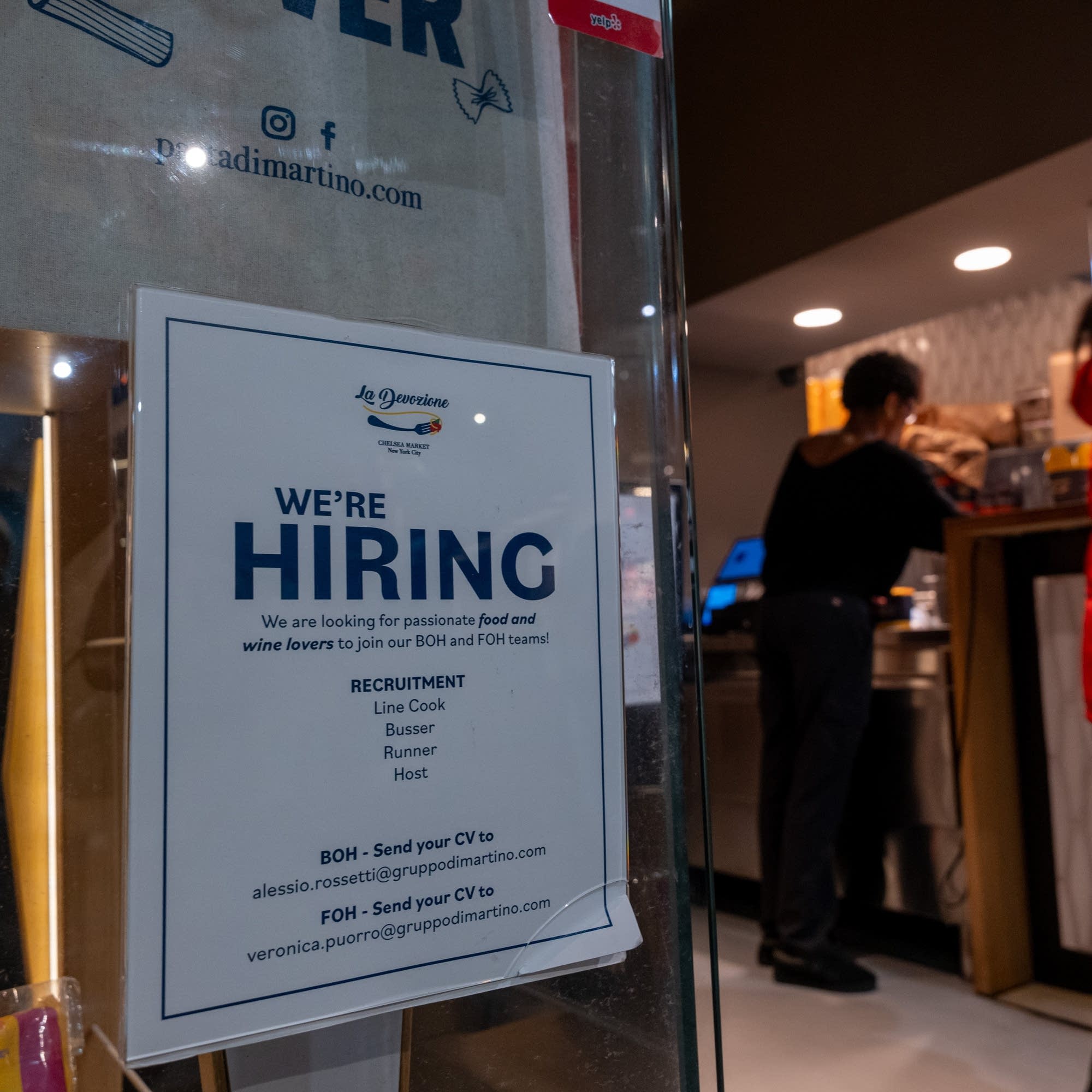
Fear of unemployment jumped 4.6 percentage points to 44% in March, according to a New York Fed survey. That’s the highest it’s been since April 2020. Expect the commercial real estate market to feel that same vibe. Companies concerned about a tariff-induced recession may make cuts or stick with Zoom instead of leasing new office space, experts told us. Also: Uncertainty is driving up junk bond yields, foreign investors may be pulling back on U.S. markets, and we talk to a small-business executive in “survival mode” over tariffs.
Press play and read along
Transcript
Speaker 1 This podcast is supported by Odoo. Some say Odoo business management software is like fertilizer for businesses because the simple, efficient software promotes growth.
Speaker 1 Others say Odoo is like a magic beanstalk because it scales with you and is magically affordable.
Speaker 1 And some describe Odoo's programs for manufacturing, accounting, and more as building blocks for creating a custom software suite. So Odo is fertilizer, magic beanstock building blocks for business.
Speaker 1
Odoo, exactly what businesses need. Sign up at odoo.com.
That's odoo.com.
Speaker 4 This marketplace podcast is supported by Wealth Enhancement, who ask, Do you have a blueprint for your money?
Speaker 4 Wealth Enhancement can help you build the right blueprint for investing, retirement, tax, and more.
Speaker 4 With offices nationwide, there's an advisor who's ready to listen and craft a blueprint for your future. Find out more at wealthenhancement.com/slash build.
Speaker 2 So, the good news is that at least we're not going to be talking about tariffs in every story today.
Speaker 2 From American public media, this is Marketplace.
Speaker 2
In Los Angeles, I'm Kyle Rizdahl. It is Monday today, the 14th of April.
Good as always. Have you long, everybody?
Speaker 2 The way the global economy works, and I'm talking biggest of big pictures here, is that countries buy and sell stuff to and from other countries.
Speaker 2 Goods and services, yes, but also stocks and sovereign debt, that is government bonds, U.S. Treasury bonds in our case, corporate bonds as well.
Speaker 2 But there is a growing pile of evidence post-the tariffs that the rest of the world is slightly not as interested in sending its money here anymore.
Speaker 2 Marketplaces rebenish or explains why, if that gets too much worse, we could have a problem on our hands.
Speaker 5
The U.S. might buy a lot of goods from the world, but the world puts a staggering amount of money right back as investment.
You can measure its size by comparing it to the entire U.S. economy.
Speaker 6
Total foreign holdings of U.S. assets, bonds, equities, everything else are like 60, 70% of U.S.
GDP.
Speaker 5 Brad Setzer is a senior fellow at the Council on Foreign Relations.
Speaker 5 Foreigners own 30% of treasuries, 30% of corporate debt, and 20% of the entire stock market, according to calculations by Apollo Global Management.
Speaker 5 It's mostly private investors looking to make money, says Setzer, and they are rethinking.
Speaker 6
When all U.S. assets are going down, that does suggest that foreign investors are re-evaluating their U.S.
exposure.
Speaker 5 A Morgan Stanley analysis found foreign investors have been gradually reducing their exposure to the U.S. stock market since the beginning of the year, but they seemed to be staying in bonds.
Speaker 5 That might have just changed slightly, says Andrew Caroly, Dean of Cornell's College of Business.
Speaker 7 There are a number of industry reports suggesting that there have been some outflows over the last week or so, most notably in the area of U.S. treasuries and some of our high-yield bond funds.
Speaker 5 The change represents just a tiny fraction of total foreign investment so far, Carole says. Mark Williams is chief Asia Economist at Capital Economics.
Speaker 5 He says there is fear abroad that the current administration is overturning the U.S. economy.
Speaker 9 A lot of global investors look at that and think, well, why would you you do that? If you want to overturn things, then maybe we don't want to be quite so exposed to U.S.
Speaker 9 markets as we were in the past.
Speaker 5
That would become a problem if enough foreign investors backed out of bonds in particular. Less demand for bonds forces interest rates up.
Again, Brad Setzer.
Speaker 6 If interest rates on, say, treasuries and 30-year treasuries go up, that means it's going to cost more for companies to borrow. It means mortgages are going to cost more.
Speaker 5 That is the last thing you want, he says, if the economy economy is already slowing down. In New York, I'm Sabri Benishore for Marketplace.
Speaker 2 Wall Street today, no news of tariffs is, it seems, good news.
Speaker 2 We'll have the details when we do the numbers.
Speaker 2
Consumers are confused by this whole tariff, Michigan. Analysts are bewildered.
Economists are simply stunned, not the ideal state of affairs.
Speaker 2 It's worse, though, for small businesses who are captive to the president's policies, even as they're trying to run their companies. Todd Adams has been on the program a couple of times.
Speaker 2
He owns Sanitube. That's a company that makes stainless steel tubing for the food industry.
Todd, it's good to have you back on.
Speaker 11 Thank you for having me.
Speaker 2 Last we heard from you, which I just looked it up, was the 12th of March, which is obviously before the tariff
Speaker 2
stuff has been going on. And you were, I mean, you were deeply upset back then.
And I guess I wonder how you're feeling now, man.
Speaker 11 Yeah, well, you know, a lot of what we were sort of discussing, you know, that might occur has occurred.
Speaker 11 Fortunately, you know, in my industry, the steel industry, we're in a separate, as the administration calls it, a separate bucket. So we're not subject to these escalating reciprocal tariffs.
Speaker 11 However, some products that
Speaker 11 we have manufactured abroad, such as
Speaker 11 it's an ancillary product like gaskets, they are subject to the reciprocal tariffs.
Speaker 11 But interestingly enough, with everything going on, we've tried to refocus some of our manufacturing or refocus to some more manufacturing here in Florida. And
Speaker 11
we're in the process of buying materials for manufacturing. Those have to be imported.
And the price of those materials has skyrocketed. So there's no way around it.
Speaker 11 We're going to be looking at a much higher end cost of our products going forward.
Speaker 2 And also, by the way, you're going to have to have some cash to pay for those imported products, right? So you've got a cash flow problem now, too.
Speaker 11
Absolutely. And that's my biggest concern right now.
We're being very conservative in what we order from overseas, whether it's finished product or
Speaker 11 raw materials for manufacturing, because we don't know what our landed cost is going to be. And it seems to change on a daily basis.
Speaker 2 How does chaos as a business model strike you then, Todd? It seems challenging.
Speaker 11
It is challenging. And it's just forced us to sort of dig ourselves into a trench.
And we're not focused on growth initiatives. or other exciting things we had planned for this year.
Speaker 11 We're in sort of a survival mode where we're hoarding cash and
Speaker 11 prepared for the worst.
Speaker 2 So I heard you talking to Nick, the producer of this segment, before I actually jumped on the line, and I won't name any names here, but you're going to a food industry trade show
Speaker 2 thing in the next day or two. What is your message to your customers going to be?
Speaker 11
Our message to our customers is that we are trying to have as much material on hand as possible. We're trying to manage our costs, but there will be increases.
I think the two
Speaker 11 major threats that we're facing are
Speaker 11 much higher costs and
Speaker 11
availability of materials. Those are the two factors.
So I know some of our competitors have cut back on
Speaker 11 their purchasing, and I don't blame them for that, but that could lead to a shortage down the road. And that may very well still occur.
Speaker 2 As you sort of alluded to earlier, tariff policy changes on a dime.
Speaker 2 This weekend, the president came out, I guess it was Friday, Friday, came out with exceptions for
Speaker 2 cell phones and electronics. And then there's news coming on semiconductors, which is not you.
Speaker 2 But the bigger question is, do you have any hope of getting any exclusions or exemptions for the products you need?
Speaker 11 Well, I am hopeful that, you know, common sense will prevail.
Speaker 11 I mean, we're providing an essential industry, the food manufacturing industry, but I really hate to say that any industry is not essential. It exists because there is a need for it.
Speaker 11
Now, we saw in the first administration, you know, there were some exemptions that were granted for specific companies. And I really don't want to go down that road again.
It was very unfair.
Speaker 11 It was somewhat political. It was somewhat random as to who got the exemptions.
Speaker 11 And there was already, I saw an article last week, there was some talk about possibly extending exemptions for specific companies, not industries, but companies.
Speaker 11 And that's obviously going to go to, you know, friends and family, so to speak. And who's going to get left paying the bill? Small business.
Speaker 11 And I feel the overarching theme to all of this is: small business is really getting killed. We're the ones bearing the brunt of this trade war.
Speaker 2 I appreciate the delicacy of this question, so I'll let you dodge it, I suppose, if you feel like it.
Speaker 3 But
Speaker 2 how long can you keep going if this all continues to be the case?
Speaker 3 Well, we can keep going
Speaker 11 as long as the market can bear the the price increases that we'll have to pass on.
Speaker 11 We have positioned ourselves in a way such that we have enough cash available to bring in all the material we have on order.
Speaker 11 Now, if tariffs were just to escalate to some level that's unheard of, which arguably we're already there,
Speaker 11
you know, at some point we would break. But I think the entire economy would break before we would break.
And we saw that when there was that 90-day pause instituted last week.
Speaker 2 Todd Adams, Santa Tube is his company. It's stainless steel tubes, valves, and fittings.
Speaker 2 Todd, thanks a lot. I appreciate your time.
Speaker 11 Thank you for having me, Kai.
Speaker 2 Heading into this year, moving toward and then past the five-year mark of the pandemic, it looked like the office real estate market was maybe finally kind of sort of turning a corner.
Speaker 2 According to the commercial real estate brokerage CBRE,
Speaker 2 in the last three months of 2024, office leasing was up 23% over a year earlier, which makes sense when you remember that companies like Amazon and JPMorgan Chase were making people come back to the office.
Speaker 2 And then came the tariffs, and uncertainty is hitting the office real estate market once again. Marketplace Matt Levin has this one.
Speaker 12 If you broke down and snuck a look at your 401k sometime over the past couple weeks, don't worry, I did too. You may be naturally rethinking your spending decisions for the rest of the year.
Speaker 12 Like maybe now's not the right time for that patio expansion with a pizza oven. Well, when it comes to renting new office space, corporations are just like you and me.
Speaker 13 It's difficult to make an argument for why companies might lease space right now.
Speaker 12 Ermengarde Jabber is director of economic research at Moody's. She says with the whiff of possible tariff-induced recession in the air, companies aren't sure how many employees they'll need.
Speaker 13 If a recession does come, then companies make cuts. And so that, of course, will be another factor in the amount of office space that companies will require.
Speaker 12 And in the meantime, corporations might just stick with Zoom. Lonnie Hendry is at the real estate analytics company TRAP.
Speaker 12 He says tariffs are also making it more expensive for landlords to upgrade their properties and compete with working from home.
Speaker 14 We've heard a lot of talk around the tariffs being imposed on aluminum metals, lumber, et cetera.
Speaker 14 So if you're an office owner and you're having to spend a lot of additional money to build out space, that puts downward pressure on demand side.
Speaker 12 Henry says higher-end trophy properties, the big skyscrapers that already have the golf simulators and fancy gyms next to the conference rooms, they'll be okay.
Speaker 12 But your lower tier, less fancy Class B offices?
Speaker 14 Unfortunately, I think that's the space that probably gets most impacted right now.
Speaker 12 He says the office market is by no means crumbling, but we'll have to wait a few months to see how much damage all this uncertainty has caused. I'm Matt Levin for Marketplace.
Speaker 2 The farther into the Trump administration's tariff regime that we get, the more insights we are getting into how consumers are feeling about things.
Speaker 4 TLDR?
Speaker 2 Not all that great. The regular survey of consumer expectations from the New York Fed was out today, and it showed consumers are especially concerned about the job market.
Speaker 2 Mean unemployment expectations, basically whether people think unemployment is going to be higher a year from now, they jumped to their highest reading since another time when uncertainty was the watchword, April of 2020.
Speaker 2 Marketplace's Elizabeth Troval has more on what we can learn from U.S. consumers.
Speaker 15
After years of a resilient labor market, this new survey data shows U.S. consumers are starting to feel shaky.
Ali Bustamante is with the Roosevelt Institute.
Speaker 17 They're feeling very insecure right now economically, and so they feel that they're at greater risk at losing a job in the near future.
Speaker 15 Shifts in economic policy are driving that insecurity, says Greg Wright with UC Merced. That feeling isn't caused by any one tariff, but rather the onslaught of tariff policy changes.
Speaker 16 A lot of companies are probably at this point just taking a kind of wait and see attitude.
Speaker 18 And a wait and see attitude is kind of a, you know, a slow growth attitude. I think that level of uncertainty is basically just poison for businesses and households.
Speaker 15 That's Josh Bivens with the Economic Policy Institute, who says everyone is trying to figure out how to spend their money over the next year.
Speaker 18 If you're going to build a new factory or expand your business, you really need to know what the various tariff levels are like in different countries.
Speaker 18 And so until you have clarity on that, you're not going to do a lot of investment.
Speaker 15 That uncertainty is seeping into consumer expectations, which can become something of a self-fulfilling prophecy, says Luke Pardue with the Aspen Economic Strategy Group.
Speaker 10 When consumers are confident about their ability to have a job a year from now, they'll spend money. And then that creates the dynamics that allow for jobs growth.
Speaker 15 But when consumers are not confident and start pulling back, that drags down the economy and creates either a slowdown or a recession.
Speaker 15 In other words, where consumers think we're going helps pave the road to where we end up. I'm Elizabeth Troval for Marketplace.
Speaker 2 Coming up.
Speaker 19 They did not like these nuns and priests and ministers and rabbis showing up at annual meetings.
Speaker 2 The religious roots of sustainable investing. But first,
Speaker 2 sure, why not?
Speaker 3 Let's do the numbers.
Speaker 2
Town Industrial is up 312 points today. 8 tenths percent finished at 40,524.
Did the blue chips? The NASDAQ added 107 points, 2/3 1%,
Speaker 2
16,831. The SP 542 points to the good, 8 tenths percent, 54 and 5.
There,
Speaker 2 President Trump says now he might be giving automakers a tariff reprieve. He told reporters at the White House this morning that he was considering temporary exemptions for car makers.
Speaker 2 He said they will need time before they can manufacture parts in the United States.
Speaker 2 Yeah,
Speaker 2
Ford accelerated 4.10% today. I mean, come on.
General Motors sped up 3.5%. Tesla, should you be curious?
Speaker 2
Basically unchanged. Bond prices rose, yield on the 10-year T-Note fell 4.39er%.
You're listening to Marketplace.
Speaker 3 Now's the time to start your next adventure behind the wheel of an exciting new Toyota hybrid.
Speaker 3 With the largest lineup of hybrid, plug-in, hybrid, and electrified vehicles to choose from, Toyota has the one for you.
Speaker 3 Every new Toyota hybrid comes with Toyota Care, two-year complementary scheduled maintenance, an exclusive hybrid battery warranty, and Toyota's legendary quality and reliability.
Speaker 3
Visit your local Toyota dealer today, Toyota. let's go places.
See your local Toyota dealer for hybrid battery warranty details.
Speaker 20 New markdowns are on at your Nordstrom Rack store. Save even more, up to 70%, on dresses, tops, boots, and handbags to give and get.
Speaker 19 Because I always find something amazing.
Speaker 21 Just so many good brands.
Speaker 22 I get an extra 5% off with my Nordstrom credit card. Total Queen Treatment.
Speaker 20
Join the Nordy Club at Nordstrom Rack to unlock our best deals. Big gifts, big perks.
That's why you rack.
Speaker 24
There's a reason pork is the world's favorite meat. Pork brings the flavor.
Don't believe me? Where would breakfast be without sizzly crispy bacon?
Speaker 24 Why have pizza without the subtle spice of a pepperoni? Can you even say you barbecued without making ribs? If pork is on the menu, now you're cooking with flavor.
Speaker 24 So sear chops, shred shoulder, bake tenderloin, and discover all the incredible flavors in every bite of pork.
Speaker 4 What are you waiting for?
Speaker 24 Taste what pork can do. This message was brought to you by America's pig farmers.
Speaker 21 Is it time to reimagine your future? The right business skills may make a difference in your career.
Speaker 21 At Capella University, we offer a relevant education that's designed to focus on what you need to know in the business world.
Speaker 21 We'll teach professional skills to help you pursue your goals, like business management, strategic planning, and effective communication. And you can apply these skills right away.
Speaker 21 A different future is closer than you think with Capella University. Learn more at capella.edu.
Speaker 2
This is Marketplace. I'm Kai Rizdahl.
Sabri got us started today talking about net outflows from the United States.
Speaker 2 In the face of the chaos in this economy right now, people and companies and other countries are simply choosing not to spend their money here.
Speaker 2 They're selling stocks, they're selling the dollar, and they are selling government bonds.
Speaker 2 And the corporate bond market, where companies turn when they need capital, has gone quiet. One slice of that corporate bond market in particular is making investors especially nervous.
Speaker 2 High-yield corporate debt, junk bonds in the vernacular. Marketplace Adjustin Ho has more now on what's been going on there.
Speaker 25 All kinds of companies issue bonds with high yields.
Speaker 26 High-yield companies can span utilities, consumer products.
Speaker 25 That's Randy Vogel at Wilmington Trust.
Speaker 26 You can have high-yield technology, high-yield cable and media, industrial companies, manufacturing companies.
Speaker 25
Vogel says what these companies have in common is that they tend to carry large amounts of debt on their balance sheet. They're also more likely to stick to a narrow line of business.
And so?
Speaker 26 They're either more cyclical or just more vulnerable to any weakness in their business.
Speaker 25 That's why when these companies borrow money, investors demand higher interest rates because of the risk that the companies might default if business takes a turn for the worse or the economy does.
Speaker 25 Chuck Tomes is with Manu Life Investment Management.
Speaker 27 It's going to be a more difficult environment if economic growth is moving downward or you're in an environment where there's a higher probability of recession.
Speaker 25 Sound familiar? In the last few weeks, investors have been nervous about risky assets, including stocks and corporate bonds, especially high-yield bonds.
Speaker 25 Tome says investors have been demanding to be paid even more interest.
Speaker 27 That's the market pricing and a higher probability of default.
Speaker 25 But remember, these companies were already paying high interest rates.
Speaker 28 So if high yields get even higher, it has the risk of becoming something of a vicious cycle.
Speaker 25 That's John Canavan at Oxford Economics.
Speaker 28 If you're looking at a company that you think might have trouble paying back its debt in the future, asking or creating even higher yields for the debt that they have certainly is just going to worsen their financial situation.
Speaker 25 Canavan says companies have alternatives if they need to borrow money. They can borrow from banks or the private credit market, meaning private equity firms and other asset managers.
Speaker 25 But that'll cost them.
Speaker 28 Even if they're able to move to private markets, that may allow them to borrow, but private markets are also going to demand notably higher yields.
Speaker 25 And so many companies are deciding to just sit on their hands right now, says Kelly Hsu at Yale.
Speaker 29 What we've seen in recent days and weeks is that very few companies are issuing new bonds.
Speaker 25 Thing is, many companies have to issue bonds to refinance the debt they already have.
Speaker 25 Shu says if companies wait too long, it might get even harder for them to borrow money, especially if there's a recession.
Speaker 29 What I worry about happening is something similar to our past financial crisis in 08, which is a lot of firms had trouble rolling over their debt because the credit market had collapsed.
Speaker 25 Shu says if companies really need to borrow money, paying today's high yields might not be such a bad idea. I'm Justin Howe for Marketplace.
Speaker 2 ESG, shorthand for Environmental, Social, and Governance Investing. Five years ago, it was all the rage on Wall Street, and the basic idea is pretty simple.
Speaker 2 Companies that manage the risks and the opportunities that societal issues present, think climate change, are going to perform better in the long term.
Speaker 2 Going to perform better there should be understood to mean make more money. But there's been a backlash against ESG the past couple of years.
Speaker 2 That's the subject of the new season of our climate podcast, How We Survive. Marketplace's Amy Scott investigates the rise, the fall, and the reincarnation of climate-conscious investing.
Speaker 30 Long before ESG was a concept adopted by Wall Street, there were smaller investors weighing environmental and social issues, religious investors like Sister Pat Daly, a Dominican nun from Caldwell, New Jersey, who won the hearts of many while striking the fear of God in corporate executives.
Speaker 19 We were not at all welcome. They did not like these nuns and priests and ministers and rabbis showing up at annual meetings.
Speaker 30 That's Sister Pat in 2014 accepting an award for her work in sustainable investing.
Speaker 19 Today, I'm honored to call so many of my colleagues and corporations true friends and partners in this.
Speaker 30 Sister Pat died in 2022, but for decades, she was the executive director of the Tri-State Coalition for Responsible Investment, a group of religious orders that leveraged their collective shareholder power to push companies to make social and environmental changes, including huge corporations like GE, Ford, and ExxonMobil.
Speaker 30 Sister Pat was a force. Her former colleagues talk about her ability to form meaningful relationships with the very people she butted heads with in the boardroom.
Speaker 31 Sister Pat would show up to deaths and births and marriages, and she would oversee, I mean, of companies that she fought for 20 or 30 years.
Speaker 30 Tracy Rembert is on the climate and environmental justice team at the Interfaith Center on Corporate Responsibility, a coalition of faith-based and other socially conscious investors.
Speaker 30 Today, its members collectively own or manage more than $4 trillion in assets. Tracy worked with Sister Pat on several initiatives.
Speaker 31 She was friends with some folks inside those companies. I mean,
Speaker 31 Bill Ford Jr.
Speaker 30 at Ford.
Speaker 31 She could just dial him straight up on her cell phone if she wanted.
Speaker 30 In 1999, that relationship helped her persuade Ford to leave the ironically named Global Climate Coalition, a lobbying group which actively opposed efforts to reduce greenhouse gas emissions.
Speaker 31 She just went head-to-head with so many powerful CEOs.
Speaker 31 You were literally in an auditorium looking at a David and Goliath scene, where it is one person up at a microphone talking to like huge sources of power in in the United States and saying,
Speaker 31 this isn't good enough.
Speaker 30 One of those David and Goliath moments came in May 2000 at the first shareholder meeting of the newly merged ExxonMobil Corporation.
Speaker 30 A group of religious investors, with support from Sister Pat, filed a resolution calling on the company to reduce its reliance on fossil fuels and promote renewable energy sources.
Speaker 8 Pat Daly's not a tree hugger. She's a shareholder and a nun who represents clergy-based pension funds.
Speaker 30 A CBS reporter interviewed Sister Pat at the time.
Speaker 8 Is ExxonMobil any different on the issue of global warming than any other of the big oil companies?
Speaker 19 They're incredibly different. They have absolutely isolated themselves on this.
Speaker 30 Turns out, Exxon's own scientists had known about the dangers of climate change since the 70s, but publicly, the company continued to sow doubt.
Speaker 30 Exxon shareholders rejected that proposal 25 years ago, but Pat and other faith-based and socially conscious investors persisted. And as the scientific consensus grew, they attracted more support.
Speaker 30 Here's Sister Pat in an interview from 2016.
Speaker 19 I think the legacy is that we really have started the ESG
Speaker 19 movement, the environmental, social, and governance movement in
Speaker 19 the United States. And we've set it in play and
Speaker 19 it's taking off.
Speaker 30 And it didn't take long for Wall Street to start caring about these issues too, though for a very different reason, the bottom line. I'm Amy Scott for Marketplace.
Speaker 2 Amy and Crew explain how the ESG movement went mainstream and then became a political punching bag in their new season, How We Survive Wherever You Get Your Podcasts.
Speaker 2 This final note on the way out today: I just want to get back to Sabri's piece that we started with up at the top of the program: net outflows from this economy.
Speaker 2
The rest of the world, as he told you, isn't buying stocks and bonds and stuff. They're also not buying the U.S.
dollar. On Inauguration Day, it would have cost you $1.04
Speaker 2 to buy one Euro, $1.04 to buy one Euro. Today, a buck 13.
Speaker 2 Our daily production team includes Andy Corbin, Nicholas Guillong, Maria Hollenhorst, Iro Ekbinobi, Sarah Leeson, Sean McHenry, and Sophia Terenzio. I'm Kai Risdahl.
Speaker 2 We will see you tomorrow, everybody.
Speaker 2 This is 8 p.m.
Speaker 23 Ever see an idea so clearly in your head but struggle to find the time to get it all done? Wix helps you go from, eh, I'll get to it, to done.
Speaker 22 Build a full site just by describing your idea.
Speaker 22 Let an AI agent handle daily tasks, plan your next marketing campaign, or help out customers so you can grow your business the way you want without it taking over your life. Try it out at Wix.com.