More labor market blues
Business owners aren’t too optimistic about the labor market, according to an NFIB survey. About a third are struggling to fill an open position, and around a quarter said labor quality was their most pressing issue. In this episode, we scrape together a picture of today’s labor market, sans government data. Plus: Cities issue bonds at a record pace, we explain the consequences of Trump’s proposal to back 50-year mortgages and one report shows real wage growth has slowed to 2%.
Every story has an economic angle. Want some in your inbox? Subscribe to our daily or weekly newsletter.
Marketplace is more than a radio show. Check out our original reporting and financial literacy content at marketplace.org — and consider making an investment in our future.
Press play and read along
Transcript
Speaker 1 This podcast is supported by Odoo. Some say Odoo business management software is like fertilizer for businesses because the simple, efficient software promotes growth.
Speaker 1 Others say Odoo is like a magic beanstalk because it scales with you and is magically affordable.
Speaker 1 And some describe Odoo's programs for manufacturing, accounting, and more as building blocks for creating a custom software suite.
Speaker 2 So Odoo is fertilizer, magic beanstock building blocks for business.
Speaker 1
Odoo, exactly what businesses need. Sign up at odoo.com.
That's odoo.com.
Speaker 6 Introducing your new Dell PC with the Intel Core Ultra Processor. It helps you handle a lot, even when your holiday to-do list gets to be a lot.
Speaker 6 Like organizing your holiday shopping and searching for great holiday deals and customer questions and customers requesting custom things, plus planning the perfect holiday dinner for vegans, vegetarians, pescatarians, and Uncle Mike's carnivore diet.
Speaker 6 Luckily, you can get a PC with all-day battery life to help you get it all done. That's the power of a Dell PC with Intel inside, backed by Dell's Price Match Guarantee.
Speaker 6
Get yours today at dell.com/slash holiday. Terms and conditions apply.
See Dell.com for details. details.
Speaker 3
We'll do some labor market. We'll do some bond market.
And then we're going to talk condiments
Speaker 3 from American public media. This is Marketplace.
Speaker 3
I'm Kai Rizdal. It is Tuesday, today, the 11th of November.
Good as always to have you along, everybody.
Speaker 3 If If we are lucky, and believe you me, we are as ready as you are not to be talking about private data anymore. But if we're lucky, this will be the last week or so we're going to have to do that.
Speaker 3 Today's installment comes to us in the form of the National Federation of Independent Businesses Small Business Optimism Index, down just a hair in October, though still more optimistic than not.
Speaker 3
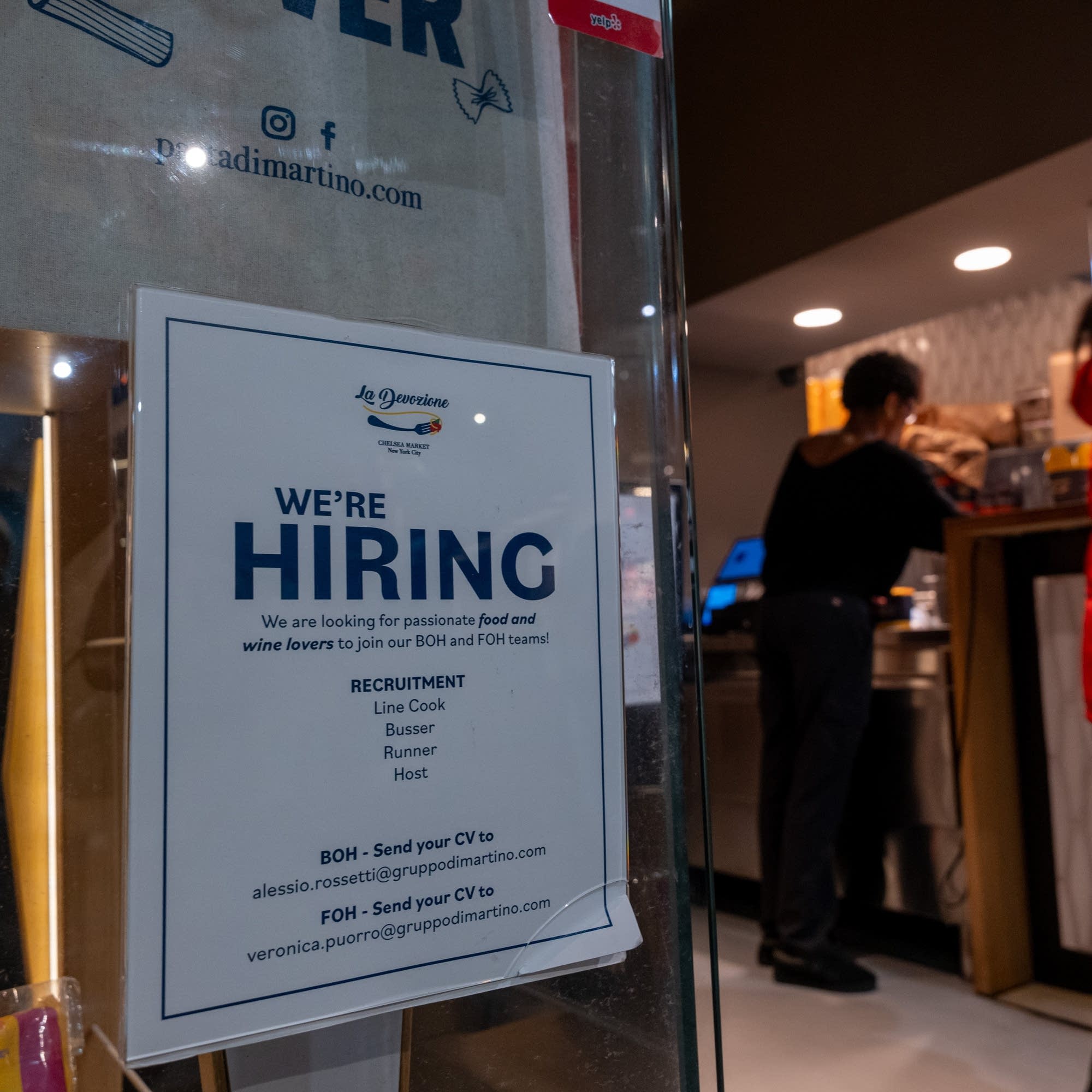
Dig down a bit, though, and there are some cracks. 32% of small business owners say they've got jobs they cannot fill.
27%
Speaker 3
said labor quality is their single most important problem. The highest that's been since right about now, back in 2021.
Marketplace's Kristen Schwab gets us going.
Speaker 8 Of all the things on business owners' to-do lists, hiring is not usually anyone's favorite, says Aaron Sojourner at the W.E. Upjohn Institute for Employment Research.
Speaker 9 Employers, especially small business employers, are perennially upset about their struggles to attract talent.
Speaker 8 It's partly because the smaller the business, the more intimately the business owner feels the frustrations that come with hiring. Also, the smaller the business, the harder it is to hire, period.
Speaker 9 You know, they're competing against larger employers who have bigger scale, more benefits.
Speaker 8 And higher pay. And the kind of security bigger businesses can offer may be more attractive than usual to job seekers now because of all the layoff buzz that's been happening.
Speaker 8 Holly Wade runs the research center at NFIB.
Speaker 11 It's a bit of a pretzel because you have two sides of the labor market that are kind of pushing in the same direction.
Speaker 8 One side is companies, which aren't doing a lot of hiring. The other is prospective workers who know companies aren't doing a lot of hiring.
Speaker 8 So if they already have a job, they're less likely to be looking for a new one. And all of this makes it harder for businesses to attract strong applicants.
Speaker 8 Industries that rely on immigrant workers are having a particularly hard time, like construction.
Speaker 11 We are also seeing some challenges in transportation, some service sector industries, and manufacturing.
Speaker 8 Sojourner at the Up John Institute stresses that this is just one report from one organization with a narrow set of survey respondents.
Speaker 8 But if you add in data from ADP and Indeed and regional Federal Reserve banks, they all point to basically weakening in the labor market.
Speaker 9 You know, slower job growth, a higher unemployment rate, you know, stagnant wages.
Speaker 8 And expectations among both firms and workers that it's going to get worse. I'm Kristen Schwab for Marketplace.
Speaker 3
Wall Street today, blue chips were up. The rest were kind of mixed.
We will have the details when we do the numbers.
Speaker 3 Hey, what are you doing 50 years from now?
Speaker 3 I ask because President Trump floated the idea of a half-century-long home loan this past weekend.
Speaker 3 50-year mortgages may or may not come to pass in part because, as Marketplace Supreme Benefit reports, the math on this idea doesn't really math.
Speaker 4
A 50-year mortgage would mean you get 20 more years to pay off the house. It also means you get 20 more years of paying off the house.
David Reese is a professor at Cornell Law School.
Speaker 13 The average age of a first-time homebuyer is now 40 years old.
Speaker 13 The notion that you'd finish paying off your mortgage at 90 is probably not something that most people contemplate when they want to buy a home.
Speaker 4
Still, in the short term, a 50-year mortgage would appear cheaper, slightly. Robert Bridges did the math.
He's associate professor emeritus at the Marshall School of Business.
Speaker 14 The payment on a 50-year mortgage, for instance, for a $200,000 loan at 6%
Speaker 14 would be about $1,052,
Speaker 14 where a 30-year loan would have a payment of $1,199.
Speaker 4
So that's a difference of $147 in that example. But it comes with costs to the borrowers as well.
For starters, the interest rate would be higher, says Cornell's Rees.
Speaker 13 You pay more for a 30-year mortgage than you do for a 15-year mortgage, so you will probably pay more for a 50-year mortgage than you would for a 30-year mortgage.
Speaker 4 According to the American Enterprise Institute, a 50-year mortgage would initially increase a homeowner's buying power by 8%.
Speaker 15 Over time, maybe months, maybe years, that would fade.
Speaker 4 Edward Pinto is a senior fellow at the American Enterprise Institute. Basically, if everyone's buying power goes up, so does the price of housing.
Speaker 4 And a longer mortgage also means it takes longer to build up equity.
Speaker 15 Then you're really left with not much advantage and you become really a renter with a mortgage.
Speaker 4 A longer loan, where it takes longer to build equity, also leaves homeowners more vulnerable to risks in the market if home prices stagnate, which Pinto predicts they will in coming years.
Speaker 15 This has been tried with 40-year loans before, and every time it's been tried in the United States, it's failed.
Speaker 4
Failed because they're too risky, he says. That's one reason we don't already have 50-year mortgages.
Again, Robert Bridges.
Speaker 14 It doesn't seem like this is really the remedy for the housing problem that we all know we have in this country.
Speaker 4 Which is first and foremost, he says, that we don't have enough of it. In New York, I'm Sabri Benishore for Marketplace.
Speaker 3 However long the term of a mortgage is, our ability to afford it depends a whole lot on how much we make. Data out from the J.P.
Speaker 3 Morgan Chase Institute not too long ago shows that growth in real incomes, that's incomes once you take inflation into account, is stuck at around 2% a year, just about as low as it's been in a decade.
Speaker 3 I would give you the latest government data here, but,
Speaker 3 well, you know. Here, though, is an observation from the Federal Reserve Bank of Philadelphia in the most recent Beige book.
Speaker 3 For some entry-level positions and some workers, the Philly Fed wrote, wage increases are no longer keeping pace with price increases, especially as firms adjust both workforces and prices in response to tariffs.
Speaker 3 Marketplace of Samantha Fields has more now on what that means in real life.
Speaker 12 If you walk into town center music in Suwannee, Georgia, Georgia, in the suburbs of Atlanta, you'll see all sorts of guitars hanging from the walls.
Speaker 12 And if you ask, you can probably get someone who works there to take one down and play it for you, or let you try one yourself.
Speaker 12 Aaron Brown has owned the shop which sells and repairs instruments and offers music lessons since 2012 and has worked there even longer.
Speaker 17 I have one guy that's been here for eight years and I've got another guy that's been here for 20 years.
Speaker 12 Which is why it kills him that he probably won't be able to give them pay increases this year like he usually does.
Speaker 17 Between the numbers that I'm seeing of money coming in and just the uncertainty of everything, I've just kind of told everybody to hang tight for this year.
Speaker 12 It's been a rough seven months for the business, mostly because of inflation and tariffs. Brown has had lots of inventory held up in ports and his suppliers have raised prices, so he has too.
Speaker 17 Due to tariff confusion and just tariffs in general, I lost out on what I calculate to be upwards of 15 grand in sales.
Speaker 12
He just doesn't feel like he has the money to give his staff raises this year. And he's also holding off on hiring a salesperson he needs.
The music is slowing across the economy.
Speaker 12 Hiring has been cooling for months. And now it's clear that wage growth is too for some workers more than others.
Speaker 18 Wages at, let's say, the bottom of the American economy are actually growing more slowly than wages in other parts of the economy.
Speaker 12 Andrew Stettner at the Century Foundation says that's a notable shift from the last few years coming out of the pandemic when wages were rising fastest for the lowest paid workers.
Speaker 18 Tail end of last year and really early this year, I think that's when you really kind of saw the labor market shifting.
Speaker 12 From one where companies couldn't hire fast enough and were raising wages to compete to one where there's very little hiring happening at all.
Speaker 18 In general, when there's more workers available, companies are going to feel less pressure to increase wages. And that's the moment we're in now.
Speaker 12 In that kind of environment, Elizabeth Jacobs at the Urban Institute says it's common for workers in the lowest paying jobs to be hit first.
Speaker 12 And folks who may be looking for work may be trying to figure out how to get a foot in the door and haven't been able to figure it out. Data from the J.P.
Speaker 12 Morgan Chase Institute shows wage growth is slowing the most for workers in their mid to late 20s. There are a lot of factors at play here, including immigration policy and artificial intelligence.
Speaker 12 But Jacobs says tariffs are the big one.
Speaker 12 We have good reason to to think that they will put a drag on the labor market that is not good for low-wage workers, fewer jobs, lower wages, vicious circle kind of situation.
Speaker 12 Tariffs put a lot of pressure on small businesses in particular, Jacob says, which tend to have more trouble absorbing higher costs. Small businesses are a huge part of the economy.
Speaker 12 They are a particularly big part of the economy that employs folks working for low wages. So all of the pressure that small businesses are feeling from tariffs, that is not good news.
Speaker 12 Aaron Brown is feeling it at Town Center Music in Georgia.
Speaker 17
I like to take care of my folks here. They work hard and I want them to take in some of the reward of that.
But right now, it's...
Speaker 17 I just don't know.
Speaker 12 He's not comfortable sharing how much he pays the people who work at the shop, but...
Speaker 17 No one's making a lot of money.
Speaker 12 Brown says he'd like to be able to pay them more, but because customers don't have the money right now, he doesn't either i'm samantha fields from marketplace
Speaker 3 got your mustard you got your ketchup Increasingly, though, you've also got your chili crisp, your avocado mayonnaise, your pickle ketchup, your steak sauces of various varieties.
Speaker 3 Our refrigerators overflow with sauces. According to the market research firm Mintel, the condiment market is now a $12 billion industry, up more than 50% in the past five years.
Speaker 3
Dina Schanker covers food for Bloomberg Business and Business Week. She wrote about the topic at hand just the other day.
Welcome to the program.
Speaker 10 Thanks so much for having me.
Speaker 3 So I mentioned that Mintel report on the growth in the sauce market.
Speaker 3 Why?
Speaker 10 Well, you know, I think there's a number of things going on. The first is that we're just a lot more adventurous in our eating than we were even just a few years ago.
Speaker 10 We also, in some ways, are more restrictive with our eating. So some people don't want any sugar and some people don't want any carbs.
Speaker 10 There's also cooking at home, which really jumped, of course, during COVID, but has stayed elevated
Speaker 10 from pre-COVID levels, particularly lately as people are going out to fewer restaurants because prices are so high. There are more ways than ever to buy your condiments as well.
Speaker 10 Things can just become viral hits online.
Speaker 3 Okay, the whole virality of condiments thing is not a sentence I thought I would ever utter, but there is a, there's, as with everything now, there is a social media part of this thing, right?
Speaker 3 You see a little thing on TikTok or whatever, and you're like, oh, yeah, I'm going to try that.
Speaker 10
Yeah, definitely. So one of the big ones was a Japanese barbecue sauce.
Also, like Fly By Jing is another condiment company.
Speaker 10 They released a limited edition chili crisp ketchup online and it sold out in 33 hours.
Speaker 3
I will say I fell for the whole fly-by-jing thing. I have since moved on, but it was a nice little taste sensation while I tried it.
Let me ask you this though.
Speaker 3 Fly-by-jing, relative newcomer, talk to me about the OGs, and I'm thinking Kraft Heinz here in particular. Where are they?
Speaker 10 Yes, so Kraft Heinz, of course, is one of the biggest food companies there is and
Speaker 10 really
Speaker 10
owes so much of their market cap to ketchup. They have gone well beyond just their regular ketchup.
They've added all natural ketchup with made with cane sugar instead of high fructose corn syrup.
Speaker 10 And they also have these mixing machines that they put in restaurants.
Speaker 10 They're called Heinz Remix and they come with just a whole bunch of bases, like the ketchup and the mustard and the mayo, et cetera.
Speaker 10
And then they also have enhancers like caramelized onion and smoky chipotle. And you can make more than 2,000 possible combinations.
And they use what consumers do to inform future products.
Speaker 10 And apparently, it was some of the insights from the remix machines that yielded Heinz mustard.
Speaker 3 Yeah, well, it's interesting you said it that way because there are like five, maybe eight A's in that thing.
Speaker 3 I thought that remix thing was so interesting because fundamentally it's a data play, right? They get consumers to do this and then they learn what consumers want.
Speaker 3 And then, as you said, they go to market with mustard.
Speaker 10
Yes, exactly. It's so smart.
To me, it's so American because nobody's being charged for using it, but nobody's getting like a royalty for coming up with the next big
Speaker 8 condiment either.
Speaker 3 It's amazing. It's, I mean, brilliant in so many ways.
Speaker 3 But are we, do you think, at peak sauce? Because as you point out in this piece,
Speaker 3 the rate of increase has slowed.
Speaker 10 You know, it's so funny because this was a conversation that I had with my editor several times
Speaker 19 about whether we were at peak sauce.
Speaker 10 And I think what we are is we are going to continue to see more sauces. I actually just saw Chipotle in their recent earnings said that 90%
Speaker 10 of Gen Z will go to a restaurant just for a new sauce. Seriously?
Speaker 10 And so people still love sauces, but I think that
Speaker 10 the growth is just not going to continue at the same rate.
Speaker 3 I will end this actually the way you ended the piece, which is we all of us have a zillion bottles of opened but unfinished sauces in our fridge, right? And
Speaker 3 the industry is banking on just adding one or two more, and we're all just going to do that, right?
Speaker 10 I mean, it can be really hard to resist.
Speaker 10 Sometimes I buy one, I don't even like it that much, but I can't even bring myself to like throw it away because, like, maybe it'll taste good on something else.
Speaker 19 I just have to find the right vector for it.
Speaker 3 Dina Shanker, she writes at Bloomberg Business Week. The piece is called Why America's Fridges, as we were just talking about, are overflowing in sauce.
Speaker 3 Dina, thanks a lot. I appreciate your time.
Speaker 10 Thank you.
Speaker 3 Coming up.
Speaker 20 Everyone I know watches with captions.
Speaker 3 Coming soon to a theater near you. First, though, let's do the numbers.
Speaker 3 Tow Industrial is up 559 today, 1.2%, 47,927. The NASDAQ slipped 58 points, about a quarter percent, 23,468.
Speaker 3 The S ⁇ P 500 gained 14 points, 2 tenths percent, 68, and 46.
Speaker 3
Sabri was talking about those 50-year mortgages, or maybe not. Loan Depot gained 3.2% today.
Bank of America increased 4 tenths of 1%.
Speaker 3 Paramount Skydance spiked 9.8% today after reporting earnings for the first time since the $8.4 billion merger of those two companies. Airlines, you know where this is going, right?
Speaker 3
They're warning that flight disruptions are going to continue even after the shutdown ends. Hello, Thanksgiving.
Delta Airlines down 1.4%. Today, United Airlines descended 1.25%.
Speaker 3 The bond market closed for Veterans Day. Today you're listening to Marketplace.
Speaker 16 This podcast is brought to you by Wise, the app for international people using money around the globe.
Speaker 16 With Wise, you can send, spend, and receive up to 40 currencies with only a few simple taps and save up to 55% compared to major banks.
Speaker 16 Whether you're buying souvenirs with pesos in Puerto Vallarta or sending Euros to a loved one in Paris, you know you're getting a fair exchange rate with no extra markups.
Speaker 16 That's what makes WISE the fast, affordable way to use your money around the globe.
Speaker 16 WISE offers 24-7 live support and runs over 7 million daily checks to catch and prevent fraud, so you know your money is where it's supposed to be. Be smart.
Speaker 16
Join the 15 million customers who choose WISE. Download the WISE app today or visit wise.com.
Learn more by visiting wise.com slash US slash compare. T's and C's apply.
Speaker 1 This podcast is supported by Odo. Some say Odo business management software is like fertilizer for businesses because the simple, efficient software promotes growth.
Speaker 1 Others say Odoo is like a magic beanstalk because it scales with you and is magically affordable.
Speaker 4 And some describe Odo's programs for manufacturing, accounting, and more as building blocks for creating a custom software suite.
Speaker 2 So Odoo is fertilizer, magic beanstock building blocks for business.
Speaker 1
Odo, exactly what businesses need. Sign up at odo.com.
That's odoo.com.
Speaker 5 This marketplace podcast is supported by Wealth Enhancement, who ask, Do you have a blueprint for your money?
Speaker 5 Wealth Enhancement can help you build the right blueprint for investing, retirement, tax, and more.
Speaker 5 With offices nationwide, there's an advisor who's ready to listen and craft a blueprint for your future. Find out more at wealthenhancement.com/slash build.
Speaker 16 Fifth Third Bank's commercial payments are fast and efficient. But they're not just fast and efficient, they're also powered by the latest in payments technology built to evolve with your business.
Speaker 16 Fifth Third Bank has the Big Bank Muscle to handle payments for businesses of any size, but they also have the FinTech Hustle that got them named one of America's most innovative companies by Fortune magazine.
Speaker 16 That's what being a Fifth Third Better is all about. It's not about being just one thing, but many things for our customers.
Speaker 16 Big Bank Muscle, FinTech Hustle, that's your commercial payments, a fifth-third better.
Speaker 3
This is Marketplace. I'm Kai Rizdahl.
Everybody borrows money. That's the way this economy works.
People borrow, those are called loans.
Speaker 3 Companies and governments and universities and some other nonprofits, they borrow as well. Those are called bonds.
Speaker 3 And this year, according to Bloomberg, the municipal bond market, that's states and cities along with some other government agencies, that's hit a record more than $500 billion worth of bonds issued.
Speaker 3 Marketplaces Henry App looks at what's driving all that muni debt.
Speaker 7 Michael Gawne leads the Vermont Bond Bank, which provides access to the bond market for small cities and towns in the state.
Speaker 7 He's working with pretty much the same number of communities this year, he says.
Speaker 22 What is different this year is that the project size is definitely larger, and that's a continuation of last year's trend.
Speaker 7 As in, the amount of money each community is looking to borrow is going up because costs of concrete and steel are going up.
Speaker 22 Higher costs now are driving the volume we're seeing.
Speaker 7 Higher costs and interest rates from a few years ago are also why we're seeing more bonds issued now, because a lot of communities put off projects as costs rose, says Abby Ertz at FHN Financial.
Speaker 23 So a lot of what we've seen, honestly, this past year and even in 2024 was just catch-up issuance.
Speaker 7 Municipalities are also finally issuing bonds for some projects partly funded by federal pandemic era aid.
Speaker 7 Some of that money during the Biden years went to projects that weren't, as developers say, shovel-ready. Justin Marlowe is director of the Center for Municipal Finance at the University of Chicago.
Speaker 21 And it took, in many cases, three, four, five years to do all of the background work to get to the point that you borrow money to actually begin the project construction process.
Speaker 7 Cities and states are finally doing the work and taking on the debt.
Speaker 7 And for now, they're in good financial shape to do so, thanks to stronger economic growth a few years ago, because rising incomes and higher property values take a while to translate into tax revenue, Marlowe says.
Speaker 21 I think what we're seeing, especially in 2025, is the comparatively very strong economy that we saw in 2023 and 24 finally appear on state-local government income statements and balance sheets.
Speaker 7
Making them feel a bit better about taking on new debt. But the feeling might not last if the economy takes a turn for the worse.
Plus, a lot of municipal bonds need to be approved by voters.
Speaker 7 Always a wild card. I'm Henry App for Marketplace.
Speaker 3 Not that it's necessarily any of my business, but when you sit down at home to watch something, TV, a movie, YouTube, whatever, are you captions on or are you captions off?
Speaker 3 Turns out, and this is from a new poll from the Associated Press, 40% of adults in this country under the age of 44 always watch at home with captions on.
Speaker 3
And now, theaters. are getting in on that trend.
WPLN's Justin Barney went to the movies.
Speaker 24 In the parking lot of the Belcourt Theater in Nashville, Tennessee, I caught Amelia Van Howe, who loves watching all movies with captions.
Speaker 20 I feel like COVID was maybe the time that I started watching everything with captions, and I think that that was just because I was living in a perpetual couch state.
Speaker 24 Once she started watching Netflix with the captions on, she just never turned them off.
Speaker 20 Everyone I know watches with captions, and maybe this is because I'm a millennial. But why not have it in theaters as well?
Speaker 24 The executive director at the Belcourt, Stephanie Silverman, decided to run open caption screenings for the many people who need them.
Speaker 25 One in seven Americans have hearing loss and other challenges, and that's the community that we're really trying to make sure has easy, open, accessible screenings available to them.
Speaker 24 It's part of a growing accessibility movement in theaters across the country. In 2021, AMC, the country's biggest movie theater chain, added open caption screenings to 240 theaters across the country.
Speaker 24
Since then, they've increased that number. Regal, the second largest chain, added screenings too.
And now, small independents like the Bell Court are dedicating entire days to open caption screenings.
Speaker 24
Film critic and professor Walter Chow says that there's a reason that captions are showing up everywhere these days. It's streaming.
And he pinpoints the change to ATT's takeover of HBO in 2018.
Speaker 26 Before, there was a standard from the Golden Age of Broadcasting where the volume of a piece was always grounded on dialogue being the loudest noise.
Speaker 24 But ATT changed the standard to ground the loudest sound in a movie.
Speaker 26 So all of a sudden, when you had a gunshot or an engine revving or a crash or an explosion, that became the upper register. So everything else was considerably quieter then.
Speaker 24 That is when so many people got in the habit of following along with the dialogue by reading the words on the screen. But Chow says that we kind of lose something by watching movies like this.
Speaker 26
I think maybe that is just making us a little bit lazy and a hold into a plot. I'm not sure every word is sacrosanct.
I think you actually lose more by having subtitles on that are not necessary.
Speaker 24 This captions on, captions off debate is even playing out at Open Captions Night at the Belcourt Theater.
Speaker 24 Trey Johnson and Holly Field, a couple in their early 20s, are about to watch one battle battle after another.
Speaker 1 So here's the thing.
Speaker 20 If it were just me in the theater,
Speaker 1 I would say no. Because I feel like it draws my eyes to the bottom of the screen.
Speaker 24 Standing in line for popcorn, they're a house divided.
Speaker 12 I wish I had subtitles in real life. I feel like I'm just
Speaker 12 prone to not paying attention if I'm not reading something, honestly.
Speaker 24 Soon, AI Transcription will make virtually every movie available for captions in the future.
Speaker 24 So whether you want to, need to, or see it against your will, everyone will be able to read lines like this from one battle after another on the screen.
Speaker 24 In Asheville, I'm Justin Barney for Marketplace.
Speaker 3 Just final note on the way out today: today, a glimpse of the holiday shopping season labor market yet to come. This is from Challenger Grain Christmas, saw it in the Wall Street Journal.
Speaker 3 That so far this year, big companies have announced plan to hire almost 375,000 seasonal workers, which sounds like a lot until I tell you this.
Speaker 3 Last year at that time, this time rather, that number was 660,000.
Speaker 3
Jordan Manji, Zonio Maharaj, Janet Wynne, Oga Oxman, Virginia K. Smith, and Tony Wagner are part of our digital team.
I'm Kai Rizdahl. We will see you tomorrow, everybody.
Speaker 3 This is APM.
Speaker 12 Imagine a future where chocolate and coffee are rare and expensive, where cheap nutritional staples like corn and wheat are threatened. Sounds unpleasant, doesn't it?
Speaker 12 Well, we could be heading there if we don't recognize that the climate crisis is also a food crisis.
Speaker 3 I've seen yields drop because of drought.
Speaker 3 And believe me, boy, have I seen them drop.
Speaker 25 We have had dry spells that have lasted years.
Speaker 12 I'm Amy Scott.
Speaker 12 This season on How We Survive, we investigate how the climate crisis is threatening our most vital food systems and how scientists are racing to develop alternatives that will shape the future of food.
Speaker 12 Listen to this season of How We Survive on your favorite podcast app.