Nvidia: Boom or bubble?
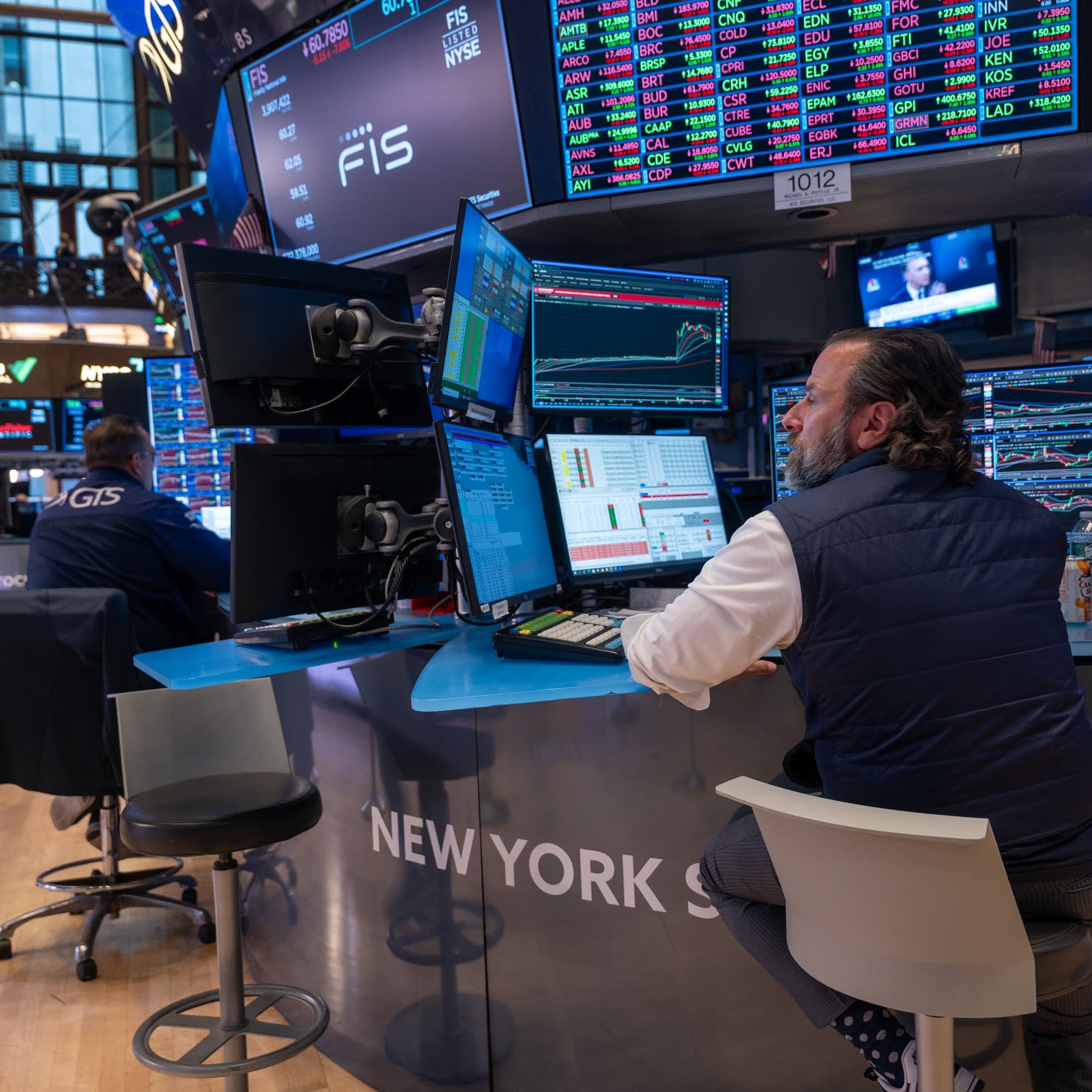
Nvidia's market valuation surged to $5 trillion Wednesday, breaking records. The chipmaker is on fire, and it’s using its glut of resources to invest in other tech firms that need those chips. But if companies are using Nvidia money to buy Nvidia chips … should investors fret about a bubble? Also in this episode: We unpack Trump’s trade agreements with Japan and South Korea, more families skip paid child care altogether, and the Fed cuts rates for the second time this year.
Every story has an economic angle. Want some in your inbox? Subscribe to our daily or weekly newsletter.
Marketplace is more than a radio show. Check out our original reporting and financial literacy content at marketplace.org — and consider making an investment in our future.
Press play and read along
Transcript
Speaker 1 This podcast is supported by Odoo. Some say Odoo business management software is like fertilizer for businesses because the simple, efficient software promotes growth.
Speaker 1 Others say Odoo is like a magic beanstalk because it scales with you and is magically affordable.
Speaker 1 And some describe Odoo's programs for manufacturing, accounting, and more as building blocks for creating a custom software suite. So Odoo is fertilizer, magic beanstock building blocks for business.
Speaker 1
Odoo, exactly what businesses need. Sign up at odoo.com.
That's odoo.com.
Speaker 3 Introducing your new Dell PC with the Intel Core Ultra Processor. It helps you handle a lot, even when your holiday to-do list gets to be a lot.
Speaker 3 Like organizing your holiday shopping and searching for great holiday deals and customer questions and customers requesting custom things, plus planning the perfect holiday dinner for vegans, vegetarians, pescatarians, and Uncle Mike's carnivore diet.
Speaker 3
Luckily, you can get a PC with all-day battery life to help you get it all done. That's the power of a Dell PC with Intel inside.
Backed by Dell's Price Match Guarantee.
Speaker 3
Get yours today at dell.com/slash holiday. Terms and conditions apply.
See Dell.com for details.
Speaker 2 We now return to our favorite game show, What is J-PAL Thinking?
Speaker 5 We have the situation where the risks are to the upside for inflation and to the downside for employment.
Speaker 2 From American public media, this is Marketplace.
Speaker 2
I'm Kai Rizdahl. It is Wednesday, today, October the 29th.
Good as always to have you along, everybody.
Speaker 2 The headline at a J-PALS press conference today, you know already, because it was, as market traders like to say, priced in.
Speaker 2 The price of money in this economy is just a touch cheaper now. The central bank's target range for the interest rate that it controls, which is called the federal funds rate, is now 3.75% to 4%.
Speaker 2 That is a half-percentage point cut in the past couple of months. But,
Speaker 2 and however, nothing with the Federal Reserve is ever simple.
Speaker 5 So
Speaker 5 the way we
Speaker 5 have been thinking, the way I've been thinking about it is
Speaker 5 the risks to the two goals.
Speaker 2 Remember, since their last meeting in September, Powell has been talking a lot about risk and how there is no risk-free path for managing this economy right now.
Speaker 5 For a very long time, the risk was clearly of higher inflation. And then that has changed now.
Speaker 2 Changed specifically by the labor market.
Speaker 5 And as we saw the, particularly after we saw, after the July meeting, we saw the downward revisions in job creation, we saw a very different picture of the labor market and suggested that there were higher downside risks to the labor market than we had thought.
Speaker 2 Again, risks.
Speaker 5 And that suggested that policy, which we had been holding at a, I would say, modestly, others people would say moderately restrictive level, needed to move more in the direction over time of neutral.
Speaker 2 The difference between modestly and moderately, by the way, I don't know.
Speaker 2 Anyway, remember the neutral rate is the sweet spot, an interest rate that's not holding the economy back, but also not giving it too much gas.
Speaker 5 If the two goals are sort of equally at risk, then you ought to be at neutral because one of them is calling for you to hike and one of them is calling for you to cut.
Speaker 2 So what I hear you ask happens next.
Speaker 2 Well, for the Fed, next comes in December, their meeting on the 9th and 10th, where in ordinary times, Powell would say something, something, something about wanting to see more data.
Speaker 2 These are not, however, normal times. As you know, see also the government shutdown.
Speaker 5 So in terms of how it might affect December, it's really hard to say. December's, you know, the meeting's like a six weeks away.
Speaker 5 We just don't know what we're going to get.
Speaker 5 If there is a very high level of uncertainty, then
Speaker 5 that could be an argument in favor of caution about moving. But we'll have to see how it unfolds.
Speaker 2
We will indeed. Traders today did not much care for what Chair Powell had to say.
They didn't hate it, but they didn't love it. We'll have the details when we do the numbers.
Speaker 2 There are, we are told, new trade agreements with Japan and South Korea.
Speaker 2 President Trump will give the two countries special breaks on his tariffs in return for them making hundreds of billions of dollars of investment in projects here in the United States.
Speaker 2 As with all things, though, it is in the details of how those investments are going to be made and who's going to decide where the money goes where things get interesting.
Speaker 2 Marketplace Supreme Benishore. How's that?
Speaker 6 South Korea would invest $350 billion.
Speaker 6 Japan would invest $550 billion. The Japanese agreement is the more fleshed out of the two.
Speaker 2 The U.S.
Speaker 6 has already listed the kinds of places it wants that money to go.
Speaker 7 Strategic vital sectors.
Speaker 6 William Chu is a senior fellow at the Hudson Institute.
Speaker 7 Things like semiconductors, vertical minerals, shipbuilding, pharmaceuticals, AI infrastructure, energy.
Speaker 6 He says Japanese firms would be doing the investing using loans from Japanese government-affiliated banks. Japan maintains its side can refuse any project.
Speaker 6 The actual deciding will be done by the White House. Christy Govella is a senior advisor at the Center for Strategic and International Studies.
Speaker 8 There is an investment committee that consists of representatives from the U.S. government.
Speaker 6 It would be led by Secretary of Commerce Howard Lutnick. There would also be a group of Japanese advisors who offer their thoughts.
Speaker 8 And so between these committees, they will assess potential projects and come up with good candidates that will then be recommended to President Trump.
Speaker 8 And President Trump will have the ability to select them.
Speaker 6 This is not normally how private investment decisions are made.
Speaker 9 This is totally unprecedented.
Speaker 6 Gary Huffbauer is a senior fellow at the Peterson Institute for International Economics.
Speaker 9 It's a venture into state capitalism. You could say it's Chinese capitalism with American characteristics.
Speaker 6 He says historically, democracies that get involved in industry don't always decide productively.
Speaker 9 In a democratic country, the government is inclined to protect losers.
Speaker 6 That is, companies that maybe should not survive.
Speaker 6 The Biden administration did offer billions to largely competitive chip manufacturers, and various government agencies do routinely invest in startups, but rerouting private investment by Japanese multinationals that normally base their decisions on competitiveness is different, according to Matt Slaughter, Dean of Dartmouth's Tuck School of Business.
Speaker 10 If you start to constrain the business choices of these companies for whatever political or policy reasons, you run the risk of actually dampening the productivity and innovation that these companies bring to America.
Speaker 4 Whether this all works or not, we won't know for many years.
Speaker 6 In New York, I'm Sabri Benishore for Marketplace.
Speaker 2 The formula for market capitalization, how much the stock market thinks a company is worth, is share price times the number of shares outstanding.
Speaker 2 You do that math on the AI chip design company NVIDIA today,
Speaker 2 and by the close, the most valuable company on the planet had gotten a bit more valuable, 5.03 trillion with a T dollars.
Speaker 2 Obviously, the artificial intelligence boom is driving that, but NVIDIA is driving the AI boom itself too a little bit by making a slew of investments in other AI-related companies.
Speaker 2 This week, it was Nokia to the tune of a cool billion dollars. That deal-making has gotten markets excited, obviously, but it also has people muttering about a bubble.
Speaker 2 Marketplace's Megan McCarty-Carino has more on that one.
Speaker 11
NVIDIA has made dozens of investment deals just this year. $100 billion in OpenAI, $5 billion in Intel, and reportedly $2 billion in XAI.
It's funded cloud providers and AI application startups.
Speaker 12 They're all over the place.
Speaker 11 Analyst Stacey Rasgon at Bernstein Research says NVIDIA is making so much money, it basically just has piles of billions of dollars sitting around.
Speaker 12 So why not use that cash? to grow and support the ecosystem of users and applications and everything else to help ensure that there is a flywheel here, that there is like widespread adoption.
Speaker 12 I mean, like, it makes sense to me.
Speaker 11 He says NVIDIA is seeding a diverse customer base that ideally will keep buying chips. But that is what has some people concerned, says analyst Jay Goldberg at Seaport Research.
Speaker 13 The flip side of that is that it goes too far.
Speaker 11 Basically, that NVIDIA could end up creating kind of an artificial demand for its chips.
Speaker 13 Are you investing money now because you're just financing a deal like you're just a bank? Or are you getting these customers to buy stuff they wouldn't otherwise buy?
Speaker 11 If companies are buying NVIDIA chips with the money that NVIDIA gives them, but they don't have enough customers for their products or services, we could end up with a finance crunch, like what happened in the telecom crash of the late 90s, early 2000s, says Jeffrey Sonnenfeld, a management professor at Yale.
Speaker 14 The capacity was mushrooming, but the use wasn't. They got way ahead of it.
Speaker 11 The equipment companies were lending money to telecom startups to turn around and buy their products, an arrangement called vendor financing.
Speaker 14 So that it had an illusion of a surge, but it was really much more of a bubble.
Speaker 11 When it popped, dozens of companies went bankrupt, and the glut of fiber optic infrastructure took more than a decade to be utilized. I'm Megan McCarty-Carino for Marketplace.
Speaker 2 On the 18th of November, Merriam-Webster is going to publish the 12th edition of its iconic collegiate dictionary. It's their first new edition in more than 20 years.
Speaker 2 It features more than 5,000 new words and 1,000 new phrases and idioms, among other language-related developments.
Speaker 2 But here in the 21st century, the company whose business is language is staring down the barrel of artificial intelligence and large language models and the threats that they pose.
Speaker 2
Greg Barlows, the president of Merriam-Webster, welcome to the program. Good to have you on.
Good to be here. Would you do me a favor, and this is going to sound like a stupid question.
Speaker 2 Would you tell me what your company does, please?
Speaker 7 Sure. Merriam-Webster creates definitions.
Speaker 2 That's good. That's way less than five words, which is my go-to for CEOs when I ask them what they do.
Speaker 2 Here's the follow-up question.
Speaker 2 We are 20ish years into the internet and online life and nobody actually having a dictionary on their desk anymore. How are you running your business here in 2025?
Speaker 7
It's actually a little bit of a misconception. We actually sold about one and a half million dictionaries in the last year.
And the year before, we sold about one and a half million dictionaries.
Speaker 7
But your point is well taken. Of course, the print dictionary is a pretty small part of our business.
It's quite important to us, but the business is by far online.
Speaker 7 Just in the last 12 months, we had about 1.2 billion visits to merriamwebster.com. And that's really what our business is based on.
Speaker 2 Let me go back to the beginning for a second and ask you about your business and definitions.
Speaker 2 I wonder if a broader way to say that, and look, I'm not telling you what your job is, your job fundamentally is language, right? And language changes, and you are in that sweet spot.
Speaker 7 Absolutely. Definitions, synonyms, but also language
Speaker 7 as an industry, right? We have millions and millions, hundreds of millions of sessions to our website every year for people who are
Speaker 7 playing language-based games or word games or people who are reading our language-based newsletters and really people who are learning language through articles we publish.
Speaker 7 Things like why irregardless is actually a word.
Speaker 2 Wait, no, wait. Is it really? Yeah.
Speaker 7 Irregardless has been a word for decades. And it's actually a word for the same reason every word is a word, which is people use it.
Speaker 7
People think that Merriam-Webster prescribes definitions to people, but that's not what we do. We're a descriptive organization.
We chronicle language of how it's used.
Speaker 7 And if people use irregardless to mean regardless, millions and millions, if not hundreds of millions of times over decades and decades, well, our job is to make sure that it's chronicled in the books so everybody knows what everybody means.
Speaker 2 Are you a word and language guy from way back? Is this kind of the dream job for you?
Speaker 7
The answer is yes and no. It is absolutely a dream job of mine.
No, I did not have a language background. I came up through the business world.
Speaker 7 I worked at the Wall Street Journal for years on the business side, and then I spent a few years in private equity.
Speaker 7 And about 15 years ago, 2009, so a little bit longer, I joined Merriam-Webster and Britannica as our chief marketing officer, left the company, and about four years ago,
Speaker 7 after a bit of a stint without a president of Merriam-Webster, I reconnected with the management team and the owners, and I got back.
Speaker 3 And here you are.
Speaker 2 Here you are. Here I am.
Speaker 2 On the language thing, I do have to ask you about the current rage in language now, which is, of course, large language models and artificial intelligence.
Speaker 2 Where is that on the scale of monsters under your bed in terms of a threat to your business?
Speaker 7
It's something we think about. Absolutely.
AI can offer a lot to a lot of different companies, right? And it can offer us a lot as well. There's also a threat to lots of companies, right?
Speaker 7 Which is, you know, can AI replace my business? Now, the dictionary,
Speaker 7 it's not much of a threat. And the reason is
Speaker 7
AI is amazing. It's amazing in all sorts of ways, but we know it can't always be trusted.
And Merriam-Webster can be.
Speaker 7 And of course, when it comes to words and what they mean and how they're understood, a definition really needs to be perfect. And remember, AI tries to figure out what the definition is.
Speaker 7 Well, Merriam-Webster, we actually write the definition.
Speaker 2 We create it.
Speaker 7 We invent it. So it can't be wrong.
Speaker 15 And
Speaker 7 like you, like everyone, we all have that anxiety of writing a text where maybe the word is wrong, maybe it's spelt wrong. Am I using this one right? It's the right homonym.
Speaker 7 You really don't want to mess something up, especially when the answer is on merriam-webster.com. So it's not much of a threat to us, especially
Speaker 7 given all of our other business lines.
Speaker 2 So last thing, and then I'll let you go. In say 10-ish years, are you still going to be selling a million and a half dictionaries a year, do you think?
Speaker 7
Man, I hope so. Again, I hope so.
And that's coming from, and I mean this, it's coming from my heart. It's an insignificant portion of our revenue.
Absolutely.
Speaker 7
It's a very, very small amount, but people love the book. They like the feel of it.
They like browsing. They love the thumb notches.
And they love seeing it on their bookshelf.
Speaker 7 If you asked me 10 years ago, would I hope that we're still printing and selling a million and a half dictionaries 10 years later? I would have said, absolutely.
Speaker 7 I'm going to stick with that story now.
Speaker 2
I somewhere in my house have the dictionary my parents gave me when I graduated from high school. So I hear you.
I hear you. I think it's time to buy a new one.
Speaker 2 The new edition is coming out.
Speaker 7 It's the first edition in almost 20 years, and it's wonderful.
Speaker 2
I will go looking. I will go looking.
Greg Barlow, he's the president of Merriam-Webster. Mr.
Barlow, thanks for your time, sir. I appreciate it.
Speaker 7 Thank you.
Speaker 2 Coming up.
Speaker 16 So yeah, you know, my customers always end up becoming my friends.
Speaker 2 And that, gang, is how you get a discount. But first, let's do the numbers.
Speaker 2
Dow Industrial is off 73 points today, just shy of two-tenths of 1%, 47,632. The NASDAQ climbed 130 points, almost 6 tenths percent, 23,958.
The S ⁇ P 500, basically flat, 68,900 there.
Speaker 2 General Motors is laying off 1,700 workers at EV-related production locations in Michigan and Ohio. GM slowed 1% today.
Speaker 2 NVIDIA, as we talked about with Megan McCarty-Carino, the world's most valuable company, accumulated 3% today to get over that $5 trillion market cap.
Speaker 2 Boeing says it's not going to be able to deliver the first of its 777X jets until early 2027.
Speaker 2 Planemakers taking a $5 billion charge because of those delays. Boeing descended 4% and 4 tenths the day.
Speaker 2 The Kraft Heinz company slipped 4.5% after cutting its sales and profit forecasts for the year. The company said demand for its higher-priced snacks and pantry condiments is sluggish.
Speaker 2 Vita Coco reported that demand for its coconut water beverages is strong somehow because coconut water is gross. Also, better than expected quarterly results.
Speaker 2 Vita Coco bubbled up 7.2% the day you're listening to Marketplace.
Speaker 17 This podcast is brought to you by Wise, the app for international people using money around the globe.
Speaker 17 With Wise, you can send, spend, and receive up to 40 currencies with only a few simple taps and save up to 55% compared to major banks.
Speaker 17 Whether you're buying souvenirs with pesos in Puerto Vallarta or sending Euros to a loved one in Paris, you know you're getting a fair exchange rate with no extra markups.
Speaker 17 That's what makes Wise the fast, affordable way to use your money around the globe.
Speaker 17 WISE offers 24-7 live support and runs over 7 million daily checks to catch and prevent fraud, so you know your money is where it's supposed to be. Be smart.
Speaker 17
Join the 15 million customers who choose WISE. Download the WISE app today or visit Wise.com.
Learn more by visiting WISE.com/slash US slash compare. T's and C's apply.
Speaker 1 This podcast is supported by Odo. Some say ODU business management software is like fertilizer for businesses because the simple, efficient software promotes growth.
Speaker 1 Others say Odoo is like a magic beanstalk because it scales with you and is magically affordable.
Speaker 1 And some describe Odoo's programs for manufacturing, accounting, and more as building blocks for creating a custom software suite. So Odo is fertilizer, magic beanstock building blocks for business.
Speaker 1
Odoo, exactly what businesses need. Sign up at odo.com.
That's odoo.com.
Speaker 4 This marketplace podcast is supported by Wealth Enhancement, who ask, Do you have a blueprint for your money?
Speaker 4 Wealth Enhancement can help you build the right blueprint for investing, retirement, tax, and more.
Speaker 4 With offices nationwide, there's an advisor who's ready to listen and craft a blueprint for your future. Find out more at wealthenhancement.com/slash build.
Speaker 15 It's time for Black Friday, Dell Technologies' biggest sale of the year.
Speaker 15 That's right, you'll find huge savings on select Dell PCs like the Dell 16 Plus with Intel Core ultra-processors, ultra-processors and with built-in advanced AI features, it's the PC that helps you do more faster.
Speaker 15 From smarter multitasking to extended battery life, these PCs get the busy work done so you can focus on what matters most to you.
Speaker 15 Plus, earn Dell rewards and enjoy many other benefits like free shipping, expert support, price match guarantee, and flexible financing options.
Speaker 15 They also have the biggest deals on accessories that pair perfectly with your Dell PC, improving the way you work, play, and connect.
Speaker 15 Whether you just started holiday shopping or you're finishing up, these PCs and accessories make perfect gifts for everyone on your list. Shop now at dell.com slash deals and don't miss out.
Speaker 15 That's dell.com/slash deals.
Speaker 2 This is Marketplace. I'm Kai Rizdahl.
Speaker 2 The economic principle underlying this next story is price elasticity, how sensitive consumers are to changes in the price of any given product or service in this economy.
Speaker 2 The practical application underlying this next story is childcare, everything from daycare to after-school programs, where already high prices have gone up so much that the number of households paying for it is decreasing.
Speaker 2 So says a new report from the Bank of America Institute, as Marketplace Carla Javier reports.
Speaker 18 The number of households making monthly child care payments is down 1.6% from last year, according to Bank of America Institute economist Taylor Bowley.
Speaker 19 Fewer families with multiple paychecks are making child care payments, especially in lower-income households.
Speaker 19 So that kind of suggests to us that one parent, and frankly, it's often a mom, is stepping out of the workforce to take on caregiving full-time.
Speaker 21 We know these costs are going up for families. They're also going up for childcare programs.
Speaker 18
That's Daniel Haynes with the National Association for the Education of Young Children. His organization surveyed childcare providers earlier this year.
Labor, he says, is a big expense.
Speaker 21 You need really small staff-child ratios where individual educators have a lot of time with individual children.
Speaker 18 And other costs are rising. One in three programs reported higher rent and nearly half said insurance is more expensive.
Speaker 18 Some states, including West Virginia and New Mexico, have stepped in to use taxpayer money to help families with the higher costs, says Taryn Morrissey at American University.
Speaker 20 States across the political spectrum have really recognized that early childhood is kind of a no-brainer in terms of investment Because if you get children, young children in particular, into high-quality educational settings, that's going to pay off for the workforce of the future.
Speaker 18 Morrissey says if providers and families continue to be squeezed, kids might be less prepared for school and the broader economy might suffer.
Speaker 20 Because she says, reliable, affordable childcare helps parents get to work.
Speaker 18 And if more mothers drop out of the workforce because they can't afford child care, she says that's going to widen the wage gap. I'm Carla Javier from Marketplace.
Speaker 2 The holiday season is peak time for retailers of all stripes. Bakeries included all those extra desserts for holiday dinners and parties and gifts, too.
Speaker 2
That makes this a good time to hear from Rita Magaldi. She owns Sheer Ambrosia.
That's a bakery that specializes in Baklava in Salt Lake City, Utah.
Speaker 2 In the five-plus years that we've been talking to her, she's gone from running the business out of her home to opening up a commercial kitchen.
Speaker 16 I'm good. I'm really good.
Speaker 16 I'm a little anxious as we gear up for the holiday season because of the economy and all of the price increases everywhere I turn every single time I go into Costco I'm spending at least another three or four hundred dollars more than I used to
Speaker 16 back in June Nordstroms reached out to me and said hey we would love to have you come and do a pop-up at our Nordstroms in the Fashion Place Mall in Murray, Utah.
Speaker 16 And of course, I said, absolutely, you just tell me when and I will be there.
Speaker 16 And we ended up selling out.
Speaker 16 We set up two other times for me to come in August and then September. But at any rate, you know, we were just really
Speaker 16 making headway in the community and people were starting to come to the bakery.
Speaker 16 So I reached out to the mall and I said, Okay, for I don't want to sign a big long lease, I'm scared to do that.
Speaker 16 But they do have a way that you can rent a kiosk during the holiday season only, so November and December. And so, I'm gonna go for it.
Speaker 3 There's a couple they walk the mall, and we ended up becoming really good friends.
Speaker 11 And I had them over at my house for dinner.
Speaker 16
So, yeah, you know, my customers always end up becoming my friends. And here's something really cool.
So, my friend Adrienne, she's my friend now, but she's been buying from me since 2020.
Speaker 16
She's actually donating her time. She refuses to let me pay her.
She is a retired nurse practitioner, and she says she needs something to do with her time.
Speaker 16 So, she's going to be helping me at the kiosk.
Speaker 16
I a thousand percent believe that slow and steady wins the race. I'm not trying to be a hare over here.
I'm not trying to be a multi-millionaire and overnight.
Speaker 16 I just, I love my business and I want to be able to
Speaker 16 have enough to pay my bills and have a retirement one day and to maybe one day be able to go on a vacation.
Speaker 16 But
Speaker 16 weathering the storms of the economy right now now means more to me than getting to go somewhere. It's the long game that's going to grow this business, not short-term gratification.
Speaker 2 Rita Magali, Sheer Ambrosia, Salt Lake City, Utah. Baklava for everybody.
Speaker 2 This final note on the way out today, in which uncertainty rears its head once again in somewhat personal terms.
Speaker 2 There's new research out from the Transportation Institute at Texas AM, its 2025 Urban Mobility Report, that shows we are spending more time in our cars getting to and from work than at any point since 1982 when they started keeping track.
Speaker 2 For the average commuter, 63 hours a year in traffic.
Speaker 2 Here though is the kicker for which I can personally vouch pandemic-induced disruptions in how and where we work means it's harder to predict where and when you are going to get stuck.
Speaker 2 Our media production team includes Brian Allison, Jake Cherry, Justin Dueller, Drew Dostnett, Gary O'Keefe, Charlton Thorpe, and Juan Carlos Torado. Jeff Peters is the manager of media production.
Speaker 2 And I'm Kai Risdahl. We will see you tomorrow, everybody.
Speaker 2 This is APM.
Speaker 22 Sometimes kids ask questions that reveal just how much adults still need to learn, like, can you explain what causes an economic bubble? And why are things so expensive at the airport?
Speaker 22 Or how much national debt might be too much?
Speaker 22 Fear not, Million Bazillion is back with a new season to help you and your kids become pros at understanding how money shapes the answers to all those questions and more.
Speaker 22 Listen to the latest season of Million Bazillion on your favorite podcast app.