AI is here. Where are the new, better jobs?
Amazon and Chegg both announced layoffs this week; Chegg says AI competition was a factor, and Amazon’s CEO alluded to AI-related job cuts earlier this year. History tells us when a new technology comes along and totally overhauls society (think, the steam engine), we end up with new, better jobs. So … why have we only heard about AI-related job elimination? Later in the episode: Wayfair bucks home goods trends, consumer confidence stays sorta glum, and schools struggle without pandemic-era universal free lunch funds.
Every story has an economic angle. Want some in your inbox? Subscribe to our daily or weekly newsletter.
Marketplace is more than a radio show. Check out our original reporting and financial literacy content at marketplace.org — and consider making an investment in our future.
Press play and read along
Transcript
Speaker 1 Are you looking to invest in municipal bonds? For extra protection, buy bonds insured by Assured Guarantee. It guarantees 100% of your principal and interest will be paid when due.
Speaker 1 Assured Guarantee has demonstrated its reliability and financial strength for nearly four decades. That's why the bonds they back are one of the safest investments you can make.
Speaker 1 Visit AssuredGuarantee.com. Assured Guarantee, a stronger bond.
Speaker 2 This podcast is supported by Odoo. Some say Odo business management software is like fertilizer for businesses because the simple, efficient software promotes growth.
Speaker 2 Others say Odoo is like a magic beanstalk because it scales with you and is magically affordable.
Speaker 6 And some describe Odoo's programs for manufacturing, accounting, and more as building blocks for creating a custom software suite.
Speaker 4 So Odoo is fertilizer, magic beanstock building blocks for business.
Speaker 2
Odoo, exactly what businesses need. Sign up at odoo.com.
That's odoo.com.
Speaker 5 We're going to do jobs jobs today, and it's not going to be great.
Speaker 5 From American Public Media, this is Marketplace.
Speaker 5
I'm Kyle Rosnell. It is Tuesday, today the 28th of October.
Good as always to have you along, everybody.
Speaker 5 We begin today with news of the American labor market. Some not so happy news, I'm afraid.
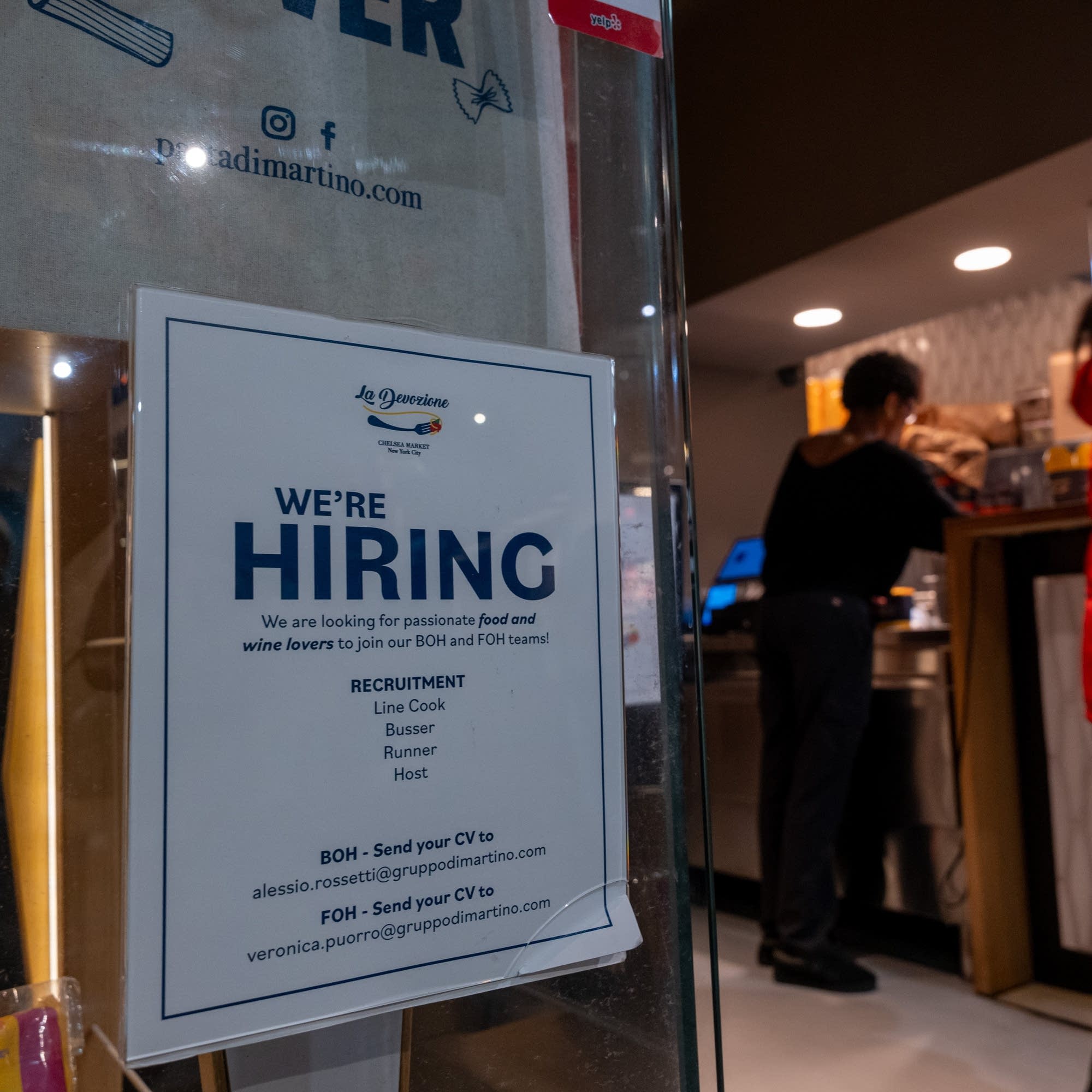
Speaker 5 Amazon said today it's laying off 14,000 corporate workers, the first slice of what's expected to be 30,000 white-collar layoffs in all.
Speaker 5 The online education company Chegg said yesterday it's cutting 45% of its remaining workforce. That's after cutting 20% of it earlier this year.
Speaker 5 Companies, as you know, lay people off all the time for all manner of reasons. But here in 2025, when white-collar workers get let go, one reason in particular seems to be cropping up more and more.
Speaker 5 Chegg publicly blamed artificial intelligence chatbots for eating its business model, which is helping kids do their homework.
Speaker 5 Amazon CEO sent employees a note back in June telling them that AI is going to eliminate the need for some kind of jobs in that shop.
Speaker 5 You know, usually what happens when transformative technology comes along-the steam engine, the internet-to pick just two-what happens is that old jobs get replaced with new and better jobs.
Speaker 5 So, where are the new AI jobs exactly? Marketplace Matt Levin gets us going.
Speaker 8 Remember when everyone wanted to be a prompt engineer? That was the hottest AI job title back in 2023, shortly after ChatGPT launched.
Speaker 8 Even if you weren't a programmer, if you played with the technology enough to actually get it to do what you wanted it to do, a company might pay you six figures to be their professional robot whisperer.
Speaker 8 Well, it's 2025. Have any of your friends been offered a prompt engineering job yet?
Speaker 9 That's a great question. I'm still wondering when that phone call is coming for me as well.
Speaker 8 Larry Schmidt is an economist at MIT Sloan School of Management. Turns out the AI got smart enough where lots of businesses could easily teach their employees how to be the types good questions guy.
Speaker 8 No new salary or title required.
Speaker 10 We do find evidence that the jobs are changing, but it's more subtle than that. It's not necessarily that whole new categories of jobs get created.
Speaker 8 At least not within just three years.
Speaker 8 Harvard economist David Deming says in the long run, those subtle AI changes will likely evolve jobs into something better than they are now, if history is any guide.
Speaker 12 Think about like an office assistant went from stenographer to typist to secretary to administrative assistant to executive assistant.
Speaker 12 So that's just one example of a job that changes not just titles, but really functions underneath in response to changes in office technology.
Speaker 8 If you're wondering what happens until we get to the long run, history has some other lessons where the short run is, well, maybe we should all brush up on our dickens.
Speaker 12 If you look at, like, for example, when the economy industrialized, you know, about 150 years ago, it was a pretty bad time for humanity for a couple of decades.
Speaker 8 For now, companies are trying to figure out what to do with employees who are saving time by using AI. David Martin helps companies implement new AI processes at Boston Consulting Group.
Speaker 13 What you would typically see is 20% of that person's time then can go toward innovation. So the old Google model of spend your Fridays thinking about something more blue sky.
Speaker 8 Martin says one common topic of such brainstorming, how do we keep AI from putting us out of business? I'm Matt Levin for Marketplace.
Speaker 5 Ironically, or perhaps not, AI drove equities today. We will have the details when we do the numbers.
Speaker 5 If this is Tuesday, it must be another day without government data on this economy.
Speaker 5 Spare a thought here, by the way, for Jay Powell and the gang at the Fed trying to figure out which way to turn the interest rate dial in their big meeting today and tomorrow.
Speaker 5 Spoiler alert, they're going to turn it down. Overwhelming expectations are for a quarter percentage point cut in the federal funds rate, data drought or not.
Speaker 5 But we did get a clue this morning about a very important part of this economy.
Speaker 5 You, the Consumer Confidence Index from the good people at the conference board, fell slightly in October because we're just not all that economically confident.
Speaker 5 Marketplace's Supreme Benisha explains what's going on there. The mood, on average, among consumers is ambivalent to glum.
Speaker 14 Seems that confidence has been stuck.
Speaker 5 Stephanie Guichard is a senior economist at the conference board.
Speaker 14 And it's not moving out of this very narrow range where it has been since June.
Speaker 5 The reasons will probably not shock you.
Speaker 14 It's overwhelmingly inflation and prices. And second to that is tariffs.
Speaker 5
Of course, like with anything, it depends on who you ask. For younger people and those making less than $75,000 a year, confidence fell.
For older people and those making more, confidence rose.
Speaker 5
For people making more than $200,000 a year, it rose a lot. Matt Luzzetti is chief U.S.
economist at Deutsche Bank.
Speaker 15 It's consistent with an economy where higher-income households, particularly those that are homeowners and have been homeowners for a while, are perceiving the economy as doing better.
Speaker 5 They're more likely to own stock, too. And stocks are doing great, so they feel great about it.
Speaker 15 While at the same time, those households that are younger or at the lower end of the income distribution are experiencing more pressures.
Speaker 5 Now, what consumers think and what consumers do are two very different things. People can be depressed, but still click add to cart.
Speaker 5
So, consumer confidence isn't a great predictor of overall spending. But there is one thing consumer feelings do predict.
Well, the unemployment rate.
Speaker 5 Part of the Consumer Confidence Survey asks about how hard it is to get a job. Bradley Saunders is with Capital Economics.
Speaker 16 And what's interesting is if you take the number of people saying the jobs are plentiful and take away the share of people who are saying the jobs are hard to get, then that spread tends to be quite a good leading indicator of the unemployment rate.
Speaker 5 More people said jobs were plentiful in October than the month before, and fewer people said jobs were hard to get.
Speaker 5 That would suggest, says Saunders, the unemployment rate is not going to rise by much, if at all, which is a confidence boost. In New York, I'm Sabri Benishore for Marketplace.
Speaker 5 The ticker symbol of the day today is W,
Speaker 5 just
Speaker 5 W.
Speaker 5 Wayfair, the mostly online home goods retailer, reported way better than expected quarterly earnings this morning.
Speaker 5 It's bucking a slowdown in furniture sales, Wayfair is, pointing to its loyalty program and an expansion into brick-and-mortar as reasons why.
Speaker 5 But, asterisk here, note that the quarter for which it was reporting today wrapped up at the end of September, which matters when you remember that that was just before President Trump's tariffs hit upholstered furniture and cabinets and the like.
Speaker 5 And those import taxes the president has imposed, paid, I'm required to remind you by American consumers and businesses, are only one part of the headwinds that are buffeting home furnishing retailers.
Speaker 5 Marketplace's Megan McCarty-Carino has that one.
Speaker 17 Home goods sales have been in a bit of a funk because of the pandemic, says analyst Egal Arunian at Citi.
Speaker 11 Consumers, you know, coming out of COVID bought pretty much everything they needed for the homes for a number of years.
Speaker 17
People were stuck inside furnishing home offices and zhuzhing up their Zoom backgrounds. They were also moving a lot, with mortgage rates at historic lows.
That feels like a long time ago.
Speaker 11 Existing home sales are still at record lows, and rates have come down off the highs, but you still haven't seen this big tick up in housing market activity.
Speaker 17 The frozen housing market is probably the biggest factor dragging down furniture demand, says retail consultant Catherine Black at Kearney.
Speaker 17 But she says Wayfair has done better than the rest of the sector by selling smaller housewares, bedlinens, throw pillows, hand towels.
Speaker 19 That's not dependent on a new home. That's dependent on a consumer wanting to refresh their space.
Speaker 17 They might be sick of the coastal grandmother vibe they went all in on during lockdown. But even the redecorating might stop once consumers feel the full effect of tariffs.
Speaker 19 I think everyone's bracing a little bit, holding their breath a little bit for what might be to come.
Speaker 17 Most furnishings are imported and subject to country-level tariffs. Then there are are the specific tariffs on upholstered furniture, cabinets, and lumber.
Speaker 20 But, says analyst Zach Tambor at eMarketer, Wayfair is somewhat insulated from that because its vendors are bearing those costs.
Speaker 17 It operates as a marketplace and doesn't import goods itself.
Speaker 20 However, that will inevitably drive up the cost of goods that it's selling, which likely will cause consumers to think twice before they click the buy button.
Speaker 17 Prices on home furnishings have already increased 8% since March, according to Harvard's Pricing Lab. I'm Megan McCarty-Carino for Marketplace.
Speaker 5 Finding a home with everything you're looking for, that big backyard, a beautiful fireplace, or the perfect kitchen, whatever it is, that can be tough enough.
Speaker 5 But it goes to a whole nother level when you add handicapped accessibility into the mix. More than 70 million people in the United States live with some sort of disability.
Speaker 5
That's about 20% of the population. But just 5% of U.S.
homes have disability accommodations. That's according to data from Housing Wire.
So some remodeling work might be in order.
Speaker 5 Here's today's installment of our series, Adventures in Housing.
Speaker 21
My name is Brian Bradley. I live in Farmington, Utah.
Recently, we bought a home that we've been renovating for our daughter with special needs.
Speaker 21 Savannah's nine years old. She's completely immobile, relies on us for everything she needs.
Speaker 21 And so the house we were in had stairs up to her room, which when she was small, wasn't too difficult, right? We could just carry her upstairs.
Speaker 21 It was in early 2020 that she had a growth spurt, started to get big, like kids do, right?
Speaker 21 And so we needed something different.
Speaker 21 We looked at a few houses that were wheelchair-accessible homes that had already been modified to be such, but none of them really fit the needs outside of the wheelchair.
Speaker 21 Savannah's not our only child. We have three other kids, and you know, we,
Speaker 21 as much as we want to cater to Savannah, we also want to make everybody else in the house happy, right? The house that we ended up finding, my sister, actually
Speaker 21 lives down the street. And I think having family nearby made a big difference in our decision to purchase that home.
Speaker 21 There really was nothing as far as like the wheelchair accessibility in the home when we moved in. We've put in a couple of wheelchair ramps to get over the stairs that go into the house.
Speaker 21 It's not perfect. We still have to pop a Willie to get onto the ramp, but it works great.
Speaker 21 We've put in a lift in her bedroom that will lift her up out of her bed and then we can move her into her wheelchair. And we recently did a bathroom renovation.
Speaker 21 It's been expensive
Speaker 21 to get the landscaping of the house to a place where she could be outside and enjoy it. We've probably spent $20,000
Speaker 21 inside. The ceiling lift was $10,000
Speaker 21 and
Speaker 21 the bathroom renovation came out to close to $40,000. But we were able to reach out to community resources like family and neighbors to help pay for some of those things.
Speaker 21 It's hard to say forever is forever, right? We don't know what's going to happen 10 years down the road, but we would like this to be a forever home, a place where we stay.
Speaker 21 I've definitely learned with having a special needs child that you can't predict what's going to happen next week.
Speaker 21 And having that long-term vision is important, but what's important is Savannah's comfort right now and making it function right now.
Speaker 21 And so it's hard to say that we'll be there forever, but we would like to be.
Speaker 5
Brian Bradley in Farmington, Utah. Whether you're buying a fixer-upper or settling into that forever home, let us know.
Would you marketplace.org/slash adventures into housing is where you do that.
Speaker 5 Coming up.
Speaker 18 I discovered that somebody had plagiarized my papers, and that made me very angry.
Speaker 5 Yeah, scandals in science, but first, sure, why not? Let's do the numbers.
Speaker 5
Dow Industrial is up 161 today, about a third of 1%, 47,706. The NASDAQ climbed 190 points, 8 tenths percent, 23,827.
The SP 500 gained 15 points, 15%,
Speaker 5 68,90 there.
Speaker 5 Wall Street, as usual, generally applauded companies for making those layoffs. Matt Levin was telling us about Amazon down 30,000 jobs, up 1%.
Speaker 5 United Parcel Service, I didn't mention this, 48,000 jobs down, up 8%. The exception, though, educational technology firm Chegg tumbled 13 and 2/10%
Speaker 5 because, in addition to laying off nearly half its employees, its CEO stepped down, and the company said AI is having an adverse impact on its business.
Speaker 5 As we mentioned, you are listening to Marketplace.
Speaker 22 This podcast is brought to you by Wise, the app for international people using money around the globe.
Speaker 22 With Wise, you can send, spend, and receive up to 40 currencies with only a few simple taps and save up to 55% compared to major banks.
Speaker 22 Whether you're buying souvenirs with pesos in Puerto Vallarta or sending Euros to a loved one in Paris, you know you're getting a fair exchange rate with no extra markups.
Speaker 22 That's what makes WISE the fast, affordable way to use your money around the globe.
Speaker 22 WISE offers 24-7 live support and runs over 7 million daily checks to catch and prevent fraud, so you know your money is where it's supposed to be. Be smart.
Speaker 22
Join the 15 million customers who choose WISE. Download the WISE app today or visit Wise.com.
Learn more by visiting wise.com/slash US slash compare. T's and C's apply.
Speaker 2 This podcast is supported by Odo. Some say Odo business management software is like fertilizer for businesses because the simple, efficient software promotes growth.
Speaker 2 Others say Odoo is like a magic beanstalk because it scales with you and is magically affordable.
Speaker 6 And some describe Odoo's programs for manufacturing, accounting, and more as building blocks for creating a custom software suite.
Speaker 4 So Odoo is fertilizer, magic beanstock building blocks for business.
Speaker 2
Odoo, exactly what businesses need. Sign up at odoo.com.
That's odoo.com.
Speaker 7 This marketplace podcast is supported by Wealth Enhancement, who understand that dreams don't happen by chance. It takes a plan.
Speaker 7 They're ready to build your wealth blueprint for retirement, investing, taxes, and everything else your financial life brings.
Speaker 7 It reveals gaps and highlights opportunities you may have missed at no cost to you. Find out more at wealthenhancement.com/slash blueprint.
Speaker 22 Fifth Third Bank's commercial payments are fast and efficient. But they're not just fast and efficient, they're also powered by the latest in payments technology built to evolve with your business.
Speaker 22 Fifth Third Bank has the Big Bank Muscle to handle payments for businesses of any size, but they also have the FinTech Hustle that got them named one of America's most innovative companies by Fortune magazine.
Speaker 22
That's what being a Fifth Third Better is all about. It's not about being just one thing, but many things for our customers.
Big Bank Muscle, FinTech Hustle.
Speaker 22 That's your commercial payments, a fifth-third better.
Speaker 5 This is Marketplace. I'm Kai Rizdahl.
Speaker 5 A little bit more than three years ago in the summer of 2022, the federal government ended a pandemic-era program that had offered free school breakfasts and lunches to all students.
Speaker 5 That meant that in most states, things went back to the way they were in the before times. Most students pay full freight.
Speaker 5 Students who meet family income eligibility requirements get free or reduced price meals. That's the bureaucratic part of this story.
Speaker 5 The real-world part of the story is that even three years on, some schools are still struggling with the end-of-free meals for all. Marketplace's Carla Javier reports from Chester, Connecticut.
Speaker 23 It's lunchtime at Cheshire High School.
Speaker 23 Students scoop up burger bowls and chicken chipotle panini, then head to the cash registers.
Speaker 23 Their lunches cost between $4.50 and $5.50.
Speaker 23 But almost one in five of them don't pay that much because they're eligible for free or reduced price meals. In both cases, federal funds reimburse the district for the difference.
Speaker 23 Erica Biagetti is the Director of Food and Nutrition Services at Cheshire Public Schools. She says to be eligible for free meals, a family of four needs a gross income under roughly $42,000.
Speaker 23 And to be eligible for reduced-priced lunches that cost just 40 cents, a household of four would need to gross under $59,478.
Speaker 25 That is low.
Speaker 23 Viagetti says the students she worries about come from families with incomes just above that threshold.
Speaker 23 They used to get school meals for free, but now if they have a couple kids, they have to come up with $1,000 or $2,000 every school year.
Speaker 25 And they're having to make those tough decisions of, what am I going to send for lunch? What bills do I pay? What am I going to do here?
Speaker 23 If families don't pay, then schools are on the hook for the difference. And across the country, the amount they're having to cover is rising.
Speaker 23 According to the School Nutrition Association, in 2018, the median school nutrition program reported an unpaid meal balance of $3,400.
Speaker 23 In fall of 2024, it was $6,900.
Speaker 23 And even in Connecticut, which is one of the highest per capita incomes in the country, Biagetti says her district had to cover more than $25,000 in unpaid meal debt last school year.
Speaker 23 Juliana Cohen is a school nutrition researcher who teaches at Merrimack College in Harvard. She says sometimes community members will chip in to cover the school's shortfall.
Speaker 26 But more often than not, this ends up being paid off by the school district.
Speaker 23 And that affects other programs.
Speaker 26 Sometimes they pay it off from the student activity fund, but sometimes it also comes from the general academic fund.
Speaker 23 Some states, including California and New York, have stepped into the gap left when the federal government ended universal free meals by dedicating state money to provide them.
Speaker 23 And in November, Colorado voters will consider raising a tax on high earners to continue funding that state's meal program.
Speaker 23 Meanwhile, in Connecticut, Erica Biagetti and her colleagues on the Cheshire School Nutrition Team are already facing $10,000 in unpaid meal debt this school year.
Speaker 23 And they're having to make some tough calls home to families with high balances.
Speaker 25 It doesn't feel good for anyone, the families, the staff, the people calling.
Speaker 23 She says she's hopeful more states, including Connecticut, will find a way to fund universal meals once more, like they do for other school services.
Speaker 25
Every student gets a ride on the bus. You are secured a seat no matter if you have a vehicle at home or you don't.
You're given a Chromebook, even if you have a computer at home.
Speaker 25 You are given the tools that you need to succeed in your school day.
Speaker 23 In the meantime, Erica Biagetti says she and her team will encourage eligible families to apply for benefits.
Speaker 23 If they're eligible for SNAP benefits, they're also eligible for free or reduced priced meals. And connect them with soup kitchens, food banks, and other forms of assistance.
Speaker 23 I'm Carla Javier from Marketplace.
Speaker 5 Academic journals, while perhaps not the most scintillating reading for a layperson, are big, big business to the tune of billions of dollars every year.
Speaker 5 The challenge for the industry is that all that money makes fraud an attractive option. According to an analysis by the journal Nature, more than 10,000 research papers were retracted in 2023.
Speaker 5
That's a record for a single year. One of the leaders in the effort to root out that malfeasance is Dr.
Elizabeth Bick. She's a microbiome expert by training, turned science integrity investigator.
Speaker 5
Dr. Bick, welcome to the program.
Pleasure to be here. How does a microbiologist become a science integrity person?
Speaker 5 Could you tell us how you got there?
Speaker 18
Yeah, sort of a strange career switch, I guess. Yes.
I discovered that somebody had plagiarized my papers, and that made me very angry. And so I worked on plagiarism for a while.
Speaker 18 And then by accident, I discovered somebody had duplicated images that were representing different experiments. So then that became my new hobby and now it's my profession.
Speaker 5 Well, give us the 30-second talk on how big a problem this is in the academic publishing industry, which is worth billions and billions of dollars. And as you've demonstrated, some of it's just fake.
Speaker 18 It is. A couple of years ago, I did a big study of 20,000 papers, and I found that 4% of those papers contained duplicated or manipulated images.
Speaker 18 And we estimated about half of those, so 2% of those 20,000, were done deliberately. So, a photoshopped image, for example, or an image that had been rotated or mirrored.
Speaker 18 But I think since then, the problem has only grown because there's almost now a commercialized type of fraud.
Speaker 18 We call them paper mills, an industry that creates these fake papers and sell the authorships to authors who want to have a paper. They actually advertise on Facebook or other social media.
Speaker 18 Yeah, and I think it's a way that folks in maybe countries that do not have a lot of money to give to science, they're hoping for maybe
Speaker 18 a better quality of life, maybe a position in North America or in Europe, and they need those papers to pad their resume.
Speaker 5 Aaron Ross Powell, explain then the concept for us of peer review, because
Speaker 5 I had thought the whole thing was that
Speaker 5 people with expertise in the subject at hand review these things and then they get published. No?
Speaker 18 Yes,
Speaker 18
that is definitely the case. But I think peer review is not really designed to catch fraud.
It's designed from the sort of the idea that the data that you're reviewing as a peer reviewer is real.
Speaker 18 And I think that worked really well until maybe one or two decades ago, because the field of science and specifically the field you're peer reviewing in, which is your own field, was relatively small.
Speaker 18 But nowadays, there's so many more papers being published. And I think peer reviewers don't realize that there's a fraction of the papers that they might peer review are fraudulent.
Speaker 5 Yeah.
Speaker 5 A fraction, but still it's the credibility thing that gets affected here.
Speaker 18 It does. And it's, you know, talking about science misconduct could lead people to think that all science is flawed.
Speaker 18
But that's not the case. I do want to stress that.
And it's really important to realize we're talking about a fraction, a couple of rotten apples in a fruit basket.
Speaker 18 But I like to think that the rest of the fruit basket is still beautiful. But yeah, part of it is bad.
Speaker 5 Aaron Powell, Jr.: And about the literature, there is a financial incentive for professional journals to publish papers, right? I mean, it's literally part of their business model.
Speaker 5 They got to do it at scale.
Speaker 18 Yes. And the whole scientific publishing industry
Speaker 18 is very strange if you explain that to a non-scientist. Because we scientists, we write the papers for free and we peer review them for free.
Speaker 1 We might even be an editor
Speaker 5 Wait, sorry, peer reviewers don't get paid?
Speaker 18 Yeah, usually not. No, I mean,
Speaker 18 there are some journals that start doing it.
Speaker 5 Wow.
Speaker 18 But basically, we provide and write and peer-review the papers for free, and then we have to pay the scientific publishers to be able to read them or make them open access so that everybody can read them.
Speaker 18 The scientific publishing industry makes huge amounts of profits. So, in return, you would hope what the publishers add to the paper is maybe some quality control or some fraud detection.
Speaker 18 And it seems that, yeah, they're not doing a very good job there.
Speaker 5 Do you imagine then, Dr. Bick, that this problem gets better or worse? Will AI, as it's coming, help you ferret out these frauds, or will it actually
Speaker 5 make the problem more challenging for you? Aaron Powell,
Speaker 18
both, unfortunately. So, we are using tools, AI-based tools, to help find fraudulent papers.
But as you can imagine, it's very easy now using AI to create a fake image.
Speaker 18 And you can make a peer reviewer believe that the experiments that have been done are real. And that is, we assume, already a big problem, but it's so hard to recognize those images.
Speaker 5 Do you imagine you're going to research and integrity consult your way out of a job someday? That'd be your ideal, wouldn't it?
Speaker 18
That would be great if there was an actual quality control and we didn't have to do uh this type of work. But, um, as I'm sort of close to retirement, yeah, I hope that day will come soon.
But
Speaker 18 I think there will be enough work for the next generation of uh sleuths.
Speaker 5
Dr. Elizabeth Bigg, she's a microbiologist by training.
Also, now she does scientific integrity research. Thank you very much for your time, Dr.
Bigg. I appreciate it.
Speaker 18 My pleasure.
Speaker 5
Ooh, this is going to be a little tight. Too much talking by me today.
Jordan Manji, Zonio Maharaj, Janet Wynne, Oga Oxman, Virginia K. Smith, and Tony Wagner.
Part of the digital team.
Speaker 5 I'm Kai Rizdall. We will see you tomorrow, everybody.
Speaker 5 This is APM.
Speaker 24 We've all done it. Stock our fridge with leafy greens and good intentions, only to have our future self sacrifice quality nutrition for the convenience of takeout.
Speaker 24 Keep your body and mind nourished all day with a whole-body meal shake from cachava. It's got 25 grams of protein, 6 grams of fiber, greens, and so much more.
Speaker 24 But the best part, it actually tastes delicious. With six indulgent flavors to choose from, it's easy to make a superfood-packed shake.
Speaker 24 From chocolate, vanilla, and chai to matcha, coconut acai, and strawberry, you've got endless ways to personalize your cachava.
Speaker 24 Whether you prefer it straight up or enjoy adding fruit, peanut butter, nut milk, or even iced coffee, with every two scoops of cachava, you're getting 85 plus superfoods, nutrients, and plant-based ingredients.
Speaker 24 Shop now through December 2nd to get 30% off your first purchase of two or more bags with code news at cachava.com. That's 30% off for a limited time at kachava.com code news.