A sluggish spin cycle
The shutdown has delayed October's durable goods report. But fear not! Michigan-based appliance manufacturer Whirlpool reported earnings today, and they were pretty tepid. What does that tell us about Trump's tariffs, or the housing market? In this episode, corporate earnings act as a stand-in for missing federal data. Plus: There are winners and losers during a period of high beef prices, small business owners scrutinize their staffing strategies, and regional banks consolidate to compete with fintech.
Every story has an economic angle. Want some in your inbox? Subscribe to our daily or weekly newsletter.
Marketplace is more than a radio show. Check out our original reporting and financial literacy content at marketplace.org — and consider making an investment in our future.
Press play and read along
Transcript
Speaker 1 This podcast is supported by Odoo. Some say Odoo business management software is like fertilizer for businesses because the simple, efficient software promotes growth.
Speaker 1 Others say Odoo is like a magic beanstalk because it scales with you and is magically affordable.
Speaker 1 And some describe Odoo's programs for manufacturing, accounting, and more as building blocks for creating a custom software suite. So Odoo is fertilizer, magic beanstock building blocks for business.
Speaker 1
Odoo, exactly what businesses need. Sign up at odoo.com.
That's odoo.com.
Speaker 2 Introducing your new Dell PC with the Intel Core Ultra Processor. It helps you handle a lot even when your holiday to-do list gets to be a lot.
Speaker 2 Like organizing your holiday shopping and searching for great holiday deals and customer questions and customers requesting custom things, plus planning the perfect holiday dinner for vegans, vegetarians, pescatarians, and Uncle Mike's carnivore diet.
Speaker 2 Luckily, you can get a PC with all-day battery life to help you get it all done. That's the power of a Dell PC with Intel inside, backed by Dell's Price Match Guarantee.
Speaker 2
Get yours today at dell.com/slash holiday. Terms and conditions apply.
See Dell.com for details.
Speaker 4 Government data or no government data, we got you covered from American Public Media. This is Marketplace.
Speaker 4
I'm Kyle Rizdahl. It is Monday today, October the 27th.
Good as always, to have you along, everybody.
Speaker 4 If you are one of those who keeps track, this is day 27 of the government shutdown, a day on which the Census Bureau would have given us its latest data on orders for durable goods, big, expensive stuff supposed to last three years or more.
Speaker 4 Obviously, we in the business and economic press are without said data, but we are not without ideas. So we are looking instead today to a certain Michigan-based manufacturer, Whirlpool.
Speaker 4 purveyor of some of those aforementioned big expensive things, meant to last for a while.
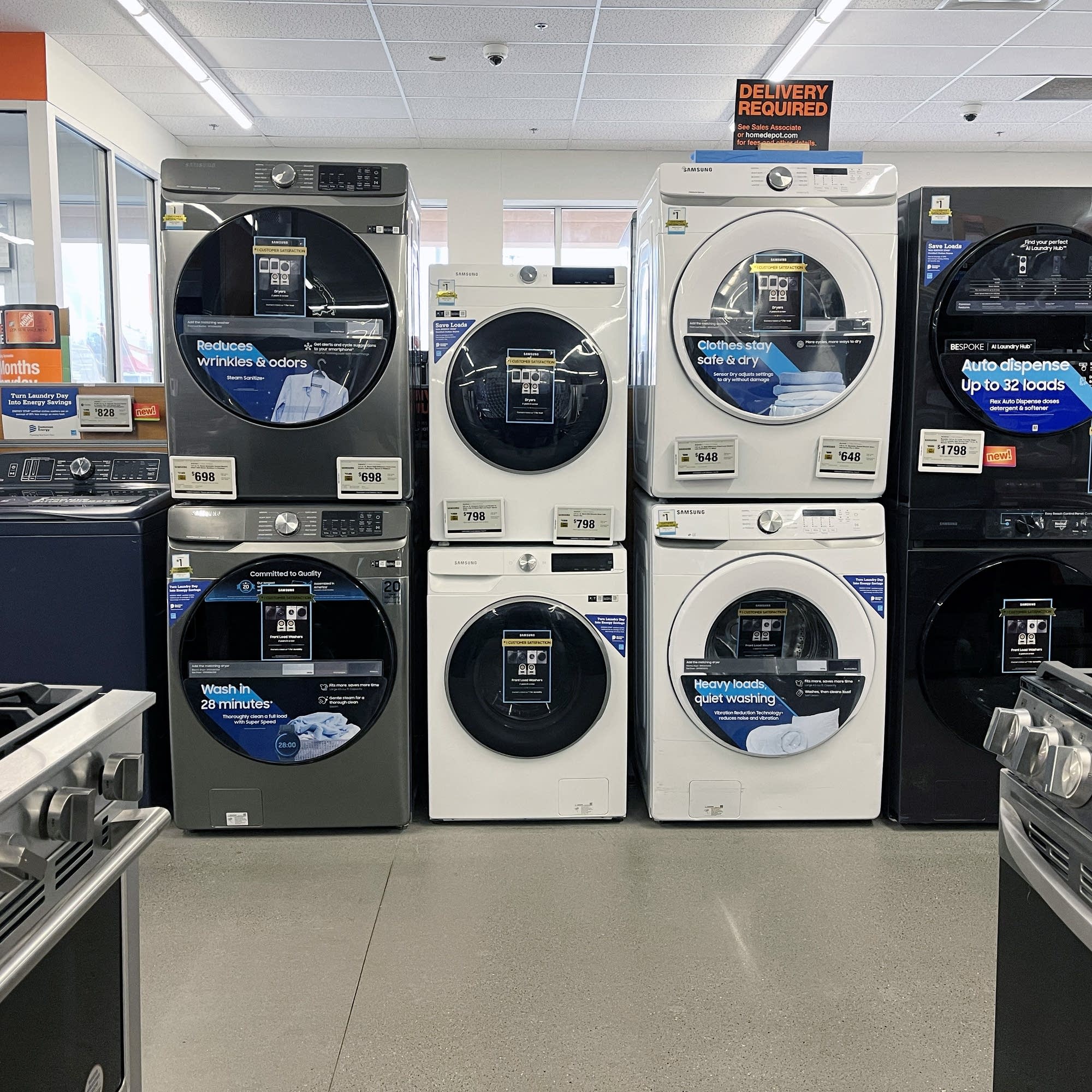
Speaker 4 Marketplace's Matt Levin Levin gets us going with the home appliance market and what that might tell us about the broader economy.
Speaker 5
Mackenzie Dahl is the sales manager at Kitchen Kings in Gunter, Texas. It sells major home appliances north of Dallas.
She says her hottest items right now are also among her priciest.
Speaker 6 More of our high-end appliances are going right now. So Sub-Zero Wool, Cove, Thermidor, those brands are like hot cakes.
Speaker 5 The less expensive Whirlpools whirlpools and frigidaires, those aren't moving as much. Dahl is a working theory why, a sluggish housing market.
Speaker 6 I see a lot of people
Speaker 6 doing remodels instead of buying new.
Speaker 6 So, you know, they've got money in their pockets and they are
Speaker 7 getting the good stuff.
Speaker 5 Home sales are down from their post-pandemic highs in Dallas and nationally. And the appliance market is married to the housing market.
Speaker 5 When someone buys a home, they spend about $2,700 on new appliances.
Speaker 5 When someone buys a newly constructed home, they spend even more, says economist Robert Dietz at the National Association of Home Builders.
Speaker 8 In a year where you've got single-family housing construction down, that's going to be downward pressure for appliance makers and retailers.
Speaker 5 The housing market is the big reason Whirlpool's net sales have dropped this year compared to last, at least through summer. You'd think tariffs would actually help.
Speaker 5 80% of Whirlpool's manufacturing is based in the U.S., while leading competitors like Samsung and LG make a lot of their products in Asia.
Speaker 5 Rafe Jadrasich at Bank of America says those tariffs really haven't changed much.
Speaker 8 So far, we've not seen major market share shifts.
Speaker 5 Because tariffs haven't quite forced those giant multinational corporations with other lines of business to raise prices, at least not yet. I'm Matt Levin for Marketplace.
Speaker 4 Turns out the third quarter was pretty good for Whirlpool. It announced earnings after the bell today, sales and profits both up.
Speaker 4 Elsewise on Wall Street, three more record highs on the major indices. We will have the details when we do the numbers.
Speaker 4 Another way to get around the dearth of government economic data is by getting on the phone, calling our regulars to get some ground truth out there. Today's lucky winner is Austin Golding.
Speaker 4 He's the CEO of Golding Barge Line in Vicksburg, Mississippi. Austin, it's good to talk to you again.
Speaker 9 Hey, Ky, thanks for having me back.
Speaker 4 First question, which I'm sure you know by heart right now. How's business?
Speaker 9
Business Business is pretty good. It's steady.
We have a little bit of excess barges. We have too much equipment out there right now for a number of kind of internal reasons.
Speaker 9 We overbuilt 10 years ago, and a lot of those barges are still on the market, and some of their required maintenance has come up.
Speaker 9 And the government shutdown has affected a little bit of that licensing where we've had some problems with that. But for the most part, business is very strong and demand is high.
Speaker 4 The other thing that government shutdown-wise that I was looking at is the Corps of Engineers, which obviously controls the water level on the river, which directly affects how you do your job.
Speaker 4 Is that a thing now, or is the Corps of Engineers still working? How's the water level? What's up with the actual environment of your job?
Speaker 9 Well, right now, the water levels are low. The Corps of Engineers has still been able to maintain all of our waterways from an essential standpoint.
Speaker 9 But the longer we have this shutdown, the more soft spots are going to get exposed.
Speaker 9 You never know what you got until it's gone, and we're slowly figuring out what that is.
Speaker 4 So, all right, here's a technical question, which, as I'm about to formulate it, seems kind of silly. But the lower the water level is, the less stuff you can put in your barges, right?
Speaker 4 And that also affects your business and your bottom line.
Speaker 9
No question. Low water affects us much more than high water.
The impact of low water is fewer barges in the tow and less cargo on those barges because of reduced drafts. So, you know, it's been a
Speaker 9 hard run of low water the last five years. So we were headed that way pretty sharply three weeks ago, and we've gotten a a little reprieve with this rain here.
Speaker 9 But if you look out 30 days, it still looks like we need more rain to maintain a really viable system.
Speaker 4 How often do you check the weather?
Speaker 9
Every day. Every single day we check water levels.
But our customers are not just checking what's the water doing today.
Speaker 9 We get updated forecasts about what it's going to do a month out, which affects a lot of their supply chain decisions. So if we're telling them what the weather is today, we're a month late.
Speaker 9 My competition has probably already let them know.
Speaker 4 Good point.
Speaker 4
Talk to me about what you are carrying. It's traditionally been a lot of petroleum stuff.
You're carrying other stuff as well now?
Speaker 9 Yes,
Speaker 9
a lot of petroleum. That's still about 80 to 90% of our business in a given year.
But lately, we've been moving a lot of rock and limestone and building material.
Speaker 9 And I'll tell you, Kyle, we are in the data center hotspot of the country.
Speaker 4 Oh, that's so interesting. Say more about that.
Speaker 9 Well, right now we have just right outside of Vicksburg. We have Meta's largest project here in Louisiana right across the river going in.
Speaker 9 ExxonMobil is poking around north of us.
Speaker 9 So we have a lot of construction going on here, and so that requires a lot of material. So the rock business has really taken off, and there's a lot of material moving into this part of the country.
Speaker 4 That is so interesting.
Speaker 4 And along those lines, not to cast dispersion on Jay Powell, but you have, I think, a pretty good sense of the macroeconomy, right? There's a lot of things that influence your business.
Speaker 4 You keep an eye on a lot of things. How are you feeling short to medium term-ish about your business, but also sort of the larger economy?
Speaker 9 Well, I tell you, we're seeing, I think, an unreported struggle within the economy. Some of the products we move that go into making plastic materials or paint,
Speaker 9 those businesses are really off right now. That being said, there's a lot of volume of gasoline and diesel being moved, and we're seeing new materials come online, mainly around construction.
Speaker 9 The consumer side, it seems like, is struggling more than some of the
Speaker 9 larger projects.
Speaker 4 I did a talk this weekend with a business school professor, and one of the questions from the floor was, you know, how do you think the economy is doing? The question I just asked you, and he said
Speaker 4
he thinks it's on a razor's edge. He thinks it's really, really finely balanced.
And I said, well, sort of more like a dull knife edge.
Speaker 4 What do you think?
Speaker 9 I certainly think that there's a lot of people in this country that are doing really well, but I'm afraid there might be more that aren't.
Speaker 9 And I I think the ones that are doing well are carrying us, and the ones that aren't have a different story to tell and are under a lot of pressure.
Speaker 9 For our business, it's critical that we're tied into the right products and the right geographic areas and the right customers.
Speaker 9 Because if we're not, there are certain players out there that are not having the type of year that some of our partners are.
Speaker 4
Austin Golding at the Family Business, Golding Bars Lines in Vicksburg, Mississippi. Austin, good to talk to you as always.
Thanks for your insights.
Speaker 9 Thank you, Kai.
Speaker 4 The top three agricultural commodities in the great state of Texas are, in reverse order, dairy at number three, chicken and eggs in second, and on top and going away, cattle.
Speaker 4 Perhaps related, Texas prides itself on its barbecue, as you might know, with restaurants by the thousands all over that state.
Speaker 4
So the give or take 15% increase in beef prices this year cuts both ways. Pit masters are dealing with those high prices, while cattle producers are outperforming.
in the agricultural sector.
Speaker 4 Marketplace Elizabeth Troval has more on that one.
Speaker 10 Brisket, ribs, and sausage are are just a few of the staples Chef Ernest Cervantes serves at his restaurant Burnt Bean Company in Seguin, Texas. But the menu has changed.
Speaker 11 We no longer serve the famous Texas dinosaur beef ribs. You know, we don't do those anymore because of the prices.
Speaker 10 Brisket has to stay on the menu because this is Texas. But these days, it's not profitable.
Speaker 12 We tend to make more of our money off of poultry and pork products.
Speaker 11 So whenever people say, how many briskets do you go through, I cringe because when
Speaker 11 I see my weekly beef bill, I could buy a car.
Speaker 4 You know what I mean?
Speaker 10 About 150 miles east of Cervantes barbecue restaurant, Damian Turner raises a small herd of cattle outside of Houston. As a small-scale producer, he has to be really careful about costs.
Speaker 10 For example, after the pandemic, he struggled to pay for hay to feed his cows.
Speaker 12 Round bale to hay was up to almost 200 bucks a round bill and usually then anywhere from 50 to 75.
Speaker 12 And so you can imagine paying double the price you had for one round bill.
Speaker 10 Drought made the hay expensive so selling his cows wasn't profitable. But now hay is cheaper and beef prices are way up.
Speaker 12 But now it's profitable pretty much. And so if you go sell a cow now, you still have money left over after you, you know, buy feed and things like that.
Speaker 10 Turner says he gets a 10 to 15 percent profit for each calf he sells. And those numbers are why economist David Anderson with Texas A ⁇ M says some ranchers are expanding their herds.
Speaker 13 High prices really encourage expanding production.
Speaker 10 Still, a young heifer born this last spring won't have her first calf until 2027.
Speaker 13 That calf is not gonna get to its final full-grown weight and head to a meat packer for about 20 months after that.
Speaker 10 So, while high prices will help boost the cattle supply eventually, it's gonna take a while. I'm Elizabeth Troval for Marketplace.
Speaker 4 There's news of consolidation in the regional banking industry today.
Speaker 4 Huntington Bank Shares, based in Ohio, is buying Cadence Bank out of Texas and Mississippi for nearly $7.5 billion.
Speaker 4 It's the latest in a slew of regional deals, and Huntington and Cadence have both already made acquisitions this year along with Fifth Third, PNC, and Pinnacle. Why now the buying spree, though?
Speaker 4 And what's it going to mean for the people and businesses that use those banks, do you suppose? Daniel Ackerman has that one.
Speaker 14 The banking industry is changing quickly, says Meg Tire, head of financial institutions at the law firm Davis Polk.
Speaker 15 A lot of banks just need more scale to survive in the next generation.
Speaker 14 More scale, as in more assets on the balance sheet to invest in new technology, like building fancy apps for mobile banking.
Speaker 15 Every regional bank needs to make it as fun as Robin Hood makes it.
Speaker 14 And Tire says consolidation can free up cash to make that happen.
Speaker 14 Another driver of the recent acquisitions is pent-up demand, says Jeremy Kress, a professor of business law at the University of Michigan.
Speaker 16 Over the past several years, regional banks were reluctant to merge during the Biden administration, which was seen as unfriendly toward bank consolidation.
Speaker 14 Whereas the Trump administration is encouraging it, says Kress.
Speaker 16 A lot of regional banks are trying to strike while the iron is hot, while the regulatory environment is friendly.
Speaker 14 Kress says consolidation can allow banks to offer more services and better fraud protection.
Speaker 16 At the same time, When regional banks merge with the ambition of competing with Wall Street banks, they tend to lose focus on their local communities.
Speaker 14 Which could make it harder for outside-the-box small business ideas to get loans. Consolidation can also mean less favorable interest rates, says Alexander Yoakum, a bank analyst at CFRA.
Speaker 17 There's less competition, that means they can offer you lower rates on your deposits. And then on the other side, maybe they can charge you more on their loans as well.
Speaker 17 So, I mean, net net, probably a negative for consumers to have fewer banks.
Speaker 14
For now, Yoakum says the U.S. still has a healthy mix of national, regional, and community banks, but he says there's likely more consolidation to come.
I'm Daniel Ackerman for Marketplace.
Speaker 18 Coming up, we've got horror thriller true crime.
Speaker 4
Nope, nope, nope, nope, nope, nope, nope, nope. But maybe that's just me.
First, let's do the numbers.
Speaker 4
Down Delshow is up 337 points today, 7 tenths percent, 47,544. But here's why you got the happy music, the really happy music.
NASDAQ up 432, 1 and 9 tenths percent, 23,637.
Speaker 4 The S ⁇ P 500 gained 83 points, 1.25%,
Speaker 4
68,75. Daniel Ackerman was just telling us about regional banking.
Huntington Bank Shares, the acquirer in today's news, gave back 2 and 2 thirds percent.
Speaker 4
Cadence Bank, the acquiree, pocketed about 4.4% today. 5th, 3rd, Bancorp slipped 4 tenths percent.
Pinnacle Financial Partners decreased about 1.5%.
Speaker 4 Whirlpool, Matt Levin was telling us about them earlier. Nudged up just shy of two-tenths of one percent on the day.
Speaker 4 Lululemon Athletica announced a deal with the National Football League to issue clothing collections for all 32 teams in the National Football League.
Speaker 4
The YogaWear company picked up one and eight-tenths of one percent. Bond prices went up.
When that happens, the yield goes down. The yield on the 10-year treasury note 3.9 or 8%.
Speaker 4 And you're listening to Marketplace.
Speaker 19 This podcast is brought to you by WISE, the app for international people using money around the globe.
Speaker 19 With Wise, you can send, spend, and receive up to 40 currencies with only a few simple taps and save up to 55% compared to major banks.
Speaker 19 Whether you're buying souvenirs with pesos in Puerto Vallarta or sending Euros to a loved one in Paris, you know you're getting a fair exchange rate with no extra markups.
Speaker 19 That's what makes Wise the fast, affordable way to use your money around the globe.
Speaker 19 WISE offers 24-7 live support and runs over 7 million daily checks to catch and prevent fraud, so you know your money is where it's supposed to be. Be smart.
Speaker 19
Join the 15 million customers who choose WISE. Download the WISE app today or visit WISE.com.
Learn more by visiting wise.com/slash US slash compare. T's and C's apply.
Speaker 1 This podcast is supported by Odo. Some say Odo business management software is like fertilizer for businesses because the simple, efficient software promotes growth.
Speaker 1 Others say Odoo is like a magic beanstalk because it scales with you and is magically affordable.
Speaker 1 And some describe Odoo's programs for manufacturing, accounting, and more as building blocks for creating a custom software suite. So Odoo is fertilizer, magic beanstock building blocks for business.
Speaker 1
Odoo, exactly what businesses need. Sign up at odo.com.
That's odoo.com.
Speaker 3 This marketplace podcast is supported by wealth enhancement, who understand that dreams don't happen by chance, it takes a plan.
Speaker 3 They're ready to build your wealth blueprint for retirement, investing, taxes, and everything else your financial life brings.
Speaker 3 It reveals gaps and highlights opportunities you may have missed at no cost to you. Find out more at wealthenhancement.com/slash blueprint.
Speaker 19 Fifth Third Bank's commercial payments are fast and efficient. But they're not just fast and efficient, they're also powered by the latest in payments technology built to evolve with your business.
Speaker 19 Fifth Third Bank has the big Bank Muscle to handle payments for businesses of any size, but they also have the FinTech Hustle that got them named one of America's most innovative companies by Fortune magazine.
Speaker 19
That's what being a Fifth Third Better is all about. It's not about being just one thing, but many things for our customers.
Big Bank Muscle, FinTech Hustle.
Speaker 19 That's your commercial payments, a fifth third better.
Speaker 4
This is Marketplace. I'm Kai Rizdahl.
With one eye on the monetary policy calendar, that is to say, the Federal Reserve meets tomorrow and Wednesday on interest rates, here with this observation.
Speaker 4 At the central bank's last meeting in September, Chair Powell called the decision at that meeting to lower their key interest rate a risk management cut.
Speaker 4 The risk being managed was a then already sluggish labor market possibly weakening further. Businesses across the economy are seeing that play out in real time now.
Speaker 4 So Marketplace Adjustin Hoe made some calls to hear how business owners are thinking about their own risk management decisions.
Speaker 20 Business has been fairly shaky this year at Fearless Foundry, a marketing and consulting firm near Seattle. Owner Madeline Reeves says many of her clients have been nervous about the economy.
Speaker 20 So they're nervous about spending money too. Some of them are even ghosting her.
Speaker 7 I think there is this moment where people get excited or want to initiate a project and then because they're not confident in spending money right now, they just kind of like, rather than giving us a firm no, just kind of like disappear.
Speaker 20 Reeves says all of that uncertainty has her questioning what her business should be spending money on, especially when it comes to staff.
Speaker 7 Who are the people we need? What are the projects that we are going to have coming through? Do we have the right capacity on our team? Do we need to hire? Do we need to fire people?
Speaker 20 Reeve says hiring people can be risky since there's always a chance that a new hire might not work out.
Speaker 7 We have easily spent probably close to 50 plus thousand, maybe closer to $100,000 on staff that are no longer with us because they didn't perform at the level that it was expected in their job descriptions.
Speaker 20 Sarif says she's not hiring. Instead, she's focused on improving the business itself, using new software to help existing staff manage projects.
Speaker 7 Because, you know, one, it doesn't really make sense to pay a person to do that job if a system can do it instead.
Speaker 7 And two, if I'm struggling to find somebody who will show up and do that role with consistency, I would rather have a system in place because then my clients aren't impacted if the person is not performing.
Speaker 20 There are still plenty of businesses that want to hire.
Speaker 21 If we found qualified candidates, we would probably hire 25 to 30 more people across all of our operations at this point.
Speaker 20 That's Spiro Papadopoulos. He's the CEO of Schlau Restaurant Group, which operates seven restaurants in several states.
Speaker 20 He says he's struggling to find candidates to be lead bartenders, kitchen managers, and other creative talent. As a result, he's raised wages, and he's offering more perks to his existing staff.
Speaker 21 So offering even more flexible scheduling, better benefits, cross-training them, investing in their development in maybe the next step of their career to try and retain those people that are so valuable to us.
Speaker 20 Papadopoulos says all of that comes at a cost. So he's decided to limit the number of days many of his restaurants are open.
Speaker 20 That lets him avoid having to hire extra staff just to keep them open, even on slow days.
Speaker 21 We pay rent on every day, whether it's a Monday lunch or a Friday night. We want to be open.
Speaker 21 But there's some operations that cost more to staff than revenue that will come in during the time that the staff is there.
Speaker 20 Other businesses are trying to navigate this moment by getting bigger. Stinner Frameworks is a bike frame manufacturer in Santa Barbara, California.
Speaker 22 We've been cautious, but we're at a point where like we literally can't even fit any more bodies inside of our shop. So we have to grow and spread out.
Speaker 20 CEO Aaron Stinner says the company is in the process of moving into a new space with double the square footage. It also just hired a new welder, and Stinner is hoping to hire a couple more.
Speaker 22 One ways to get more efficient is to hire, and another way to do it is to have space where you can have better tooling and better setups and better ways to make product more efficiently, which should eventually lead to more output.
Speaker 20 Making more frames will help the company bring in more revenue. and build up a buffer in case the economy takes a turn for the worse.
Speaker 22 If it swings and sales slow for some reason, you have the ability to just absorb that because you're not riding that line super hard, the make or break line financially.
Speaker 20 And if the economy doesn't slow and demand stays strong, a bigger operation will help the company grow even faster. I'm Justin Howe for Marketplace.
Speaker 4
I think we've talked about the boom in romance novels a time or two. They are selling lots and lots of copies.
There is, though, another genre that's growing, horror.
Speaker 4
Not just a Halloween thing either. Horror book sales were up 7% the first nine months of 2025.
That's compared to the same period a year earlier.
Speaker 4 And it gets us to today's installment of our series, My Economy.
Speaker 18
My name is Trinity Beck. I'm 24 years old, and I own the Dreadful Bookshop in Casper, Wyoming.
The Dreadful Bookshop is an all-horror bookstore.
Speaker 18
Right now, it's all used books, but we're planning on bringing some new books into our inventory. We've got horror, thriller, true crime.
We even have some kids' books and young adult books.
Speaker 18 I moved to Casper from Texas about a year ago.
Speaker 18 I found a job at another used bookstore in town and then Christy, she's the owner of Bookinit and she also bought the whole building that her bookstore is in, which is how I was able to open my store was because there's old apartments upstairs.
Speaker 18 So I turned one of the old apartments into my bookshop.
Speaker 18 My grand opening was Friday the 13th of June and
Speaker 18
well I definitely didn't expect the amount of people that did show up. There were hundreds and hundreds and hundreds of people.
And my shop's not very big.
Speaker 18 So I had to have people wait outside because it was becoming like a fire safety hazard. I actually sold out of pretty much everything that I had in the shop that day.
Speaker 18 Business is going pretty good right now. I am surprised that October so far has been my
Speaker 18 slowest month, which I thought would be the complete opposite, but it's still going good.
Speaker 18 It's been a dream of mine to open a bookstore. I never thought that I would actually be able to do it,
Speaker 18 but when I got my job working at a bookstore, even that was like, oh, this is a dream job. This is probably as close as I'll get to opening my own bookstore.
Speaker 18 Even thinking back on it now, like when I started working on that space for the shop, it looked completely different and I was so scared and I was like, this is never going to happen.
Speaker 18 Like this is never going to work, but it did and it's been going really well.
Speaker 18 When I moved here, I had four jobs. Do not recommend, very stressful, had a breakdown a week probably, but it was what I needed to do at the time.
Speaker 18 Being able to have one job and still be able to pay for everything and travel every once in a while and do all those things is insane. I actually think about that a lot because
Speaker 18 last year around this time, like
Speaker 18
I was struggling a lot financially. And this year, I can buy groceries whenever I need to.
I can go out to the movies if I want to.
Speaker 18 If friends invite me out to dinner, I don't have to say no because I can't afford it. So for personal finances, it has been great.
Speaker 4 It's a good story, huh? Trinity Beck, she runs the dreadful bookshop in Casper, Wyoming.
Speaker 4 Let us know what's going on with you, would you? You can do it at marketplace.org/slash my economy.
Speaker 4 This final note on the way out today, which simply must be offered with this caveat, what could possibly go wrong.
Speaker 4 Saw this in The Verge last week that Nike is out with something called Project Amplify that it is branding as, and this is a quote, the world's first powered footwear system.
Speaker 4 Kind of looks like a brace or something on your calf with a battery pack and a motor that powers your feet, I guess. Still in testing, but coming to consumers at some point again.
Speaker 4
What could possibly go wrong? Amir Bibawi, Caitlin Ash, John Gordon, Noya Carr, Amida Petron, Stephanie Seek are the marketplace editing staff. Kelly Silvera is the news director.
And I'm Kai Rizdahl.
Speaker 4 We will see you tomorrow, everybody.
Speaker 4 This is Apm.
Speaker 23
October brings it all. Halloween parties, tailgates, crisp fall nights.
At Total Wine and Moore, you'll find just what you need for them all. Mixing up something spooky?
Speaker 23 Total Wine and Moore is your cocktail central for all your Halloween concoctions.
Speaker 23 With the lowest prices for over 30 years, you'll always find what you love and love what you find only at Total Wine and Moore. Curbside pickup and delivery available in most areas.
Speaker 23
See TotalWine.com for details. Spirits not sold in Virginia and North Carolina.
Drink responsibly. B21.