Off-price retailers shine as consumer moods sour
TJX, the parent company of off-price retailers T.J. Maxx, Marshalls, and HomeGoods, posted excellent earnings this week, while Target cut its sales forecast. “Off-price” means TJX sells excess inventory at a discount, which may be more attractive to increasingly stressed shoppers hunting for deals. Also in this episode: Political affiliation colors consumer sentiment, USDA cuts end a major revenue stream for small-scale farmers, and supply chains are unusually slow this holiday season.
Every story has an economic angle. Want some in your inbox? Subscribe to our daily or weekly newsletter.
Marketplace is more than a radio show. Check out our original reporting and financial literacy content at marketplace.org — and consider making an investment in our future.
Press play and read along
Transcript
Speaker 1 This marketplace podcast is supported by Wealth Enhancement, who understand that dreams don't happen by chance, it takes a plan.
Speaker 1 They're ready to build your wealth blueprint for retirement, investing, taxes, and everything else your financial life brings.
Speaker 1 It reveals gaps and highlights opportunities you may have missed at no cost to you. Find out more at wealthenhancement.com slash blueprint.
Speaker 2 This podcast is supported by Odo. Some say Odoo business management software is like fertilizer for businesses because the simple, efficient software promotes growth.
Speaker 2 Others say Odo is like a magic beanstalk because it scales with you and is magically affordable.
Speaker 2 And some describe Odo's programs for manufacturing, accounting, and more as building blocks for creating a custom software suite. So Odo is fertilizer, magic beanstock building blocks for business.
Speaker 2
Odoo, exactly what businesses need. Sign up at odoo.com.
That's odoo.com.
Speaker 3 On the program today, we will do that Friday thing that we do. And then we'll talk about you.
Speaker 5 Yes, you.
Speaker 3 And why you are so discontent.
Speaker 3 From American Public Media, this is Marketplace.
Speaker 3
In Los Angeles, I'm Kyle Riznolph. Friday, today, 21 November.
Good as always to have you along, everybody. The data has started flowing, kind of, so we have an idea of where this economy,
Speaker 6 well, where it was back in September.
Speaker 3
That is where we're going to start today with Greg Ipp at the Wall Street Journal. He is a one-man show for us today.
Hey, Greg.
Speaker 7 Hey, Kai, how are you?
Speaker 3
I'm well. So let's talk the September jobs data, 119,000 new jobs.
Unemployment rate ticked up to 4.4%.
Speaker 3 First of all, your gut on what it tells us
Speaker 7 well good news we got more jobs in september than people were expecting 119 000 bad news we learned that the number of jobs actually shrank in the month of august so if you actually average those two months you get around 60 000 jobs a month which is not a boom time but also not a really bad time it's sort of like just pottering along.
Speaker 7 Now, as you pointed out, the unemployment rate did tick up to 4.4%.
Speaker 7 And in fact, it seems to have been ticking up steadily over the last three or four months.
Speaker 7 So, when you put those two pictures together, very slow job creation, slowly rising unemployment rate, and a few other things that we know about, like the fact that there aren't a lot of people claiming unemployment insurance, it looks like what we call the no-hire, no-fire economy.
Speaker 7 Not a lot of hiring going on, but not the kind of waves of layoffs that you expect if the economy were actually going into a recession.
Speaker 3 Well, no waves of layoffs is a good thing, but I'll point you to another data item that came out today.
Speaker 3 The Bureau of Labor Statistics said that it's just canceling the October report on the Consumer Price Index, inflation at the consumer level.
Speaker 3 Number one, what do you think of that? And number two,
Speaker 3 if you got one piece of data that you could grab right now, what would it be?
Speaker 7 It would be that piece of data that we're not going to get, the October CPI.
Speaker 7 Because,
Speaker 7 I mean, think about it.
Speaker 7 there the next inflation report we're going to get is going to be actually for the month of November and that'll be in the middle of December which will actually come after the Federal Reserve's next policy meeting and what are the two things people care about most right now the job market and inflation well we have some job data but we have no inflation data so there's a very important part of the economic picture missing and since all people seem to want to talk about these days including you know President Trump whether he likes it or not is affordability It would be sure nice to have some of the official consumer price index data on hand, but it just looks like we're not going to have any for a little while.
Speaker 3 I saw this idea go by on my social feed today, and I would credit it if I remembered. Somebody had said, you know, the Fed ought to just push its meeting back to wait for this data.
Speaker 3 Just quickly, what do you think about that? I mean, they're never going to.
Speaker 7 Yeah, I don't think so. I mean, what so, I mean, if they really wanted to, they could just decide not to do anything in December, and then they'll meet again in January.
Speaker 7 But, you you know, the fact that they don't have data on the economy doesn't mean that nothing is happening in the economy.
Speaker 7 And the two things that they care about, the job market and inflation, need to be dealt with whether or not they actually have the numbers in hand.
Speaker 3
It's like I said yesterday. It's Schrödinger's economy.
You know, the economy could be great. It could be terrible.
Speaker 6 We're not going to know until we open the box.
Speaker 7
Yeah, that's right. Like, we don't even have a date for a new GDP figure.
And honestly, for those of us
Speaker 7 who watch these numbers for a living, it's a little bit of a scary process opening up that box.
Speaker 7 That said, we've been getting a flow of sort of private data along the way, and we have the stock market to watch on a daily basis.
Speaker 7 And that kind of reinforces, I think, the overall picture of an economy that's got a sluggish labor market and a little bit of an inflation problem.
Speaker 6 Let me ask you a little bit, Greg, about the Fed.
Speaker 3 We had Heather Long on the program on Wednesday-ish, I think, and we were talking about the Fed for some reason and how there's been lots of chatter, let's call it, from Fed officials.
Speaker 3 They would probably be offended to hear it called chatter, but they've been making lots of speeches.
Speaker 3 And they are, number one, being very specific about what they think about the course of interest rates.
Speaker 3 And number two, there is very strong disagreement, and that's a quote from the Fed minutes, about what they think ought to happen. Heather's position is that all this dissent is good.
Speaker 3 I'd be curious to hear what you have to say.
Speaker 7 Well, look, as a general matter, yeah, you don't want groupthink. You would expect that thoughtful people would have disagreements on the data and what they should do.
Speaker 7 That said, I've been watching the Fed for many, many years, and I don't recall a meeting that had so much disagreement and so many potential dissenting votes as the one we're going to have in the second week of December.
Speaker 7 Now, why is that? Well, I think one reason is because, as we were just discussing a minute ago, is that the data are telling two kind of contrasting stories.
Speaker 7 It's telling us that the job market is sluggish, and that would normally call for lower interest rates.
Speaker 7 But the last data we had on inflation tells us that around 3% it's still too high, at least too high for the Fed, which wants 2% inflation. And that would call for keeping interest rates steady.
Speaker 7 So the fact that you have data pushing in opposite directions, it's not surprising. There's a contingent of officials that want to deal with the labor market and cut rates.
Speaker 7 And a contingent of officials say, no, we should worry more about that high inflation and not cut rates.
Speaker 7 but there is and so to that extent I think dissent is understandable and perhaps yes healthy but there's another piece of it which is perhaps not so healthy that's because you can see in the backgrounds of the people advancing these positions the people a lot of the people who want to cut rates were appointed to the Fed by President Trump and we know that President Trump has been very insistent that he wants lower interest rates.
Speaker 7 On the other side, some of the people who don't want to lower interest rates are associated with former President Joe Biden Biden or Democrats.
Speaker 7 So to the extent that these positions reflect not disagreements about the data, but political preferences, that is probably not so healthy.
Speaker 7 And I think in the coming year, because we are coming to a time when there will be a new Fed chairman, when the current chairman, Jay Powell, steps down, it would be a bit worrisome if we see politics become a more important factor in determining how the Fed sets interest rates.
Speaker 3
I think that is a very, very, very big if. And I think it probably leans one very specific way coming up in May when Sher Powell steps down.
Greg Gipp of the Wall Street Journal.
Speaker 4 Greg, thanks a lot.
Speaker 7 Thanks for having me.
Speaker 3 Wall Street today, you know, the thing about markets is that you never know what they're going to do one day to the next.
Speaker 3 Big up day to end a big down week at the corner of Wall Street and Broad and Lower Manhattan. We will have the details when we do the numbers.
Speaker 3 You sure can say this for the American consumer. We are consistent in our discontent.
Speaker 3 November's consumer sentiment data from the University of Michigan came out this morning, and it turns out we feel pretty much the same this month as we felt about the economy last month, which was pretty bad.
Speaker 3 One thing about consumer sentiment surveys in general, though, is that they, like so very much else, are becoming increasingly political.
Speaker 3 If your party is in the White House, you are more likely to feel good about the economy. If your party is not, you're more likely to feel bad.
Speaker 3 And as Marketplace's Kristen Schwab reports, that split has become so persistent, there are some economists that are are questioning how much consumer sentiment even matters anymore.
Speaker 9 There are two kinds of economic numbers, soft data, like consumer sentiment, and hard data, like consumer spending.
Speaker 9 And Hector Sandoval, who directs the Economic Analysis Program at the University of Florida, says historically, the first was a good predictor of the second.
Speaker 10 Before the pandemic, it worked perfectly.
Speaker 9 Then came COVID, historic inflation, and a presidential election. Though political affiliation had always influenced consumer sentiment, the correlation became more pronounced.
Speaker 10 Now it's more noisy. Now that there is some kind of contamination, if you want to call it like that, on how we measure the mood of consumers.
Speaker 9 The mood is moody enough for some economists to question the usefulness of the data.
Speaker 9 Joanne Hsu, who directs the surveys of consumers at the University of Michigan, says one way to better gauge sentiment is to hone in on how independents feel, because their confidence tends to land somewhere between that of Democrats and Republicans.
Speaker 11 And that is something that hasn't changed. We've seen that now through across three different presidential administrations.
Speaker 9 Because the independents do seem truly independent. Shu says the survey records what party respondents currently lean toward, and over time, many flip back and forth.
Speaker 9 This sort of volatility is why Sophia Baig, an economist at Morning Consult, says answers about how people are feeling now are more accurate and less partisan than answers about long-run expectations.
Speaker 12 Because you probably voted for or support the economic vision of whatever party is in power and then feel better about the future.
Speaker 9
Or the opposite. You didn't vote for the party in power, so you think things will get worse.
Bague says, what's notable is when this trend breaks.
Speaker 9 Morning Consult's survey shows Republican sentiment is in sharp decline.
Speaker 12 Through a lot of what was going on in the early days of the Trump administration, they continued to be more and more optimistic about the economy, but now it's been going down pretty steadily since June.
Speaker 9 Even though their party is in power, I'm Kristen Schwab for Marketplace.
Speaker 3 On the list of government economic data that we have gotten was an update on trade this week.
Speaker 3 The trade gap in August, the difference between what we bought from overseas and what we sold abroad, the trade deficit narrowed in August. Imports in particular were 5% off from the month before.
Speaker 3 Again, that's August.
Speaker 13 Thank you, shutdown.
Speaker 3 But private data from the shipping company Descartes shows imports stayed weak in September and October. What then do you suppose that might portend? Marketplace Adjustin Ho is on it.
Speaker 14 Every month, Zach Rogers, a professor at Colorado State University, surveys supply chain managers.
Speaker 14 He asks them how much they're charging for shipping and how much capacity they have on trucks and trains and in warehouses.
Speaker 14 And a few months ago, he noticed something he'd never seen at this time of year.
Speaker 15 We saw in August, September, and then through the first half of October that capacity was growing faster than price.
Speaker 14 Rogers says that's unusual because this is peak season as retailers try to stock up ahead of the holidays. And so supply chain capacity is usually low and prices are high.
Speaker 14 But this year, he says companies shipped a lot of stuff before the president's tariffs kicked in.
Speaker 15 Most of the things that needed to be imported for the holiday season came in in the summer. And so all these places had a lot of inventory sitting there for three months.
Speaker 15 And during those three months, nothing was really moving.
Speaker 14 But even if companies already have the holiday goods they need, Rogers says it can be a worrying sign when transportation capacity grows faster than the price of transportation.
Speaker 15 And every time we've seen that happen for, you know, three, four months in a row, we've dipped into a freight recession.
Speaker 14 Freight recessions are basically times when the transportation sector gets smaller, profits shrink, hiring slows down, some transportation companies might go out of business, and the sector has already been showing signs of stress, says Megan Schoenberger, senior economist at KPMG.
Speaker 15
One of the biggest leading indicators for freight is trailer production. So it's the production of the trucks that transport goods.
It is extremely low at the moment.
Speaker 14 Schoenberger says the freight sector has been struggling for a while now, really ever since the pandemic.
Speaker 15 And while consumer spending has been holding up this year, the biggest question we have moving forward is once people start to run out of those inventories that they stocked up on, do they start to restock the shelves with the same products?
Speaker 15 Do they order less?
Speaker 14 Schoenberger says a freight recession isn't the same thing as a recession recession.
Speaker 14 But if businesses do end up ordering fewer goods, Schoenberger says that would be a red flag for the overall economy.
Speaker 15 We've actually never really seen a significant decline in goods spending outside of a recession.
Speaker 14 Companies have a few reasons to order fewer goods this coming year.
Speaker 14 Tom Goldsby, a professor of supply chain management at the University of Tennessee, Knoxville, says for one, companies don't know how consumer spending will hold up, given how difficult it is to forecast anything right now.
Speaker 15 Rather than relying on inventory to provide that safety blanket, as so many organizations would as they would typically maybe enter into a healthy sales period, they might take more of a wait-and-see approach.
Speaker 14 Plus, ordering too many goods can be costly.
Speaker 15 And if we see the general economy cooling off, it's going to be even more costly because it means you're holding on to inventory for a longer period of time.
Speaker 14 But the economy might also keep humming along. And in that case, low inventory levels could actually cause the freight sector to pick up steam.
Speaker 14 Zach Rogers at Colorado State says retailers would end up bringing in more goods more often.
Speaker 15 Because the pressures of cost on inventory are so big, it could actually push freight into a more robust market because you need a lot of transportation if you're going to be turning things over quickly.
Speaker 14 And that could help bring the freight sector out of recession. I'm Justin Hubb for Marketplace.
Speaker 8 Coming up.
Speaker 16 We had buyers, policy change, we don't gotta go find some more.
Speaker 8 And so it goes.
Speaker 3 But first, let's do the numbers.
Speaker 3
The Dow Jones Industrial average up 493 points today, about 1.1%, 46,245. The NASDAQ grew 195 points, about 9/10%, finished at 22,273.
And the SP 500 added 64 points, about 1%,
Speaker 3
66,002. and 2.
For the five days gone by, the down and the S ⁇ P both trimmed about 1.9%.
Speaker 3 The NASDAQ declined 2.7%.
Speaker 3 Bitcoin continues to drop, and so do crypto mining companies like Riot Platforms, down about 1%.
Speaker 3 American Bitcoin down 3.3%.
Speaker 3
Apparel retailer Gap jumped 8.2% today. The San Francisco-based company beat expectations on same-store sales.
You hear that from time to time, the phrase same-store sales. What does it mean?
Speaker 3 Well, it's the change in revenue for existing stores over a sit period of time. It's a way to calculate sales growth for established locations.
Speaker 3 Does not repeat not take performance at brand new stores into account? Now you know.
Speaker 6 Bonds were up.
Speaker 3 Yield on the 10-year Tino down 4.06%.
Speaker 3 You are listening to Marketplace.
Speaker 5 Now's the time to start your next adventure behind the wheel of an exciting new Toyota hybrid.
Speaker 5 With the largest lineup of hybrid, plug-in hybrid, and electrified vehicles to choose from, Toyota has the one for you.
Speaker 5 Every new Toyota hybrid comes with Toyota Care two-year complementary scheduled maintenance, an exclusive hybrid battery warranty, and Toyota's legendary quality and reliability.
Speaker 4 Visit your local Toyota dealer today, Toyota.
Speaker 5 Let's go places. See your local Toyota dealer for hybrid battery warranty details.
Speaker 1 This marketplace podcast is supported by Wealth Enhancement, who ask, do you have a blueprint for your money?
Speaker 1 Wealth Enhancement can help you build the right blueprint for investing, retirement, tax, and more.
Speaker 1 With offices nationwide, there's an advisor who's ready to listen and craft a blueprint for your future. Find out more at wealthenhancement.com/slash build.
Speaker 18 It's time for Black Friday, Dell Technologies' biggest sale of the year.
Speaker 18 That's right, you'll find huge savings on select Dell PCs like the Dell 16 Plus with Intel Core ultra-processors, and with built-in advanced AI features, it's the PC that helps you do more faster.
Speaker 18 From smarter multitasking to extended battery life, these PCs get the busy work done done so you can focus on what matters most to you.
Speaker 18 Plus, earn Dell rewards and enjoy many other benefits like free shipping, expert support, price match guarantee, and flexible financing options.
Speaker 18 They also have the biggest deals on accessories that pair perfectly with your Dell PC, improving the way you work, play, and connect.
Speaker 18 Whether you just started holiday shopping or you're finishing up, these PCs and accessories make perfect gifts for everyone on your list. Shop now at dell.com/slash deals and don't miss out.
Speaker 18 That's dell.com/slash deals.
Speaker 13 Suffering from aches and pains, the Tempurpedic Adapt Mattress eases your pressure points all night, every night.
Speaker 13
Now save up to $500 on select adjustable mattress sets and $50 off select pillow sets at Tempurpedic.com. Select adjustable mattress sets only.
Lesser savings may apply.
Speaker 3
This is Marketplace. I'm Kai Rizdahl.
Let's discuss retail now, shall we? We got earnings from a couple of big retailers this week that tell two different stories. Target came first.
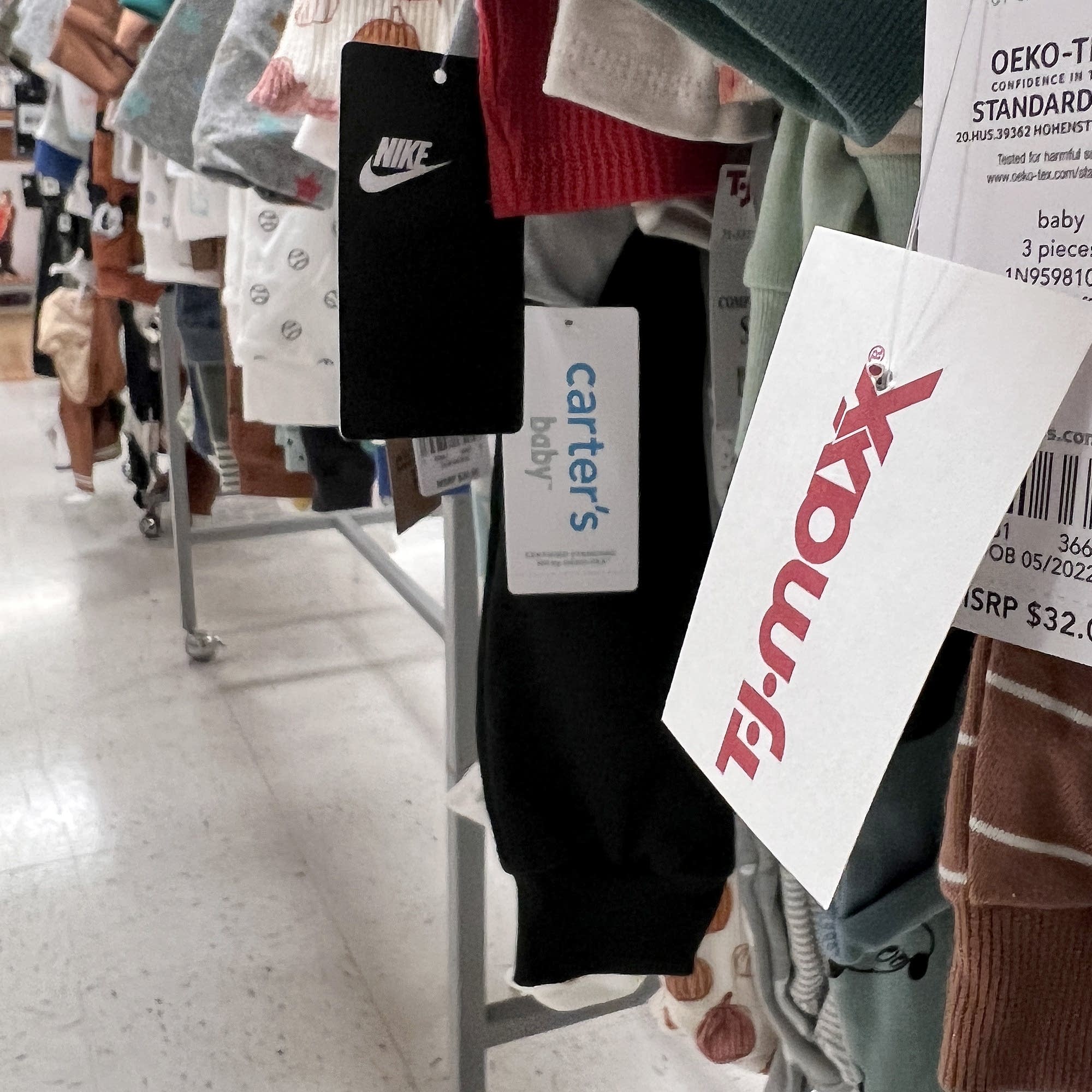
Speaker 3 It reported a third-quarter decline in traffic and sales, and it cut its outlook for the year. TJX followed, that's the owner of TJ Maxx, Marshalls and Home Goods, off-price stores, as they're called.
Speaker 3 They actually beat expectations and raised their profit forecast. Marketplaces Carla Javier looked into the advantages then of being an off-price retailer.
Speaker 19 The off-price retailers are really strong right now, says analyst Janet Kloppenberg of JJK Research.
Speaker 20 There's very few retailers who are performing at the level that TJX is performing at.
Speaker 19 That success starts with the business model, says Nicole D. Horatius at Columbia Business School.
Speaker 21 A lot of times they're buying excess inventory from other retailers or other brands.
Speaker 19 She says the challenges facing retail lately, including tariffs, benefit the TJX model.
Speaker 21 The more challenge that the traditional retailer has in ordering goods, in forecasting inventory, in forecasting their own demand, the better off off the TJX companies are because there's going to be supply and demand mismatches.
Speaker 19 Which means excess inventory to buy and sell.
Speaker 22 They're providing high quality products at a less than normal retail price.
Speaker 19 Peter Zaleski, an economist at Villanova, says that's why these stores consistently get a lot of traffic.
Speaker 22 It's not a very highly cyclical company. So in a boom, they may not see sales spike, but in a recession, they may actually pick up customers.
Speaker 19 The off-pricing is especially attractive now, says Stephanie Sigelski of ICSC, a trade association for the marketplaces industry.
Speaker 23 Consumers are getting hit at the grocery store, and so they're trying to find ways to, you know, still get those things that they need and clothes for themselves and for their children, but doing so at a lower price point.
Speaker 19 And even though they are getting deals at the big box retailers too, she says consumers also enjoy the hunt for that perfect shirt that might not be at their local TJ Maxx next time.
Speaker 19 I'm Carla Javier for Marketplace.
Speaker 3 Back in 2021, the American Rescue Plan, that's the Biden-era pandemic recovery law, it created a couple of programs to boost local produce ecosystems, that's local farms and ranchers and small-scale growers.
Speaker 3 In April of this year, the Trump administration canceled both.
Speaker 3 So now those growers and the groups that benefited are scrambling to find new markets in what is already a challenging business, as Marketplace's Elizabeth Troval reports.
Speaker 24 On a plot of land next to Highway 90 in southwest Houston, Toto Alamasi shows me around his his less than an acre farm. Here he grows sugar cane, cassava, okra.
Speaker 24 Wearing a bucket hat and red button-down, he holds up a plant with little magenta pods.
Speaker 25
This is Rosal Pod. Hi, biscuit.
We grow this in Africa.
Speaker 4 Back at home.
Speaker 24 Home is the Democratic Republic of the Congo. Alamasi moved to Houston in 2011 through the U.S.
Speaker 24 Refugee Resettlement Program and was connected to a non-profit called Planet Forward, which was created to help refugees learn to farm in Houston.
Speaker 25 To farm here, it looks like back at home. Only back home, we have only two seasons.
Speaker 24
He and his wife have adjusted to farming the four seasons here in Houston. It's a full-time job for them.
It isn't lucrative, but it's been enough for them to pay their bills.
Speaker 25 We sell to the farmers market, and our big customer is Planet Forward, the organization.
Speaker 24 Planet Forward buys a lot of produce from Alamasi and other refugee farmers and sells it to wholesale purchasers like the Houston Food Bank. Well, they used to.
Speaker 24 This year, the Trump administration ended the USDA funding that food banks used to buy produce from local small-scale growers.
Speaker 24 That has left food banks with less produce and farmers like Alamasi without buyers for their crops.
Speaker 24 It's a problem that's top of mind for Planet Forward CEO Najor Roffman, who I meet at the nonprofit's food hub, where produce is cleaned and stored.
Speaker 14 It's sort of a micro-warehouse where the farmers can come in, they could sort out the produce, they could weigh it, they could wash it.
Speaker 24 Planet Forward is under a major overhaul right now to help keep farmers like Alamasi in business. They're looking for new buyers and shifting to a more cooperative model.
Speaker 26 Can we come together and can we prioritize which produce to grow based on what the market demands are?
Speaker 26 You know, if one farmer is very good at one particular crop, let them do more of that and let the other farmers do less of that.
Speaker 24 Rothman is also trying to expand Planet Forward's educational educational mission beyond refugees, since that program has mostly winded down under Trump.
Speaker 24 Now they're working with schools and the formerly incarcerated, and on getting farmers special certifications that would allow them to sell to new buyers, like cafeterias.
Speaker 24
And they're not the only ones having to pivot. I meet farmer Jeremy Peaches at his grocery store.
He buys from local growers, and he's also a farmer himself and lost buyers because of the USDA cuts.
Speaker 16 It's just a sign of the times.
Speaker 13 Like
Speaker 16 we had buyers, policy changed, we don't.
Speaker 17 Gotta go find some more.
Speaker 24 But while he looks for new buyers, he can't totally stop planting.
Speaker 16 Because
Speaker 16 what if I find one but I don't have that product ready? Then that means I can't fulfill a need.
Speaker 16 So it leaves uncertainty.
Speaker 24
But he is scaling back. from growing on 25 acres to 15 and he's hired fewer workers.
Peaches says small small farmers have to do everything on their own.
Speaker 24 That's why pooling together produce to nail down higher-volume contracts is a strategic pivot.
Speaker 17 That's why co-op and these groups need to get together, do more marketing, and find more buyers.
Speaker 24
But organizational change takes longer than a harvest season. And farmers like Toto Alamasi have produce they need to sell now this year.
He can't count on the food bank.
Speaker 24 He fears what this means for his business.
Speaker 25 If even food bank cannot come back,
Speaker 4 we are afraid how we will continue.
Speaker 25 Food bank was our bigger customer. The market cannot finish on.
Speaker 24
He's not sure what he's going to do. He's not selling enough produce right now to cover his mortgage.
But for now, he keeps tending to his farm.
Speaker 24 In Houston, I'm Elizabeth Troval for Marketplace.
Speaker 3 This final note on the way out today, which is a reminder that I definitely need to call my agent. Maybe you saw this the other day?
Speaker 3 That Parmigiano-Reggiano, the cheese, is going to be repped, as they say in Hollywood, by the talent agency UTA.
Speaker 3 The consortium of Parmigiano-Reggiano said, and this is a quote: Parmigiano-Reggiano stands for simplicity, quality, and depth, and we are excited to explore new formats and platforms to express this story globally.
Speaker 4 I am totally calling my agent on Monday.
Speaker 3 Totally.
Speaker 3
Our theme music was composed by BJ Lederman Marketplace's executive producer is Nancy Fargalli. Joanne Griffith is the chief content officer.
Neil Scarborough is vice president and general manager.
Speaker 3
And I'm Kai Rizdahl. Have yourselves a great weekend, everybody.
We will see you back here on Monday. All right.
Speaker 6 8
Speaker 6 this is
Speaker 8 With the state of today's economy, it's more important than ever to invest in products that last for years to come.
Speaker 8 As the seasons shift and get cooler, make sure your closet is stocked with durable layers that stand the test of time from American Giant.
Speaker 8 American Giants' clothes work harder and are wearable season after season.
Speaker 8 Their greatest hoodie ever made is made from the highest quality materials that are cut and sewn right here in the United States. So you're investing right back in your local community.
Speaker 8 Choosing American Giant means taking a stand for American manufacturing and hardworking Americans, something other megacorporations don't care about.
Speaker 8 From fleece to knit, all in a range of colors for versatile daily wear, American Giant delivers everyday pieces designed for everyday life.
Speaker 8 Feel the difference of quality made-to-last clothes from American Giant. Get 20% off your first order with code STAPLE20 at AmericanDash Giant.com.
Speaker 8 That's 20% off your first order at AmericanDash Giant.com with code Staple 20.