The long-awaited September jobs report arrives
The September jobs report finally arrived after a six-week delay, showing employers added 119,000 jobs — well above expectations. The BLS also recorded an unusually strong 80% employer response rate, the highest since 2019. Improved accuracy came as a consequence of the deferred report. Also in this episode: Food service gained 36,000 jobs, America’s brand image hit a new low, and a scholarship celebrated 20 years of supporting Latina students.
Every story has an economic angle. Want some in your inbox? Subscribe to our daily or weekly newsletter.
Marketplace is more than a radio show. Check out our original reporting and financial literacy content at marketplace.org — and consider making an investment in our future.
Press play and read along
Transcript
Speaker 1 Are you ready to get spicy? These Doritos Golden Sriracha aren't that spicy.
Speaker 1
Sriracha sounds pretty spicy to me. Um, a little spicy, but also tangy and sweet.
Maybe it's time to turn up the heat. Or turn it down.
Speaker 2 It's time for something that's not too spicy.
Speaker 1 Try Doritos Golden Sriracha. Spicy,
Speaker 2 but not too spicy.
Speaker 3 This podcast is supported by Odoo. Some say Odoo business management software is like fertilizer for businesses because the simple, efficient software promotes growth.
Speaker 3 Others say Odo is like a magic beanstalk because it scales with you and is magically affordable.
Speaker 3 And some describe Odoo's programs for manufacturing, accounting, and more as building blocks for creating a custom software suite. So Odoo is fertilizer, magic beanstock building blocks for business.
Speaker 3 Odoo, exactly what businesses need. Sign up at odoo.com.
Speaker 1 That's odoo.com.
Speaker 4 Happy Jobs Day Thursday, everybody.
Speaker 4 Hey, better late than never, right? From American Public Media, this is Marketplace.
Speaker 4
In Los Angeles, I'm Kai Risdall. It is Thursday, today the 20th of November.
Good as always to have you along, everybody.
Speaker 4 The headlines for this morning's almost seven weeks delayed September jobs report, as you have heard, not too shabby. 119,000 new jobs in this economy as the summer of 2025 came to a close.
Speaker 4 That is more than people had been guessing. The unemployment rate, though, did nudge up to 4.4%.
Speaker 4 But let's go back to that number of new jobs thing I mentioned a second ago. It comes from what's called the Establishment Survey.
Speaker 4 Businesses are asked, literally, how many jobs they added in any given month.
Speaker 4 And I mention that because the Bureau of Labor Statistics noted today that the response rates for the September survey were unusually high thanks to the government shutdown.
Speaker 4 And as Marketplace's Justin Ho reports, high response rates are a good thing.
Speaker 5 The BLS gathers data for its establishment survey by sending businesses a form to fill out, asking about headcounts. But there isn't any law or incentive pushing businesses to respond quickly.
Speaker 6 Usually, not all firms fill out the report in time.
Speaker 5 Preston Moy is senior economist with the research group Employ America. He says response rates for the initial jobs reports after any given month are sometimes as low as 50%.
Speaker 5 But remember, the September report came out nearly seven weeks late.
Speaker 6 So that gave firms more time to fill out their forms. And so the first release of the data saw a higher collection rate than usual.
Speaker 5
The BLS says the response rate for the September report was more than 80%. That's the highest since late 2019.
Courtney Schubert is an economist with macro policy perspectives.
Speaker 7 This is a kind of a shift because we've seen that response rates have really suffered since the pandemic. That's not just for the BLS, but across other government surveys and private surveys too.
Speaker 5 Schubert says that could be that trust in government and private sector surveys is eroding. It could also be that many businesses are having a tough year dealing with economic uncertainty.
Speaker 7 When firms are struggling, they're not going to be focusing on turning on a survey response. They're probably focusing on whether they can make payroll or not.
Speaker 5 And while it is welcome news that response rates were higher for the September report, Kate Bond, chief economist at the Institute for Women's Policy Research, says we already have a process meant to incorporate late responses from businesses.
Speaker 5 Revisions. So the report that came out today, for instance, contained revised numbers for July and August.
Speaker 8 You know, revisions are an important and normal part of improving accuracy of data. This is just how data collection works, and it does not mean there's something wrong with that data collection.
Speaker 5 And even though extending data collection periods can increase response rates, Bond says it's also important that the BLS keeps releasing jobs data in a timely fashion.
Speaker 8 We have a need for really quick response data in our economy. You know, the Fed is looking at these monthly reports because they need something at a regular basis.
Speaker 5 Bond says timely jobs data is more effective for policymaking, even if it means bigger revisions later on. I'm Justin Ho for Marketplace.
Speaker 4
On Wall Street today, traders had a high response rate. It was to sell.
We'll have the details when we do the numbers.
Speaker 4 One more on today's jobs report, delayed though it was. We are going now to table B1: employees on non-farm payrolls by industry sector and selected industry detail.
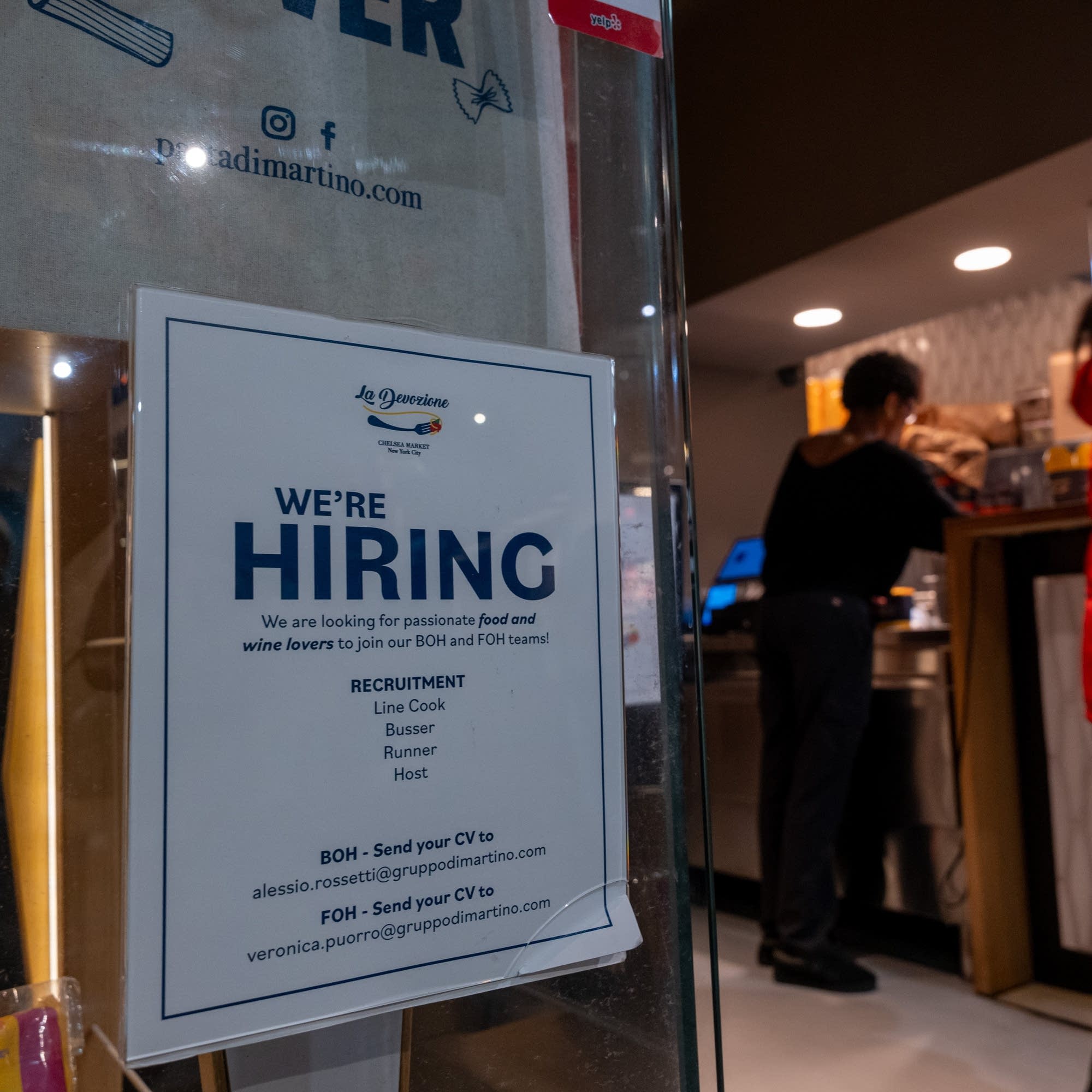
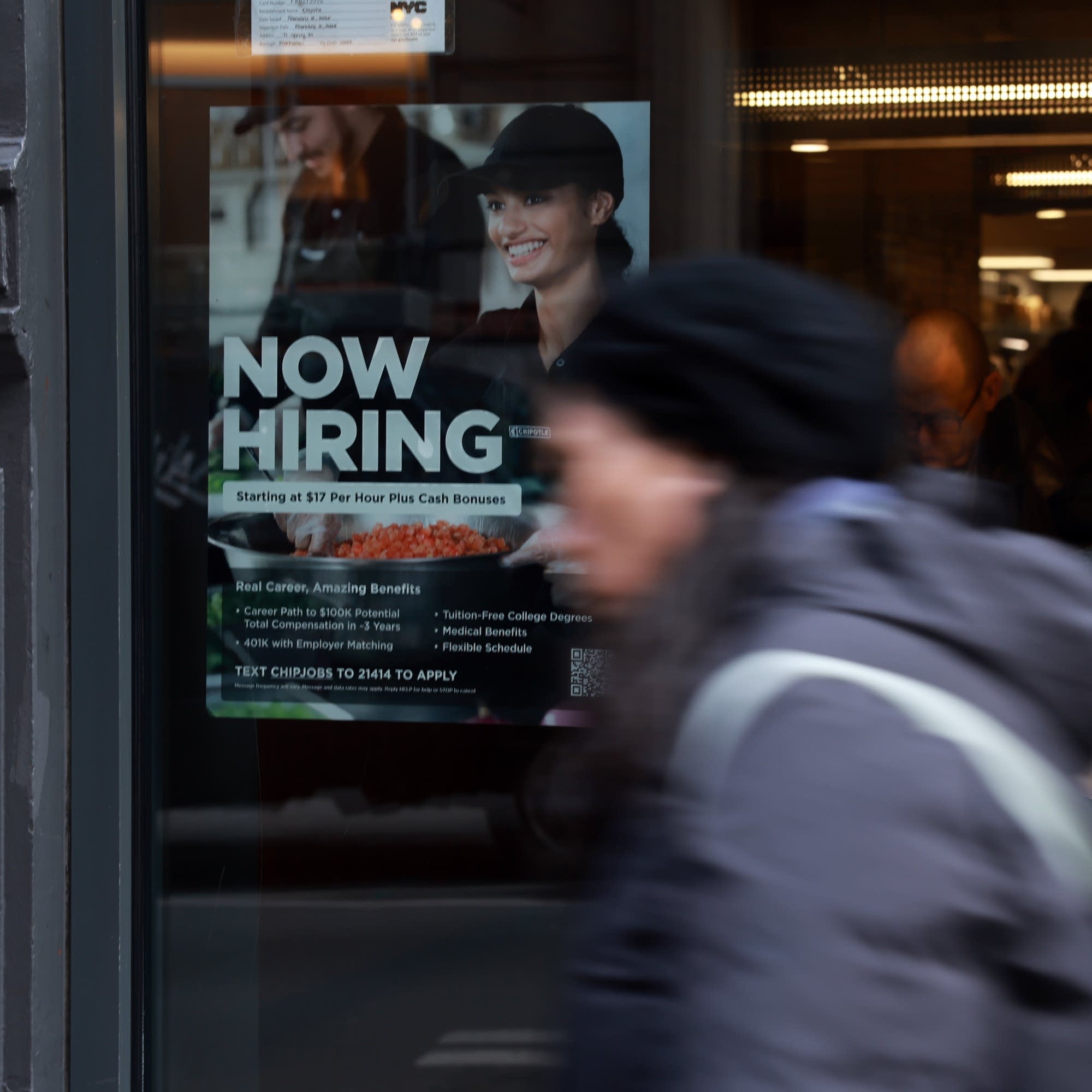
Speaker 4 The industry and industry detail of interest to us today, food services and drinking places, which added more than 36,000 jobs two months ago. That was more than in any other sector except healthcare.
Speaker 4 Marketplace's Daniel Ackerman looked into why, in an economy that's tightening for a whole lot of consumers out there, restaurants are staffing up.
Speaker 9 Plenty of people are still eating out in Keene, New Hampshire. That's where Beth Wood owns the 21 Bar and Grill.
Speaker 10
We get customers from all bases. We have a college in town.
We have families that come in. We have business professionals.
Speaker 9 And to feed the crowds, Wood recently hired three additional kitchen staff. She says the process was much easier than it used to be.
Speaker 10 A year ago, it was pretty impossible to hire kitchen staff. And now it's great to actually see applications come in and people inquire more frequently if we are hiring.
Speaker 9 One reason for this uptick in restaurant applications is that some workers are having a hard time finding jobs elsewhere in the economy, says Alex Susskind, a professor of food and beverage management at Cornell University.
Speaker 11 That's a normal employment cycle for the restaurant business. When the economy starts to tighten and other types of employment become less available, then the restaurant business is always there.
Speaker 11 It always has been.
Speaker 9 Some applicants may also look to restaurants for a second or third job. Susskind says restaurants can use the labor right now, especially full-service ones.
Speaker 9 That's because high earners are dining out a lot. And even folks with tighter finances who might be cutting back on travel or luxury items still see restaurants as one place they can splurge a little.
Speaker 11 They're not afraid of spending money. They're just very careful about selecting the right experiences for the money that they do have to spend.
Speaker 11 And so a food service experience or restaurant experience might be a part of that.
Speaker 9 Still, some restaurant owners aren't sure the good times will last, says Chad Moutre, chief economist at the National Restaurant Association.
Speaker 12 When I talk to restaurant operators, they're very anxious about the next six months.
Speaker 12 They're really getting hit pretty hard by rising costs and the uncertainty over a number of issues, I think is really causing them to be much more anxious.
Speaker 9 For now, though, customer traffic has modestly declined nationwide, but Moudre says it's still enough to keep the restaurant industry and its workers afloat.
Speaker 9 which he says reflects something about American consumers.
Speaker 12
After a while, they get tired of cooking and they want to go out to eat. They want to go out and celebrate things.
Consumers are prioritizing restaurants.
Speaker 9 Cheers. I'm Daniel Ackerman for Marketplace.
Speaker 1 Okay.
Speaker 4 I'm going to give you a set of facts here that might not seem connected, but that definitely are.
Speaker 4 Fact number one, the effective tariff rate American consumers are paying right now is about 18%, the highest it's been since 1934. That's according to the budget lab at Yale.
Speaker 4 Fact number two, Levi's, the denim company, listed rising anti-Americanism as a risk to its business in a regulatory filing over in the UK earlier this year. And here's number three.
Speaker 4 You were just back from travel overseas, right? You were on a trip to India?
Speaker 6 Yeah.
Speaker 4 Usha Haley is a professor of management and international business at Wichita State University.
Speaker 4 She has lived and worked on five continents, and she's also the chair of the World Trade Council of Wichita.
Speaker 4 When you were out and about, do you see people, did you see people shying away from American products?
Speaker 13
Yes. What I found was that wholesalers were steering away from American products, agricultural goods.
So, for example, American apples were very much in demand and always have been.
Speaker 13 And you couldn't find them in the markets anymore. People were buying New Zealand apples,
Speaker 13 not going to McDonald's that often or at all.
Speaker 13 It's things like that.
Speaker 4 A reminder here that President Trump has doubled tariffs on India to 50% as punishment for their purchases of Russian oil.
Speaker 4 And he's imposed a $100,000 fee for H-1B visas, around 70% of which go to people born in India.
Speaker 4 And I know that wholesalers buying New Zealand apples instead of American or fewer people going to McDonald's might seem small,
Speaker 1 but.
Speaker 13
People don't go to McDonald's to buy hamburgers. McDonald's is very expensive compared to local food.
What they go for is an American experience, or what they like to see as an American experience.
Speaker 4 That American experience and what it means for this economy, I've talked about. We export products, sure, but ideas too, about fairness and transparency and the rule of law.
Speaker 4
That's a critical part of the American brand. So now think about this.
The CEO of McDonald's said in an interview back in September, and this is a quote, the aura around America has dimmed.
Speaker 4 McDonald's and Coca-Cola too have each launched ad campaigns downplaying their American roots.
Speaker 4 So we're going to spend some time today talking about the American brand, what's happening to it, and why it matters for our economy.
Speaker 13 I came here as a student many, many decades ago from India, and brand America attracted me here, as it does for my students currently around the world.
Speaker 13 America stood for predictability, the shining city on the hill, an educational system, par excellence, and the ability to be what you want to be.
Speaker 13 But most of all, America was a market that you could understand, where data were transparent, where regulation was understandable, where you didn't have to bribe somebody to get ahead.
Speaker 13 You know, all these things meant a lot to me. And I think that's what attracts people, and that's what attracts investment.
Speaker 4 That's why American Treasury bonds are the safest investment in the world. It's why the dollar is the world's reserve currency.
Speaker 4 But investment in our national brand is also about the people who come here.
Speaker 4 The number of new international students enrolled at U.S. colleges and universities dropped by 17% this fall.
Speaker 4 The World Travel and Tourism Council points to a sharp drop in foreign tourism to the United States and says the U.S. economy could lose $12.5 billion this year because of it.
Speaker 13 When I was working at the Harvard Kennedy School, I had a colleague called Joe Nai. Joe Nai developed this idea of soft power.
Speaker 13 Soft power stood for things that a country could transmit and that others could understand, such as culture, values, education, and the media.
Speaker 13 All of these things contributed to an image of the United States, and I have seen that change drastically over the years.
Speaker 4 Joseph Nye is sadly no longer with us, but I wonder
Speaker 4 what he might say, and I wonder what you say about Brand America today, right now.
Speaker 13 Well, it's pretty shocking. I'm an expert on emerging markets, and the United States is being evaluated just as an emerging market would, in the sense that there is a high degree of regulatory risk.
Speaker 13
We don't know when the next tariff is going to come and from where. The upshot is nobody wants to invest currently in the U.S.
They're waiting and seeing.
Speaker 4 I'm going to roll out a vocabulary word here that you, of course, will be familiar with, but perhaps listeners won't.
Speaker 4 The idea of a risk premium when dealing with the United States, the idea that it's going to cost you a little more if you want to do business with America. Talk about that for a second.
Speaker 13 That is so astute. I mean, that is actually a good word to use here.
Speaker 13 It is a risk premium associated with the United States and also correlating quite well with the high degree of economic and political uncertainty that currently surrounds the United States.
Speaker 4 Uncertainty is the sum total of stuff you cannot know.
Speaker 4 And there's a lot of that when it comes to the American economy and its place in the world right now.
Speaker 4 But one thing you can know, something you can measure, is our national image.
Speaker 1 Measuring is the easy part, to be honest with you, but the difficult thing is doing something about it if you don't like what you find.
Speaker 4 A marketing analysis of brand America. But first, let's do the numbers.
Speaker 4 Dow Industrial is down 386 today, eight-tenths of 1%, 45,752 on the blue chips. NASDAQ down 486, that is 2.1%,
Speaker 4 22,078. The S ⁇ P 500 dipped 103 points, 1.5%.
Speaker 4 Ended things at 65.38. NVIDIA's blockbuster third quarter did not stop that stock from slip-sliding away today after initially rising 5%.
Speaker 4
NVIDIA finished down 3.1% on the session. It's possible investors are holding on to concerns that AI stocks are overvalued.
Or maybe they're worried about what the Fed will do with interest rates.
Speaker 4
And that is what silenced NVIDIA's sizzle. Walmart reported a 4.5% same-store sales boost for its last quarter.
Shares of the Bentonville, Arkansas company jumped 6.1% of 1% today. Bonds were up.
Speaker 4 The yield on the 10-year T-note fell 4.09er%.
Speaker 4 You're listening to Marketplace.
Speaker 14 This episode is brought to you by Progressive Commercial Insurance. Business owners meet Progressive Insurance.
Speaker 14 They make it easy to get discounts on commercial auto insurance and find coverages to grow with your business. Quote in as little as eight minutes at progressivecommercial.com.
Speaker 14
Progressive Casualty Insurance Company. Coverage provided and serviced by affiliated and third-party insurers.
Discounts and coverage selections not available in all states or situations.
Speaker 15 With Venmo Stash, a tag on one hand, and ordering a ride in the other, means you're stacking cash back. With Venmo Stash, get up to 5% cash back when you pick a bundle of your favorite brands.
Speaker 15
Earn more cash when you do more with Stash. Venmo Stash Terms Inclusive Supply max $100 cash back per month.
C terms at Vimmo.me slash stash terms.
Speaker 16
Lowe's early Black Friday deals are going fast. Don't miss up to 50% off.
Select major appliances. Plus, up to an extra 25% off when you bundle select major appliances.
Speaker 16
And with Christmas around the corner, you're going to need more string lights, right? Save $4 on GE LED 100 count string lights. Now just $5.98.
Lowe's, we help. You save.
Valid through 12.3.
Speaker 16
Selection varies by location. Select locations only.
While supplies last. See Lowe's.com for more details.
Speaker 17
AI agents are everywhere, automating tasks and making decisions at machine speed. But agents make mistakes.
Just one rogue agent can do big damage before you even notice.
Speaker 17 Rubrik Agent Cloud is the only platform that helps you monitor agents, set guardrails, and rewind mistakes so you can unleash agents, not risk. Accelerate your AI transformation at rubrik.com.
Speaker 17 That's r-u-b-r-i-k.com.
Speaker 4
This is Marketplace. I'm Kai Rizdahl.
If you're a long-time listener to this program, you've heard me say this before. The institutions of this economy depend on the institutions of this democracy.
Speaker 4
The rule of law, fair regulation, recourse when wronged. It's why people come here and it's why businesses invest here.
That's the American brand.
Speaker 1 People do observe the United States around the world. It's a country that looms quite large in the popular global imagination.
Speaker 4 Simon Anholt started his career in advertising and social anthropology before he turned his attention to national brands a couple of decades ago.
Speaker 1 I think it was when I was having the hundredth conversation with other people in the advertising agency where I worked about brand values and why they mattered so much.
Speaker 1 I think we were dealing with toilet paper. And I just suddenly thought to myself, On the one hand, this is so fascinating from the point of view of human psychology.
Speaker 1 But on the other hand, here we are, grown men talking about toilet paper. I just thought, supposing we were to apply this to something that really mattered, like the countries that people live in.
Speaker 4 He's published an annual ranking of how people feel about different countries since 2005. It's called the Nation Brands Index.
Speaker 4 How does one go about it then? What's the methodology of measuring a national brand?
Speaker 1 Measuring is the easy part, to be honest with you, because all you have to do is to run opinion polls. The difficult thing is doing something about it if you don't like what you find.
Speaker 4 Well, let's back up to the methodology for a minute. Is it literally as simple as, what do you think of Japan? How do you feel about Brazil? That kind of thing.
Speaker 1 And not quite so open because people are notoriously bad at answering open questions, and I would be the same.
Speaker 1 So what we actually tend to do is to make a series of fairly neutral statements, and then we ask people how much they agree or disagree with those statements.
Speaker 4 Those questions, which Simon's team sends to about 40,000 people around the world every year, they run the gamut.
Speaker 1 Like, for example, this country takes a responsible approach to global poverty.
Speaker 1 Or I would like to have a friend from this country strongly agree, strongly disagree, and five or six points in the middle. So when I first started doing the study way back in 2005,
Speaker 1 I set about very enthusiastically running the study every three months.
Speaker 1 And it quickly became apparent that I had engendered the world's most boring social survey because people just didn't change their minds. And we kind of realized that once a year was plenty.
Speaker 4 We are
Speaker 4 an American journalism outfit. So obviously we are interested in Brand America which is why we're doing this story.
Speaker 4 And I guess the question that has to be asked is Brand America in 2005 versus Brand America 2025?
Speaker 1
Discuss. Discuss.
Well
Speaker 1 America responds very precisely to its own behaviors.
Speaker 1 So what I mean by that is that people do observe the United States around the world. It's a country, as I said before, that looms quite large.
Speaker 1 And what we began to find was that it was surprisingly volatile.
Speaker 4
It went down during the George W. Bush years as the war in Iraq dragged on.
And then up during the 2010s, when it pretty much dominated the top spot.
Speaker 1 As soon as Obama left office and Trump stepped in, it was suddenly no longer first.
Speaker 1 It went down to six. Now, to most people, five places wouldn't sound like a lot, but for the world's most boring social survey, that is a really big drop.
Speaker 4 You're very disparaging of your own research, I'll just say.
Speaker 1 It's an English habit. But there you go.
Speaker 4
In Simon's 2025 ranking, based on survey data collected this past August, Japan is the top-ranked country. Germany's number two.
Canada three.
Speaker 4 You scroll on down the list, and you'll find the United States of America all the way down at number 14.
Speaker 1 Which is by far the lowest it's ever been and the first time that it's ever dropped out of the top 10.
Speaker 1 In fact, the first change there's ever been in the top 10 countries since I started the survey in 2005.
Speaker 1 So what does that all mean? Well, you can really very precisely and very accurately key each of these changes in rank to something that America does to the world outside its own borders.
Speaker 4 Things like wars and tariffs and foreign aid.
Speaker 1
People don't care about what goes on domestically in other countries. They don't know.
They don't bother to find out.
Speaker 1 But they do care about the impact that other countries countries have on the world in which they live. So if the U.S.
Speaker 1 does something messy and unpopular, like invade Iraq, down it goes. If it does something popular, like helping fix Ebola, sign the Paris Agreement, then up it goes.
Speaker 4
Now, country rankings are everywhere. You can find lists of the happiest countries in the world, the richest countries in the world.
There are a ton of them.
Speaker 4 And even if you don't know or even care exactly where the United States ranks on all those lists, how people outside our borders feel matters.
Speaker 4 This is at bottom, with all respect to
Speaker 4 your geopolitical analysis here, this becomes an economic issue because people don't want to go to, people don't want to spend money in, people don't want to go to school in, people don't want to start businesses in countries that they have a negative brand impression of.
Speaker 1
Right. And this was exactly my point.
It is tied in every imaginable way to the real fortunes of countries.
Speaker 1 And we found that there is a higher than 80% correlation between a country's score on the Nation Brands Index and the amount of revenue that it gets from most
Speaker 1 external forces like trade and tourism and foreign investment. So it'll cost you.
Speaker 4 The United States does obviously have a uniquely influential role in the global economy. It's hard for other countries to just opt out of doing business with us.
Speaker 4 That's one reason you see governments around the world making promises to invest here, trying to lower that effective tariff rate I talked about up at the top.
Speaker 4 But we might not know the true cost of the changing American brand, of all the people who didn't come here, of the businesses not started here, investments not made here for generations.
Speaker 4 It strikes me as I look at this 2025 list that Japan and Germany are one and two.
Speaker 4 And if you go back 80 years, they were, I mean, I wasn't there, but they were the most reviled countries on the planet.
Speaker 1
Absolutely. In fact, if you go back to last year, number three was Italy.
And there you have it:
Speaker 1
the complete set of the access palette. That's right.
So I often quote this to people, governments in particular, who say, oh, but it's impossible to change the image of a country.
Speaker 1
And I say, no, just look at Germany, Italy, and Japan. They're the three most admired countries.
From Pariah to Paragon in just 80 years, that's a pretty rapid change, in my opinion.
Speaker 4 Let me say that one more time.
Speaker 4 80 years counts as pretty rapid change when you're rebuilding a national brand.
Speaker 4 If you break down today's jobs report that we talked about up top, if you break it down by education, table A4, if you're still following along at home, the unemployment rate for people 25 and up without college degrees was more than a percentage point higher for those with bachelor degrees.
Speaker 4 That divide's not a new one. So for today's installment of our series, My Economy, a job that's not just about the job, but is about the work being done to help others.
Speaker 6
I'm Julissa Hermosen. I've been a technology leader and executive for over 20 years and I live in New Jersey.
I was born in the Dominican Republic.
Speaker 6 My family emigrated to the United States and we moved to New Jersey. So I grew up in Perth Amboy, then attended Rutgers
Speaker 6 and
Speaker 6 we were a working class family. So as the first in my family, we really didn't know all the things that were needed to pay for college.
Speaker 6
I learned that I was deregistered from Rutgers on April 1st, April Fool's Day. This was spring of junior year.
And so I was deregistered and my car broke down. I lost my job.
Speaker 6
And long story short, I made a promise to myself. I was walking on New Brunswick Avenue in Perth Amboy and I didn't have anything.
And so I made a promise to myself, you know, get me through this.
Speaker 6 I promise I will help others. I promise.
Speaker 6 So I worked seven days a week, two jobs, and I was able to come back to Rutgers in September and eventually completed my degree in political science and criminology.
Speaker 6
I have debt now. And so my focus is working and paying off that debt.
And yeah, I forgot about the promise that I made because I needed to now focus on building a career, build, you know, saving.
Speaker 6 And then I went to an event.
Speaker 6 A friend of mine invited me to like, you know, one of those sort of motivational events. And at that event, we did some sort of closing your eyes and imagining things, right?
Speaker 6
And it was at that moment that I remembered my promise. Like I made it.
You know, I graduated college. So now I need to give back.
Speaker 6
The only way that I knew was to call the university. And I called the alumni office.
I told them, you know, I'd like to start a scholarship. And so I named it the Latina Leadership Potential Award.
Speaker 6 I met with them, signed paperwork, and the scholarship started in 2005. And it was for $1,000 for a junior Latina.
Speaker 6
I know I didn't, I didn't have that. I didn't see that for me.
I didn't have that role model. So I just want to help so that others don't feel alone like I did.
Speaker 4
Julissa Hermosan. She's a technology executive in New Jersey.
She's working to help the next generation of Latina leaders.
Speaker 4
This series, no matter what you do, does not happen without you. So take a second.
If you would let us know what's going on, marketplace.org/slash myeconomy.
Speaker 4
This final note on the way out today. We started with delayed data.
We are going to end with delayed data.
Speaker 4 The Bureau of Economic Analysis said today our second look at economic growth, July through September, is not going to come out next Wednesday as scheduled.
Speaker 4 As it happens, we never got our first look at Q3 GDP either, thanks to the shutdown. Look, I know I used this line a couple of weeks ago, but it really is Schroeder's economy right now.
Speaker 4 Might be shrinking, might be growing. We're not going to know till we open the box.
Speaker 4 Our daily production team includes Livy Burdett, Andy Corbin, Nicholas Guillong, Maria Hollenhorst, Sarah Leeson, Sean McHenry, and Sophia Terenzio.
Speaker 4
Will Story is the brand new supervising senior producer. I'm Kyle Rizdahl.
We'll see you tomorrow, everybody.
Speaker 4 This is APM.
Speaker 15 With Venmo Stash, a tackle on one hand, and ordering a ride in the other means you're stacking cash back. With Vimmost, Stash, get up to 5% cash back when you pick a bundle of your favorite brands.
Speaker 15
Earn more cash when you do more with Stash. Venmo Stash Terms includes supply.
Max $100 cash back per month. See terms at Venmo.me slash stash terms.