Much ado about affordability
“Affordability” — it’s a hot-button issue across the political spectrum. But how does one define or quantify a subjective idea? We called up a linguist and a few economists to hear their thoughts. Plus: Flat wholesale inflation is a warning sign for higher overall inflation, September retail sales merely inched up, and the U.S. dollar is showing signs of recovery after a troubling first half of the year.
Every story has an economic angle. Want some in your inbox? Subscribe to our daily or weekly newsletter.
Marketplace is more than a radio show. Check out our original reporting and financial literacy content at marketplace.org — and consider making an investment in our future.
Press play and read along
Transcript
Speaker 1 Introducing your new Dell PC with the Intel Core Ultra Processor. It helps you handle a lot even when your holiday to-do list gets to be a lot.
Speaker 1 Like organizing your holiday shopping and searching for great holiday deals and customer questions and customers requesting custom things, plus planning the perfect holiday dinner for vegans, vegetarians, pescatarians, and Uncle Mike's carnivore diet.
Speaker 1 Luckily, you can get a PC with all-day battery life to help you get it all done. That's the power of a Dell PC with Intel inside, backed by by Dell's price match guarantee.
Speaker 1
Get yours at the best price of the year by visiting Dell.com/slash holiday. Terms and conditions apply.
See Dell.com for details.
Speaker 4 This podcast is supported by Odoo. Some say Odo business management software is like fertilizer for businesses because the simple, efficient software promotes growth.
Speaker 4 Others say Odo is like a magic beanstalk because it scales with you and is magically affordable.
Speaker 4 And some describe Odo's programs for manufacturing, accounting, and more as building blocks for creating a custom software suite. So, ODU is fertilizer magic beanstock building blocks for business.
Speaker 4 Odoo, exactly what businesses need. Sign up at odoo.com.
Speaker 2 That's odoo.com.
Speaker 2 One word, six syllables: the new, new way to talk about this economy from American public media. This is Marketplace.
Speaker 2
In Los Angeles, I'm Kai Risdahl. It is Tuesday today.
This one is the 25th of November. Good as it always is to have you along, everybody.
Speaker 2 We are going to get to the newest buzzword about and for this economy in just a little bit, but we're going to start with data of the government kind, delayed though it was.
Speaker 2 Up first, the producer price index, inflation at the wholesale level is another way to think about that. Three-tenths of 1% higher in September than it was in August.
Speaker 2 Yes, this is old data, but that's not so bad given, you know, everything.
Speaker 5 Core PPI came in a little bit softer than what most people were expecting. So that caught me a little bit by surprise.
Speaker 2
Economist Nicole's survey at Wells Fargo there. Since we are not going to get personal consumption expenditures indexed, the Fed's favorite, as you know, tomorrow is scheduled.
Again, thank you.
Speaker 2 Shutdown. This PPI is going to matter all the more at the central bank's meeting in a couple of weeks.
Speaker 5 You have a committee at the Fed that seems
Speaker 5 pretty split.
Speaker 5 You have some people who are more worried about the stable maximum employment side of the mandate, and then you have some folks, the hawks, that are a little bit more worried on the inflation side.
Speaker 5 And so I think what this data does, what it shows us, is that it actually gives some evidence because the core PPI came in a little bit softer than expected, it maybe tells those hawks, those people on the committee that are worried about the inflation side, that inflation is not spiraling out of control.
Speaker 2 Well, yes, but what about the people more worried about the labor market?
Speaker 5 They can say, well, look, this PPI data suggests that this inflationary picture looks a little bit more benign. Why not focus more on the employment side where we are seeing some weakness?
Speaker 5 The unemployment rate ticked up in the latest report that we saw.
Speaker 2 Add it all up.
Speaker 5 And so I think the crux of the data, I think, would put more of the committee towards a cut in December. That's our call.
Speaker 5 But like I said, I'm grasping for straws here a little bit. I don't think it changes the reaction function dramatically just on this PPI report alone.
Speaker 2 Disclaimer noted, and honestly, we are all kind of trying to read the tea leaves, right?
Speaker 2 We got an update on consumer confidence this morning, too, down to its lowest reading since April. Part of that, though, was just timing.
Speaker 5 Most of the survey period was
Speaker 5 occurring while the government, the federal government, was still shut down.
Speaker 2 Jay Powell and the gang do like their hard data, it is true, but vibes matter, people.
Speaker 5 I think this report does show you that potentially there is some room for a little bit of pullback in spending because of just the magnitude of the shift in confidence.
Speaker 5 But again, take it with a grain of salt, just as we've seen that there's a disconnect between what consumers feel and then what they actually do.
Speaker 2
Grain of salt noted. Also, because today was, relatively speaking, kind of a data palooza.
Retail sales for September came out today, spending two-tenths of 1% higher.
Speaker 2 Growth, sure, but less than the month before and less than people had been guessing. Marketplace's Kristen Schwab has more on what that might mean as we head into prime spending season.
Speaker 7 The overall feeling about September's retail sales report?
Speaker 9 Blah.
Speaker 7 Mark Sandy is chief economist at Moody's Analytics, and he says slowing sales growth isn't necessarily a red flag, especially after retail sales went up more than expected in August.
Speaker 7 But it's clear September's data isn't a reason to celebrate.
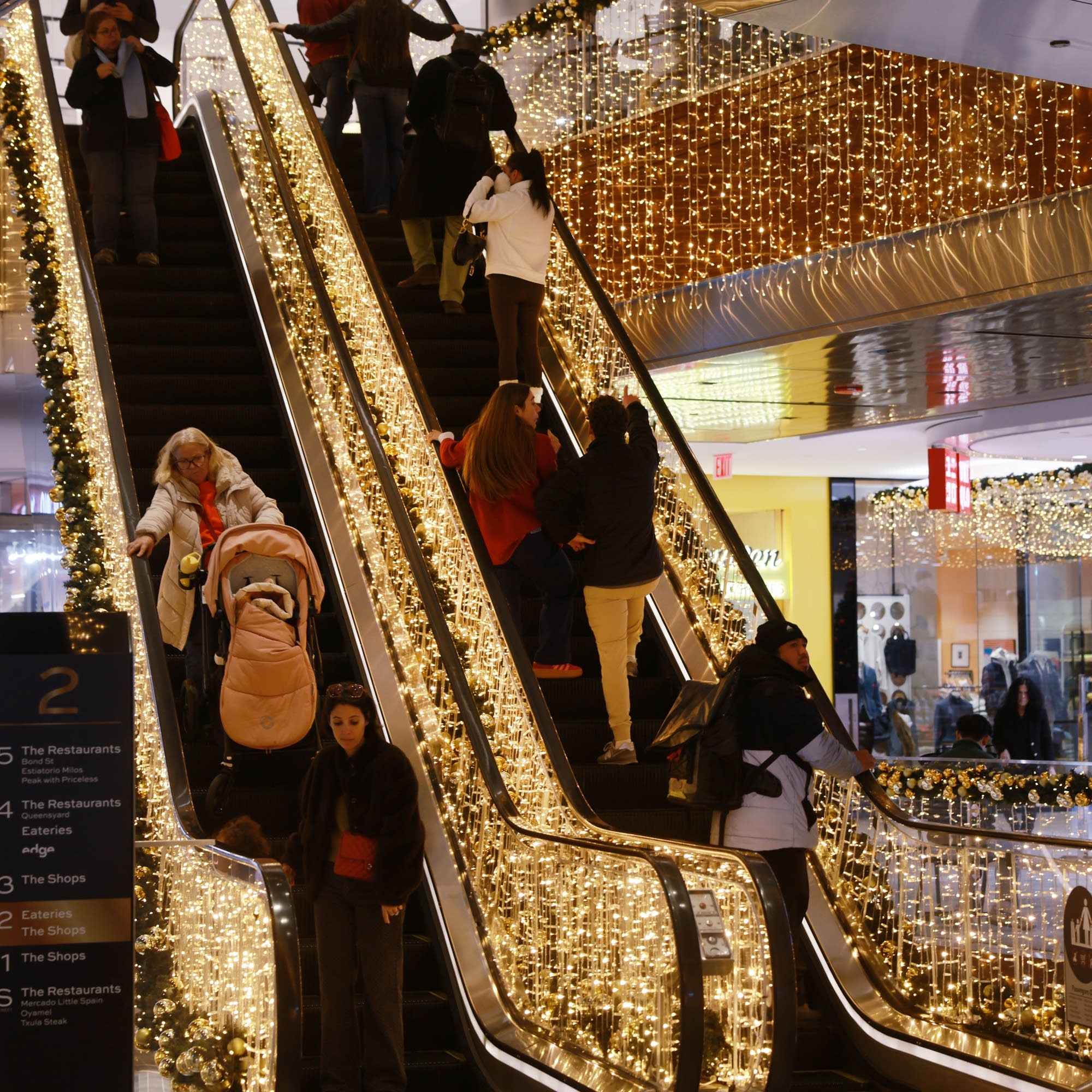
Speaker 9 Just feels like consumers coming into the Christmas buying season are kind of tired.
Speaker 7
That fatigue carried across categories. Car sales fell by three-tenths of a percent.
Electronics and appliances dropped half a percent. Clothing sales down seven-tenths of a percent.
Speaker 9 You know, if you kind of look at the components of of the retail sales report that go into producing consumer spending in the GDP accounts, it was basically zero.
Speaker 7 Blah, blah, and more, blah.
Speaker 7 Of course, one month of one type of data doesn't tell us exactly where the economy is heading, says Sam Zeif, global macro strategist at JPMorgan Private Bank.
Speaker 9 You can't look at any data report in a vacuum.
Speaker 7
Remember, this was September retail sales. We're still missing October.
And we won't get an October jobs report because of data that didn't get collected during the government shutdown.
Speaker 7 A report out from ADP today says private sector job losses ramped up over the last month.
Speaker 9 Definitely shows that the labor market is
Speaker 9 going through a soft patch.
Speaker 7 Which has a direct impact on how much people spend in this consumer-driven economy.
Speaker 7 We're also missing fresh data on inflation, information that helps economists understand where retail sales increases are coming from. The last inflation reports show prices keep rising.
Speaker 7 Beth Ann Bovino is chief economist at U.S. Bank.
Speaker 10 What that says is people are spending more money, but getting less in return.
Speaker 7 So much that Bovino says even higher-income households are changing their shopping habits.
Speaker 10 We're seeing a bit more trading down, searching for value than certainly we had not seen in the past.
Speaker 7 It means there could be more blah ahead. I'm Kristen Schwab for Marketplace.
Speaker 2
Come on, that was pretty good. Blah, right? Wall Street today, sure.
Stocks, yay.
Speaker 2 Bonds, though, gang. Bonds.
Speaker 2 We'll have the details when we do the numbers.
Speaker 2 One U.S. dollar today against a basket of the world's other floating currencies is worth about 3% more than it was a couple of months ago, mid-September, to be just a bit more precise.
Speaker 2 That's quite a turnaround from the first half of this year when the Greenback tumbled on worries over tariffs and how they were destabilizing global trade and also, and by the way, this economy, marketplace Justin Ho has more on the dollar's pickup.
Speaker 3 Throughout the last few weeks, investors have been betting that the Federal Reserve will hold interest rates steady next month because it doesn't have much government data to help guide its decision.
Speaker 11 They may push it off and wait for confirmation of economic data before they actually look to cut rates again.
Speaker 3 That's Chuck Tomes with Manu Life Investment Management. He says that expectation actually caused interest interest rates on short-term government bonds to rise.
Speaker 3 That boosted demand for those bonds and, by definition, for the dollars you need to buy them.
Speaker 11 People want to look at where you can get the highest yielding opportunities in a lot of times.
Speaker 11 So you saw the US dollar be a little bit more attractive to people looking at where they want to allocate capital.
Speaker 3 But Tomes says in the last few days, many investors have gone back to thinking the Fed will lower rates next month. That's after a few Fed officials said a cut in December would be appropriate.
Speaker 3 That said, there are plenty of factors that are continuing to boost the dollar's value.
Speaker 13 I think it's the least dirty shirt in the laundry basket.
Speaker 3 That's Sebastian Malaby, senior fellow at the Council on Foreign Relations. He says many other currencies in that laundry basket have been getting weaker thanks to stagnant economic growth.
Speaker 13 Growth in Germany in the third quarter has been flat, and France is in sort of permanent budget come political crisis. And so the two main economies in Europe have been very sluggish.
Speaker 3 Malabi says the Japanese yen has been weakening too, after the Japanese government approved a big round of stimulus.
Speaker 13 And stimulus means the government's promising more government spending, therefore more bond issuance, and that is negative for the yen.
Speaker 3 To be clear, Malabi says the factors that eroded confidence in the dollar this year are still at play, including the president's tariffs, also his attacks on central bank independence, and the growing national debt.
Speaker 3 But overall, he says investors are getting more accustomed to those risks.
Speaker 13 Thinking is, there may be long-term attrition in the competitiveness of the U.S. economy if there are tariffs, but we're not panicking anymore.
Speaker 3 The administration's policies will continue to affect the dollar's value.
Speaker 12 Ed Gresser with the Progressive Policy Institute says if tariffs cause consumer spending to drop off in the coming year, that means we are buying fewer yen or Euros or yuan or pesos, so the value would tend to diminish a little bit.
Speaker 3 And that would cause cause the dollar's value to rise even more. I'm Justin Howe for Marketplace.
Speaker 2 Should you be up early in the morning wondering what is going on in the world of business and the economy? I have a suggestion for you.
Speaker 2 The Marketplace Morning Report, David Broncaccio and the gang, get up real early to tell you what you need to know. Check it out.
Speaker 2 I'm going to talk about a word here that you have been hearing a lot lately: a lack of affordability.
Speaker 14 Address affordability.
Speaker 15 The affordability crisis that is putting up this new word called affordability, and they don't talk about it enough.
Speaker 2 That was South Carolina Congressman Jim Clyburn, Treasury Secretary Scott Besant, Zoran Mamdani, the mayor-elect of New York City, and the President of the United States.
Speaker 2 Politicians from both sides of the aisle, all within the last week or two talking about affordability.
Speaker 2 So we're going to talk about it too, because it's becoming a stand-in for how politicians are talking about this economy.
Speaker 8 My name is Jessica Rhett, and I'm a professor of linguistics at UCLA. Do you want me, me, I have some thoughts on like the differences between the word economy and the word affordability.
Speaker 8 Should I just launch into those?
Speaker 2 Please.
Speaker 8 They're both nouns, but affordability is a much weirder noun.
Speaker 2 Weirder?
Speaker 8 We come to it by this indirect root. It starts off as a verb, afford, and then we put an ending on it to make it an adjective.
Speaker 8 affordable and then we put another ending on it to make it a noun so it's a nominalized deverbal adjective Who says economists get to have all the fun with the jargon, huh?
Speaker 2
I will say it again. A nominalized deverbal adjective.
Learn something new every day on this job.
Speaker 8 This sort of snakey path from a verb to a noun means that we were able to distill a bunch of adjectival properties or properties that the adjective that it comes from holds, that the word economy doesn't hold.
Speaker 2 Whether or not something is affordable is easy enough to understand. Whether or not something is economic,
Speaker 2 well.
Speaker 8 Nouns like economy often describe a bunch of dimensions all at once, but affordability is really honing on a particular dimension.
Speaker 2 All right, so let's dig in just a little bit.
Speaker 8 So, if I have the word liquid, it could refer to a bunch of different properties at once, like viscosity, ability to evaporate, boiling point, porability.
Speaker 8 But if I use the word porability, I'm just focusing on one of those dimensions.
Speaker 2 Affordability is one dimension of this entire economy, but it is the one that for sure is hitting home.
Speaker 8
The economy is something that you have to have a PhD in order to be a specialist in. There are economists.
They live in Chicago or wherever they might live.
Speaker 8 But everyone's an expert in affordability because it's very subjective, right? It's relative to their own personal experience. And, you know, it's something that they have a daily interaction with.
Speaker 2 Yes, there is a more cynical take to be had here. If you're a politician trying to connect with voters, affordability is a way easier thing to talk about than the entire economy.
Speaker 2 So that's the PhD linguists' breakdown of affordability. What about the PhD economists? The ones we spoke to, you should know, do not live in Chicago.
Speaker 16 Yes, that's true. Like, people do talk a lot about affordability more than before.
Speaker 2 Mihala Pintia is chair of the economics department at Florida International University.
Speaker 16 So when we talked about different economic indicators such as GDP growth, inflation, unemployment, so this typically reflects the health of the economy.
Speaker 2 We tell you about those big macroeconomic indicators most every time they come out.
Speaker 2 And even though unemployment and inflation, at least in our latest kind of outdated because of the shutdown readings, are a little higher than what the Fed wants, they're pretty solid solid by historical standards.
Speaker 2 But we have known for a while now that people don't feel solid about this economy. See also another term that was trendy a couple of years ago, vibe session.
Speaker 2 The disconnect between those economic stats and how people are feeling, affordability bridges it pretty nicely.
Speaker 16 What about me? Yes, maybe somehow everybody else is doing okay.
Speaker 16 But why is it that I'm left behind? Why is it that I have a hard time just living my life?
Speaker 2 The answer is that all kinds of essentials cost more than they used to. Abdullah Al-Birani is an economist at Northern Kentucky University.
Speaker 18 I have friends that when they talk about affordability, they're talking strictly about grocery prices.
Speaker 18 And then I have friends as well that are thinking about if they should be working or not because childcare has become so expensive.
Speaker 2 It's bigger than just year-over-year inflation. Let's take what happened over the past 10 years.
Speaker 2 According to the most recent data we've got, it's from September, compared to 2015, grocery prices have gone up by about 30%,
Speaker 2 shelter costs by about 50%,
Speaker 2 and medical care costs by more than 30%.
Speaker 18 Is my income growing at a rate that allows me to buy the products that sustain my life?
Speaker 2 And the answer for a lot of people is not really.
Speaker 18 And I think that's what the average American is complaining about when they bring up the term affordability.
Speaker 2 Which makes sense. But even though affordability or the lack of it really is easy to feel, it is a little trickier to measure.
Speaker 18 The common conversation that I have with people is, can I afford life?
Speaker 18 Which is the subjective part because we spend money on different things and we have different priorities. And that's where it gets a little complicated.
Speaker 2 Complicated because one person's life might include paying back student loans, another's feeding a family of five, yet another's paying a mortgage.
Speaker 2 And if you multiply all those differences out, there are endless definitions of affordability.
Speaker 2 It's subjective, like Abdullah Al-Birani said, but it lands because it does capture the reality of life in this economy right now.
Speaker 2 Coming up.
Speaker 6 So you can call us at midnight in your jammies.
Speaker 2 Good to know.
Speaker 2 But first, let's do the numbers.
Speaker 2
Dow Industrial is up 663 points today. 1.4% closed at 47,112.
The NASDAQ picked up 153 points. That is close to 7 tenths percent, 23,025.
Speaker 2 The S ⁇ P 500 found 60 points in the couch cushions, about 9 tenths percent, 67, and 65. Kristen was telling us about the shape of retail as we barrel into the heart of the holiday spending season.
Speaker 2
Well, here we go. Dick's Sporting Goods picked up 2 10ths percent.
Said it was going to close some foot locker stores. Best Buy rose 5.3% on the day.
Speaker 2
In its latest quarterly report, it said consumers were spending a nice amount on cell phones, laptops, and game consoles. Same store sales.
We went over those the other day. They rose 2.7%.
Speaker 2
Kohl's up 42%. Today, the retailer raised its full-year forecast and surprised investors by posting a quarterly profit.
Told you earlier about affordability. So here are some affordable companies.
Speaker 2 Dollar General, the one that has a yellow sign with black letters, grew 2.5%. Dollar Tree, that's the one with the...
Speaker 2
mildly abstract green tree in the logo. It was up 5.4%.
I defy you to help me tell them apart. Bonds up.
Yield on the tenure, Tino, down to 4.0%. That is a bet, gang.
The Fed is looking to cut.
Speaker 2 That's what the market's saying. You're listening to Marketplace.
Speaker 14
This is a vacation with Chase Sapphire Reserve. The Butler, the Spa.
This is the Edit. A collection of hand-picked luxury hotels and a $500 edit credit.
Chase Sapphire Reserve.
Speaker 2 Now even more rewarding.
Speaker 19
Learn more at chase.com/slash Sapphire Reserve. Cards issued by J.P.
Morgan Chase Bank and a member FDIC. Subject to credit approval.
Speaker 1 This marketplace podcast is supported by Wealth Enhancement, who who understand that dreams don't happen by chance, it takes a plan.
Speaker 1 They're ready to build your wealth blueprint for retirement, investing, taxes, and everything else your financial life brings.
Speaker 1 It reveals gaps and highlights opportunities you may have missed at no cost to you. Find out more at wealthenhancement.com slash blueprint.
Speaker 20 It's time for Black Friday, Dell Technologies' biggest sale of the year.
Speaker 20 That's right, you'll find the lowest prices of the year on select select Dell PCs like the Dell 16 Plus with Intel Core Ultra Processors.
Speaker 20 And with built-in advanced AI features, it's the PC that helps you do more faster.
Speaker 20 From smarter multitasking to extended battery life, these PCs get the busy work done so you can focus on what matters most to you.
Speaker 20 Plus, earn Dell rewards and enjoy many other benefits like free shipping, expert support, price match guarantee, and flexible financing options.
Speaker 20 They also have the biggest deals on accessories that pair perfectly with your Dell PC, improving the way you work, play, and connect.
Speaker 20 Whether you just started holiday shopping or you're finishing up, these PCs and accessories make perfect gifts for everyone on your list.
Speaker 20 Shop now at dell.com slash deals and don't miss out on the best prices of the year. That's dell.com/slash deals.
Speaker 21 Your business is one of a kind, so your website should be too. With Wix, it's easy, almost too easy, to create a website that's perfectly yours.
Speaker 21 Just tell AI what kind of site you want to build or choose from thousands of templates. Change whatever you want whenever you want and get everything you need to start running your business your way.
Speaker 21 No matter what you sell or what you aspire to be, you can do it all yourself on Wix.
Speaker 2
This is Marketplace. I'm Kai Rizdahl.
All right, quick. What's big green comes out of Moline, Illinois, and can tell you a thing or two about this economy.
Speaker 2 If you guessed John Deere Farm Equipment, you know more about Moline than the average person, I would say. Also, more ways to figure out what is economically what.
Speaker 2 The maker of iconic tractors and farm equipment reports results tomorrow, which will tell us a thing or two about how the trade war is playing out in ag and in manufacturing.
Speaker 2 Marketplaces Savannah Peters has that one.
Speaker 17 John Deere's annual Day Before Thanksgiving earnings call means the company plays a special role in lots of analysts' holiday traditions.
Speaker 22 We have fond memories where my kids would be in the back seat and I'd be doing the deer conference call from some parking lot somewhere.
Speaker 17 Stephen Volkman watches the industrial sector for Jeffries.
Speaker 17 This year, he'll take the call from his home office and he'll be looking for signs of how Deer is managing tariffs on steel, aluminum, and components it imports to its U.S. factories.
Speaker 22 There's been a lot of inflation in equipment markets, and frankly, there's a little bit of fatigue, I think, around price increases.
Speaker 17
Volkman says U.S. manufacturers are trying to avoid passing more costs on to their customers.
Deer has predicted tariffs will take a $600 million bite out of its 2025 profits.
Speaker 17 The company is facing pressure on the demand side, too, with farm profitability slipping. Chad Hart is an agricultural economist at Iowa State University.
Speaker 9 Whenever we see that decline, it tends to also mean that, you know, farmers tighten their belts.
Speaker 17 Hart has his eye on deer's year-over-year sales as a reflection of farmers' optimism or lack thereof.
Speaker 9 You're talking about, you know, large tractors, combines that can cost hundreds of thousands of dollars. And so when incomes are dropping, it's hard to justify that large expense.
Speaker 17 John Deere also makes construction equipment, and Kristen Owens, senior analyst with Oppenheimer, expects that to be a bright spot in tomorrow's report.
Speaker 23 I think it tells us a lot about the day-to-day economy that we all exist in, whether it's the food that we're eating on the Thanksgiving table or the roads that we're driving over.
Speaker 17 In this time of lagging economic data, Owen says John Deere's performance gives us a window into how American companies are navigating the trade war squeeze. I'm Savannah Peters for Marketplace.
Speaker 2
Artificial intelligence, I'm sure I do not need to tell you, is everywhere. Social media is clogged with AI slop.
Everybody's got their own chat GPT-like assistant.
Speaker 2 It is changing how we live and work. So, we're going to spend the next couple of installments of our series, My Economy, talking about just that.
Speaker 6
My name is Rhonda Conker. I am the vice president of CBH Homes in Boise, Idaho.
I kind of make a joke about this, but I don't know if you know the Savannah Bananas, the baseball team.
Speaker 6 And, you know, they're still playing baseball, but they're doing it so differently.
Speaker 6 And that's kind of how I want to view us as a home builder: that we're out there, you know, doing things completely different.
Speaker 6 And that's what really one of the main reasons why I think we embraced AI so early.
Speaker 6 One of the things that I always say is we're a tech company that happens to build homes. You know, we have a saying around here at CBH Homes that speed wins.
Speaker 6 And so, you know, when we dove into AI, that was one of the main reasons. We just knew that it was going to help us compete at such a different level if we were open to it.
Speaker 6 Obviously, we started at the basic level like everybody else, writing emails and you're writing job descriptions and you're like a PR release.
Speaker 6 And then we started using it for higher level things, analyzing data and looking at, you know, all areas of the company in different ways.
Speaker 6 You know, we use AI for our sales follow-up and for our long-term connection because, you know, people need to be constantly reminded about buying a home and that takes a lot of connections, a a lot of emails a lot of phone calls and so we have an ai that does the lion's share of our
Speaker 6 long-term follow-up for us so that our team can spend more quality time with people who are ready to buy right here right now
Speaker 6 You know, if you want to look at from a buyer perspective is we introduced it to our warranty department. And so you call into our warranty department and you're going to talk to our AI agent first.
Speaker 6 And they do such a good job of answering like, you know, what's my paint color? Who's my warranty through for my appliances? Like, we get hundreds of these calls, and you want to answer really fast.
Speaker 6 And the other thing it gave us the ability is to answer 24/7.
Speaker 6 So, you can call us at midnight in your jammies, you know, with a broken water heater, and they're going to be able to give you the number to call and what to do, like that.
Speaker 6 And you don't have to wait till 8 a.m. to talk to a human.
Speaker 6
I want to use AI to help us grow our company, not not eliminate employees. That's not our game.
Culture and people are our number one priority.
Speaker 6
And what we believe with AI, we want to grow and do more and have more and be more. Like we have all these visions.
And we fully know that we'll only be able to do that with really good people.
Speaker 6 And we just believe with this AI and this technology that it's giving us the ability to do more. So we don't look at it as, oh, we're going to lose a person now.
Speaker 6 No, we're like, oh, well, they're freed up to do this, this, and this now to help us grow even further because AI is going to take this from us.
Speaker 2 Rhonda Conger, she's the vice president of CBH Homes in Boise, Idaho.
Speaker 2 This final note on the way out today, a quick follow-up from our story about the real estate market yesterday. The benchmark Case Schiller Home Price Index came out this morning.
Speaker 2 Told you it was a data palooza. The national composite up just 1.3% in September.
Speaker 2 That is the slowest rate of increase since early 2023, just as the real estate market was starting to absorb the Federal Reserve's interest rate increases.
Speaker 2
If you can remember that far back, Jordan Manjis, O'Neil Maharaj, Janet Wynn, Olga Oxman, and Virginia K. Smith are the social and digital team.
I'm Kai Rizdahl. We will see you tomorrow, everybody.
Speaker 2 This is 8 p.m.
Speaker 15 Sometimes kids ask questions that reveal just how much adults still need to learn, like, can you explain what causes an economic bubble? And why are things so expensive at the airport?
Speaker 15 Or how much national debt might be too much?
Speaker 15 Fear not, Million Bazillion is back with a new season to help you and your kids become pros at understanding how money shapes the answers to all those questions and more.
Speaker 15 Listen to the latest season of Million Bazillion on your favorite podcast app.