Are more Americans working multiple jobs?
The delayed-by-the-shutdown September jobs report showed a stronger-than-expected monthly gain of 119,000 jobs, seasonally adjusted. But dig into the data, and signs point to many of those jobs being second or third jobs. In this episode, more people are working multiple gigs to get by. Plus: China’s got a different AI investment approach than the U.S., the housing market got a boost in October, and your online return probably ended up on the secondary market.
Every story has an economic angle. Want some in your inbox? Subscribe to our daily or weekly newsletter.
Marketplace is more than a radio show. Check out our original reporting and financial literacy content at marketplace.org — and consider making an investment in our future.
Press play and read along
Transcript
Speaker 1 Introducing your new Dell PC with the Intel Core Ultra Processor. It helps you handle a lot even when your holiday to-do list gets to be a lot.
Speaker 1 Like organizing your holiday shopping and searching for great holiday deals and customer questions and customers requesting custom things, plus planning the perfect holiday dinner for vegans, vegetarians, pescatarians, and Uncle Mike's carnivore diet.
Speaker 1 Luckily, you can get a PC with all-day battery life to help you get it all done. That's the power of a Dell PC with Intel inside, backed by by Dell's price match guarantee.
Speaker 1
Get yours at the best price of the year by visiting Dell.com/slash holiday. Terms and conditions apply.
See Dell.com for details.
Speaker 2 This podcast is supported by Odoo. Some say Odo business management software is like fertilizer for businesses because the simple, efficient software promotes growth.
Speaker 2 Others say Odo is like a magic beanstalk because it scales with you and is magically affordable.
Speaker 2 And some describe Odo's programs for manufacturing, accounting, and more as building blocks for creating a custom software suite. So, ODU is fertilizer magic beanstock building blocks for business.
Speaker 2
Odoo, exactly what businesses need. Sign up at odoo.com.
That's odoo.com.
Speaker 1 You want retail? We got retail. You don't want retail?
Speaker 1 We got some other stuff too.
Speaker 1 From American Public Media, this is Marketplace.
Speaker 1 In Los Angeles, I'm Connor Rizzo. It is Monday today, the 24th day of November is where we have found ourselves
Speaker 1 good as it always is to have you along, everybody.
Speaker 1 We are going to begin today and we will carry this theme through the program where one might imagine we would begin on a week that formally kicks off the make or break season for American retailers.
Speaker 1 According to the National Retail Federation, which, yes, I know is not a disinterested party, a record 187 million people are planning to shop this year from Thanksgiving Day through Cyber Monday.
Speaker 1 And that is despite the previously much discussed consumer ajada we are all feeling right now.
Speaker 1
So, to see how things are going, as they are going, we picked three of our retail regulars to follow through this holiday season. We start with Dylan Demery.
She's the owner of She's Fly.
Speaker 1 That's a women's fly fishing outfit based in Fort Collins, Colorado.
Speaker 3
We've prepared mostly by trying to get all of our retreats ready to book by mid-December. We've never done that that early.
And so that's something different that we're trying this year.
Speaker 3 I haven't seen many early shoppers yet.
Speaker 3 I'm also seeing challenges with pricing in that pretty much the entire fly fishing industry has been impacted by the tariffs.
Speaker 3
Everything from blank fly rods to print on demand merchandise is being impacted. So prices have fluctuated a little bit.
They've gone up a bit.
Speaker 3 We are still keeping our anniversary sale from August going through the end of the year at least because we really want to clear out some of these items. I mean some things are up to 40% off.
Speaker 3 So we're trying to keep that going. We're not super
Speaker 3 concerned if we don't hit the sales that we normally would around this time of year. Last year we did pretty well and we expected with the economy this year that we might not do so well.
Speaker 3 So, we've been prepared for that.
Speaker 1 Dylan Demery, She's Flies, the store. It's in Fort Collins, Colorado.
Speaker 1 Not everything in this economy, of course, is retail. And one of the very not retail things that's having outsize influence right now is artificial intelligence.
Speaker 1 Big tech companies are spending hundreds of billions of dollars, and that's kind of been floating the economy while at the same time raising an eyebrow or two about whether or not it's a bubble.
Speaker 1
And it's not just here. The past couple of weeks have been choppy for Chinese tech companies, too.
But as Marketplace Matt Levin reports, things are a little different over there.
Speaker 4 There are multiple fronts in the AI Cold War, including, of all things, milk. And sorry, Wisconsin, China apparently has the lead there.
Speaker 5 The state ordered like one of the state's biggest dairy companies to create a dairy and milk-based nutrition-focused LLM.
Speaker 4 Kendra Schaefer is head of tech policy research at the consulting group Trivium China. LLMs are the technology that powers the likes of ChatGPT.
Speaker 4 Now, robot-enhanced milk is probably not the most economically efficient use of resources, but it speaks to China's broader strategy on AI.
Speaker 4 Fewer massive investments in data centers to enable robot superintelligence, more focus on having businesses and consumers actually use the robots right now.
Speaker 5 China's goal isn't to hit some kind of finish line or develop some kind of super technology, but its goal is to diffuse AI as widely as possible throughout the economy and society.
Speaker 4 Chinese tech giant Alibaba recently announced a $50 billion AI investment over the next three years. By comparison, one project led by OpenAI is supposed to cost $500 billion over the next four.
Speaker 4 China's approach is cheaper.
Speaker 5 It may be less prone to a bubble because the money is not being dumped into that bet.
Speaker 4
There's another reason China isn't going all in on data centers though. The U.S.
isn't letting it buy the fanciest AI chips to make building a new data center worth it.
Speaker 4 Chris Maguire is with the Council on Foreign Relations.
Speaker 7 Obviously, there are bubble concerns, but I think that's not what's holding back the Chinese development of equivalent infrastructure.
Speaker 7 It is the constraints that they have on some of the supplies and inputs into it.
Speaker 4 If American big tech is right and demand for AI justifies all that spending, our economy will reap the benefits first because it's more closely tied to AI.
Speaker 4 But if it doesn't, well, I'm Matt Levin for Marketplace.
Speaker 1 Wall Street today.
Speaker 1 Oh, look, AI companies drove things higher. Well, that and what increasingly looks like a Federal Reserve that is getting ready to cut interest rates in a couple of weeks.
Speaker 1 We will, as we always do, have the details when we do the numbers.
Speaker 1 Six months or so ago, Kristen Schwab launched a series for us called Lived Economies.
Speaker 1 She's been following six families living six different economic realities to get an understanding of how they feel about this economy and how they are navigating it.
Speaker 1
One of the first people she profiled was Ashley Ayala. She's 37, lives in Austin, Texas.
She's single and works as an insurance appraiser.
Speaker 1 Last we heard, she was looking to buy her first home while at the same time navigating a long-distance relationship.
Speaker 8 Here's Kristen with the update: After months of going to open houses and stockpiling her savings, Ashley is still a renter.
Speaker 9 So I went and looked at a couple houses, and they're awesome and great.
Speaker 9 And I really, really want one, but I'm terrified.
Speaker 8
Terrified for a bunch of reasons. The big blaring one is the economy.
Mortgage rates haven't really come down. The average 30-year fixed is at about 6.25%.
Speaker 8 Meanwhile, Ashley works in insurance and a few of her friends who also work in the industry have been laid off.
Speaker 8 Her company keeps reminding employees that they shouldn't expect overtime, even though it makes up almost half of Ashley's paycheck.
Speaker 9 Financially, on paper, I am doing better than I ever have before,
Speaker 9 but it feels a lot harder because everything still seems out of reach.
Speaker 8 When I first started working on this project, following people as they navigate the economy, I imagined I'd document more change in their financial lives.
Speaker 8 Instead, a lot of people like Ashley have hit pause.
Speaker 11 Think about the challenges that she is talking about.
Speaker 8 Wendy Edelberg is a senior fellow at the Brookings Institution.
Speaker 11 She is seeing a complicated job market. She sees mortgage rates quite high.
Speaker 8 There are tariffs, inflation, and complex geopolitics. Between a slowing labor market and a frozen housing market, Edelberg says a lot of people are delaying big decisions.
Speaker 11 Like, how can you do anything in this environment other than just
Speaker 11 sit and wait for things to resolve? How can you know what your financial situation is going to look like in a month?
Speaker 8 For Ashley, all of this anxiety is heightened because of her personal life. She and her boyfriend broke up in August, and her job makes dating hard.
Speaker 8 As an insurance appraiser, she travels for three weeks at a time. It leaves her only one week a month to date.
Speaker 9 That's a great opener for someone you just want to hook up with.
Speaker 12 I'm here for a good time, not a long time.
Speaker 9 But it's not great about looking for a potential partner.
Speaker 8
Ashley earned about $130,000 last year with overtime. That's what's allowed her to save $25,000 for a down payment.
But the job is also, in some ways, keeping her from buying a house.
Speaker 8 To put this kind of crudely, she either needs to merge incomes with a partner or see a shift in the economy to feel good about buying a loan.
Speaker 9 It doesn't feel like a safe or smart option to pursue right right now. Yeah, I feel stuck.
Speaker 8 I ask if she would consider finding a different job to prioritize dating. She says that would require a pay cut, so it's a non-starter.
Speaker 9 Because I saw what it was like when my parents split and my mom didn't know what to do and had no idea of what the bills were, let alone how to pay them. So for me,
Speaker 9 money is safety.
Speaker 8 Safety also means waiting to buy a home. In the meantime, she's spending her money in other ways.
Speaker 9 So I got braces?
Speaker 8
Ceramic ones with clear brackets. They cost $5,000.
She's also added to her collection of Le Cruset cookware.
Speaker 9 It's a pumpkin brazer and a pumpkin Dutch oven, and I love them.
Speaker 9 So, I mean, if I got braces, like I can just eat soup now.
Speaker 8 Ashley figures if she's not buying a house anytime soon, what's a few hundred dollars worth worth of pots and pans? I'm Kristen Schwab for Marketplace.
Speaker 1 As surely as day follows night after the holiday shopping season comes post-holiday shopping return season. It is, in fact, a year-round phenomenon, this returning of goods that we consumers do.
Speaker 1 And what happens to those returns is an industry in and of itself, which is why a story in Wirecutter the other day caught my eye.
Speaker 1
Deputy editor Emery Conte and her colleagues went and bought a palette of return goods and then wrote about their adventure. Emery, welcome to the program.
Good to have you on.
Speaker 10 Oh, I'm so happy to be here.
Speaker 1 I need you to set the stage for us, please.
Speaker 1 And the first thing I need you to do is tell us why and how it came to be that you and your colleagues at Wirecutter bought, and this is a quote from the headline of this piece: a 450-pound mystery palette packed with returned goods from Amazon and beyond.
Speaker 10 Well, I am one of those people, for good or worse, who is perpetually online. And I was noticing a lot of influencers unboxing these haul-style videos with these big palettes filled with stuff.
Speaker 10
And I was like, I want to do this. I want to see what we get.
And then we we can talk about product quality. We can talk about the cycle of buying stuff.
Speaker 1 And
Speaker 1 that exactly turn out like that. I was just going to say, I love the sense of wonderment in your voice because, spoiler alert, listener, it does not turn out that way.
Speaker 1
You found a warehouse. You went out to this warehouse.
Describe it for me, would you?
Speaker 10 So it was a hot August day when I started, and we walk into this ginormous warehouse, and it was more
Speaker 10
stuff than I've ever seen in my life. Palettes stacked high, over six feet, and just rows and rows and rows of them.
And from all different retailers, we saw Home Depot, we saw Walmart, we saw Target.
Speaker 10
It really was a sense of wonderment. It felt like so much.
And then it started to feel like... excess.
Yeah.
Speaker 1 So let's do a little ecosystem thing here. This is what's called the secondary market.
Speaker 1 It's something like $850 billion worth of stuff that we American consumers buy and then for whatever reason, return. That's basically how all this stuff winds up there, yes?
Speaker 10 It's both buying and returning as well as overstock. So something where a retailer wasn't able to sell it and they have to make room on the shelf.
Speaker 10
They will liquidate their merchandise and send it off to a liquidator who will then resell it. Okay.
Okay.
Speaker 1 You get all this stuff back to Wire Headquarters, you open up the palette, and this is where the letdown starts.
Speaker 10 So I didn't buy a palette of mixed goods that I thought I was.
Speaker 1 I bought a palette of returns.
Speaker 10 You know, I start opening the packages and I'm like, ooh, okay, it's a piece of polyester clothing. Oh, oh, it's a pair of pants made out of polyester.
Speaker 10 Oh, it's a and what we realized quickly was that this was the funnel for items that had been returned, and it was 90%
Speaker 10 polyester clothing.
Speaker 1 Call me naive, but I always thought when I returned something, whatever it is, polyester clothing, a KitchenAid, a tennis racket, whatever.
Speaker 1 I always kind of thought that most of that stuff got restocked and then resold, but I learned through you and Wirecutter, not so much.
Speaker 10 Some of it does. Some of it goes back to the manufacturer for refurbishment to be resold, but a lot of it does end up in these returns palettes.
Speaker 10 And it's sort of a quick way for these companies to get rid of all of this excess stock without having to put the labor into sorting it and reselling it.
Speaker 1 What'd you learn?
Speaker 10 I feel like we are manufacturing too much stuff. One of the things that I did, I was really curious about:
Speaker 10 did the people who return these items realize what was going to happen to it? And so I reached out to them. I was, you know, I was able to
Speaker 10
find these people. I wrote letters and some responded.
And the thing is, this is all very human, right?
Speaker 10 You purchase something with the best of intentions, and it doesn't work for whatever reason, and you return it, and you don't really think about where it's going to go.
Speaker 10 So if we are a little bit more thoughtful about what we purchase,
Speaker 10 I think it might help stem some of the tide of this over-manufacturing, overflow, restock situation.
Speaker 1
Anne-Marie Conte is a deputy editor at Wirecutter. I'm telling you, gang, you got to read this piece.
It's kind of wild. Anne-Marie, thanks a lot.
I appreciate your time.
Speaker 10 I appreciate your time. Thank you so much.
Speaker 1 Retailer number two that we're going to be tailing through the holiday season is Kalina Bruce at the Noir Luxe Candle Bar up in Seattle.
Speaker 13 I am feeling optimistic about the holidays.
Speaker 13 We've run into a number of different shortages and supply chain challenges. One of the major wax suppliers,
Speaker 13
I believe, had a fire in their warehouse, And so that created a shortage of wax. We tried to offset that by trying a new wax.
And we found that that new wax was okay. It wasn't as good as the old one.
Speaker 13 So we are trying to figure out how to go back to the old one.
Speaker 13 Over the next month, I'm hoping to see that folks are having more financial stability. I know
Speaker 13 times have been really challenging. You know, you would typically see people ordering a couple of candles at a time, and now you're maybe seeing them order one or two.
Speaker 13 You know, can we introduce more bundles that are like $25 and under so that they're not having to
Speaker 13 feel like they're getting priced out of the market?
Speaker 1 Kelina Bruce in Seattle, more from her in the weeks to come. For today, though, one more regular in just a little bit.
Speaker 1 Coming up.
Speaker 14 CDs are coming back, which is really, really weird to me.
Speaker 1 CDs?
Speaker 1 Really?
Speaker 1 First, though, let's do the numbers. Dow Industrials up 202 points today, 4 tenths percent, 46,448 for the blue chips.
Speaker 1 The NASDAQ picked up 598 points, 2 and 7 tenths percent, closed to 22,872 altogether. Now, thank you, AI.
Speaker 1 The SP 500 gained 102 points, just over 1.5%. Edit things at 67.05.
Speaker 1
Six Flags Entertainment announced it's found a new CEO, one with experience in the theme. Park business, that's good, I suppose.
Ticker symbol F-U-N climbed seven and a third percent.
Speaker 1 Grinder, that's the LGBTQ dating app, has decided that an unsolicited offer by two shareholders to take it private is not in its best interest. Grinder gave back 12 and a tenth percent.
Speaker 1 Today you're listening to Marketplace.
Speaker 10 Take the next 30 seconds to unwind and enjoy relaxing music.
Speaker 1 This Marketplace podcast is supported by Wealth Enhancement, who ask, Do you have a blueprint for your money?
Speaker 1 Wealth Enhancement can help you build the right blueprint for investing, retirement, tax, and more.
Speaker 1 With offices nationwide, there's an advisor who's ready to listen and craft a blueprint for your future. Find out more at wealthenhancement.com/slash build.
Speaker 15 These PCs get the busy work done so you can focus on what matters most to you.
Speaker 15 Plus, earn Dell rewards and enjoy many other benefits like free shipping, expert support, price match guarantee, and flexible financing options.
Speaker 15 They also have the biggest deals on accessories that pair perfectly with your Dell PC, improving the way you work, play, and connect.
Speaker 15 Whether you just started holiday shopping or you're finishing up, these PCs and accessories make perfect gifts for everyone on your list.
Speaker 15 Shop now at dell.com slash deals and don't miss out on the best prices of the year. That's dell.com/slash deals.
Speaker 6 How many times have you wished you could be in two places at once? With Wix, you practically can. Wix's website builder is packed with powerful AI tools to make running your business online easier.
Speaker 6
Build a full site just by talking with AI. Get an AI agent to manage your sales and marketing.
Or work like a 10-person team, even if it's just you.
Speaker 6
So, you don't need superpowers to get everything done. You just need Wix.
Try it now for free at Wix.com.
Speaker 1
This is Marketplace. I'm Kai Rizdal.
It's a slow-ish week in this economy, as you might well have figured it would be.
Speaker 1 There's going to be a bunch of delayed government reports coming out tomorrow, retail sales and inflation at the wholesale level, most prominently among them.
Speaker 1
That will be, by the by, data from September. We'll also get the latest on what's happening with home prices from Kay Schiller and pending home sales.
That's from the National Association of Realtors.
Speaker 1 Late fall, of course, is typically not a big home buying time o year, but if recent data from Zillow is right, looks like October wasn't so bad. Marketplace of Samantha Fields has more.
Speaker 12
October was a good month for mortgage rates. They dropped just under 6.2%, the lowest they've been in over a year.
And Orfe Divungi at Zillow says people noticed.
Speaker 16 Buyers and sellers came back.
Speaker 12 Inventory and pending home sales both rose 5% in October, according to Zillow's data.
Speaker 16 Affordability, you know, remains a major challenge, right, for most households.
Speaker 12 However, affordability hit hit a three-year high in october largely because of the decline in mortgage rates steve unghi says and the fact that incomes are now growing a little faster than home prices as long as incomes continue to rise at a faster rate than housing costs you get to see as an improvement in housing affordability slight improvement anyway logan motashami at housing wire says the recent increases in both affordability and sales are relative and a lot of this is we are really working from like the lowest home sales ever when you adjust it to population.
Speaker 1 So it doesn't take much to move the needle, but a little bit more buyer-friendly marketplace in 2025.
Speaker 12 Depending on where you live, Danielle Hale at Realtor.com says there are some big regional differences.
Speaker 17 With the Northeast and the Midwest seeing relatively stronger price growth and the South and the West seeing relatively weaker price growth.
Speaker 12 Overall, she says the housing market is still slow as it has been for a long time now.
Speaker 17 But it is interesting to see people re-engage. And this mirrors what we saw roughly a year ago when mortgage rates get into the low 6% range.
Speaker 17 We do see more engagement, more buyer activity, more listing activity as well.
Speaker 12 And if mortgages stay in the low sixes for a while, Hale says that will bode well for the housing market. I'm Samantha Fields for Marketplace.
Speaker 1 Speaking as I was a minute ago about delayed data in this economy, we're going to do a follow-up on that delayed September jobs report we finally got this past Thursday.
Speaker 1 119,000 jobs jobs added to this economy in the ninth month of the year. That was a bit stronger than most people had been guessing.
Speaker 1 But that does not necessarily mean 119,000 more people employed in this economy. Marketplace's Daniel Ackerman explains what's going on.
Speaker 18 The headline job gains were decent, says Ali Bustamante, economist at the University of New Orleans.
Speaker 1 But digging deeper.
Speaker 19 Nearly all of those jobs that we gained were coming from just two places.
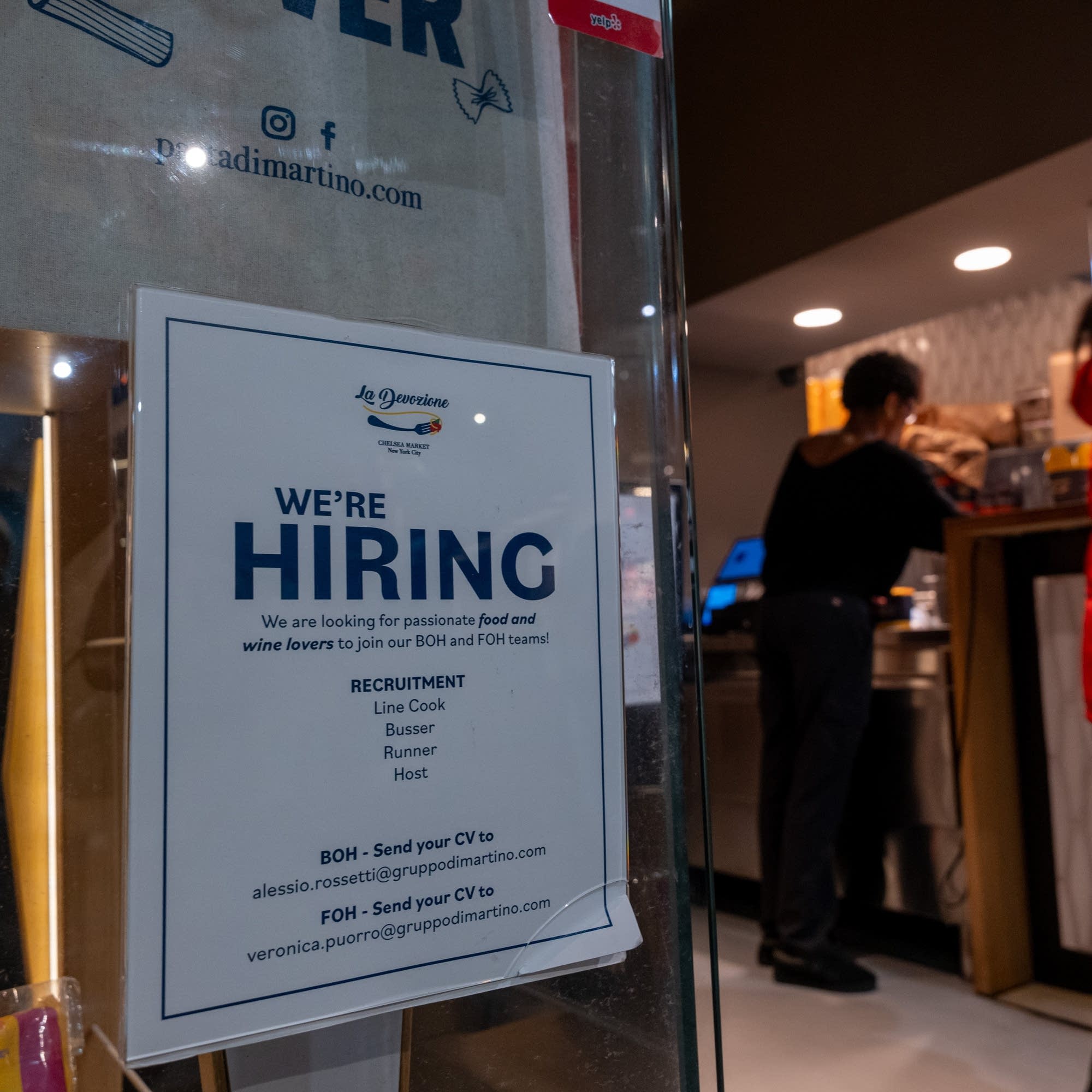
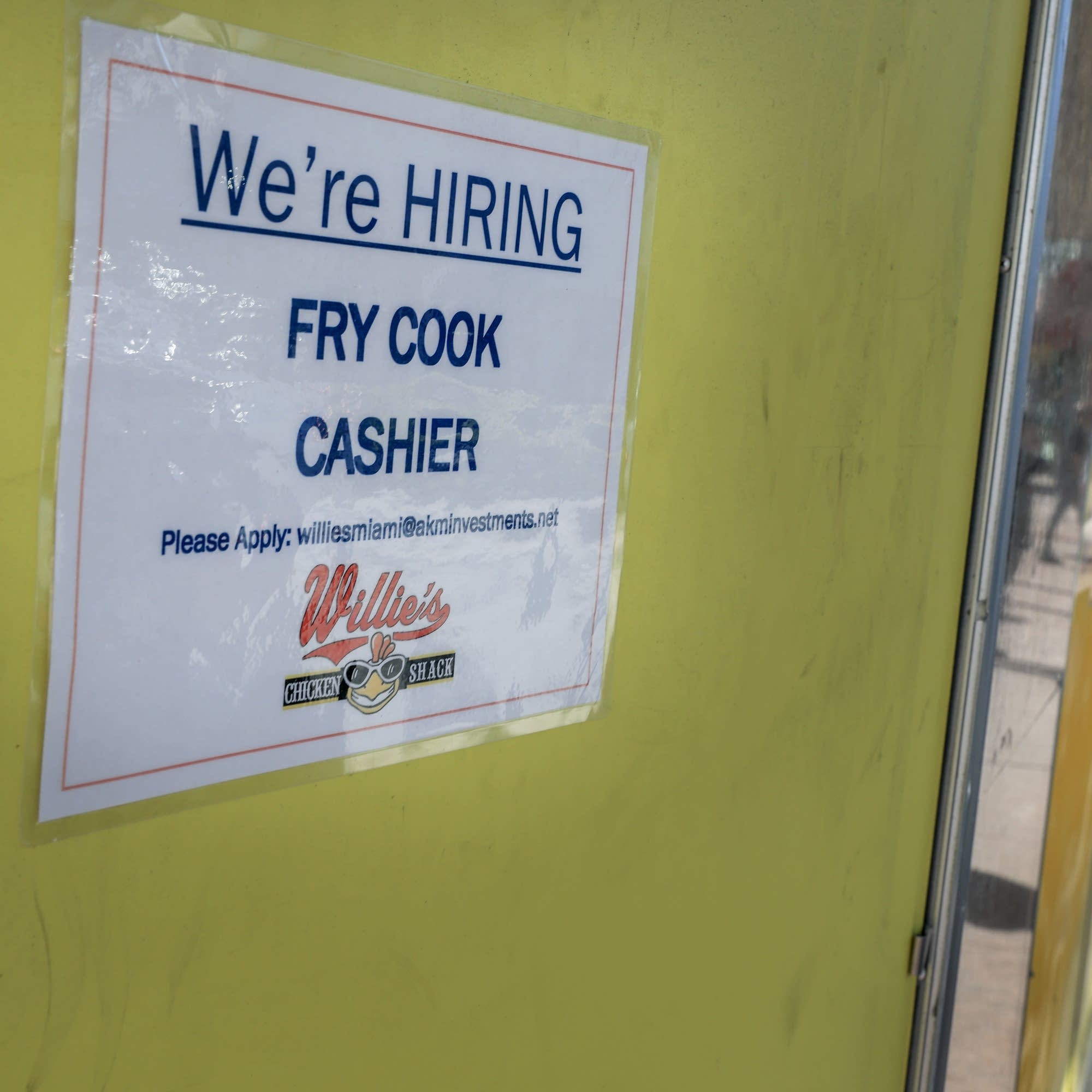
Speaker 18 One was healthcare, which has been growing for a while, and the other, perhaps surprisingly, given consumer wariness, was restaurants.
Speaker 19 Bustamante says when hiring in other sectors is flat or falling, this jump in restaurant hiring usually means that we're in a loose, sluggish economy where workers are really just trying to, you know, stitch things together.
Speaker 18
As in stitching jobs together. Luke Pardue with the Aspen Economic Strategy Group says nearly 5.5% of workers have more than one gig right now.
That number has been growing for years.
Speaker 20 It ticked down during the pandemic and has been pretty consistently rising, almost back to the level that we saw in 2008 now.
Speaker 18 Pardue says the rise in workers doubling up is partly because of slowing wage gains.
Speaker 20 A worker in the tech sector might have felt very confident a few years ago that they could negotiate for a wage gain, and now that confidence is sort of lost.
Speaker 18 To the point that they might want to pick up some extra cash on the side, and restaurant work can be good for that. And this could help explain why unemployment in September ticked up.
Speaker 18 A lot of the new jobs went to people who are already employed. Lonnie Golden is a labor economist at Penn State.
Speaker 21 People are a little anxious about their future job prospects, even if they're currently full-time.
Speaker 18 Golden says nabbing a second job can be a hedge if you're worried you might lose your first. I'm Daniel Ackerman for Marketplace.
Speaker 1
Philip Rollins, retailer number three in our Rolodex, sells comics and records at his store. It's called Offbeat.
It's in downtown Jackson, Mississippi.
Speaker 14
I'm overprepared, honestly. This year's weird.
You know, I feel it really on the record side, not so much the comic book side, just because prices of records are just high.
Speaker 14
$40, $35 for a record is a stretch for a lot of folks. It's a stretch for a lot of folks.
With Black Friday coming up, we have a lot of special releases. I try to order the bare minimum as possible.
Speaker 14 CDs are coming back, which is really, really weird to me.
Speaker 14 And so next year, I need to make a decision about carrying CDs, new and used, because a lot of people come in and are like, Hey, you don't have CDs, and I'm like, No, like, what are you talking about?
Speaker 14 Your car has a CD player, and you know, it's kind of funny for me saying that considering I have records and cassette tapes in here.
Speaker 14 In the next month, I hope to see people who are, you know, coming in looking for recommendations.
Speaker 14
I don't ask for too much, honestly, or expect too much. Um, this next month should be good, honestly.
Um, I'm I'm optimistic a little bit.
Speaker 1 C Ds?
Speaker 1 Really? I know I said that before, but come on. Phillip Rollins at Offbeat in Jackson, Mississippi.
Speaker 1 This final note on the way out today, just to round out the retail-ish theme of the program. One more data point from the National Retail Federation.
Speaker 1 Even though 187 million of us are going to be shopping over the next, you know, week-ish or so, we are going to be finding fewer bargains.
Speaker 1 That is, the total dollar amount of holiday sales is going to go up.
Speaker 1 I've mentioned it before, a trillion dollars worth this year, but it's going to be fewer actual sales, fewer actual number of sales, just with, wait for it, higher prices.
Speaker 1 Amir Bowie, Caitlin Ash, John Gordon, Noya Carr, Amanda Petra, and Stephanie Seek are the marketplace editing staff. Kelly Silvera is the news director, and I'm Kai Risdahl.
Speaker 1 We will see you tomorrow, everybody.
Speaker 1 This is APM.
Speaker 1 Sometimes kids ask questions that reveal just how much adults still need to learn, like, can you explain what causes an economic bubble? And why are things so expensive at the airport?
Speaker 1 Or how much national debt might be too much?
Speaker 1 Fear not, Million Bazillion is back with a new season to help you and your kids become pros at understanding how money shapes the answers to all those questions and more.
Speaker 1 Listen to the latest season of Million Bazillion on your favorite podcast app.