Small businesses pull back on hiring
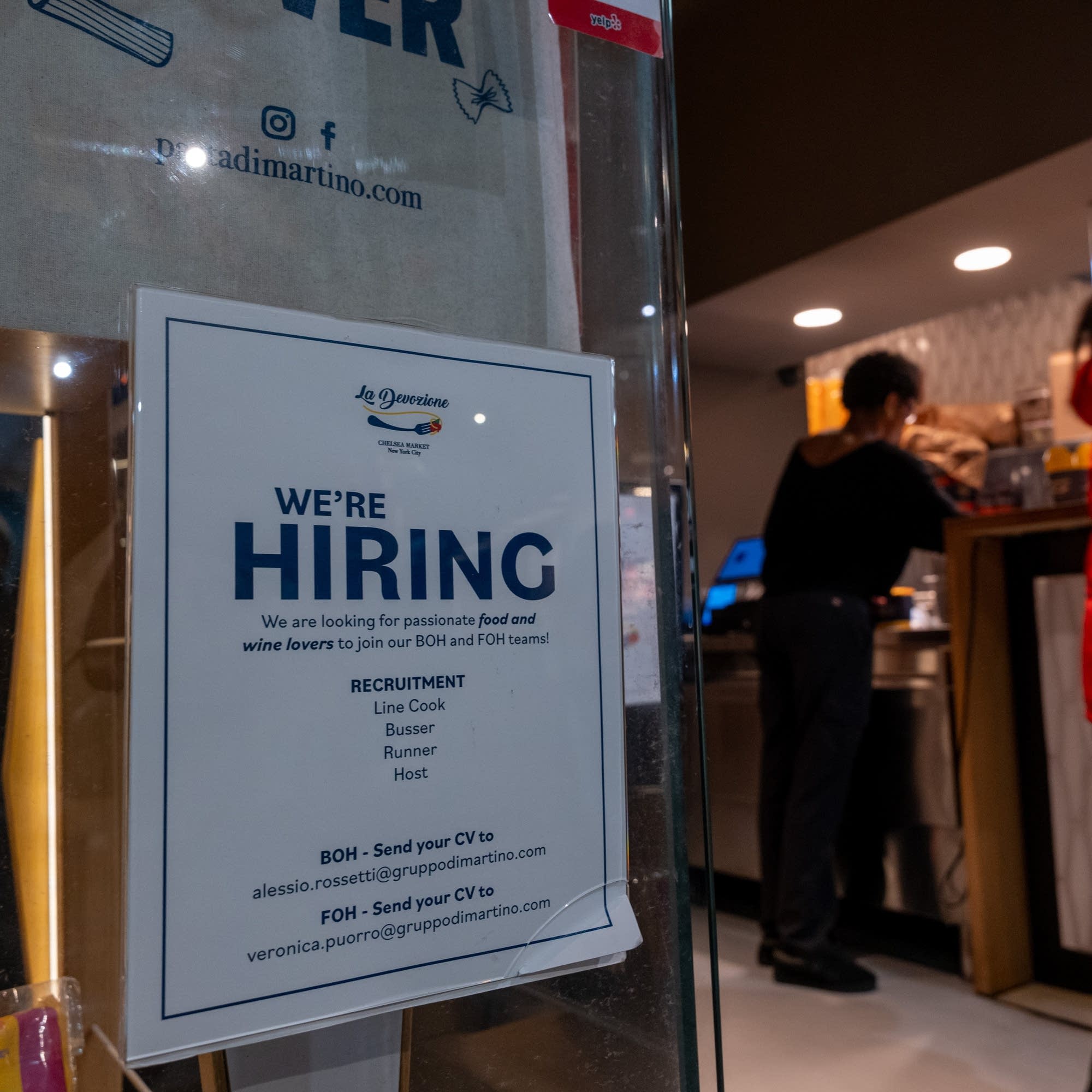
Small business owners’ economic moods remain mixed. But, as is so often the case, how folks feel is different from how they act. And hard data tells us small business owners are pulling back on hiring — one ADP report shows businesses with fewer than 50 employees cut a net 120,000 jobs in November. Should we be worried? Plus: Retailers benefit from buy now, pay later offerings, import prices sans fuel rose in September, and cap-and-trade carbon emissions programs have changed since their inception.
Every story has an economic angle. Want some in your inbox? Subscribe to our daily or weekly newsletter.
Marketplace is more than a radio show. Check out our original reporting and financial literacy content at marketplace.org — and consider making an investment in our future.
Press play and read along
Transcript
Speaker 1 This podcast is supported by Odoo. Some say Odoo business management software is like fertilizer for businesses because the simple, efficient software promotes growth.
Speaker 1 Others say Odoo is like a magic beanstalk because it scales with you and is magically affordable.
Speaker 1 And some describe Odoo's programs for manufacturing, accounting, and more as building blocks for creating a custom software suite. So Odo is fertilizer, magic beanstock building blocks for business.
Speaker 1
Odoo, exactly what businesses need. Sign up at odoo.com.
That's odoo.com. This Marketplace podcast is supported by Wealth Enhancement, who ask, Do you have a blueprint for your money?
Speaker 1 Wealth Enhancement can help you build the right blueprint for investing, retirement, tax, and more.
Speaker 1 With offices nationwide, there's an advisor who's ready to listen and craft a blueprint for your future. Find out more at wealthenhancement.com/slash build
Speaker 1
in which we go looking for the canary in the economic coal mine. From American Public Media.
This is Marketplace.
Speaker 1
In Los Angeles, I'm Kai Risdahl. It is Wednesday today, the third day of December.
Good as always to have you along, everybody. We are agreed, are we not?
Speaker 1
That the labor market is the whole deal right now. Yes.
Sure, inflation, but people working in this economy are uneasy about their prospects.
Speaker 1 Companies are adding fewer jobs, and the Federal Reserve, as you know, has made clear its heightened interest.
Speaker 1 Also, and not for nothing, we're a couple of months behind on actually measuring the American job market. So, of necessity, as we have talked about, private data is playing a more important role.
Speaker 1 To wit, the private payroll processing company ADP told us this morning that by its count, this economy, net net, lost 32,000 jobs last month.
Speaker 1 For small businesses, though, that's companies with less than 50 employees, they lost 120,000 jobs. What, you ask, might we learn from that? Marketplace's Sabri Benishor has the answer.
Speaker 1 Anna Hammond is CEO of Matriarch Foods, which employs four people. They take surplus crops and byproducts and turn them into finished food, like pasta sauce and even meal kits for emergencies.
Speaker 1 I asked her, how is business?
Speaker 3 Things are okay,
Speaker 3 actually.
Speaker 1 She's even considering adding more employees. Tariffs haven't been an issue for Matriarch.
Speaker 3 All of the vegetables are U.S. grown.
Speaker 1 Inflation, they've mostly dodged.
Speaker 3 Because we work with byproducts and surplus, you know, our costs are less.
Speaker 1 But Hammond can sense a change in buyers.
Speaker 3 People be much, much, much more careful with the dollars that they're spending.
Speaker 1 Still, for now, Hammond is optimistic, as are many small business owners, according to surveys by the U.S. Chamber of Commerce.
Speaker 6 The small business economy is holding steady.
Speaker 1 Tom Sullivan is Senior Vice President for Small Business Policy at the Chamber.
Speaker 6 Confidence in their businesses and their abilities to succeed continues to be heightened.
Speaker 1 But here, too, it is a mixed bag.
Speaker 6 We are seeing a decrease in plans to reinvest in business, and that scares us, quite frankly.
Speaker 1 The National Federation of Independent Business Research Center also surveys small businesses. It also found a mixed bag.
Speaker 1 Service businesses, for example, have slowed down on hiring people, but construction can't find enough people.
Speaker 7 Which, in combination, you're not looking at a lot of job growth.
Speaker 1 Holly Wade is executive director at the research center. But so often in business as in life, what people say they feel is different from what they do.
Speaker 1 A company called Homebase runs payroll for 150,000 small businesses and has real-time data on what they are actually doing around hiring.
Speaker 8 From our vantage point, small businesses are absolutely pulling back on hiring and hours worked in a way we haven't seen the last three years.
Speaker 1 John Waldman is CEO of Homebase.
Speaker 8 Small businesses are leading indicators of what our medium and larger business is going to do later.
Speaker 1
He says a lot is going to hinge on how well this holiday shopping season goes. In New York, I'm Sabri Benishore for Marketplace.
On Wall Street today, here's the logic.
Speaker 1 A weaker job market, see also that ADP number, means the Fed is all but certain to cut rates when it meets next week. Classic trader bad news is actually good news thing.
Speaker 1 We'll have the details when we do the numbers.
Speaker 1 Back in the day, it was called Layaway, but it's gotten a rebrand. Buy now, pay later, BNPL for short is booming.
Speaker 1 You make a payment up front, maybe 25% of the full purchase price, regular payments thereafter, generally without interest.
Speaker 1 And there is lots of consumer interest, if I may say. BNPL topped $1 billion for the first time this past Cyber Monday, up more than 4% over a year ago.
Speaker 1 It's offered, usually, at checkout, by payment providers like Klarna and a firm, and PayPal, also by retailers themselves. Makes sense for consumers, obviously.
Speaker 1 You get your thing before you've paid for the whole thing. But as Marketplace Mitchell Hartman reports, there is a business model side to this thing, too.
Speaker 10 Buy now, pay later is a pretty good deal for consumers. You get the goods you want right away, but you're only out a fraction of the price.
Speaker 10
You can spread the payments out for when future paychecks are coming in. There usually aren't fees, and the debt doesn't grow with interest.
Here's Duke business professor Manju Puri.
Speaker 11 How does this work? Because the consumer is getting a zero-interest loan.
Speaker 11 We know there's supposed to be no free lunch in finance, so someone is paying for this. Who's paying for it and why?
Speaker 10 The answer: both the retailer and the payment provider have skin in this game. Retailers pay a fee to the payment provider on each transaction, explains Grace Broadbent at eMarketer.
Speaker 13 Buy Now Paylader fees range between 2 to 8% of the sales cost, and that is compared to credit card processing fees, which are from like 1.5 to 3.5%.
Speaker 10 That's a hefty bite taken out of a retailer's profit margin. Why would they do it?
Speaker 13 So Buy Now Pay Leader can help them improve their conversion rates at checkout.
Speaker 10 That means fewer consumers leave abandoned shopping carts on retailers' websites full of stuff they kind of want but don't think they can afford.
Speaker 10 If it's only going to cost $20 now, not the full hundred, maybe they can afford it after all. Also, merchants end up selling more to each consumer on their site.
Speaker 10 And keep in mind, the retailer gets paid up front in full for whatever they've sold, says Ed DeHaan at the Stanford Graduate School of Business.
Speaker 15 So from the retailer's perspective, they're not bearing any risk because the money is being paid by the BNPL provider. Then you have to say, well, who's making money here?
Speaker 15
Well, on the BNPL provider's side, they're getting a cut of fees from the retailer. So that's a primary source of revenue.
Plus, says Dahan, they also get paid for things like data.
Speaker 15 They harvest an enormous amount of data on their customers. They can offer highly tailored advertising.
Speaker 10 The payment providers do absorb all the credit risk that the consumer won't pay back the loan and they'll be out the money they fronted to the retailer.
Speaker 10 But so far, says DeHaan, default rates on BNPL loans haven't been notably high. I'm Mitchell Hartman for Marketplace.
Speaker 1 I feel pretty comfortable saying that the odds of you having touched, used, or otherwise interacted with plastic today, and every day really are just about 100%.
Speaker 1 We are surrounded by it. More and more of it is produced every year, and in fact, annual production is expected to triple by the year 2060.
Speaker 1 The issues with plastic, for us people, and for the planet, are well known. So what's an economy to do? Judith Hank is a former regional administrator for the EPA.
Speaker 1 She now works with the advocacy group Beyond Plastic, and her new book on the subject at hand is called The Problem with Plastic. Welcome to the program.
Speaker 16 Thrilled to be with you.
Speaker 1 I was struck to read in the opening pages of this book, actually, that half of all the plastic we have on this planet right now has been created since like 2007 or something.
Speaker 16 Yeah, this is a recent serious problem. I mean, plastic really hit the market after World War II, but this massive increase is relatively recent, which says to me, we can solve the problem.
Speaker 16 It's a new problem and we know that there are alternatives.
Speaker 1 So let's talk about the solving the problem, which is fundamentally what this book is about.
Speaker 1
You point out, and after you said it, I was like, yes, of course. Plastics are known to be an environmental nightmare.
They are known to be, in some cases, toxic.
Speaker 1 And yet we don't regulate it like we do, say, lead or asbestos. And I guess the question is why? And I want your answer to go beyond big oil has really powerful lobbying arms.
Speaker 1 Well, big oil has really powerful lobbying arms.
Speaker 16
That is actually the major problem. I mean, I used to work at the EPA.
I was a regional administrator during the Obama administration. And even then, there was not much of a focus on plastic.
Speaker 16
But today, there are many good proposals around the world to deal with plastics. It's not a science issue.
It really is a political science issue.
Speaker 16 The enormous political strength of chemical companies, fossil fuel companies, and consumer brand companies are what's standing in the way of protecting our health and our environment.
Speaker 1 We do have to say, though, that for all of those things, which are true that you just pointed out, consumers wanting ease and facility and low prices is part of the challenge.
Speaker 16
Well, I think the bigger problem is consumers don't have a choice. And we can have ease and affordability and not have plastic.
We don't need to wait for a big space age age breakthrough.
Speaker 16 We can rely on paper, cardboard, metal, glass.
Speaker 16 They can all be made from recycled material and actually do get recycled when you put that in the recycling bin and not substantially more expensive than plastic.
Speaker 1 Let's just take a very quick detour here to trod some conceivably well-trod ground, certainly on public radio, but it needs to be said.
Speaker 1 We put all this plastic in our blue recycling bins and put them out by the curb, but there the recycling myth kind of ends, yes.
Speaker 16 Yeah, putting plastics into your recycling bin does not mean it gets recycled. Only five to six percent of plastics actually get recycled.
Speaker 16 It's not because we're not all trying, it's because by design, most plastics are not recyclable.
Speaker 16 And the reason why many of us are confused is because the plastics industry has spent millions of dollars telling us just keep recycling your single-use plastic.
Speaker 16 It's so bad, in fact, that that Attorney General of California, Rob Bonta, has sued ExxonMobil for deceptive statements around plastics recycling.
Speaker 1
So let's do a little solutions journalism here. You spoke earlier about some great solutions around the world.
Give me your top like three
Speaker 1 ways that we, specifically in the United States, rather, because that's the test audience here.
Speaker 1 What can we do?
Speaker 16 Oh, there's so much.
Speaker 1 Okay,
Speaker 1 you got three. Yeah.
Speaker 1 Okay.
Speaker 16 I think we need to pass new laws to make sure that the producers of plastic actually pay for disposal. I think we need to shift toward reusable and refillable packaging.
Speaker 16 When I was growing up, and I'm not that old, we had milk in refillable glass bottles. We need to build that refill-reuse infrastructure.
Speaker 16 But it starts with getting new laws on the book so that the plastics producers don't continue to have a free ride.
Speaker 1
Judith Enk is most recently the author of a book called The Problem with Plastic. Judith, thanks very much for your time.
I appreciate it.
Speaker 16 My pleasure.
Speaker 1 September last year, Hurricane Helene tore through parts of Florida, Georgia, and North Carolina. For those who didn't live through it, it feels like a long time ago.
Speaker 1 But for the communities that were hardest hit, things are just now getting back to normal.
Speaker 1
And that's especially the case for small businesses that are gearing up for their first holiday retail season in two years. Hannah Berniske owns one of them.
It's called Cold Mountain Art Collective.
Speaker 1 It's a pottery and art gallery and studio in Canton, North Carolina.
Speaker 4 Business has been really good.
Speaker 4
The studio has been really busy. We've picked up a couple new memberships.
Our classes have been full.
Speaker 4 I did make some really conscious choices to, in the new year, I'll be dissolving this gallery side, like our larger retail side, and opening up working studios instead
Speaker 4 because it will give me more free time. I could be building my own brand and accepting opportunities as an artist that I feel like I've been missing out lately.
Speaker 4 Holiday shopping has definitely started, so there's increased foot traffic in the gallery doing holiday shopping and supporting local.
Speaker 4 I think since we've made the announcement too that we'll be dissolving the gallery after the new year, people are coming in to really show support for the final time with these artists and this work that they might not see again.
Speaker 4 I've been creating a lot of my staples.
Speaker 4
My Blue Ridge mountain pieces are my best seller. I can't keep them in stock.
They're $52 for the mugs. I think $48 for the bowls.
Speaker 4
But they are great gifts, and that's what a lot of people are buying them for. They're like, oh, I already have my two, but I want to get some for my sister.
And
Speaker 4 so they're repeat buyers, which is what I love.
Speaker 4 In comparison to what I've been through in the last year, things are just going really well and I'm just so grateful to be back, to be in this space.
Speaker 4 I think it was last year a woman came in, her name is Hazel, and she told me she met her husband in my building back when it was an ice cream parlor.
Speaker 4 She came back in a couple weeks ago just to see how we were doing and she was so glad we were back. And it was just really nice to see her again because, you know, we don't know what happens.
Speaker 4 to people, especially over the last year where everybody went if they stayed in town or left. And it was just really nice to see her and talk to her again.
Speaker 1
Hannah Berniske. She's the owner of Cold Mountain Art Collective.
It's in Kenton, North Carolina.
Speaker 17 Coming up, you'd set an overall cap on the number of meals out.
Speaker 1 Why would you want to do that?
Speaker 1 First, though, let's do the numbers.
Speaker 1
Dow Industrial is up 408 points. That is 9 tenths percent, 47,882 on the blue chips.
The NASDAQ ticked up 40 points, about 2 tenths percent, 23,454.
Speaker 1 The S ⁇ P 500 added 20 points, a third of 1%, 6849 are there.
Speaker 1 And another sign that Americans are spending away this holiday season, the country's biggest department store chain, Macy's, raised its outlook for sales.
Speaker 1
Today, the company reported its strongest growth in more than three years. That comes after the company shifted strategies, closing 150 stores.
Macy's down 1.10%
Speaker 1 because capitalism. Delta says the government shutdown this fall cost it roughly 200 million American Simoleans.
Speaker 1
Bookings were down 5% to 10% over the 10 days when it was forced to make flight reductions. Things are back to normal now, though.
Delta climbed 3.6 tenths percent. American Airlines rose 2.25%.
Speaker 1
United jumped 3.9%. Bonds up.
yields down, 10 years at 4.06%.
Speaker 1 You're listening to Marketplace.
Speaker 9 A new year is an opportunity to level up personally and professionally. Upgrading to Gusto is one of the easiest ways to give your business an instant upgrade.
Speaker 9 Gusto is online payroll and benefit software built for small businesses. It's all in one, remote-friendly, and incredibly easy to use.
Speaker 9 So you can pay, hire, onboard, and support your team from anywhere, allowing you more time to grow your business.
Speaker 9 With automatic payroll tax filing, direct deposits, health and commuter benefits, workers' comp, 401k, you name it, with tools built in, Gusto makes it simple.
Speaker 9 Gusto has options for nearly every budget and one monthly price, no hidden fees, and is trusted by over 400,000 small businesses.
Speaker 9 Try Gusto today at gusto.com/slash marketplace and get three months free when you run your first payroll. That's three months of free payroll at gusto.com slash marketplace.
Speaker 9 Gusto.com slash marketplace.
Speaker 18 Indulge in all your holiday faves this season, knowing you're getting the good stuff your body craves with cachaba's all-in-one nutrition shake.
Speaker 18 It's your post-holiday recovery kit with 25 grams of protein, 6 grams of fiber, greens, adaptogens, and so much more. And it actually tastes delicious.
Speaker 18 With six indulgent flavors to choose from, it's easy to make a superfood-packed shake. From chocolate, vanilla, and chai to matcha, coconut acai, and strawberry.
Speaker 18 You can even savor the season and enjoy getting the nutrition you need.
Speaker 18 There are endless ways to personalize your cachava, whether you prefer it straight up or enjoy adding fruit, peanut butter, nut milk, or even iced coffee.
Speaker 18
With every two scoops of cachava, you're getting the highest quality ingredients. No fillers, no nonsense.
Holiday nutrition has never been this easy or delicious.
Speaker 18 Go to cachava.com and use code news for 15% off. That's cachava, k-a-c-h-a-v-a.com and use code news.
Speaker 1 This is Marketplace. I'm Kai Rizdahl.
Speaker 1 Time now for another trip in the government economic data time machine courtesy of the Bureau of Labor Statistics, whence came today something called the Import Price Index 4
Speaker 1
three months ago. September.
The big headline? Overall import prices, that is, what U.S.
Speaker 1 importers paid for, everything from fuel to manufacturing equipment, alcoholic beverages to apparel, and, and this is important, that's before taxes were essentially unchanged.
Speaker 1 But as Marketplace's Carla Javier explains, things get a little more interesting once you look a little closer and once you start to factor in those import taxes, too.
Speaker 4 Susan Fleck's team at BLS knocks on doors and asks companies the prices they paid for imports. Then they bring in millions of prices from Customs and the Department of Commerce.
Speaker 20 Then when you add up which prices have changed for which product areas, and there's addition and multiplication, I would say, and quite a bit of it,
Speaker 20 and some logarithms, then what you get at the very top level is that it appears there's no change.
Speaker 4 Until you look at the lower levels. If you take out fuel, for example, because fuel prices can be quite variable, the index went up.
Speaker 4 KPMG's Megan Schoenberger says she likes to look for categories where prices decreased.
Speaker 12 It insulates
Speaker 12 both the importer in terms of their profit margins and the final consumer from price increases when import prices come down.
Speaker 4 She noticed prices came down for computers, electronics, and European wine, but not in all categories.
Speaker 12
We do see that import prices fall, generally speaking, in response to tariffs. That hasn't happened as much.
this time.
Speaker 4 Decreases in some categories were offset with increases in others, including non-fuel industrial supplies and materials.
Speaker 19 U.S. importers of steel and aluminum and other metals from the European Union are actually paying more than what they were a few months ago.
Speaker 4 That's Jason Miller at Michigan State University. When you factor tariffs in, he says.
Speaker 19 That means they're paying a whole heck of a lot more for these products.
Speaker 4 Which puts manufacturers in a difficult spot.
Speaker 19 Do we not expand our production lines like we were thinking because machinery is more expensive? Do we maybe buy fewer tools than we were planning?
Speaker 19 Do we maybe buy more tools but actually look at cutting our workforce?
Speaker 4 Miller says he wonders if manufacturers will absorb any increased costs through lower margins or pass them along to their buyers. I'm Carla Javier from Marketplace.
Speaker 1 This is, to understate it, just a little tiny bit, a very bad time for federal policies that address climate change.
Speaker 1 See also the President's announcement today that he's cutting vehicle fuel emission standards.
Speaker 1 And with Republicans in Congress, he has gotten rid of a lot of Biden-era clean energy grants and tax credits. But the feds ain't the only game in town.
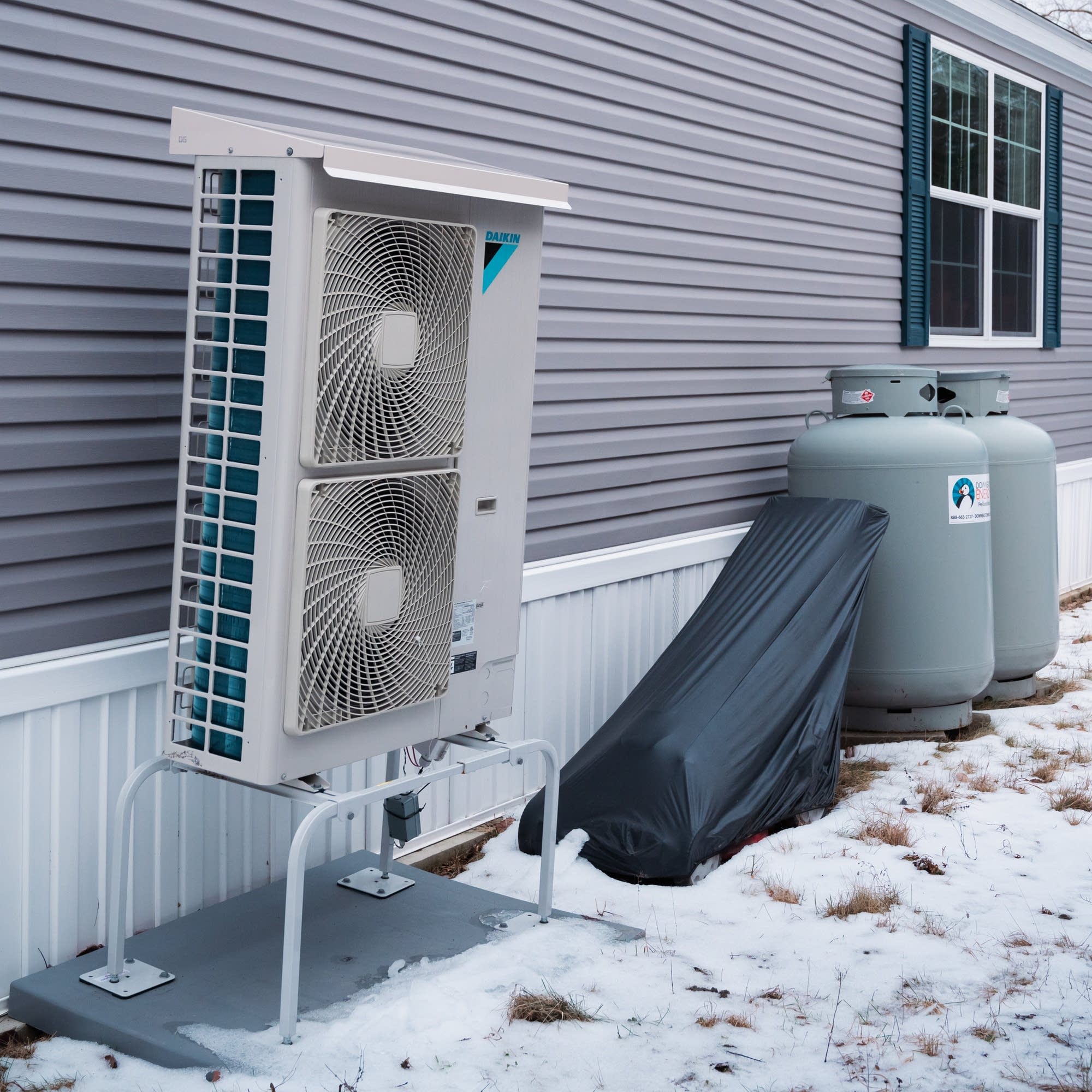
Speaker 1 States, some of them anyway, are trying to cut carbon emissions. On the East Coast, that includes an agreement among a group of 10 states to reduce the amount of CO2 coming out of power plants.
Speaker 1
It's been going for 16 years, that agreement has. It has mostly worked out all right.
But as Marketplace's Henry Epp reminds us, it is a memento of a bygone time.
Speaker 2 Imagine a world where both major presidential candidates agree that climate change is a serious problem and they want to use the same policy to address it. This was a real thing in 2008.
Speaker 9 I think a cap-and-trade system makes more sense. That's why I proposed it.
Speaker 21 When our cap-and-trade policy is in place, there will be a sudden and sustained pursuit in the market for new investment opportunities in low-emission fuel sources.
Speaker 2 Republican John McCain and Democrat Barack Obama disagreed on some details, but they agreed that a national cap-and-trade system could push power plants and other industries in the U.S.
Speaker 2 to lower their carbon emissions. Spoiler alert, their proposals never made it through Congress.
Speaker 2 But shortly after the 2008 election, 10 states on the East Coast started a cap-and-trade system of their own, the Regional Greenhouse Gas Initiative, or REGGI.
Speaker 2 Unless you're very steeped in energy policy, you're forgiven for not remembering how cap-and-trade works. Peter Shattuck at the Energy Consulting Firm Power Advisory has an analogy for Reggie.
Speaker 17 Let's say for whatever reason we wanted to reduce the amount of dining out. You'd set an overall cap on the number of meals out and sell passes to people who want to eat at restaurants.
Speaker 2 But the total number of passes available would go down over time. So wannabe diners would bid up the price for them, supply and demand.
Speaker 17 It would create an incentive to do other things like eat at home.
Speaker 17 And if you reuse the revenue raised by selling the passes and stocking people's kitchens, then it would be all the more appealing to eat at home and we'd reduce the amount of dining out.
Speaker 2
This, but for carbon dioxide emissions from power plants. That's what Reggie does.
Owners of fossil fuel plants in Reggie states have to buy a permit to emit one ton of CO2.
Speaker 2 The total number of permits available declines over time, so they're incentivized to switch to forms of energy that don't emit carbon. And the money they pay for permits goes back to states.
Speaker 2 Again, Peter Shattuck.
Speaker 17 The revenue raised by selling those permits to pollute are reinvested in things like energy efficiency that further bring down demand and reduce pollution.
Speaker 2 16 years in, it's worked pretty well. Carbon emissions from electricity generation in the Reggie states have dropped significantly, says Reggie's executive director, Andrew McKeon.
Speaker 22 We're looking at all the states that participated in Reggie from 2009 to the present. We're looking at about a 53% reduction through 2024.
Speaker 2 But Reggie can't take all the credit for that.
Speaker 14 It's important to remember that Reggie launched right at the same time as the fracking revolution came about.
Speaker 2
Sam Evans Brown is the executive director at Clean Energy New Hampshire. Fracking made natural gas really cheap.
Natural gas also emits less carbon than coal or oil.
Speaker 2 So, as power companies switched to gas, they suddenly didn't need nearly as many carbon permits as the states in Reggie expected. So, Reggie states pushed down the cap even more.
Speaker 2 And eventually, the price of their carbon permits rose by about 10 times. Evans Brown says that could have an impact.
Speaker 14 This could be the time that Reggie is starting to become a price signal that will be meaningful enough that it'll drive new renewable generation onto the grid.
Speaker 2 But that price signal, putting an extra cost on energy sources that emit carbon dioxide, is also what's made Reggie a political target.
Speaker 2 Danny Cullenward is with the Kleinman Center for Energy Policy at the University of Pennsylvania.
Speaker 5 Carbon pricing makes the cost of compliance visible, makes it easy for opponents to organize against those policies.
Speaker 2 Which has always made cap and trade a hard sell. I'm Henry App for Marketplace.
Speaker 1 This final note on the way out today, just because it's been a little bit,
Speaker 1
gold, the safest of all safe havens, still firmly above $4,000 an ounce. Make of that what you will.
Just remember that gold is where people go when there's a lot of economic ajada.
Speaker 1 Our media production team includes Brian Allison, John Fokey, Montana Johnson, Drew Jostett, Gary O'Keefe, Alex Simpson, and Charlton Thorpe.
Speaker 1 Jeff Peters is the manager of media production, and I'm Kai Risdahl. We will see you tomorrow, everybody.
Speaker 1 This right here is APM.
Speaker 23 How many times have you wished you could be in two places at once? With Wix, you practically can. Wix's website builder is packed with powerful AI tools to make running your business online easier.
Speaker 23
Build a full site just by talking with AI. Get an AI agent to manage your sales and marketing.
Or work like a 10-person team, even if it's just you.
Speaker 23
So you don't need superpowers to get everything done. You just need Wix.
Try it now for free at wix.com.