A Fed divided against itself

25m

The Federal Reserve’s quantitative approach to monetary policy decisions means its governors tend to reach consensus. But in the past few meetings, some FOMC members have disagreed on whether to prioritize jobs or inflation. In this episode, “Marketplace” host Kai Ryssdal and former FOMC member Daniel Tarullo discuss why the Fed is divided right now. Plus: Dollar stores weather an uncertain economy, companies use return-to-office policies as a workforce reduction mechanism, and electricity demand grows as data centers pop up nationwide.


Every story has an economic angle. Want some in your inbox? Subscribe to our daily or weekly newsletter.


Marketplace is more than a radio show. Check out our original reporting and financial literacy content at marketplace.org — and consider making an investment in our future.

Press play and read along

Runtime: 25m

Transcript

This holiday season, give the gift that everyone actually wants, Omaha Steaks. Right now, save 50% site-wide, plus an extra $35 off with code HOLIDAY GIFT at checkout.

From USDA-certified very tender filet mignons and perfectly aged ribeyes, to juicy burgers and gourmet sides and desserts that make every meal unforgettable, Omaha Steaks brings steakhouse quality flavor straight to your doorstep.

Whether you're gifting family across the country or filling your own freezer, freezer, every box arrives perfectly packaged and guaranteed to impress.

Because nothing says, I love you most like a gift of Omaha Steaks. Skip the malls and the guessing.
Go to Omahasteaks.com right now.

That's Omahasteaks.com to save 50% site-wide, plus get an extra $35 off with code HOLIDAY GIFT at checkout. Hurry, this deal won't last.
Omaha Steaks, delivering joy since 1917.

Minimum purchase may apply. See site for details.
This is a vacation with Chase Sapphire Reserve, the Butler, the Spa.

This is the Edit, a collection of hand-picked luxury hotels and a $500 edit credit. Chase Sapphire Reserve, now even more rewarding.
Learn more at chase.com/slash Sapphire Reserve.

Cards issued by J.P. Morgan Chase Bank and a member of FDIC, subject to credit approval.

On the program today, we are going to talk about the Fed a lot.

You'll see why.

From American Public Media, this is Marketplace.

In Los Angeles, I'm Kai Risdahl. It is Tuesday today, December the 2nd.
Good as always to have you along, everybody.

There are, of course, a zillion ways to cover the Federal Reserve. You could talk about interest rates if you wanted to.
monetary policy, the cost of money that affects each and every one of us.

You could talk about the central bank as a bank regulator, which it is.

You could talk about it as the lender of last resort in a crisis, which, as we all know, it has been twice in the past 20 years.

Also, though, and this doesn't usually get as much attention, you could talk about it as a story of people, the people on the board of governors and the people running the regional banks.

And on that score, there are changes a common. So we've done what we do when we need an inside perspective on the central bank, and we've called Daniel Tarullo.

He was on the board of governors for more than eight years. He is at Harvard Law now.
Daniel, it's good to talk to you again. Nice to be back with you, Kai.
So much to talk about, so little time.

First thing I want to get to is next week's meeting. And

I'm not so interested in what's going to happen, but how you think it's going to happen.

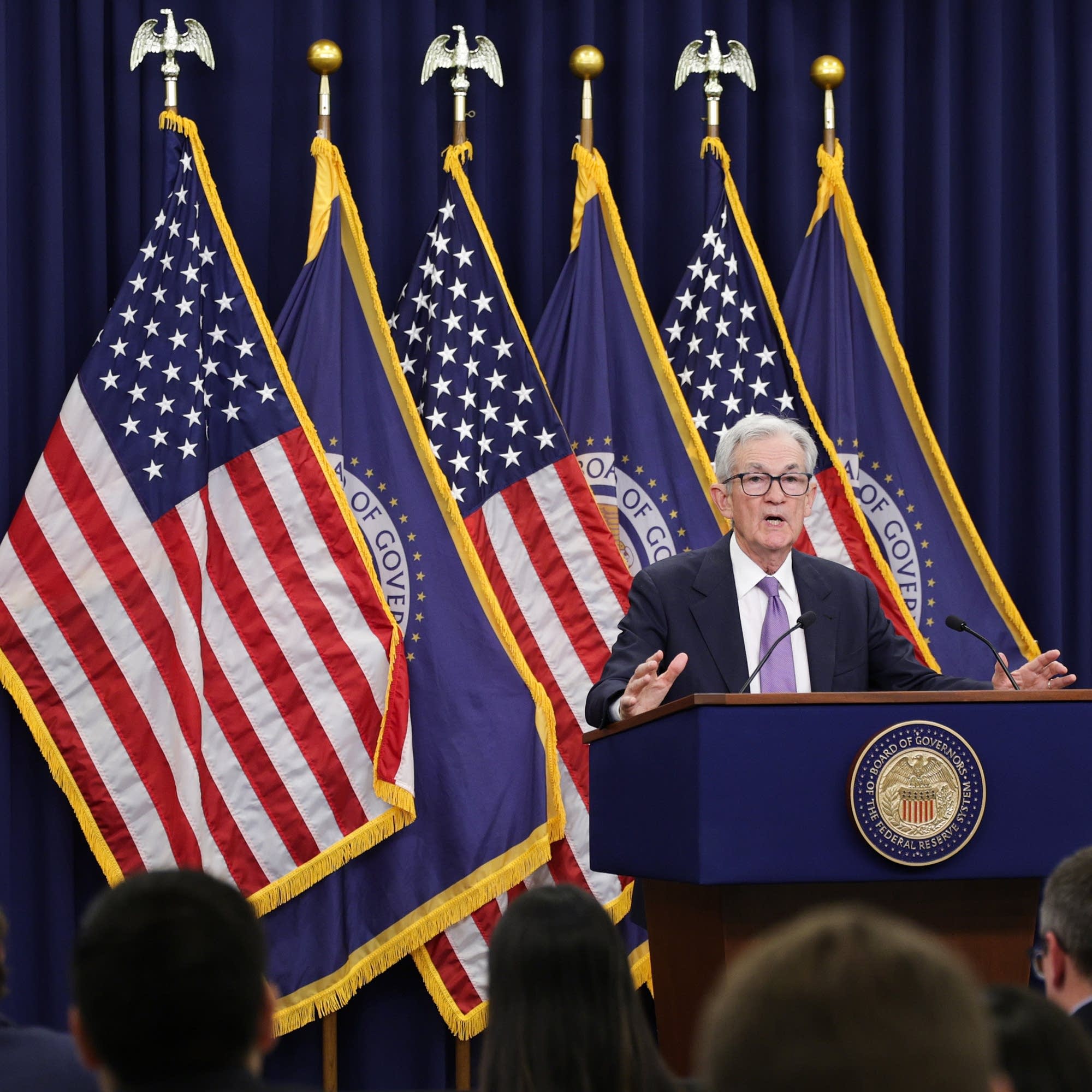
What's the conversation inside the room going to be like? And then when Chair Powell starts taking questions, what do you think he's going to be saying?

Well, I suspect, Kai, that as with almost all FOMC meetings, the outcome will be pretty much determined before the meeting begins.

We're going to have dissents one way or another, I think. That's almost a foregone conclusion.

So, the interesting thing about the meeting will be how are the members of the FOMC signaling the positions they're going to take in January and beyond.

And judging by the minutes of the October meeting, I think it will be a more robust discussion than most.

For those who didn't read those minutes, the phrase members strongly disagreed, which is kind of extraordinary, honestly, for Fed minutes.

And I'd love your thoughts on

why you think this is all happening now, why dissent is becoming so much of a thing.

So I think there are two things going on, Kai. One, just the assessment of the data, and two, positioning for the anticipation of a Trump appointee as chair next year.

With respect to the former, that is how we're making decisions now, you've got both both upward pressure, or pressure on the inflation side and pressure on the employment side.

The Fed is in a difficult situation and it's got to choose between its two mandates. And that's why I think you're seeing people fall on different sides of the line.

It kind of goes to their predispositions.

With respect to the longer term, though, I think that's the more interesting story.

The things that have been said by some of the Reserve Bank presidents in particular over the last few weeks strike me as not just about the December meeting or the January meeting.

They strike me instead as drawing a line that these Reserve Bank presidents are suggesting they're not willing to cross on fulfilling the Fed's mandate on inflation.

And I read that as a signal to whoever the incoming chair ends up being, Kevin Hassett or someone else, that they are not simply going to capitulate to an accommodative monetary policy if they feel as they do that the data suggests otherwise.

Aaron Powell, Powell, accommodative monetary policy, just for those unfamiliar, is lower interest rates, which then will stimulate the economy. Let me ask you, though, about the role of

the chair. You and I have talked before about Chair Powell, and I think you have said to me, I think in front of a microphone, so I'm not sharing any secrets,

you have great admiration for the way the chair has handled

the vagaries of his job, shall we say, during the Trump presidencies.

What, in your mind, is the Fed chair's job?

So I think the Fed chair's job is, I mean, there are many things you could say.

The two most important things are: first, to provide intellectual and analytic leadership to the FOMC, to do an assessment of the economy, to make a case for either staying with your monetary policy position or changing it.

And secondly, to be someone who forges a consensus around monetary policy. Oftentimes that consensus will connect to the analysis the chair, him or herself, has done.

But sometimes, when there are different views on the committee, the adroit chair will be able to adjust policy somewhat or adjust the way in which the Fed is communicating its policy to maintain a consensus.

And as you rightly said, Kai, I think Chair Powell has done a really first-rate job through what has been a difficult set of five or six years.

Aaron Powell, why does consensus matter so much with the Fed?

Well, I think you don't want to have a singular mindset, obviously.

That is, you do want to have a lot of debate and a lot of disagreement if there's disagreement on the merits.

The reason I think consensus is important for the Federal Reserve is that it makes it easier to communicate with markets and the public as to what the direction of policy is.

If we had a tradition like the Bank of England of having frequent and multiple dissents, I don't think it would matter as much. But if we get a lot of dissents now, given the history of

the institution, then I think markets are going to be somewhat concerned.

Okay, so let's keep going on the theme here.

Every single time that I or any other reporter asks a regional bank president or a member of the board of governors, let's talk about the politics of this moment, they all to a person say, politics doesn't matter inside that room.

And it certainly seems to me now that with Stephen Myron on the board and with the attempted firing of Lisa Cook and the other things that President Trump has said, what used to be an exogenous thing, right,

political pressure coming from the outside, is now actually in the room.

Yeah, I mean, I think that's political pressure, you know, is hard to distinguish from just a different policy position.

But you're quite right, Kai, that the policy preferences, as articulated by the administration, are now sitting around the FOMC table, obviously in the position of Governor Myron, since he continues to hold his chair as in the CEA.

But I think more generally.

And, you know, to be fair, I think we've seen some shifts in the position of some of the other members of the FOMC who used to be a little bit more dovish and now they're a little bit more hawkish.

Would you, if somebody nominated you to be on the Fed right now, would you take the job? No, I'm done with that.

Okay, let's say a younger Dan Terullo who still had a lot of good years left. Would you do it?

Let me put it this way, Kai. I would not do it within the enthusiasm that I undertook the task when President-elect Obama asked me in the fall of 2008.

I think the Fed is already changed some, and I fear that it is going to be changing more.

I think there's been an erosion in the structure of the Fed, and there's been an erosion in the capacities of the Fed. And

I'm not going to attribute this to any one president for sure, or any one administration.

I think it's been, you know, the Fed has been more front and center for almost 20 years now, and thus, whether it likes it or not, it gets buffeted more by political wins than it used to.

Do you think there's any going back?

With these things, it's always easier to undo a strong position or a position of neutrality, a position of capability than it is to rebuild it.

You know, I worry about that in lots of parts of the government. I don't think we're at a critical point yet with the Fed.

And I think if the new chair makes clear to the staff and to the other members of the FOMC that he's interested, and it's going to be he, that he's interested in the integrity of the Fed and its people, then I think we can at least preserve where we are.

But definitely the trend has not been in the right direction. Aaron Powell,

just quickly on the way out here, Dan, the President said over the weekend that he has decided who the next person is going to be. Seems a little early.
Chair Powell's not done till May.

What do you make of that?

Well,

you know, there was talk as early as the late summer that the president was going to name someone.

I mean, usually

the replacement is named a few months in advance, so we wouldn't be too much ahead of the norm.

But I think inevitably, everybody's going to just start asking the chair designate what he thinks, and that's not great for the Fed.

Dan Terullo, he's at Harvard Law now, was for many years on the board of governors of the Federal Reserve. Dan, thanks a lot.
I appreciate your time. Thank you, Kai.

Wall Street today, traders were buying, but without a whole lot of enthusiasm. I'm just going to say here, even though the meeting is a week out, they're just waiting to see what the Fed does.

We'll have the details when we do the numbers.

It has perhaps escaped your notice, but this is Dollar Store Week.

Dollar Tree, Dollar General, and five below are all reporting earnings after a year of tariffs and a government shutdown, and as many lower-income consumers are struggling.

And while all three of those stores do offer bargains, they're each positioned just slightly differently when it comes to shoppers seeking affordability over the holidays, as Marketplace's Elizabeth Troval reports.

It's Tuesday morning, and the parking lot is kind of busy outside at Dollar Tree in southwest Houston. I catch Connie Bembury getting into her car.
I picked up anti-itch cream for my mom and then like

little um essentials like crackers and different stuff for the house she spent just nine dollars which is why she regularly shops at dollar tree but i just go in because i know everything is a dollar 25 so i just scrap different stuff i don't even look at the price dollar tree has a wide consumer base says brett rose who went to the store twice last week It doesn't matter if you make $30,000 a year or $150,000 a year, you are a loyal Dollar Tree customer.

His company, United National Consumer Suppliers, sells to Dollar Tree and other stores. He says it's an advantage to appeal to different income levels.

The retailers that can survive in that middle ground, it makes them economically safe. You just shift, right? Dollar General is a different story.

They're more like a small supermarket, says Anthony Chicumba with loop capital. Dollar General's core low-income consumer is stretched.

They are still dealing with, you know, this accumulated impact of years of elevated inflation. With the government shutdown, SNAP benefits were delayed.

Meanwhile, at Five Below, which sells cheap toys, games, and decor, there's likely to be more holiday traffic. They definitely have a lot of gifts in their merchandise assortment.

All three do offer affordability, and that's important to a lot of consumers, says morning consults, Kayla Bruhn, but especially low-income adults.

Our Consumer Health Index is in negative territory for them. So that's actually indicative of a contraction in spending.

While sentiment is up with the government reopening, she says these consumers are still price sensitive. I'm Elizabeth Trobal for Marketplace.

What was it Mark Twain said reports of his demise were greatly exaggerated, right?

Here's a present-day analog brought to us by the pandemic. Meta said this week it's ordering its Instagram unit back to the office five days a week, effective February.

Amazon, ATT, Boeing, and more than a handful of others are pushing for more in-office work too.

And finance in particular, big Wall Street banks, have been bringing people in for a couple of years now.

So to return to the slightly thin premise, work from home has been on its deathbed before Marketplace Sabri Benishore has the latest prognosis.

At this point, there is a lot of data, a lot of research on the costs and benefits of working remote. ActiveTrack is a firm that measures and analyzes employee productivity.

And Gabriella Mauck is head of the productivity lab there. The remote worker is a very productive worker.
In fact, the most productive worker from what they're data track.

Those employees that are fully remote not only start their day earlier, but their day tends to go longer. This matches what a lot of studies show.

Most research on remote work seems to show positive impacts on the quantity of work that people do. Emma Harrington is an assistant professor of economics at the University of Virginia.

Where we start to see more worrisome things cropping in is often in the quality of the work. Not for everyone, but in certain sectors and for inexperienced workers in particular.

Working from home all or most of the time causes software engineers to write buggier code, causes equity analysts to make less accurate forecasts of company earnings.

But trapping everyone in the the office every day for five days a week has costs too. For example, people hate it and they quit.
And for companies, quits are hugely expensive.

Nick Bloom is a professor of economics at Stanford. The sweet spot for companies, he says, is hybrid work.

That seems to be about net zero on productivity, but in studies, it reduces quit rates by up to a third.

Which brings us to why so many companies have been in the news for dragging their workers into the office. Why would they do that if it makes people quit?

Because they want people to quit, argues Mark Ma, associate professor of business administration at the University of Pittsburgh. These firms are trying to reduce their workforce.

These are often companies that have announced or will announce layoffs, and this is an easy way for them to do it. Also, these companies are in the minority.

A lot of companies are still working either remotely or are having a hybrid schedule. 70% of Fortune 500 companies allow hybrid work for managers and professional workers.

So working from home, part of the time, is alive and well. In New York, I'm Sabri Benishore for Marketplace.

Coming up, modern aircraft are flying computers. What could possibly go wrong? First, though, let's do the numbers.

Dow Industrials notched up 185 points today. That is 4 tenths percent on the blue chips.
Closed at 47,474. That's a lot of fours and 7s.
The NASDAQ gained 137 points, 6 tenths percent, 23,413.

The S ⁇ P 500 added 16 points, about a quarter percent, 68, and 29 there. Elizabeth Troval was telling us about the three different dollar store chains and their divergent offerings.

Dollar General crept up six-tenths percent today. Dollar Tree went the other way, down eight tenths percent.
Pre-teen favored five below dropped 1.8% on the session.

San Francisco is suing some of the biggest makers of ultra-processed foods, think soda and chicken nuggets and granola bars.

The lawsuit claims these foods damaged the health of people for generations.

So some of the companies named in that suit, Kraft Heinz Company, purveyor of mac and cheese and ketchup and Philadelphia cream cheese, sank 1 and 6 tenths percent today.

General Mills fell off by 2 and 4 tenths of 1%.

PepsiCo tanked 6 tenths percent. The founder of Dell, Michael Dell, announced he and his wife are going to donate $250 to each of 25 million children born between 2025 and 2028.

That's a total of more than $6 billion going into treasury accounts that were already created for these kids as part of that big Republican bill.

Dell Technologies picked up 2 and 9 tenths percent today. Boeing says it's going to deliver more 737s and 7.87s in the coming year.
That's according to the CFO. Boeing soared just over 10% on the day.

Bonds down yield on the tenure. T-Note up 4.09er%.

Finally, we're getting there. You're listening to Marketplace.

This is the exclusive table with the view. This is your name on the the list.
This is three times points on dining with Chase Sapphire Reserve and a $300 dining credit.

Chase Sapphire Reserve, now even more rewarding. Learn more at chase.com/slash Sapphire Reserve.
Cards issued by JPMorgan Chase Bank and a member FDIC, subject to credit approval.

And now, a next level moment from ATT Business. Say you've sent out a gigantic shipment of pillows, and they need to be there in time for International Sleep Day.

You've got ATT 5G, so you're fully confident, but the vendor isn't responding. And International Sleep Day is tomorrow.

Luckily, ATT 5G lets you deal with any issues with ease, so the pillows will get delivered and everyone can sleep soundly, especially you. AT ⁇ T 5G requires a compatible plan and device.

Coverage not available everywhere. Learn more at ATT.com slash 5G network.

When a child is in the hospital, family does whatever it takes to stay. At Ronald McDonald's house, we give them a community of support, warm meals, and a place to rest.

Because when a child is in the fight of their lives, family stays. And Ronald McDonald's house stays with them.
Your morning is full of sounds that make your day come alive.

Take control of your hearing with exclusive access to savings on hearing aids. Available for all AARP members.
Visit AARPHearingsolutions.com slash new and get started today.

This is Marketplace. I'm Kai Rizdahl.
I know that we all know that there are a lot of data centers being built out there. A lot.

And I know that we all know they're using a lot of electricity. A lot.

I'm not sure though that we all realize exactly how much. Bloomberg's got a research service, they call it Bloomberg NEF for new energy finance.

They say that over the next 10 years, data centers are going to burn through 36% more energy than Bloomberg NEF was forecasting just seven months ago.

On the East Coast, energy demand from new data centers could almost match all the power being added to the grid in the next four years. In Texas, that could happen within two.

Marketplaces Samantha Field spent her day figuring out what that's going to mean. Much of the current power grid system was built in the 1960s and 70s, a slightly different time.

We didn't know that people were going to increasingly urbanize. We didn't know electric vehicles were going to become adopted.
We didn't know about rooftop solar.

Kyrie Baker at the University of Colorado Boulder says the power grid wasn't exactly built in the most optimal way for how we use it today.

And so it's getting very, very challenging because the grid is already aging. It's already strained.
We have been increasing energy use in general in many areas of the US.

And so this is just adding an additional layer of complexity. Now we have these massive multi-hundreds of megawatts or gigawatts loads that are getting added to the grid.

Data centers are the most talked about reason electricity demand is growing.

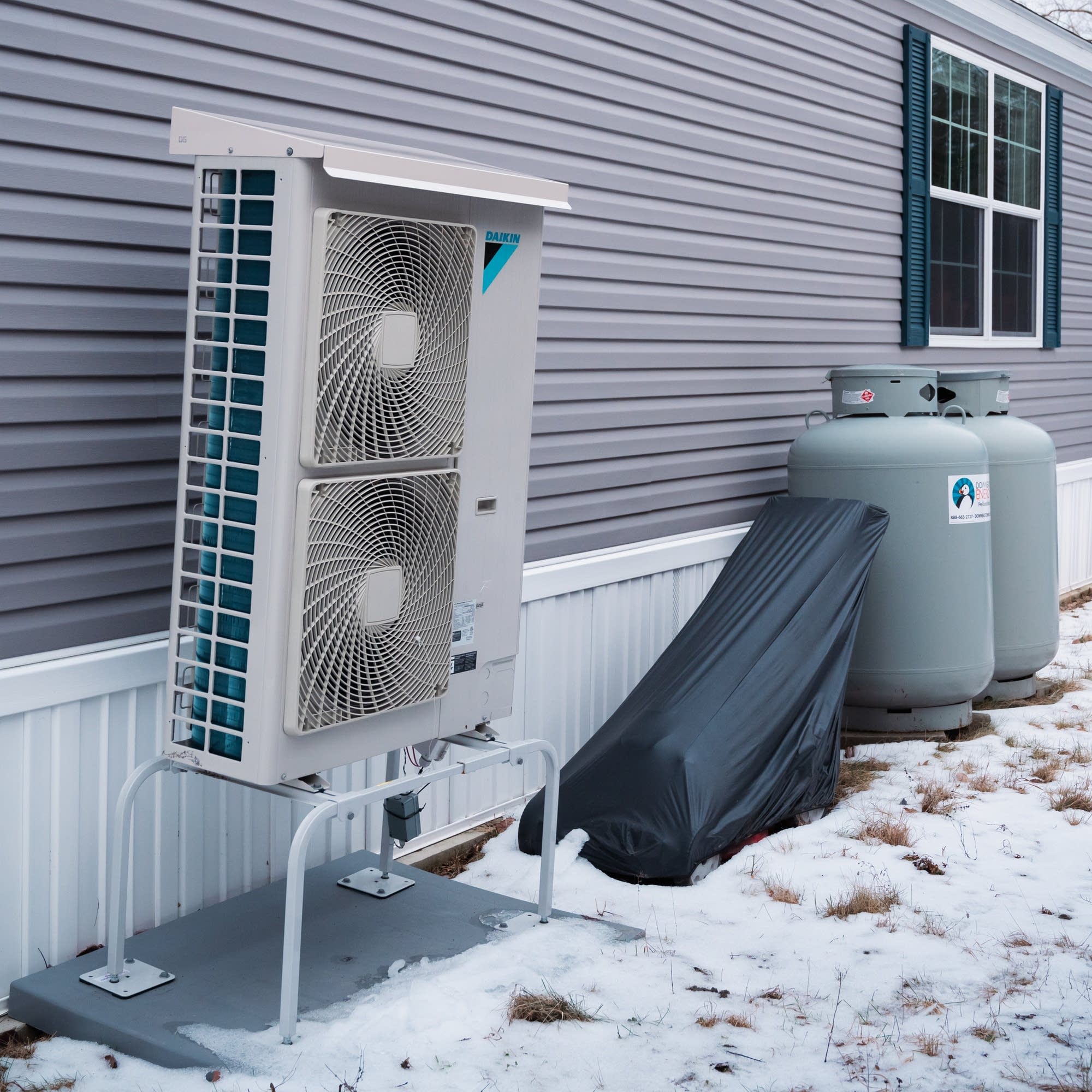
But Joshua Rhodes at the University of Texas at Austin says there's also population growth and the push to electrify much of the economy with EBs and heat pumps.

But data centers are the most visible part of that growth. And really it's all kind of coming together at the same time when we have other supply chains that are also under constraint.

And he says it's going to be a challenge for utilities and the grid to keep up, especially with these massive new data centers.

If you look at the top level numbers for the number of data centers and their power demand, I mean you're talking about doubling, tripling the grid in some places in just a handful of years.

Doing that will require replacing and building a lot of physical infrastructure, which takes time, Rhodes says, and has gotten more expensive.

All of those things that we use to build the grid, from the power plants to the transformers to the power lines, the cost of these things is double, sometimes triple, what it was just a few years ago.

And he says those higher costs will likely be passed on to consumers in the form of higher electricity bills. Barbara Cates Garnick at the Fletcher School at Tufts University agrees.

Yes, we're going to see our bills go up tremendously, and we have to decide who pays, when they pay, and how they pay. This is a huge issue, she says, that is just starting to come to a head.

I'm Samantha Fields for Marketplace.

The good news is that Airbus says it has has finished updating the software on, and this is a quote, the vast majority of the 6,000 A320-class passenger jets that were found wanting after we heard over Thanksgiving about that incident where, and this is another quote, intense solar radiation did a number on key flight control software on those planes.

The bad news is that intense solar radiation did a number on key flight control software on those planes.

The reality is, though, as Marketplace's Daniel Ackerman reports, airplanes are way more than engines and wings and tiny bathrooms. To oversimplify just a bit, modern aircraft are flying computers.

Samuel Engel researches the economics of air travel at Boston University. And he says most planes these days are so-called fly-by-wire.

That is, the pilots are manipulating a small joystick that is sending messages to the computer, which then signals the mechanical parts to move. He says before that was done via cables or hydraulics.

And all the onboard software has two main jobs, says Mike Stengel of Aerodynamic Advisory.

Number one is keeping the aircraft in its safe flight envelope, you know, not letting it bank too hard to the left or right, not letting it, you know, enter stall territory.

He says the computers also ease the workload for the pilots. So you can literally reduce the number of switches on a plane.

Stengel says, since software has become so important to flying, Boeing and Airbus are relying less on outside suppliers for it.

The aircraft manufacturers have gotten more heavily involved in the designing and developing the software that goes into their aircraft. There could be risks in letting computers take on so much work.

Dan Bubb at the University of Nevada, Las Vegas, says some investigators think malware contributed to a deadly crash in Spain in 2008.

And even though that hasn't been confirmed, that set off the alarms and made every airline, you know, manufacturer aware of now we have another challenge, you know, cyber attacks.

Overall, though, software has helped make air air travel safer, says Nicholas Owens, an analyst at Morningstar.

And just like many of the mechanical systems, there is redundancy built into aircraft computer systems.

You have more than one flight computer controlling each of the various ailerons and rudders and elevators and so forth.

And if, if the computer systems fail at the same time, Owens says there are still ways for pilots to take back some control with their own human hands. I'm Daniel Ackerman for Marketplace.

This final note on the way out today: the first and very last mention of Jeffrey Epstein on this program.

The American Economics Association has banned former Treasury Secretary Larry Summers for life over his association with Epstein.

Minor, perhaps, given the scale and scope of what was done, but not nothing.

Jordan Manji, Zonaya Maharaj, Janet Wynn, Olga Oxman, and Virginia K. Smith are part of the digital team around here.
I'm Kyle Rizdahl. We will see you tomorrow, everybody.

This is APM.

You should tell the people who we are and what our new show is. I'm Robert Smith, and and this is Jacob Goldstein.
And we used to host a show called Planet Money.

And now we're back making this new podcast about the best ideas and people and businesses in history.

And some of the worst people, horrible ideas, and destructive companies in the history of business. We struggled to come up with a name, decided to call it Business History.
You know why? Why?

Because it's a show about the history of business. Available everywhere.
You get new podcasts.