Too much oil, too little demand
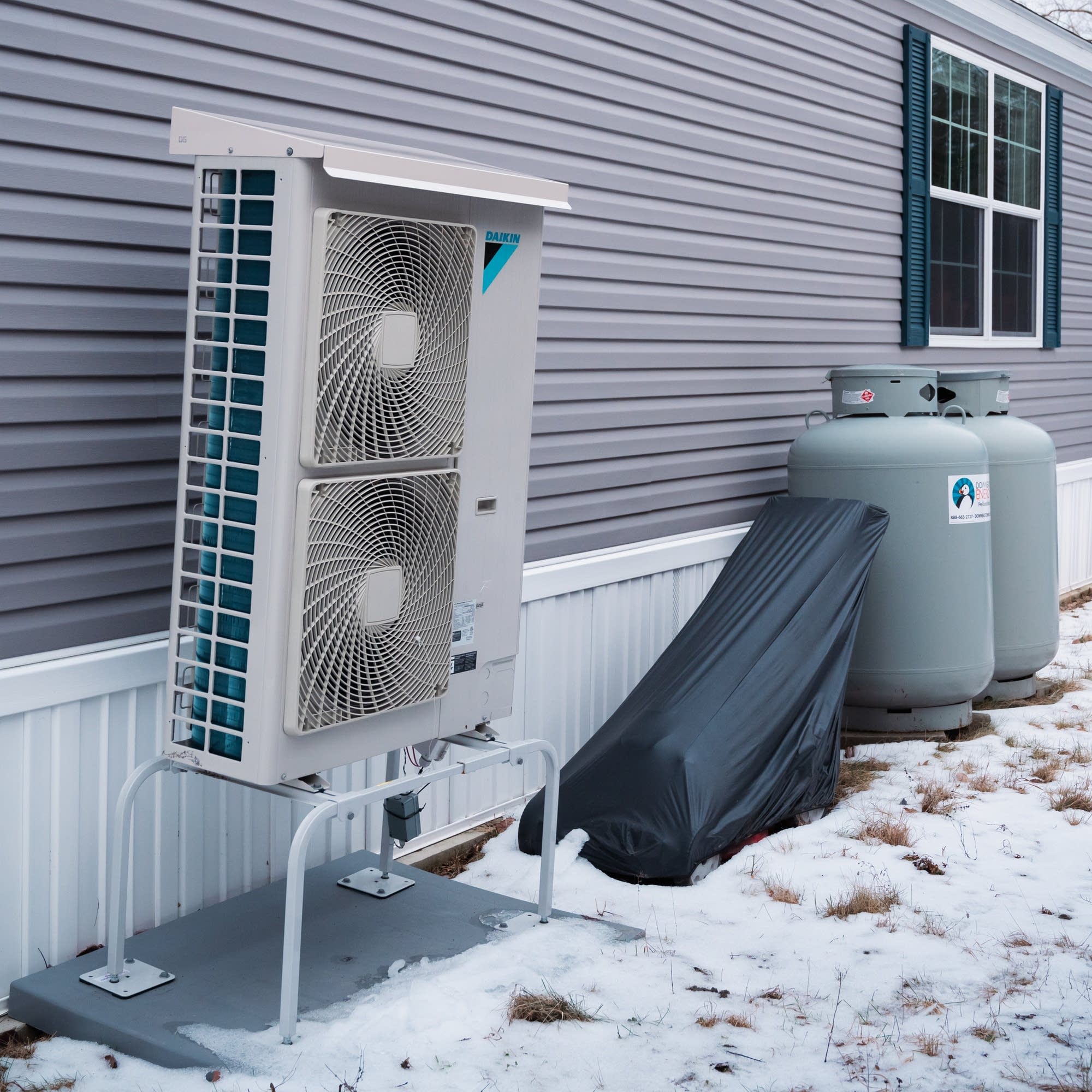
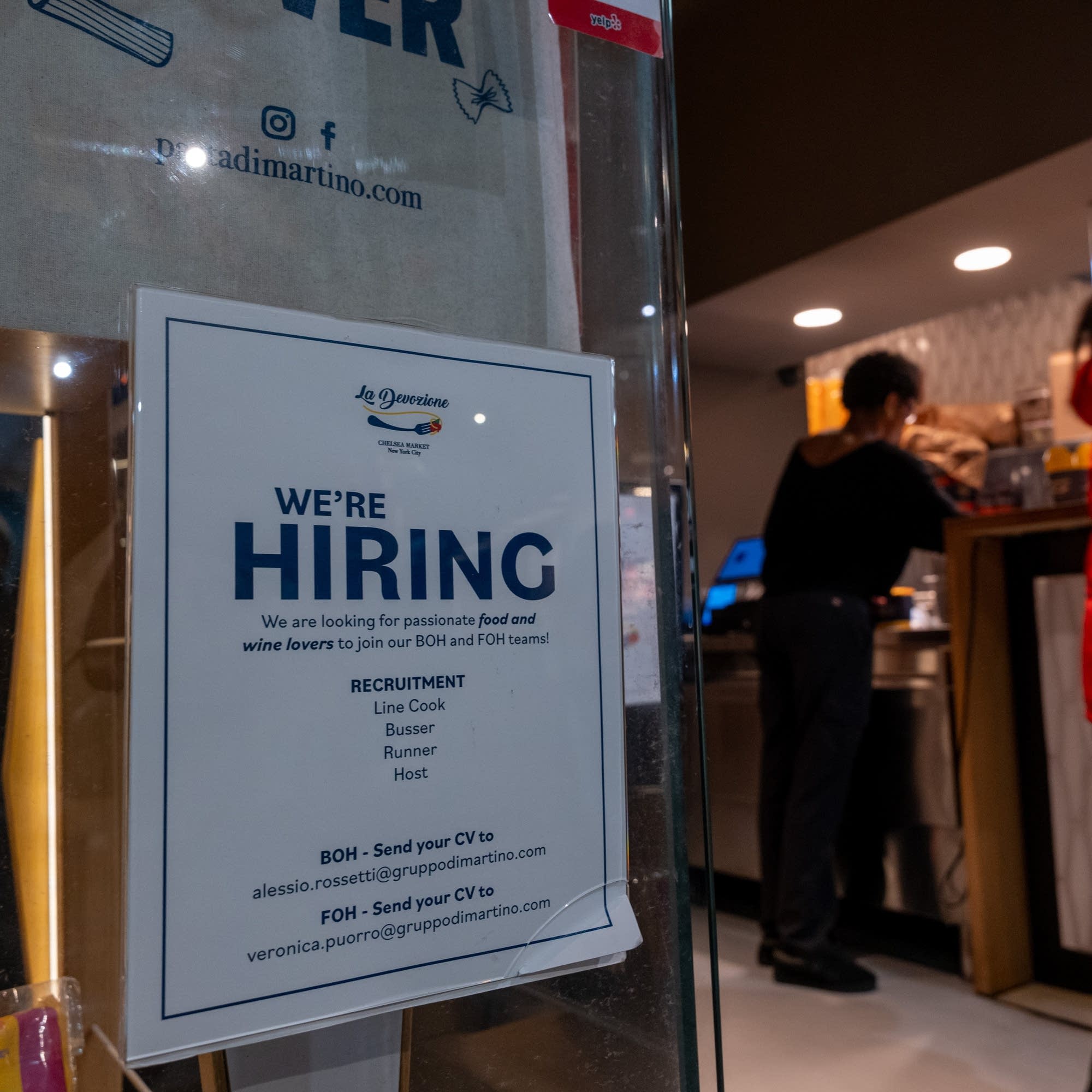
The Organization of Petroleum Exporting Countries will hold oil production steady next quarter as global supply remains unusually high, driven by record output from the U.S., Brazil, Canada, and Norway. At the same time, demand is low due to a tipsy global economy and rising EV adoption. Also in this episode: What a no-immigration economy may look like, why Zillow removed climate risk information from home listings, and how food companies introduce healthy versions of staple offerings.
Every story has an economic angle. Want some in your inbox? Subscribe to our daily or weekly newsletter.
Marketplace is more than a radio show. Check out our original reporting and financial literacy content at marketplace.org — and consider making an investment in our future.
Press play and read along
Transcript
This podcast is supported by Odoo. Some say Odoo business management software is like fertilizer for businesses because the simple, efficient software promotes growth.
Others say Odoo is like a magic beanstalk because it scales with you and is magically affordable.
And some describe Odoo's programs for manufacturing, accounting, and more as building blocks for creating a custom software suite. So Odo is fertilizer, magic beanstock building blocks for business.
Odoo, exactly what businesses need. Sign up at odoo.com.
That's odoo.com.
This marketplace podcast is supported by Wealth Enhancement, who understand that dreams don't happen by chance, it takes a plan.
They're ready to build your wealth blueprint for retirement, investing, taxes, and everything else your financial life brings.
It reveals gaps and highlights opportunities you may have missed at no cost to you. Find out more at wealthenhancement.com/slash blueprint.
We begin the last last month of 2025 with oil, real estate, and trade.
Also, the labor market and Cheetos
from American public media. This is Marketplace.
In Los Angeles, I'm Khan Risdahl. It is Monday today, the first day of December.
Good as always to have you along, everybody.
There is, perhaps, no industry on this earth as sensitive to the economic realities of supply and demand as crude oil. And it turns out we are very much on the supply side of that equation right now.
There's plenty of oil sloshing around out there. Brent crude stands just below $63 a barrel.
West Texas Intermediate around $59.
That is low-ish, and it led the Organization of Petroleum Exporting Countries and its allies, OPEC Plus, as you might know them, to decide this weekend that they are going to hold the amount of oil they pump to global markets steady for the next few months.
The cartel has been looking to boost production for a good couple of years now, but again, supply and demand. Marketplace's Henry Epp explains why there is so much oil supply right now.
There's been this tug of war between some members of OPEC Plus, says Mark Finley, a fellow at Rice University.
Do they want to have higher prices and higher revenues, or do they want to claim market share as the world's low-cost suppliers?
The chasing market share side won out for a while and OPEC countries pumped more oil, but it's hard to keep that up when prices are as low as they are and prices are low in part because the market's gotten crowded.
For one, there's the U.S. In September, we produced a record amount of crude.
Hugh Daigle at UT Austin says that's partly because U.S. oil producers have gotten more efficient.
As it stands right now, most basins here in the U.S. are still profitable.
Even at 60 or so dollars a barrel.
But it's not just the US boosting supply, says Matt Smith, an analyst at the data firm Kepler. We have Brazil hitting record production.
We have Canada also showing increasing output.
You have Norway increasing production. There's also new offshore drilling elsewhere in South America.
A lot of this new output was planned years ago, but it takes a while to get a new oil rig going.
It's like London buses. They all come along at the same time.
And that's the challenge for OPEC.
It's not just one player that they're having to deal with here, but it's a number of them all increasing, getting up to record production at the same time.
All of that supply is hitting kind of tepid demand, says Clark Williams Derry at the Institute for Energy Economics and Financial Analysis.
The global economy is a bit shaky, and especially in Europe and Asia.
EVs are starting to bite into gasoline demand, into diesel demand. Pushing down the price of crude.
For the rest of us who don't drive EVs, that means lower gas prices. The U.S.
average is now under $3 a gallon. I'm Henry App for Marketplace.
Wall Street today, not a winner. We will have the details when we do the numbers.
There was an essay in the New York Times the other day that aligns with what we try to do on this program, makes sense of all the disparate policy threads out there to help understand this economy.
The headline on the thing was, we're seeing what a no-immigration economy looks like. Wendy Edelberg wrote it.
She's a senior fellow at the Brookings Institution. Wendy, welcome to the program.
Happy to be here. Riffing on the headline of this piece, then, what does a no-immigration economy look like? Big picture, please.
Job growth is now a confusing metric for understanding whether or not the labor market is weak in a way that might suggest we're headed for recession.
So, what matters for job growth is if it matches the number of people starting to look for work. And before the pandemic, that sustainable pace of job growth was about $100,000 a month.
Then we had an immigration surge, and it was more like $200,000 a month. But now, with net immigration near zero, 40,000 jobs a month on average might be perfectly healthy.
So that's what this no immigration world looks like.
All right, so we'll get to the details in a minute, but you know as well as I do that when that jobs report comes out on the first Friday of every month, you know, shutdown notwithstanding, if it's like less than 100,000, there's panic in the streets.
So you're telling me 40,000 might be the new? Well, and in fact, I think it's going down.
And by 2027, if we continue with this immigration policy, may well be negative, which means each month we have fewer jobs than the preceding month.
Yes, this is going to create some cognitive dissonance. Okay, what does it mean for, let's just pick a couple, and I'm going to pick the two big ones.
Worker productivity, which is huge, as we know, but also then economic growth. There are a few things.
Less immigration means just a smaller overall economy.
There's just some mathematics going on there. We have a smaller population.
We're going to have a smaller economy. It also shrinks the tax base.
That makes our fiscal problems hard.
But research shows that it's worse than that and that immigrants add to innovation and productivity growth.
So we're not just choosing to be smaller today, but we are choosing to grow more slowly for years to come.
One of the things that struck me in this piece that you wrote in the Times the other day was that the Trump administration's policy of severely restricting immigration, they say it's going to create more job opportunities for Americans.
And what you say in this piece actually is the contrary, that it's going to reduce labor demand. Help me understand that.
Well, so immigrants don't just simply take jobs from native-born workers.
They're part of population growth. They create demand.
They buy groceries. They pay rent.
They get haircuts. So when you reduce immigration, you reduce both labor supply and labor demand.
Now, to be clear, less immigration is going to put some upward pressure on wages for certain jobs in certain sectors, but the effects are likely going to be much too small to to really move the needle on getting prime-age native-born men off the sidelines into the labor market.
So perhaps what the Trump administration is saying, to be pointed about it, is not actually what's going to happen. Well, I don't think so.
I mean, you know, it's in the universe of possible outcomes, but it's not what I think will happen, no.
You point out that Chair Powell said
not too long ago about the labor market. He said it is in a curious kind of balance.
What do you take that to mean?
Well, so we know that immigration has affected certain sectors in certain ways. So, like, the construction sector is probably hurting for labor right now.
But, in a macro sense,
supply and labor demand have remarkably kind of come down together. Think of it this way: if labor demand had stayed at 2024 levels while immigration fell, we'd have a really overheated labor market.
But instead, we have a curious balance. They've sort of come down together, supply and demand.
Right.
And then that manifests, as you point out in this piece, with, yes, far fewer jobs being created, 40,000 a month on average, maybe far fewer, depending on your research and where that goes.
But also the unemployment rate seems to be,
while rising of late, it could be and may be reasonably steady in the 4% to 4.5% range.
Yeah, so I am defining a healthy labor market really in a business cycle sense. So are we head of a recession or overheating?
And so by that measure, healthy means low, stable unemployment and job growth that matches labor force growth. And so I would call the labor market we have in that context healthy.
Do you think,
just to get back to the theme, I guess, of the headline of this piece, we're seeing what it looks like, are Americans going to recognize the economy in, I don't know, by the end of the Trump term?
Oh, my goodness. Well, here's what keeps me up at night.
If the White House sees these these low numbers month in and month out and doesn't understand or thinks that they can't convince people that the numbers are healthy given the administration's immigration policy, I'm not sure what they're going to do in their panic.
They might push for unnecessary stimulus. They might put more pressure on the Fed to cut rates.
And given their history of attacking data, they may just say, you know, we're going to interfere with the data that's being reported. So I don't think we smoothly get from
here to 2028 with the employment numbers that I think the immigration policy is really going to bring us. Wendy Edelberg is a senior fellow at the Brookings Institution.
Wendy, thanks a bunch.
Always good to talk to you. Yeah, thanks for having me.
If you're buying a house, what are you looking for? A new kitchen, maybe? Plenty of closets? Walkability and good schools if you've got kids?
Also, maybe in this time of rising risks from extreme weather, you want some indication of flood or wildfire potential.
And starting last year on Zillow, the biggest home listing site in this economy, you got that.
But not anymore after Realtors in California objected. Marketplace Samantha Fields has that one.
In the decade Joanna Jimenez has been working as a realtor with Compass in Miami, buyers' concern about climate risk has really varied.
For example, there were a few years ago we had hurricanes, we had some flood issues. People were asking more questions then.
Lately, not so much.
But when Zillow Realtor and Redfin added climate risk to listings, she says that had an impact too.
These websites were putting big scary warnings on homes, high flood risk, high climate risk, and we have had clients in the past tell us that they are not interested in seeing properties because of those labels.
A study published in the National Bureau of Economic Research found buyers who see flood risk data on listings are more likely to look for homes with lower risk.
Robert Medcalf at Columbia worked on the study.
We found that that you know significantly impacted on the tours that they took because they weren't looking at high flood risk homes anymore and it affected where they ultimately made an offer.
Buyers who saw flood risk information were much less likely to make an offer on a high-risk home than those who didn't.
Matthew Eby, founder of the non-profit First Street, says without easy access to that data, they're now going to be making the biggest financial decision of their lives while flying blind to these types of risks.
Zillow will still include a link to First Street's site where people can go look up climate data if they want, but just adds a barrier that wasn't there before.
When the data was there front and center, center, it just made it more accessible to folks. Now EB says it'll be easier for people to miss the information.
I'm Samantha Fields for Marketplace.
Coming up. I'm going to figure this out one way or another.
Gotta love a can-do attitude, right? First though, let's do the numbers.
Dow Industrial is down 427 points today, 9 tenths percent, 47,289. The NASDAQ dipped 89 points, 4 tenths percent, 23,275.
The SP 500 fell 36 points, about a half percent, 68 and 12.
We were talking oil a minute ago. Texas-based Conoco Phillips rose one and three-quarters percent today.
The old British Petroleum, which is now BPPLC, revved up 1.1%.
Northern Oil and Gas in Minnetonka, Minnesota. Ticker symbol, N-O-G.
Love that one. Heated up three percentage points.
New York City gained approval for three new casinos from the State Gambling Board.
They'll be the first Las Vegas-style casinos to open in the big city. Bally's Corporation, the Rhode Island-based gambling and betting company, is behind one of them.
Bally, B-A-L-L-Y.
Actually, just B-A-L-Y. Only four letters.
Scored one and four-tenths percent today. You're listening to Marketplace.
Today's number segment is presented by Intuit QuickBooks. When it comes to running your business,
QuickBooks Money Tools help you get paid faster and pay bills smarter with real-time insights in your business's financial health.
Automation reduces errors and laborious work while keeping you organized and tax-ready all year. And QuickBooks money tools allow you to apply for funding when it's time to grow.
Turn your numbers into confidence, clarity, and growth. Learn more at quickbooks.com/slash money.
That's quickbooks.com/slash money. Terms apply.
Money movement services are provided by Intuit Payments Inc., licensed as a money transmitter by the New York State Department of Financial Services.
This podcast is supported by Talkspace. When my husband came home from his military deployment, readjusting was hard for all of us.
Thankfully, I found Talkspace.
Talkspace provides professional support from licensed therapists and psychiatric providers online.
Military members, veterans, and their dependents ages 13 and older can get fast access to providers, all from the privacy of their computers or smartphones.
I just answered a few questions online, and Talkspace matched me with a therapist. We meet when it's convenient for me, and I can message her anytime.
It was so easy to set up, and they accept Tricare. Therapy was going so well, my husband and I started seeing a couples therapist through Talkspace 2.
Talkspace works with most major insurers, including TRICARE. Match with a licensed therapist today at talkspace.com/slash military.
Go to talkspace.com/slash military to get started today.
That's talkspace.com/slash military.
Winter's the perfect time to explore California, and there's no better way to do it than in a brand new Toyota hybrid.
With 19 fuel-efficient options, like the stylish all-hybrid Camry, the Adventure-Ready RAF or hybrid, or the rugged Tacoma hybrid, Toyota has the perfect ride for any adventure.
Every new Toyota comes with Toyota Care, a two-year complementary scheduled maintenance plan, an exclusive hybrid battery warranty, and of course, Toyota's legendary quality and reliability.
Visit your local Toyota dealer and test drive one today so you can be prepared for wherever the road takes you this winter. Toyota, let's go places.
See your local Toyota dealer for hybrid battery warranty details.
This is Marketplace. I'm Kai Rizdahl.
The holiday shopping shopping season started, semi-officially anyway, on Friday.
The holiday shipping season has been happening for months as retailers have been bringing product in from overseas.
But you throw in tariffs and a government shutdown and a pending Supreme Court decision on whether the president can legally impose those tariffs?
Well, we figured this would be a good time to call Weston Labar. He's the Chief Strategy Officer at Waterfront Logistics here in Southern California.
Mr. Labar, welcome back to the program.
Good to have you on. Thanks for having me.
I'll start with my standard question to regulars on this program, which you are rapidly becoming.
How's business for you? It's been an interesting year.
As we've talked throughout the year, the ups and downs,
as I like to call it, the EKG type reporting, that is the volume of imports and exports going in and out of our ports. It's been all over the map.
But a lot of the high highs through this year have led to some of the lowest lows that we've seen towards the end of the year.
And from where we sit, there's some key indicators that show that might continue well into next year. Keep going.
What are the indicators?
One of the biggest things that we look at, Kai, is empty containers.
You probably don't realize it, but many of the containers you see going in and out of ports are filled with our clean air here in California.
You know, we don't have a one-to-one import-to-export ratio.
Anybody who's been watching or listening to all the tariff-related news knows that we're trying to have a more balanced balanced trade from a federal policy perspective.
And when you cannot return an empty container, it means that there are not imports flowing into the country.
And this happens cyclically, but what we're seeing sometimes now is 20 days, 30 days plus to be able to return an empty.
So that's my world right now is trying to figure out how to get empty containers back to the port so we can continue to service the companies that we work with that have loaded containers, you know, despite seasonal buying.
So look, on the theory that your world, by extension, I mean, work with me on this metaphor, is our retail world in many ways.
How does this trickle down to what I'm going to see on the shelves at my local Walmart or Piggly Wiggly or what have you?
It's going to be, it's going to be, I mean, there's a trickle down here, right? Yeah, the first phase of it is that a lot of it was front-loaded.
So the hope is for consumers that whatever they want, it's sitting in a warehouse somewhere. That said,
if we're not seeing imports coming in, it means that people are not ordering those retail goods at the clip that we think.
And that's where getting some of the reports from the National Retail Federation and other major retail industry leaders to talk about shopping is going and retail consumer habits is going to be very important because it's one of two things, Kai.
Either they brought in more stuff than they needed or people aren't buying things.
Either way, it's an issue for companies that are servicing ports because when things are not being imported or exported, there's just not a lot of work.
Yeah, just sort of tangentially, how much of a factor is it or was it, I suppose, because it's past tense,
the government shutdown and the lack of data that we're seeing on things like employment and all of those things. Definitely creates a lagging effect.
We saw projects that were delayed because of the government shutdown, some new business that was delayed because they were waiting on pending FTC approval.
And then the other part of it, to your point, is we don't have the data. So we don't know the true impacts.
We don't know the wage and employment data.
We don't know all of the detailed transportation data across the country. These are things that we're going to have to wait probably a little bit longer to see in the same timeframe.
And so some of those reports may be delayed. Yeah.
Let me ask you the vibe question on the way out here.
Last time you and I spoke, which was in June, you talked about how the pizza parlors down by the Port of LA are kind of, were kind of empty because of all the aforementioned chaos that we were talking about with tariffs and stuff.
What's it like down there now? Because the tariff stuff is still happening. Chaos might be slightly reduced, but it's still a factor.
Yeah.
Anybody you talk to that is dependent on the ports, the industry that supports the ports,
they're still struggling. It's the fact that you're seeing shifts eliminated.
When you don't have the import volume coming in, terminals may decide to eliminate shifts.
Well, if they eliminate their Wednesday daytime shift, guess what? There's no one that's going to go be eating lunch at the local pizzeria, right, or grabbing coffee at the local coffee shop.
And, you know, with the advent of AI coming into play, you have people that are looking at those types of solutions, which obviously puts a crunch on local brick and mortar shops. Yep.
Wes Labar, he's the Chief Strategy Officer at Waterfront Logistics down in the porch here in Southern California. Mr.
Labar, thanks for your time, sir. Always good to talk to you.
Thanks, Kai.
Always a pleasure.
It is a truth universally acknowledged that a company in possession of a good brand must be in want of innovation.
Jane Austen is the setup for this next piece, in which a certain slice of the American snack-consuming public might be noticing a change today.
Instead of their usual bright orange and almost neon yellow, Doritos and Cheetos now come in more, shall we say, subdued hues.
Parent company PepsiCo is calling their new product line naked for the absence of artificial dyes and flavors.
Never fear, though, Pepsi is going to keep making the originals too, because when grocery retailers offer up something new, as Marketplace's Carla Javier explains, they still got to keep the customer base that wants the tried and the true.
When Marian Nessel first heard the news of the die-free Doritos, I laughed. Nessel is a NYU Professor Emerita of Nutrition and Food Studies, and she's seen this move before.
Food companies are not social service agencies and they're not public health agencies. They're businesses with stockholders to please.
And their first priority is maximizing sales and profits to their stockholders. And just because consumers say they want an option doesn't mean they'll actually buy it.
We've seen it time and time again, especially with healthier foods. That's food analyst Phil Lempert of Supermarket Guru.
You know, when Campbell's soup reduced the amount of sodium that they had in some of their soups, people stopped buying it. Because he says it wasn't
good.
So Campbell started offering consumers a choice, the regular soup or the low sodium versions.
By offering the alternative alongside the original, brands are able to hedge their bets and appeal to more consumers.
Though Blake Drosch, senior research analyst at eMarketer, says this strategy comes with some risk to the core brand.
The risk is that by introducing a die-free version, you're directly calling attention to the fact that your existing products have unhealthy components in them.
But he says the payoff could be that customers see these products not so much as occasional junk food, but instead as staples for, say, kids' lunches every day. I'm Carla Javier for Marketplace.
We'll finish up today with a story about photo booths. They are, it seems, all the rage now, especially those of the analog variety.
So today on our series, My Economy, a photographer who spent the past 15 years collecting them and has now opened a photo booth museum in Lower Manhattan.
That's the photo going into the carrier.
This next photo, the first photo we took is. I'm Brianna Conley-Saxon, and I'm a photo booth technician.
I restore photo booths and keep them running, and I have 20 booths in seven states, and I just opened a photo booth gallery and museum called Auto Photo in Lower East Side Manhattan.
We have booths from every era dating as far back as like the 50s basically.
This booth in particular has a hair dryer.
So when this one goes to delivery, which it will in a second here,
you'll hear just a basic hair dryer that tries to dry your photo off a little for the delivery. There she goes.
I always loved photography, even back to high school days. The first time I ever saw a photo develop, just the magic of watching it appear.
I just was hooked from the very beginning.
So I've done photography my whole life. And in 2009, I had just graduated from the Brooks Institute of Photography.
I was trying to figure out kind of what field I wanted to do.
And yeah, one day I found a photo booth at a thrift store in Alabama for 200 bucks and was basically like, I'm gonna figure this out one way or another.
Trying to Google it online, it just didn't exist. Digital had come around and it was just super oversaturated with digital photo booth markets.
I was able to find two different people who did run analog booths.
One was a Russian guy in New Jersey who offered to like take my booth and put a credit card reader on it and make the updates that was needed to make her run smoothly.
And then he was like, you might want to come train in New Jersey. And I was like, okay, like, how long? And he's like, a week.
And I was like, what could he possibly be teaching me for? Like, a week.
Once I got there, he was like, it'll take you 10 years to actually learn the ins and outs of how complicated these booths are. And he was not wrong.
10 years later, I am definitely still learning things all the time.
Once he helped me with that one and I had it up and running, I placed it in a coffee shop music venue in Alabama and it's still there to this day.
The day we open, we did have a line around the block, even though it was raining, which is really like sweet and dedicated.
And I don't know, I just bawled because I just had no idea, and it just was like felt like all the hard work was paying off. And I honestly had no idea how it would go.
And I kind of took a huge gamble. And honestly, I signed a 10-year lease believing in my passion.
And so far, it's worked out.
And you know, if one day people don't care again, then I'll learn how to make coffee.
I don't know.
We'll keep it fun. We'll have workshops.
We'll like do crafts and stuff like that. Or we'll have different exhibits to keep people coming.
So we'll make it work.
Brianna Conley-Saxon of AutoPhoto on the Lower East Side of Manhattan, analog or digital. Your stories are what make this series go.
Let us know what's happening at marketplace.org/slash my economy.
This final note on the way out today, in which congratulations, I guess, and please don't destroy humanity. Saw this on semaphore that ChatGPT turned three years old yesterday.
Amir Babawi, Caitlin Ash, John Gordon, Noia Noia Carr, Manda Petra and Stephanie Seek are the marketplace editing staff. Kelly Silvera is the news director and I'm Kyle Risdahl.
We will see you tomorrow everybody.
This is APM. Ready to elevate your career in the sports industry?
The Masters in Sports Business from the Levy School of Business prepares you for leadership roles, connecting you with partners including the San Francisco Giants and the 49ers.
Discover mentorship and real-world experience that raises your game in the heart of Silicon Valley. Search Levy Sports Business Masters to find out more about the program today.