How Their Friendship Became a Revolution | Leisha Hailey & Kate Moennig of The L Word 03, 2025
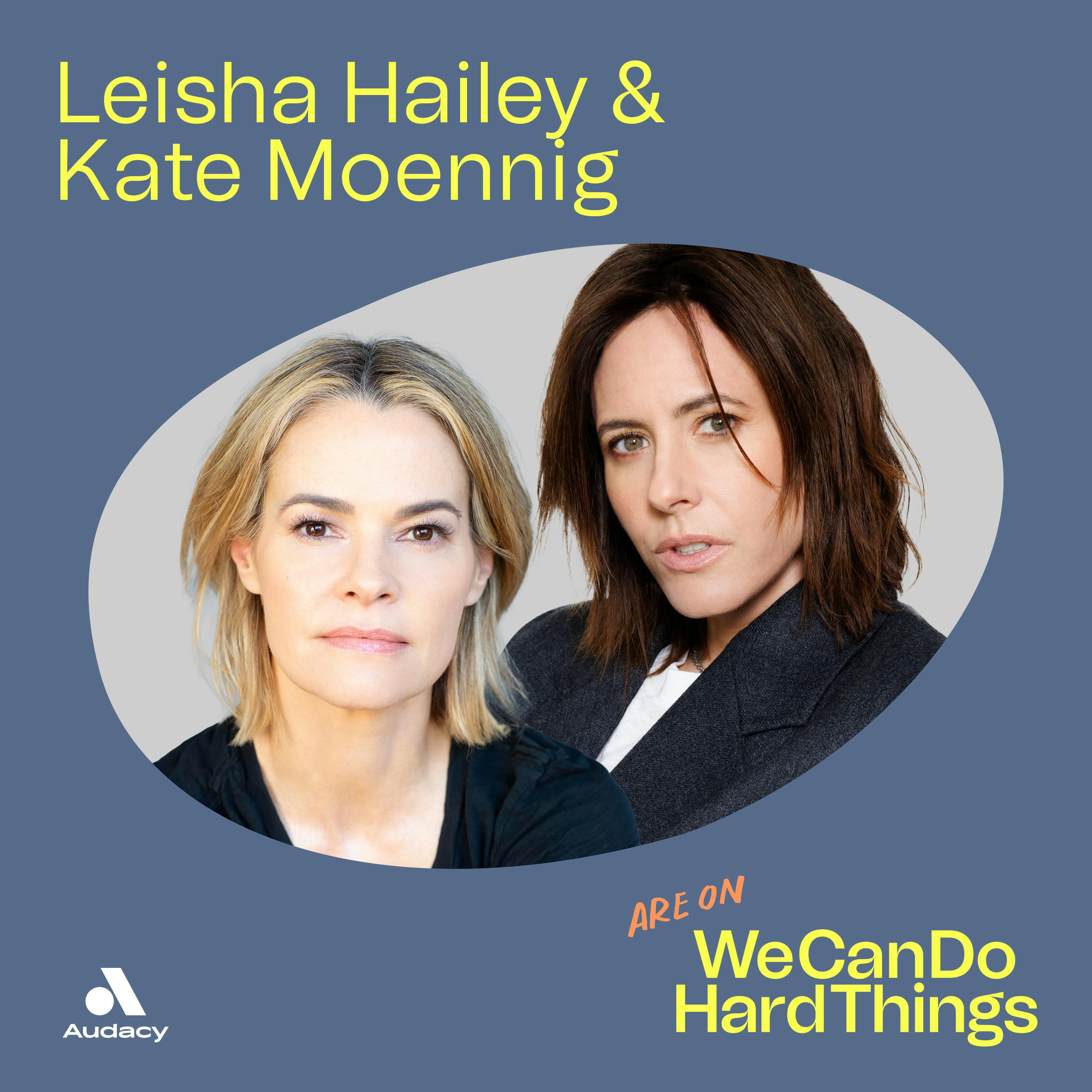
Leisha Hailey and Kate Moennig, stars of The L Word, discuss their new book, “So Gay for You: Friendship, Found Family, and the Show That Started It All,” an intimate, hilarious memoir of art, friendship and queerness.
How Kate and Leisha met; their first impressions of each other and going in for the same role
The impact and legacy of The L Word and Glennon’s recent introduction to the show
Rainbow capitalism, the pressure to publicly “come out,” and the joys of found family
LEISHA HAILEY is an actor, director, executive producer, musician, and podcaster. Hailey is best known for her beloved breakout character Alice Pieszecki in the revolutionary Showtime series The L Word and the reboot, The L Word: Generation Q. Before making her mark on-screen, Hailey cofounded the band The Murmurs in the 1990s, recording three albums for MCA/Universal Records and touring worldwide, including with Lilith Fair. More than a decade later, in 2007, Hailey cofounded the indie pop band Uh Huh Her, which toured internationally and sold albums worldwide.
KATE MOENNIG is a critically acclaimed actor and executive producer whose work spans film, television, and theater. She is most known for her iconic role as Shane McCutcheon in the Showtime series The L Word and the reboot, The L Word: Generation Q. Moennig has also starred in Showtime’s hit series Ray Donovan and in Freeform’s breakout series Grown-ish. Moennig’s film credits include the neo-noir legal thriller The Lincoln Lawyer, Lane 1974, and Terry Zwigoff's Art School Confidential. Most recently she can be seen in Liz Feldman's series No Good Deed on Netflix. She currently cohosts the podcast PANTS with Kate and Leisha.
To learn more about listener data and our privacy practices visit: https://www.audacyinc.com/privacy-policy
Learn more about your ad choices. Visit https://podcastchoices.com/adchoices
Press play and read along
Transcript
Speaker 1
Here's something that surprised me. 72% of Americans overestimate how much life insurance costs.
We just assume it's way out of reach, expensive like, well, everything is these days.
Speaker 1 That's why I love what Policy Genius is doing. It's not an insurance company, it's a marketplace that makes finding and buying life insurance fast, easy, and actually affordable.
Speaker 1 With Policy Genius, real users have gotten 20-year, $2 million policies for just $53 a month.
Speaker 1 You go online, answer a few questions, and Policy Genius compares quotes from top insurers so you can see all your options laid out clearly.
Speaker 1 Coverage amounts, prices, terms, no fine print games, just clarity. And if you need help, the license agents walk you through everything step by step.
Speaker 1 They'll answer questions, handle paperwork, and make sure you get what fits you. Secure your family's future with Policy Genius.
Speaker 1 Head to policygenius.com to compare life insurance quotes from top top companies and see how much you could save. That's policygenius.com.
Speaker 1 Hi!
Speaker 2 We're very excited about this.
Speaker 3 We're very excited about this and have been for some time.
Speaker 1
Oh, good. We're all excited.
Thank you for having us today.
Speaker 3 Oh, thanks for coming. Leisha Haley is an actor, director, executive producer, musician, and podcaster.
Speaker 3 Haley is best known for her beloved breakout character, Alice Paisecki, in the revolutionary Showtime series, The L-Word and the reboot, The L-Word, Generation Q.
Speaker 3 Before making her mark on screen, Leisha co-founded the band The Murmurs, recording three albums and touring worldwide, including with Lilith Fair.
Speaker 3 More than a decade later, Haley co-founded the indie pop band Uh Ha Her, which toured internationally and sold albums worldwide.
Speaker 3 Kate Mennig is a critically acclaimed actor and executive producer whose work spans film, television, and theater.
Speaker 3 She is most known for her iconic role as Shane McCutchin in the Showtime series The L-Word and the reboot The L-Word Generation Q.
Speaker 3 She's also starred in Showtime's hit series Ray Donovan and in Freeform's breakout series Groanish.
Speaker 3 Most recently, she can be seen in Liz Feldman's series No Good Deed on Netflix, and she currently co-hosts the podcast Pants, which we love
Speaker 3
with Kate and Leisha. Licia and Kate's new book, So Gay for You, is a D Light, and it is on sale now.
Welcome, Leisha and Kate.
Speaker 1 You're our first interview about this book, by the way, just so you know. Yes.
Speaker 2 So you're getting us number one.
Speaker 1 You're getting us fresh as daisies here.
Speaker 3
That's really exciting. Fresh as daisies.
Okay, well, I enjoyed every word of your book.
Speaker 1 I
Speaker 3 feel like writers are always talking about like, what's your favorite first line of any book? And so I have to ask you first to share.
Speaker 3 I think there's a new contender for great, people have mentioned Anna Curina, whatever. I think it's you guys.
Speaker 1 Okay.
Speaker 3
I have told this story maybe 30 times, Abby knows. It's my new dinner party story.
Okay.
Speaker 3 Tell us the story about when someone sat you down and the L-word was just a glimmer in someone's eye and someone said to you, have you heard about the lesbian pilot? Yes. And you said.
Speaker 2 Oh, did they find Amelia Earhart?
Speaker 2 So
Speaker 2 I studied acting, but I was living in Hollywood and had no idea how Hollywood worked or what pilots were or
Speaker 2 the word testing, like all these things I learned later was just jargon I didn't understand. So I had no idea what this person was saying to me when they asked me this.
Speaker 3 The lesbian pilot, Amelia Earhart.
Speaker 1 So good.
Speaker 2 Well, and you know, I don't need to like out Amelia Earhart by any means because she's not here to defend herself or, you know, speak, speak to it firsthand. But like, she seems like our people.
Speaker 3 The signs are there.
Speaker 3
Okay. One of the things I love so many things about your book and learning so much about you, but one of my favorite things is your friendship.
So talk to us about
Speaker 3 when you first met.
Speaker 3 Can you tell us the story and all that you remember about each other?
Speaker 1 We met in a very echoey hallway on Wilshire Boulevard in Century City on the 14th floor at the Showtime offices on a hard bench. I remember that.
Speaker 1
Why do you remember the hard bench? Because it was uncomfortable. The whole experience had an element of feeling uncomfortable and you're a little on edge because of the circumstances.
And it was hot.
Speaker 1 And I just remembered the senses I had.
Speaker 2 Yeah. And the bright lights, that office lighting.
Speaker 1 That awful lighting that does no one any favors. Yeah.
Speaker 1 Yeah.
Speaker 2 But we were young enough at the time who needed good lighting then. Yeah.
Speaker 1
Everything. True.
Back then, we took it all for granted. Totally.
Speaker 3 We really did, didn't we?
Speaker 1 I love a fluorescent.
Speaker 2 No problem.
Speaker 1
Yeah, it's fine. I'm always going to look like this.
Yeah.
Speaker 1 Talking about.
Speaker 2 Can I just say when Kate walked in, honestly, like, and I know her so well at this point, like her face is like, I don't know,
Speaker 2 secondhand to me, but she was like a creature from another planet. Like, I've never seen beauty like Lisha.
Speaker 2 I'm serious. You were like, unlike any person I had ever seen before.
Speaker 1 Really? Yeah.
Speaker 1 And I'm not fishing for a compliment by any means, but I never have heard you say that. And that's a very big thing say.
Speaker 2 Well, I know it sounds odd, but I'm describing my feeling when you first rounded the corner. I was sort of awestruck at your beauty and not in a crushy way.
Speaker 2
I'd never, by the way, ever had a crush on Kate. We never crushed on each other.
No. I mean, I don't know if you did on me.
Speaker 1 No. I don't think we'd be in this place today if there was that little bit of funniness throughout these 27 odd years.
Speaker 2 Who needs that, right?
Speaker 2 But no, you were like
Speaker 2 the androgyny and the lips and the clothes. I mean, we've all seen it on the show, but like I saw her in person before.
Speaker 4 It was just like, what the,
Speaker 1
you know? Yeah. And when I met Lisha, I thought, oh, it's, I've seen your face on my television selling probiotics for like the last five years.
And I felt like I knew you. I was like, oh, right, her.
Speaker 1 Yeah, I'm very familiar.
Speaker 1
But at that time, don't forget that commercial was everywhere. It was everywhere.
Yeah.
Speaker 1 And that was back when we watched television with commercials. And it was on at least five times throughout a show or a movie.
Speaker 2 I know. It got me through a couple of years in a tight spot.
Speaker 1 Person might respect that.
Speaker 3 You were both auditioning to be Shane at that point.
Speaker 1 Is that right? Yes.
Speaker 2 Get out. Yes.
Speaker 1 That's amazing. That's so that jumbles.
Speaker 3 I'm not going to disbelief.
Speaker 1
Oh, but that we were both playing Shane. That you were both trying to go for Shane.
Yeah, I was in New York when this happened.
Speaker 1
So my manager said, there's going to be only one other person testing for Shane. And she offered, she's like, I can suss out and figure out who it is.
And I said, no, no, no, no, no.
Speaker 1
I was like, I'll see them soon enough. It's okay.
But
Speaker 1 now I didn't realize we would be the only two, period. I thought maybe on another day they'd bring some more, but the way it was presented at the time was, it was just going to be you and I.
Speaker 2 And you said, describe me, because I know, like, it's, it's hard for me to even believe that was real, but it was very real at the time. But I looked like I was a little edgier, right?
Speaker 2 I could have been Shane a little bit, maybe.
Speaker 1
Yeah, I remember you had, there was a lot of color. Alicia's a very colorful person.
She'll always have some sort of interesting color palette on that's complimentary.
Speaker 1
And no one in New York where I live dressed like that. And so when I showed up, she had a pair of.
customized vintage Levi's. I don't, I recall bedazzling was very popular at that time.
Speaker 1 I don't think they were bedazzled. I'm not going to throw you under the bus with that.
Speaker 2 Well, more, like a little more studded, not like rhinestones.
Speaker 1 Yeah, but there were, there could have been a few studs now that i'm thinking but more importantly there was a lot of patchwork and there was very elaborate tiger or something on on your coat it was just there was it was a lot of very curated well thought out flair
Speaker 1 and i i mean that with all respect in the world thank you And you had a pair of beat up boots on and
Speaker 1 you had a cute haircut. And I was like, oh, okay, I thought that makes sense.
Speaker 1 Like, it made sense when I, when I saw you, but I also saw Licia
Speaker 1
when I walked in to sign at the reception desk and I saw the back of her head. And I saw a bunch of wispy things sticking out.
And I thought, oh, that's her.
Speaker 1
Wispy things, maybe my hair. Yeah, my back.
Back of your hair, your wispy back of your hair. I thought, no, that's so.
Speaker 1 I have to ask, though, like, when you're about to go read for this part, what the hell with that? Like, are you like side-eyeing each other?
Speaker 1 Are you actually friendly in this process most of our listeners probably have no background in acting auditions but like what is that like when you're sitting next to somebody well every actor has their own method i think for how they're going to get through that awkward moment some people
Speaker 1 get competitive other people brush it aside other people try to psych someone out
Speaker 1 you know there's varying ways of how to handle then there's the overtly friendly ones oh people love to chit chat the chit chatters too.
Speaker 2 They'll throw you off.
Speaker 1 Or maybe not even throwing you off, but they do it to sort of normalize this very uncomfortable environment we're in, which is anything but normal. How did we do it?
Speaker 1
I think I'm not a believer in the competition and the psych outs. I just believe in just staying in your own peace of mind and being friendly.
But we didn't really talk. We sort of
Speaker 1
both friendly. Yeah, yeah.
We're both shy.
Speaker 2 Yeah, very shy.
Speaker 1
And we just said, hey, how are you? Nice to meet you. Nice to meet you.
And then it was some awkward silences and some funny like side eyes that we gave each other. Like, oh, well, here we are.
Speaker 1 When is this going to start? Because we were waiting for so long to go in, remember?
Speaker 2
Yes. And we heard all the girls auditioning for Jenny.
You could hear overhear their auditions, which was also like, you never want that.
Speaker 1 People love to place actors right outside of the audition room. And the only thing dividing us versus the people inside the room is either a very thin wall, like dry wall or a glass panel.
Speaker 1 So you hear everything.
Speaker 1 So we were in that place for for about 35 minutes and and when you went in first i said break your face or good luck or something yeah then when you were done you just dipped you left yeah i say goodbye to you yeah you did but once you're once you get out of that room you're like whew made it okay let's go yeah yeah
Speaker 3 so what was your next contact and how did you become so close that people started calling you pants i think that was jenny right so when the l-word came out i was married to a man living in the most conservative county in Florida, had three children and was a Sunday school teacher at an evangelical church.
Speaker 3 So I wasn't aware of the L-word.
Speaker 3
I just watched it after reading your book. Wait, I am.
Yeah.
Speaker 2 I have- Wait, what? Yes.
Speaker 1 Yeah, let me hear this correctly. You just watched the original show after you read this book?
Speaker 3
Yes. And I watched it like this.
A lot of it because one of my best friends is Alex Heddison.
Speaker 3 And she told me that her boobs are in the show so i was so scared that alex's boobs were gonna pop out at me when jodi and alex are out and somebody walks up to alex and says i saw you on the l-word every time the person walks away jodi goes she's seen your boobs yeah they've all yeah all of our boobs no alex's boobs are definitely on the show dylan right dylan with long archer
Speaker 2 the documentarian yes who dated helena Helena Peabody.
Speaker 1 But she was on for a number of years. So yes, I'm sure she was topless, just like the rest of us.
Speaker 3
Just like the rest of you. Tell the people who, like me, were not conscious of the L-word somehow because it was probably blocked from our radio waves in those specific cities.
Yeah. Can you tell us
Speaker 3 in a nutshell or any way you feel like it?
Speaker 3 what the phenomenon of the L-word was? What was, is the L-word in the world?
Speaker 1
Wow. That's a good question.
That's a big question.
Speaker 1
Timing, I think, is well, timing is everything in life. And that shows timing was perfectly lined up.
And it wasn't planned. It just happened.
Speaker 1
And that was a lightning in a bottle moment that none of us could predict. We all felt it when we were making the pilot.
We knew what we were doing was special, right, Leish?
Speaker 2 But yes, very.
Speaker 1 You can't control the outcome in any way.
Speaker 1 And it took on a life of its own. And look, you're watching it now after you read our book, so that's that's a trip.
Speaker 3 I told Abby, I'm all caught up, I'm finally caught up on lesbian culture. She said, You're caught up from a while back, like, we need to catch you up further.
Speaker 2 Yeah, so that's
Speaker 2 that is, I think that's an important place to start. I don't know if you're a responsible gay if you haven't seen the L-word, I feel that
Speaker 1 it's true, and like
Speaker 1
I don't know when the first year was that it aired, 0404, yeah. And so, I'm 23, 24, baby dyke, lesbian.
And
Speaker 1 I don't know, I just want you guys to understand, and I'm sure you've heard it from a million people, but being in the sports world for so many years, my queerness was difficult because so much of what women athletes, how we make our money, the big parts of making our money are endorsement deals, right?
Speaker 1 And being seen in commercials, I mean, this is a storyline that happened in the very first season of the L-word.
Speaker 1 How Dana, how is she interacting with the corporate world of endorsement deals for pro-athletes? Sure. And so for me, coming from a Catholic upbringing, and really, I mean,
Speaker 1 at the time, it felt like lesbians were like this, it was like this underground thing.
Speaker 2 Yes, you nailed it.
Speaker 1 And kind of cool and mysterious. And then when the L-word came out,
Speaker 1 and by the way, it is very provocative. There was no holding back.
Speaker 3 And for me, like, I respected that so much.
Speaker 1 I was just like, it was so fucking ahead of its time. There was parts of me that I was like, oh my gosh, don't show so much boobs
Speaker 1 because I was hoping this was a show made for lesbians, not for popular culture. And yes, I was like, so into it, but I was also in this weird, I only really had a lot of straight friends.
Speaker 1 I didn't have a lot of queer friends.
Speaker 1 I mean, yes, I had like athlete friends who happened to be queer, but I was like straddling these, this time where I'm trying to get a lot of straight people to understand what a queer person is.
Speaker 1
That we're just like the rest of us, like we're normal. We're like, we put our pants on the same way.
Maybe we put different kinds of pants on, you know, like, but we're still people. Studded pants.
Speaker 1
Studded pants. Yes.
But I just think it's so important that you guys know,
Speaker 1 I think that the L-word had a huge impact on moving the needle forward for gay rights. And I know a lot of that is being complicated and with what's going on right now in our current government.
Speaker 1 But I just, you guys made such an impact on me personally because I just kept thinking, well, I just basically wanted to be Shane, like every like. lesbian watching the L-word.
Speaker 1 I wanted to be your character, Kate.
Speaker 3 I wanted to be Alice.
Speaker 1
Yeah, I don't know how well, I don't know if that's aged well in the year 2025, but in 2005, it certainly was the peak everyone seemed interested in. That's right.
That's right.
Speaker 3 Wait, why hasn't it aged well?
Speaker 1 Because she was, I always kind of seen it.
Speaker 1 She was a bit polarizing, especially now, because what she did, many people would find not only unethical, but cruel and teetering on inappropriate, because our lenses have changed so much since we were on
Speaker 1 and so that's why i say i don't know how well she's aged now in the year of 2025 that's interesting you know in 2004 2005 it was being written based on what people knew and the knowledge they had and you know and that has to be considered i think that we are coming full circle though because gen z kids there's a push towards non-committal more non-committal relationships which is i think in a lot of ways what shane was
Speaker 1
for me that was like i'm such a monogamous. I'm like second date U-Haul for sure, lesbian.
Like that's my personality. But now they're like into the dating apps, you know? Oh, good.
Speaker 1 Then maybe, maybe Shane will hopefully come back around and maybe inspire in a better way. Yeah.
Speaker 4 I see so many products out there for hair care. It's hard to know where to start or what I even need.
Speaker 4 My hair texture has changed a lot over the years, depending on what phase of life I've been in or what my hormones are currently doing.
Speaker 4 And if you're someone who is also coloring your hair, it might mean you want a product that really supports the health of your hair.
Speaker 4 I have tried hair masks before with none that have really stood out to me or which might leave my hair soft for like a day, then back to dry and brittle the next day.
Speaker 4 But that is why I want to tell you about the K18 Molecular Repair Hair Mask. This isn't just another temporary fix.
Speaker 4 It's patented K18 peptide goes deep all the way to the molecular level to actually repair damage from coloring, bleaching, and heat. The result?
Speaker 4
Hair that's soft, strong, bouncy, and completely renewed without feeling weighed down. Using it is simple.
Just a few minutes once a week after coloring and your hair starts to come back to life.
Speaker 4 It's like giving your hair a reset button, leaving it healthier, smoother, and more resilient than ever before. So, yes, we can do hard things, but your hair doesn't have to be one of them.
Speaker 4 With K-18, you can keep coloring, styling, and creating while your hair stays strong and beautiful every step of the way.
Speaker 4 Shop K-18's mask at Sephora or get 10% off your first purchase with code HARDTHINGS at k18hair.com. That's codehardthings at k18hair.com.
Speaker 4
As the air turns crisp and the holidays draw near, comfort becomes the best gift of all. That's why I love Quints.
They deliver layers that last.
Speaker 4 Think sweaters, outerwear, and everyday essentials that feel luxurious, look timeless, and make holiday dressing and gifting effortless.
Speaker 4
Right now, I'm obsessed with their camel double-faced merino wool trench coat. It looks straight out out of a designer showroom, but costs a fraction of the price.
The quality is honestly incredible.
Speaker 4 Warm, structured, and so elegant, it instantly feels like you are wearing something very much on purpose.
Speaker 4 I have so many items from Quince layered underneath like button-ups and sweaters, but the coat is my current fave. And Quince really does have it all.
Speaker 4 100% organic cotton cardigans for under 50 bucks, oversized blazers, classic denim, silk tops, emplice hoodies, down outerwear, everything to make you look chic, and most importantly, be cozy this fall and winter.
Speaker 4 Step into the holiday season with layers made to feel good, look polished, and last from Quince. Perfect for gifting or keeping for yourself.
Speaker 4
Go to quince.com/slash hardthings for free shipping on your order and 365-day returns. Now available in Canada, too.
That's q-u-i-n-ce-e dot com slash hard things to get free shipping and
Speaker 4 We can do our things is brought to you by Bumble, the app committed to bring people closer to love. I went through it in my first marriage.
Speaker 4 I was desperately in love, and then in a whiplash of a moment, it was gone. I felt abandoned, betrayed, crushed.
Speaker 4 A while out from the divorce, when a friend asked me whether I was ready to date again, I said, listen, I love men, but I also love hamburgers.
Speaker 4
And I just had the juiciest burger, and it gave gave me food poisoning. And I don't even want to look at another burger for a very long time.
When I was ready to look, I was terrified.
Speaker 4 How in the world do you put yourself out there after that?
Speaker 4 I don't think there are a lot of people more courageous and cool than those folks who have been through the depths of heartbreak and are brave enough to reveal their heart again.
Speaker 4 It starts with that first step, a shaky voice inside of you that says, I want this even more than I don't want that.
Speaker 4 I want to share life life and this beautiful banged up heart with another beautiful banged up heart. These days that first shaky step often happens online on a dating app.
Speaker 4 In celebration of you brave ones, we want to tell you about Bumble. What I love about what Bumble is doing is they are making that first step feel a tiny bit less scary, more possible, more human.
Speaker 4 They make you feel more safe.
Speaker 4 New Bumble users have to add multiple layers of verification, like mandatory photo, phone number, and ID verification so you can feel more confident that the people you're seeing are who they say they are.
Speaker 4 Plus, profiles aren't just about photos, they highlight personality, interests, and passions, so you can get a sense of whether you will actually connect with someone.
Speaker 4
You can be shaky and scared and show up anyway. You can start again.
Bumble helps people do exactly that. Start your love story today on Bumble.
Speaker 2 I had a question. You were saying that when you were like, oh, don't show your boobs, was it like you were worried it was going to like take it back or make it? I'm so curious about what you said.
Speaker 1 That was yeah, I was worried. I come from like the Puritan culture.
Speaker 1 So, like, even with my kids now, when they're wearing like really short, they don't believe that butts are off limits, like buttocks.
Speaker 1 They think ankles are, you do not show your ankles, but you can show your, the fullness of your buttock.
Speaker 3
Asses, not a private part. Yeah.
Ankles.
Speaker 1 And I am a little bit like, let's just cover it all up just because of the conditioning that I had. And I was actually a little bit afraid.
Speaker 1 I didn't realize that no straight people were really watching the L-word at the time, but I was afraid if they would watch it, that they would think that we're just like.
Speaker 1 all we're doing all day is walking around with our shirts off. I know it to be very,
Speaker 1
I know it's not that. And you guys weren't always taking your shirts off.
You were a lot.
Speaker 1 There were every episode there was boobs so it was your version of like respectability politics like don't be too that because then they won't think we're good and the line of thinking is incorrect the way that i was feeling about it was not analyzed or therapized in any way i think very differently about it now but there's a part of me that really does i like what leisha said in the book though when she was talking about how
Speaker 3
People were saying, don't show so much. It's like for the male gaze.
Don't make it about the male gaze. And she was was like, well, lesbians have a gaze too.
Speaker 2 We're gays. Yeah, that's exactly like I always felt like what people, what they hadn't seen yet was that we sexualize each other.
Speaker 2 And so it just was like a foreign concept that we objectify sometimes, you know, we like women to women, we can do that. And I don't think people really ever sat back and thought about that.
Speaker 2 They're like, that obviously has to be. a man you know a man wrote that or a man is directing that or women don't do that and it was to me that was kind of exciting that we were doing that.
Speaker 1 Also, considering that entire production was run by women.
Speaker 2 Yes. And written by.
Speaker 1 And written by, I'd say 90, 95%.
Speaker 2 Wow. And 95% gay women.
Speaker 2 You know, yeah. Yeah.
Speaker 3 What was it like being a part of all of that at the time? For me, one of the things I think that this an unexpected
Speaker 3 beauty of this book was for me being a person who came out when rainbows were in every old navy and on the White House and everybody was like yay queers anyway it was kind of like
Speaker 3 this isn't as bad as me
Speaker 3 yeah
Speaker 1 everybody loves me being gay is a breeze
Speaker 3 but it's an interesting dynamic between the two of us sometimes because we have such
Speaker 3 so the bad thing about that is re-entering the time we're in now
Speaker 3 feels
Speaker 3
differently daunting to me than it does to Abby because she's like, yeah, this is going to suck, but we've been here before. And in lots of ways, it was fucking awesome.
It was scary and different.
Speaker 3 But, and there's so much in your book that made me like, oh, oh, like the beauty, the way you guys lived with each other in LA at that time, it felt so vibrant and strong and gorgeous and like community based.
Speaker 2 And yes, yes. And especially like New York in the 90s, like that's where I really felt like I understood it all, like what it meant.
Speaker 2 And it felt like what you were saying, Abby, like it was like sort of underground and there was a rebelliousness to it, you know, and it was like when we hit the streets, it would be like Gay Pride Day.
Speaker 2 It was like we all came out of the woodworks and we were like, Yeah, we're here, you know, and it was just like that one day you could come out and say it and be it and feel it.
Speaker 2 And otherwise, we had to figure out how to live, you know, in the world and it wasn't easy, you know, navigating your day-to-day.
Speaker 1 Also living in the moment, too.
Speaker 1 It's just, you don't realize it until you look back in hindsight and you think, oh, right, well, that was an incredible time, or that was a challenging time, or that was a dark time.
Speaker 1 And we were just so busy just living in the moment
Speaker 1 that the only time we ever would really reflect on it truly was through this book
Speaker 1 deeply.
Speaker 3 Tell us a story about that time. Like when you remember those,
Speaker 3 that beautiful era that you were all in that together, what pops out the most for you?
Speaker 1 Finding adventure on
Speaker 1 random days.
Speaker 1 And it could be as simple as deciding to go out to a new coffee shop that so-and-so has just discovered all the way across town on Commercial Drive.
Speaker 1 But let's go check it out because it seems fun and why not?
Speaker 1 And just going on some random Canadian adventure to get this coffee or this lunch spot. And it would just turn into this sort of comedy of errors.
Speaker 2 Yeah, I think if speaking like,
Speaker 2 like if we're talking about the show and that, that era,
Speaker 2 I think the surprise to all of us was how close we became and how the on-screen dynamic became parallel to what we were experiencing off-screen. And I think...
Speaker 2 To me, that was sort of the secret to the whole entire show that no one really knew. It wasn't like the cameras rolled and we were like, okay, let's play best friends.
Speaker 2
It was really happening, you know, and all the hours when we weren't on set, we would have every meal together. We lived together.
We'd spend our weekends together. We traveled together.
Speaker 2 And so it just one bled into the other and it just really made this nice
Speaker 2 realistic connection.
Speaker 1
And I can imagine there's difficulty. I mean, I've been on teams my whole life and I love and respect so many of my teammates and not every day.
there were some hard moments that we had to deal with.
Speaker 1 Was there ever like a fight or something that happened while you were taping that happened off screen that like affected could affect the actual taping of the show? It wasn't a drama-filled set,
Speaker 1
contrary to what people may assume. Everyone gets on each other's nerves at some point.
I mean, Lisha wrote about when two of us were roommates.
Speaker 3 With Mia.
Speaker 1
With Mia, we got in ridiculous arguments. Yeah.
And 20 minutes later, we'd be laughing because we wouldn't remember what it was we were fighting about because it got so in the weeds of nothingness.
Speaker 2 Look, I mean, like you're saying, like a team is definitely the same as a cast, right? Sure, there's off days or people, like Kate said, they get on each other's nerves.
Speaker 2 Maybe something happened in the like transpo van on the way to a set that morning. And it's like,
Speaker 2 everybody in the makeup trail is like, ooh, you know, but it's like, it's nothing that lasted
Speaker 2 or was like a true barrier between anybody. Even if there were dynamics that it's just not the book we wanted to write where
Speaker 2 it was like a tell-all or, you know, we wanted to really just like celebrate and like basically write a love letter to that time in our lives.
Speaker 1
Yeah. Also, the memories of any that sort of acrimony, I don't actually have them.
Whereas
Speaker 1 writing about the times that I remembered actually have like this joyous feeling behind it, because that's what I believe I and the rest of us took away from it more than anything.
Speaker 1 So if someone wanted, if our editor even said, well, what were some downtimes? I'd honestly be hard pressed to remember one.
Speaker 1 And so like, would you say that that was like some of the happiest times of your, not just like your acting lives, but your, your personal lives too?
Speaker 1 Because it feels like there was so much overlap between
Speaker 1
the joy that you were getting. And you said you were filming in Canada.
Was that where you filmed every season? Yeah.
Speaker 3 oh vancouver i love that place how did you become so close tell us about the evolution of your friendship
Speaker 2 leash well i was the only out cast member at the time and kate and you can speak more about this yourself but kate was coming into her sexuality and i think we just sort of had this nice little bond like almost like an older sister but
Speaker 2 equal yeah very equal not like i'm old and wise but like i don't know we just kind of right away it was like oh you yeah we're gonna be.
Speaker 2 It just, and then obviously, our characters were friends, and I think there was just an authenticity to Kate that I was drawn to, and I appreciated what we had in common, you know, even our sexuality.
Speaker 2 It was just a nice, it was like having your buddy that understood all the gay stuff or the dynamics like I was having with my girlfriend, or Kate was dating someone.
Speaker 2 You know, we just kind of had each other's backs at the time.
Speaker 1 I remember it being immediate, and it's that thing.
Speaker 1 So, when you find your people, you just, your body knows, your spirit knows. And we didn't see each other again until Vancouver.
Speaker 1 And Lisa was the first person I saw in the production office.
Speaker 1 And I was relieved to see her because I was genuinely wondering, is she going to be on the show? Because she didn't get the part. So who would she be playing?
Speaker 1 And I didn't know that they were restructuring anything. And I didn't think to ask my manager or anyone, who else is cast? I never thought of asking that.
Speaker 1
So I just blindly got on the plane and flew to Vancouver and was kind of wondering who's going to be there outside of Pam and Jennifer. So I sort of saw that.
I can see that looking back.
Speaker 1 Oh, that was, this was meant to be.
Speaker 1 This was destined in some way or another, because the chances of, you know, feeling that like it was a subtle connection at the audition, although because all the other energy was sort of taking it over.
Speaker 1
But still, there was that subtle curiosity I had. And then to actually see that person again and, oh, we're going to be on this show together from day one.
It doesn't happen like that.
Speaker 1 Rarely. And then guess what? It's going to last for six years,
Speaker 1 technically 20 if we're really going to, you know, do the map.
Speaker 2 And then another three with the rebate.
Speaker 1 Yeah. So it was just, it was just meant to be.
Speaker 1 Now, you don't have to talk about this if you don't want to, but you were kind of coming out at the time, Leisha said. That's like so interesting to me.
Speaker 1 Did like playing the character of Shane help you learn more about your personal self and your personal coming out story, Kate?
Speaker 1
I think the show in general helped me find a place in the world that felt safe to explore it. Not that I was in an unsafe place prior to that.
It just,
Speaker 1 it was just this very warm environment.
Speaker 1 and accepting environment. And because sexuality was on the forefront of the show's message and unapologetically so, everyone embraced it.
Speaker 1 I'm sure, truthfully, if even if I played a role like Alice or Dana, it would have the same kind of effect on me if I didn't play Shane.
Speaker 1 Shane was just sort of this amped up version of who I wasn't, by the way.
Speaker 1 But it was sort of like, oh, so this is what the world looks like in a very extreme version of the opposite of what I've experienced in life thus far.
Speaker 1 Can't say I agree with her, but okay, so that's what that looks like. And so it just was really more the people and the experience within it that gave me solace, I suppose.
Speaker 2 You've also said that watching Eileen, because there were a lot of people in these like long relationships
Speaker 2 and you were like, oh, wow, that's. So you can be gay and have all that too.
Speaker 1
Yeah, it was just sort of like another day. It was just like, here's another day.
And there's Eileen with her wife and her two kids. Yeah.
And then there's Lecia with her long-term relationship.
Speaker 1 And oh, this is what it's like to live in LA because LA was very foreign to me. So I didn't know how people lived in LA.
Speaker 1 And when I got to LA after the pilot, I realized, oh, this is based in reality, a heightened version of it, but it's certainly based in what really exists here. I had no idea.
Speaker 1 Oh, well, now this makes sense. Cool.
Speaker 4
This show is brought to you by Alma. I want to start with a truth I've learned the hard way.
Taking care of your mental health isn't a one-time decision. It's a daily practice.
Speaker 4 And even when you know you want support, the hardest part is often just figuring out where to start. For me, finding the right therapist changed everything.
Speaker 4
But getting there was kind of overwhelming. Endless searches, phone calls, dead ends.
It's wild that the thing that's supposed to help you can feel so hard to reach. And that's why I love Alma.
Speaker 4 Alma, A-L-M-A, takes all that chaos out of the process. It's a simple, easy-to-use platform where you can search for licensed, in-network therapists who actually feel like the right fit.
Speaker 4 You don't even need an account to browse and you can filter by what matters most to you, their background, specialty, therapy style, and more. And here's the part that really matters.
Speaker 4
This isn't just about checking a box. It's about real connection.
97% of people who found a therapist through Alma say they felt seen and heard. And that's the heart of good therapy.
Speaker 4
Someone who gets you, not just your symptoms. Better with people, better with Alma.
Visit helloalma.com/slash we can to schedule a free consultation today.
Speaker 4 That's hello A-L-M-A dot com slash W-E-C-A-N.
Speaker 4 This show is sponsored by by MIDI Health.
Speaker 4 For way too long, we've been told that we just have to power through the symptoms of menopause.
Speaker 4 That hot flashes, mood swings, sleepless nights, exhaustion are just part of the natural order of things.
Speaker 4 It's no wonder why 75% of women who do seek help for perimenopause and menopause end up getting no treatment at all. 75%,
Speaker 4 zero treatment. A friend of mine was talking about this just a few weeks ago.
Speaker 4 She'd been dealing with constant perimenopause symptoms and said just trying to find a doctor who actually understands menopause felt impossible.
Speaker 4 Researching specialists, figuring out insurance, waiting forever for an appointment, it's all too much. So I told her, skip all of that nonsense, go straight to MIDI.
Speaker 4 She went online and got an appointment the next day. With MIDI, you can meet one-on-one with a perimenopause trained clinician online from wherever you are.
Speaker 4 They'll actually listen to your whole story and build a plan around you. That could mean hormone therapy, lifestyle changes, preventive care, or all of the above.
Speaker 4 They even send prescriptions right to your local pharmacy. Ready to feel your best and write your second act script?
Speaker 4
Visit joinmitti.com today to book your personalized insurance-covered virtual visit. That's joinmittie.com.
MIDI, the care women deserve.
Speaker 1 One thing I love about our listeners is how industrious all of you are. The stories we hear about you guys going off on your your own and starting your own ventures like we did, it's truly inspiring.
Speaker 1 It's a big part of why NetSuite came to us as a sponsor. NetSuite offers real-time data and insights for so many business owners, and by that I mean over 42,000 businesses.
Speaker 1 NetSuite offers the number one AI-powered cloud ERP. Think of it as a central nervous system for your business.
Speaker 1 Instead of juggling separate tools for accounting here, HR there, inventory somewhere else, NetSuite pulls everything into one seamless platform.
Speaker 1 That means you finally have one source of truth, real visibility, real control, and the power to make smarter decisions faster.
Speaker 1 With real-time data and forecasting, you're not just reacting to what already happened, you're planning for what's next.
Speaker 1 And whether your company is bringing in a few million or hundreds of millions, NetSuite scales with you.
Speaker 1 It helps you tackle today's challenges and chase down tomorrow's opportunities without missing a beat.
Speaker 1 Speaking of opportunity, download the CFO's guide to AI and machine learning at netsuite.com slash hard things.
Speaker 1 The guide is free to you at netsuite.com slash hard things.
Speaker 1 Netsuite.com slash hard things.
Speaker 3 Didn't somebody say to you, I think this was you, someone said, you don't have to come out, just be out.
Speaker 1 Just live out? Yeah, that was Liz Feldman. Yeah, yeah.
Speaker 3 What do you guys think in general about the whole concept of coming out we talk about this in our family all the time because we have little little queers old queers middle people we have all the people in our family so and they think about it so differently what do you guys think about it i was thinking about this the other day and how they're like there seems to have been a shift in people respecting one's boundaries and how they want to come out publicly And I think of Billie Eilish, who got outed on the red carpet and she directly said, are you outing me?
Speaker 1 Whereas 20 years ago, like 2005-ish, there would have been an expectation, like an entitlement to knowing.
Speaker 1 And I thought that was interesting that now she was able to call that out and she was applauded. She wasn't put down for it.
Speaker 1 Personally, everyone can do what they like. I believe everyone should trust their own
Speaker 1 rhythm, their own internal rhythm of how they want to do it. And it should never be because you're being pressured or forced or because it's not lining up with another's timeline.
Speaker 1 Because I think that will wind up doing more harm than good. But that's me.
Speaker 2
Yeah. And I think, you know, back then there was a lot of pressure.
If you were in the public eye, you two can speak to this too.
Speaker 2 Like it was almost like, okay, well, it's your responsibility to let people know, you know, because we need people as representation out there. The more the merrier, right?
Speaker 2 If the world sees how many of us there are, how great is that going to be? And I kind of get that concept.
Speaker 2 I was already out when the show came around so it wasn't like i had a big coming out so i didn't really have to feel the pressure but i can say that there was a lot of focus on me because i was the only out one and it was strange it was almost like not using me i don't want to say the network used me but it was like i legitimize the show they would often say that as a tagline or it would be the first question asked.
Speaker 2
So you're really gay. So you're the only gay one.
So like, who else is gay though?
Speaker 2 There was a lot around it. And that was very weird to me.
Speaker 1
Yeah, they always had Alicia Haley, the one out lesbian of the cast. Yeah.
Yeah. It was just that.
It was pointed. That's so much pressure.
Speaker 1 But on the flip side of that, I also felt it because it's like, oh, I'm not living up to people's expectations. But what good am I going to really do anyone just to fulfill your need? I know.
Speaker 1 To get that information out now when I'm not ready.
Speaker 2 Yeah. And you could tell it was angering some of the journalists that
Speaker 2 either I wouldn't answer about Kate or Kate wasn't answering about herself.
Speaker 1 I got a lot of passive aggression thrown in my way because I wasn't giving them what they wanted.
Speaker 1 But I always would think, so you're going to feel good about yourself because you can go home and say, I got her. But how am I going to feel?
Speaker 1
Because I'm not ready to talk about it because I don't really know what this means yet to me. Also, I'm wildly inexperienced up to a certain extent.
So what do I have to share?
Speaker 1
But if you get to feel good, well, I guess that's all that matters, right? And so I just, I rebelled. I said, no, you're actually not going to get it.
Sorry.
Speaker 3 Were you getting that pressure from the queer community too? I imagine that there was a whole
Speaker 3 reporters just wanted to get the scoop, but was it?
Speaker 1 Oh, yeah, all of it. All of it.
Speaker 2
But it wasn't even just getting the scoop. It felt like, like I was saying, like you're gay.
You have to come out.
Speaker 2 people deserved the answer.
Speaker 1
And like you're the spokesperson and then they really wanted more of you, Leash. Like, Kate, you have to come out for us.
It's bullshit and it's so unfair because it's not on your own time.
Speaker 1 And I mean, I didn't end up coming out until 2013 when I was like married. I was like, this is what happened.
Speaker 1 And I look back at that time and I like, you know, hindsight's 2020 in a way, but like, I feel bad for that part of myself, for those very scared and fearful parts.
Speaker 1 And we were living in a very different time. It was very different.
Speaker 1 It was very scary to be the out one because then you're the spokesperson.
Speaker 1 And I was also dealing with a team that I was afraid that if I came out, that the world would only look at all of my teammates, who most of them are actually straight at the time, that we would be then classified as the gay team because I had so much internalized homophobia that lived inside of me that I didn't want to do that.
Speaker 1
So there's all these implications. And Leisha, I just feel like, good job for being the out one.
And Kate, good job for holding your ground. Totally.
That had to have been so hard. Yeah.
Speaker 1 I mean,
Speaker 1
I recall it was. Yeah.
But truthfully, the fact of the matter is the people who were in my life, the people that were close to me knew. And that's all I cared about.
Speaker 1 And the support system that I had with Leisha and the girls from the show, that's what counted to me.
Speaker 1 So thank you. But it really has to go for the community, my own people that I was was around who also took care of me as well.
Speaker 3 What were you going to say, Lisa?
Speaker 2 Thanks for saying that. It's, I kind of,
Speaker 2
like back then, I would just think like, well, just live authentically. Like you don't have to be, you know, this, I don't know, picture perfect gay.
The focus was pretty large.
Speaker 2 I remember feeling like, don't mess up or.
Speaker 2
I didn't like it all on me. Like I just, that's what I'm saying.
I didn't like it. And I would try to talk myself out of worrying about it.
Kind of like what you had, Abby.
Speaker 2
Like, you don't want to mess the show up. You don't want to mess your life up.
You don't want to mess your character. You know, and then also the focus on our personal lives was very surprising.
Speaker 2 I didn't, you know, I thought we were on the show and then people like the second they'd sit you down, they're like, tell me what's going on backstage. Tell me what's going on in your home.
Speaker 2 What are your friends doing? And you're just like, whoa,
Speaker 4 it's a weird part.
Speaker 2 But we got used to it. Right after a while, we kind of like figured it out.
Speaker 1 Yeah, we could kind of sniff out, okay, these things are going to be us now. So you learned a discern tone and approach pretty quickly.
Speaker 3 Was there, like, some interview or something, Kate, where you were just finally like,
Speaker 3 it, and you just said, I'm gay, or like, how, or did you just live out loud? You never had a moment.
Speaker 1 No, I just lived my life, I just was out. Like, it's just that thing that Liz Feldman said so perfectly.
Speaker 1
Just be out. That's what I was.
And I always was. I just didn't do the declaration on a magazine cover cover because that didn't feel right to me.
Speaker 1 Sorry if that was a disappointment, but it just felt really inauthentic to who I was as a person. So I said, no.
Speaker 3 Good for you. Do you think that
Speaker 3 moving from the time you were in with this underground vibe that you're talking about into old Navy Rainbow Land?
Speaker 1 Corporate sponsorship?
Speaker 3 Yes.
Speaker 1
Capitalism of the gays. The capitalism of the gays.
Okay.
Speaker 3 Do you think that anything has been lost
Speaker 3 that can be reclaimed as we enter the time when lesbians are no longer
Speaker 3 capitalistically beneficial?
Speaker 1 Well, that's on the companies. It's not on us.
Speaker 3 Well, I mean, like, the assimilation. Because there's a lot of people that we talk to that are mostly older lesbians, honestly, who are like,
Speaker 3 won't say this out loud because it's too complicated and nuanced but they're like
Speaker 3 I didn't want this shit I didn't want any of this shit I want it all to go away I didn't ask for this like everybody happy with me all the time and they can't like verbalize it exactly but they're pointing to something that was like something was lost I didn't want Nike shoes with rainbow flags on them like I don't need that that makes sense I get it I can say that part of when I first moved to New York and I was 17
Speaker 2 and I would you you know sneak down to the cubby hole i did like that being gay was like other i did like that i was sort of in this i don't know and i want to say secret group but there was something
Speaker 2 special you felt i don't know
Speaker 2 and now now that it's you know gays are boring we're boring we're like
Speaker 2 we're just like anybody else but that was the point the whole time is that we are like everybody i don't don't know. It's a very difficult thing to answer.
Speaker 1 I understand though, why they would say they don't want it, because there is this, this feeling of inauthenticity, like, oh, it's the right thing to do now.
Speaker 1 It's a trend to support the community when it benefits them.
Speaker 1 And I mean them, meaning the companies with the dollars who, you know, buy massive signage at the parades and they're like, and they're like, so and so for, for, and it's, and it rings hollow.
Speaker 1 And then suddenly when shit hits the fan, bye, and all of it's gone. And you're like, where did you go? I thought you were my friend.
Speaker 1 Oh, so we don't care about sneakers with rainbow flags on them anymore? Okay, thanks.
Speaker 1 And so I get it. Like, I understand.
Speaker 1 I saw this video the other day that really rang true to me. And this person was talking about the difference between the word gay and queer
Speaker 1 and how we are born into our gayness, our sexuality, like who we choose.
Speaker 1 And then we are choosing the lifestyle of queerness, meaning we are kind of going against the grain, looking looking at the world through
Speaker 1 kind of this lens of questioning and is that the way
Speaker 1
non-conformity. And I loved that.
I was like, damn, that's right. Like that feels really true to me.
Speaker 3 That's what I liked about the book.
Speaker 1 Bring it it all back.
Speaker 2 Bring it all back.
Speaker 2 It's just like.com.
Speaker 3 But I'm serious about this, like, because it felt like the goal can't be the grain.
Speaker 3 if you're going against the grain then winning isn't just marriage that kind of looks a lot like a heterosexual marriage 3.5 children the white picket fence the old navy the grain isn't what the goal was so the experiences that you discuss in your book i mean like the commune living and the freedom and the friendship and like the friendships that are kind of like deeper than whatever platonic is like just yes and like you guys getting together everyone just coming over to to your house all the time, doors open, watching.
Speaker 3 By the way, I swear it was upstairs reading, screamed, you're in their book.
Speaker 1 You're in their book. Of course.
Speaker 3 Because they watched you play the sports.
Speaker 1 Just
Speaker 3 like, so you guys were watching women's sports before it was the grain. Just all of it felt so juicy and beautiful and queer.
Speaker 3 And so it gave me hope, like.
Speaker 3 maybe that juicy queerness will necessarily be brought back now that we're against the grain again.
Speaker 1 But that's who we are.
Speaker 2 I love it. I love what you're saying.
Speaker 1
I do too. But I also don't think the problem isn't with us.
And like we're always going to be who we are. We're always going to like chosen family.
That's part of our world.
Speaker 1
And for some, that's all they have, right? So that's never going to go away. And those, I love how you said, you know, friendships that are platonic, but they're deeper than that.
A hundred percent.
Speaker 1
So that's always going to be there. So it's not us that's the problem.
It's the people that are trying to capitalize off of it.
Speaker 1 And so i think what's most important is that we remain authentic to who we are and not be like oh are we in now are we not you know are we popular are we trendy no that
Speaker 1 it's a drive to be to aliveness like that's kind of the way that i see queerness it's the need and the requirement of depth within not just like friendships or relationships, but with the world that you're living in.
Speaker 1 And I just can't thank you guys enough for participating in my own personal growth as like a closeted queer athlete.
Speaker 1 And then, you know, look at where we are now, like whether or not we get to stay out
Speaker 1 in these times.
Speaker 3 Or in little communes where we're watching women's sports.
Speaker 1 That sounds better, honestly.
Speaker 2 You guys have just
Speaker 1
done better. If our marriage licenses aren't revoked, yeah, exactly.
Yeah. Yeah, exactly.
Speaker 3 You guys are so awesome.
Speaker 3 Lisha, I don't know if you remember, but I met you very briefly at Fortune Feemster's thing yes and this was before i was caught up on lesbian culture and we were walking away and abby was like how did that go for you because i have a little bit of social anxiety so she's always checking in afterwards i said i really like that blonde lady we were talking to i really liked her energy abby goes the blonde lady
Speaker 3 Do you mean Alex?
Speaker 1 And I just remember thinking, I don't think that's what she said her name was.
Speaker 1 So
Speaker 1 how we know
Speaker 3
Now I know. I am caught up, and I love you both so much.
And I'm so grateful for your book and all your work.
Speaker 2 We're fans of both of you. And this has been such a pleasure to talk to you.
Speaker 1
Yeah, thank you so much for having us on. And yeah, let's do this off the mic.
Yeah, let's hang out. People, get the book so gay for you, which is the best title ever.
Thank you.
Speaker 3 Thank you. Get the book.
Speaker 1
We love you guys. Thanks for coming on.
Bye bye, Pod Squad. Bye.
Bye. Bye.
Speaker 3 If this podcast means something to you, it would mean so much to us if you'd be willing to take 30 seconds to do these three things. First, can you please follow or subscribe to We Can Do Hard Things?
Speaker 3 Following the pod helps you because you'll never miss an episode and it helps us because you'll never miss an episode.
Speaker 3 To do this, just go to the We Can Do Hard Things show page on Apple Podcasts, Spotify, Odyssey, or wherever you listen to podcasts.
Speaker 3 And then just tap the plus sign in the upper right-hand corner or click on follow. This is the most important thing for the pod.
Speaker 3 While you're there, if you'd be willing to give us a five-star rating and review and share an episode you loved with a friend, we would be so grateful. We appreciate you very much.
Speaker 3 We Can Do Hard Things is created and hosted by Glennon Doyle, Abby Wombach, and Amanda Doyle in partnership with Odyssey.
Speaker 3 Our executive producer is Jenna Wise-Berman, and the show is produced by Lauren Lograsso, Allison Schott, and Bill Schultz.