How Abby Survived Her Biggest Loss
Abby shares an intimate account of the loss of her eldest brother, Peter, at the end of 2023. She describes the emotional turmoil she’s experienced and how she’s coping with her family's grief, the planning of the service, and the overwhelming mix of emotions she continues to feel surrounding grief and death.
To learn more about listener data and our privacy practices visit: https://www.audacyinc.com/privacy-policy
Learn more about your ad choices. Visit https://podcastchoices.com/adchoices
Press play and read along
Transcript
Speaker 1
Here's something that surprised me. 72% of Americans overestimate how much life insurance costs.
We just assume it's way out of reach, expensive like, well, everything is these days.
Speaker 1 That's why I love what Policy Genius is doing. It's not an insurance company, it's a marketplace that makes finding and buying life insurance fast, easy, and actually affordable.
Speaker 1 With Policy Genius, real users have gotten 20-year, $2 million policies for just $53 a month.
Speaker 1 You go online, answer a few questions, and Policy Genius compares quotes from top insurers so you can see all your options laid out clearly.
Speaker 1 Coverage amounts, prices, terms, no fine print games, just clarity. And if you need help, the license agents walk you through everything step by step.
Speaker 1 They'll answer questions, handle paperwork, and make sure you get what fits you. Secure your family's future with Policy Genius.
Speaker 1 Head to policygenius.com to compare life insurance quotes from top top companies and see how much you could save. That's policygenius.com.
Speaker 2 Welcome to We Can Do Hard Things.
Speaker 2 Today, Abby
Speaker 2 is
Speaker 2 brave and generous
Speaker 2 enough to share with us what happened to her and her family at the end of last year,
Speaker 2 which was
Speaker 2
maybe the hardest thing that's ever happened to her. I don't know.
We'll see. We'll see how she frames it.
But you, Pod Squad, are invited into a very beautiful space today.
Speaker 2 We're going to talk about loss and love and grief.
Speaker 2
To be fair, that's kind of always what we're talking about, but we're diving deep today. Abby's going to tell us the story.
Let me just set the scene.
Speaker 1 Great.
Speaker 2 December 27th, 2023, you and me and the kids landed for our family vacation a couple of days after Christmas. We landed in a faraway place.
Speaker 2 We woke up the next morning. We went to breakfast.
Speaker 2 Would you like to take it from there?
Speaker 1
Sure. Often when we travel with the kiddos, they like to sleep in.
So Glennon and I woke up and we went down to breakfast ourselves to drink some coffee and, you know, explore a little.
Speaker 1 We sat at the little restaurant and we had a cup of coffee and Glennon said to me,
Speaker 1 I don't think we're supposed to be here.
Speaker 1 And I was like,
Speaker 1 the fuck is she talking about?
Speaker 3 Because I hear like information that would have been helpful before we bought five very expensive flights.
Speaker 1 Yes. And also the kind of planning that goes into
Speaker 1 and the time it takes to plan for a family vacation,
Speaker 1 it's endless. And it's like always ever changing because everybody has opinions, et cetera.
Speaker 1 And so when she said this, my feelings got hurt a little bit because I was like, oh my gosh, like I've put so much, I thought we were going to have to get on a plane and get out of there. Right.
Speaker 1 Like, this is what happens at times in our life that
Speaker 1 Glennon
Speaker 1 has
Speaker 1 moments where she wants to go home or it doesn't feel right, whatever.
Speaker 2 It's not just want to go home. It's an intense feeling of this doesn't feel right.
Speaker 1 I feel wrong right now.
Speaker 2 I feel panicky. It's not just like, I don't like it.
Speaker 1 No, right, right, right, right. Right.
Speaker 3 But you could understand how others who are sitting across from you after thousands of hours and dollars and planning it would interpret that as, yeah, she doesn't want to be here.
Speaker 1 She wants to go home.
Speaker 3
Yeah. Because they're not feeling the intensity of that.
Yeah.
Speaker 2 But I understand that for you, it's like a it wasn't I don't want to be here, no, it wasn't I don't want to be here. It was holy shit, I feel like we're not supposed to be here, yeah, right.
Speaker 1 And P.S. It took us like 20 hours to travel to this place,
Speaker 1 whatever.
Speaker 1 So, I just said, I think I said, Well, we're here, and we're gonna make the very best of this trip. Like, I wasn't entertaining any ideas of any other options.
Speaker 1 So, about an hour later, the kids show up,
Speaker 1 and so we all go through the buffet and we're eating. And towards the end of our little breakfast session, my phone rings and my sister Beth, who
Speaker 1 knew that I was on vacation, would only call if there was an emergency. And so immediately, like my heart dropped.
Speaker 1
And I showed Glennon the phone and she looked at me with this look and she said, you have to take it. So I stood up and I walked away.
Cause I knew something was wrong. I didn't know what exactly.
Speaker 1 Did you have a thought about what you thought it might be? Yeah, I thought it was either my mom or dad.
Speaker 1 I thought my mom or dad, I mean, to be fair, every single time my mom calls my phone now, I think, I think something has happened. Yeah, yeah.
Speaker 1 And this is before this specific moment. So I walk a few steps and I said,
Speaker 1
What's wrong? That was my first thing I said to her. And she said, Abby, it's bad.
And I was like,
Speaker 1 What happened? And she said, Peter Jr., my oldest brother,
Speaker 1 died
Speaker 1 and
Speaker 1 it was like
Speaker 1 wait
Speaker 1 what you know like i was expecting it to be my mom or my dad and immediately like my body kind of went numb and i went into which is such a weird thing in retrospect what happened like i i needed to understand what happened so desperately as if that mechanism of understanding would make me feel better in some way.
Speaker 1
Yeah. Yeah.
But now in retrospect, I think that that's just kind of silly that we're, we need to understand and know so much, but like the truth is the truth and he's gone. Yeah.
Speaker 1 And also, I want to say here, there's a lot of people involved, like his kids and his family, that I don't want to compromise them. So I want.
Speaker 1
people to understand that this is my experience through this process. I do not speak for anybody else.
And I will try to make sure that their privacy is protected here too.
Speaker 1 Yeah. So I just want to say that.
Speaker 1 And
Speaker 1 to me,
Speaker 1 Peter was like,
Speaker 1 it's hard to even get used to using the past tense in a way, but he was like,
Speaker 1 I think that he was like the most generous of our family. Like he gave so much of himself.
Speaker 1 You know, he was like the one in our family. And unfortunately, I think this was a role that he
Speaker 1 was really proud of and probably couldn't stand at the same time. He was the one in our family that would go to my parents' house and like weed
Speaker 1 still
Speaker 1
when he's 50. You know, he was 52 when he died.
He would go clean the pool. He painted the pool during the pandemic.
And he just like always showed up
Speaker 1 for people, for people in his family. I remember after I got a DUI, I like seven days after I got the DUI, I had to go on like this 10-day
Speaker 1 speaking tour
Speaker 1 around the United States to college campuses.
Speaker 1 And I was mortified. And I thought, how the heck am I going to pull this off? Like, what the hell do I have to teach to these kids? Lo and behold, it was actually really important for me to do that.
Speaker 1 But the first stop that I went to, my brother, Peter, and my sister sister Laura showed up. And at the time when I felt so
Speaker 1 embarrassed and like I scarred the Wombok name, it meant a lot to me that he was there.
Speaker 1 So anyways,
Speaker 1 he was just that guy. Like, and I, when I got the call from Beth,
Speaker 1 I could hear.
Speaker 1 And I don't know if this was this specific call, but I remember when I spoke, I could hear my mom screaming in the background.
Speaker 1 And it was like,
Speaker 1 it was like this kind of
Speaker 1 primal,
Speaker 1 motherly expression of
Speaker 1 pain.
Speaker 1 And it's a weird, like.
Speaker 1 Shock for sure is what I was going through because I couldn't catch up with my thoughts, couldn't catch up with my breath. You know, so many things were swirling through my head.
Speaker 1 First of all, like the kids, are they going to be okay? And Glennon was amazing because she knew that something happened and she didn't understand quite what it was yet. So she walked over
Speaker 1 while, you know, keeping the kids away so that we can gather the information so that we know what to tell them. And I was able to kind of tell her.
Speaker 1 And so she was able to digest that information with them until I got off the phone. And then we just went to this other table.
Speaker 1 And
Speaker 1
I think I just wept. I just like, I just cried so hard.
And
Speaker 1 it was so sweet because our youngest daughter, Amma, she's just like
Speaker 1 the most empathetic, I think, of all of us.
Speaker 1 And
Speaker 1 I think she was crying as hard as I was,
Speaker 1 like on behalf of me. Like, Like, it felt so sweet and comforting because,
Speaker 1 you know, going through something like that, it's so personal and it's so individual. And you feel very
Speaker 1 contained inside of your own sadness. And it's like all yours, nobody else's.
Speaker 1 And Emma had this ridiculous presence to know
Speaker 1 that I was feeling that way. And so her show of emotion was like such, I just kept looking at her, like
Speaker 1 so grateful, A, that she could express herself that way, you know, like this is, you know, 10-year-old Emma was like, I don't know where my feelings are.
Speaker 1 And now, like, she's, you know, this 16-year-old kid who's got, you know, a real good grasp on where her emotions are now, which is so beautiful. And just sitting there talking about
Speaker 1 Peter with my kids and with Glennon. And
Speaker 1 then, you know, we're 7,000 miles away from Rochester, New York, which is where my brother lived and my family lives.
Speaker 1 And so
Speaker 1
I'm going into like kind of, I'm feeling very panicked. Like I need to be there.
I need to
Speaker 1 be with
Speaker 1 all of the people in my life that knew him and that, and I want to be close to everyone.
Speaker 1 and so that was really hard and also it was really hard to try to figure out how to get there you know we were on an island
Speaker 1 and
Speaker 1 flights are not that easy to get out of there so it was kind of a complication and thank god for you sister and dina who was working with us and helped us get back to los angeles so that i could get to rochester
Speaker 1 The next like 24 hours until we could get on that flight were unfortunately riddled with a lot of logistical nightmares, you know, hotel stuff and flight stuff.
Speaker 1 And sister, we've talked about this before in terms of your diagnosis and how you kind of know like,
Speaker 1
oh, I'm going to deal with this at some point. I'm not ready to deal with this all right the second.
There's much to do.
Speaker 1 right we've got to help plan his services and i've got to make arrangements to get there and
Speaker 1 you know like there's so many things that have to kind of
Speaker 1 happen
Speaker 1 in order for
Speaker 1 the funeral services to go off. I mean, the amount that I had to learn about, you know, funerals and death and all of that and what happens in the time of grief is so
Speaker 1 hard and it's so confusing. And nobody really wants to do that work beforehand, understandably.
Speaker 1 And so you're dealing with learning this stuff and you're also trying to figure out what he would have wanted.
Speaker 1 I mean, mean, he died so early that he didn't have, you know, a structured will or anything in place to know what his wishes were. And so that's complicated.
Speaker 1 It's complicated because he's got three kids and he's got this big family that he came from and everybody has opinions and trying to kind of manage all of that.
Speaker 1 is, I think, what I inserted myself into this situation as a bit of like a, you know, somebody who could talk to everybody and kind of say, here's what I'm hearing everybody say.
Speaker 1 And, you know, it was just the most,
Speaker 2 it's like this
Speaker 1
earth shattering. The way that you think about yourself now has to be altered in some ways.
Like, I am the youngest of seven.
Speaker 1 Yes, that's true. And I still to this day catches me trying to figure out how to
Speaker 1 talk about like,
Speaker 1 do I say that I have six living and I'm one of seven, but only six are living?
Speaker 1
I feel like it's confusing to kind of reorient your brain structure around your, even just like the number of people that are in your family. It's confusing.
And that like disorients so much.
Speaker 1 And so that first day,
Speaker 1 you know, I sent Glennon with the kids to go do something outside. And I just needed to be alone calling my brothers and sisters, talking to my mom and my dad.
Speaker 1 And, you know, like he was the oldest boy.
Speaker 1 So the way that our family works is there's two girls, and then my parents had four boys and then me.
Speaker 1
So Peter was the oldest boy. And of course, you know, in the 80s and 90s, like the oldest boy, Catholic, Irish family, he holds an important place in the family dynamic.
He's kind of like,
Speaker 1
I would say he was like a second father. He worked at my dad's store.
And often throughout college, like if I needed money, I would call the store and he'd pick up and he'd say,
Speaker 1 Wambach Farms, how we doing? You know, and I'd be like, Pete,
Speaker 1 I need some money.
Speaker 1
Can you put some money in my how are we doing? We're doing poor. Yeah.
We're really poor. Exactly.
And he'd say, how much do you need?
Speaker 1 And so he really did take care of a lot of us, not just me. Like, he showed up for us in lots of ways.
Speaker 1 And so, it's just like,
Speaker 1
I don't know, it didn't make sense to me. I don't understand.
Your parents are supposed to die first. How can this fucking be possible?
Speaker 1 And I know that it's possible, but how can this be possibly happening to me?
Speaker 3
This show is brought to you by Alma. I want to start with a truth I've learned the hard way.
Taking care of your mental health isn't a one-time decision. It's a daily practice.
Speaker 3 And even when you know you want support, the hardest part is often just figuring out where to start. For me, finding the right therapist changed everything.
Speaker 3
But getting there was kind of overwhelming. Endless searches, phone calls, dead ends.
It's wild that the thing that's supposed to help you can feel so hard to reach. And that's why I love Alma.
Speaker 3 Alma, A-L-M-A, takes all that chaos out of the process. It's a simple, easy-to-use platform where you can search for licensed, in-network therapists who actually feel like the right fit.
Speaker 3 You don't even need an account to browse, and you can filter by what matters most to you, their background, specialty, therapy style, and more. And here's the part that really matters.
Speaker 3
This isn't just about checking a box, it's about real connection. 97% of people who found a therapist through Alma say they felt seen and heard.
And that's the heart of good therapy.
Speaker 3
Someone who gets you, not just your symptoms. Better with people, better with Alma.
Visit helloalma.com slash we can to schedule a free consultation today.
Speaker 3 That's hello A-L-M-A dot com slash W-E-C-A-N.
Speaker 3 The origins of We Can Do Hard Things were once just a dream of community and connection and expression. That dream turned into the podcast you are listening to today.
Speaker 3 Starting your own business is a dream lots of us share, but too many of us let it remain just a dream. Don't hold yourself back thinking, what if I don't have the skills? What if I can't do it alone?
Speaker 3 Turn those what-ifs into why nots with Shopify by your side.
Speaker 3 Shopify is the commerce platform behind millions of businesses around the world and 10% of all e-commerce in the U.S., from giant corporate household names to brands just getting started.
Speaker 3 You can choose from hundreds of beautiful templates to build your store, use AI tools to write product descriptions and enhance your photos, and even launch email or social campaigns that make it look like you've got a full marketing team behind you.
Speaker 3
Take it from me, if you're launching your own business, you do not want to do it alone. There are tools that can help.
We used Shopify to sell our We Can Do Hard Things merch on our book tour.
Speaker 3 We gave 100% of the proceeds of the merch away to nonprofits, and Shopify helped us to do all of that easily and seamlessly. Turn those dreams into
Speaker 3 and give them the best shot at success with Shopify. Sign up for your $1 per month trial and start selling today at shopify.com/slash hard things.
Speaker 3 Go to shopify.com/slash hard things.
Speaker 3 Shopify.com slash hard things.
Speaker 1 So
Speaker 1 the next day we get on a flight and we fly back to Los Angeles.
Speaker 1 I have to get different clothing to go to Rochester.
Speaker 1 A couple days later,
Speaker 1
we get on a flight and we go to Rochester. And Sister Yu and Glennon's mom flew up to be there with us.
And that was really, really, really, really sweet. And I remember never having been so nervous.
Speaker 1 And I was so afraid to go to my mom's and dad's house that first time. And I was so, like, everything in my body knew that I needed to be there.
Speaker 1 But I was afraid because then it would be real.
Speaker 1 At this point, everything was just kind of in my head. Honestly, I don't think I've ever been in Rochester at my parents' house without seeing my brother there.
Speaker 1
And so, this reality of what has really transpired was going to truly hit. And I walked in and it was just like lots of tears.
And
Speaker 1 interestingly enough, during this time, I don't know why this is, and I don't know if this is like universal, but everybody was telling the story of how they found out.
Speaker 1
And I find that to be like so interesting. And it was interesting to me too.
I was interested to know everybody's story because now this is a before and after moment. Yeah.
Speaker 1 And I do think when stuff like this happens, it's like really important to like mark
Speaker 1 and put like a flag in the ground and say, okay, yeah, things will be different now. It's like, even though it's really sad, it's also really beautiful.
Speaker 1 We all unfortunately move on without him and we will.
Speaker 1 And it's it's like this moment where we get to it's a touch tree that we get to always i will never forget
Speaker 1 some of the conversations and the beautiful things that were said about my brother some of the most beautiful things that people did or said to me
Speaker 1 the stories one of my friends kelly from high school, she had lost her mom a couple of years ago and she texted me this beautiful text. And she said, oftentimes after
Speaker 1 my mom died, people didn't know what to text me. And they would text me things that, I don't know, didn't make sense or it was just like the cliche stuff that you anticipate hearing.
Speaker 1 And she said, the best and most effective things that I found to be helpful to me and to steer me through the grief of it were when people would tell me beautiful stories about my mom.
Speaker 1 And so then she went on to tell this beautiful story about my brother.
Speaker 1 And it was like, okay, right, that's right. And so there was like all of these moments, like horrifically sad,
Speaker 1 seeing my dad
Speaker 1 choked up and seeing my mom devastated.
Speaker 1 And like, knowing,
Speaker 1 as a parent, knowing that that devastation is so real for them.
Speaker 1 And that even though he was 52,
Speaker 1
he's still their kid. And I know that our kids will grow.
And hopefully, we die before them. But of course, you put yourself in,
Speaker 1 I put myself in my parents' shoes. And I just
Speaker 1 worried about their health, you know, like, how are they going to deal with this?
Speaker 1 And honestly, like, Peter did so much for them that a real worry of all of us was like, who's going to do all the shit that Peter did now?
Speaker 1 Who's going to do it?
Speaker 1 And so we go through the memorial service and the celebration of life after. And
Speaker 1
it was really beautiful. Peter was always the one in our family that like stood up at weddings and did the speeches.
And
Speaker 1 I remember when I was talking to his wife, Carol, about this, she's just like, well, obviously, like, I think that you need to do this. The eulogy? Yeah.
Speaker 1 At his funeral. And
Speaker 1 of course, I said yes, but I was so nervous because
Speaker 1 I didn't think that there was going to be anything that I could say or think of saying that would do him real justice because
Speaker 1 I don't know. It's like when you have such a big family like I do, everybody has their roles and everybody thinks about each person in that role forever.
Speaker 1 And I don't know, Peter was just actually like so nice.
Speaker 1
He was like the nicest one of us. I mean, Andy's also really nice.
So I think that the two of them are like the nicest one of us.
Speaker 1
And it's just so unfair. So I just was so nervous.
I was so worried about
Speaker 1 what I would say in the eulogy. And, you know, I talked to his kids and I talked to my mom about their favorite stories and things they hoped that they could hear in the eulogy.
Speaker 1 And thank God Glennon helped me write it. And I remember that morning just being real shaky.
Speaker 1 I was real shaky and
Speaker 1 I wanted it to be really good. And
Speaker 1 I don't remember much of the service because I was so freaked out about having to do this eulogy.
Speaker 1 And in the Catholic Church, where his funeral was, they have very strict rules on the timing of the eulogy so i was stressing about the timing and i have been i have heard that the priests will literally like shut the microphone off if you go over time not on abbey wombach in rochester yeah exactly you got a waiver but yeah it's like on the emmys or whatever the oscars where they start playing the music and they're like that'll be that that's right i was afraid that i was gonna get you know the music to go but the whole town was there.
Speaker 2 It was incredible. It was a beautiful, big Catholic church.
Speaker 1 That's where we went to grade school.
Speaker 2 And when we walked in with the family last,
Speaker 2 I could not believe it. It was packed to the brim,
Speaker 2 standing room only.
Speaker 2 Just this man was so beloved in the community. It was just like a fixture.
Speaker 1 Yeah.
Speaker 1 Yeah.
Speaker 1 And like,
Speaker 1 you know, I like to think that our kids look up to us.
Speaker 1 And
Speaker 1 I know that they do. And I also know that my brother's three boys,
Speaker 1 you know, 22, 20,
Speaker 1 16 years old, you know, that their life is forever changed. And
Speaker 1 they will likely have beautiful lives, all of them, but this will forever change their life. And all of the things
Speaker 1 that I know that Peter and Carol worked so hard for these boys, you know, they're huge sports kids, athletes playing sports in college.
Speaker 1 And the time that Peter and Carol spent driving these boys around the northeast for all of their sporting events, I just felt like Peter didn't do it because he wanted to like witness them play college sports.
Speaker 1
That's not why he did it. He did it because his kids loved it and he wanted to give his kids great experiences.
And if they played in college, wonderful. If not, great.
Speaker 1
But his middle kid plays lacrosse and it was a big deal. He was a really great lacrosse player.
And Pete would miss him playing lacrosse in college for a D1 program.
Speaker 1 And I just know he would have loved it. You know, I know that he would have
Speaker 1 really loved it.
Speaker 1 Just, he's going to miss. That's what I, of course, I'm sad for the people who have to miss him and survive beyond him.
Speaker 1 But like, I keep thinking about
Speaker 1 him
Speaker 1 and how sad I am for him
Speaker 1 because
Speaker 1 he really
Speaker 1 loved
Speaker 1
having a good time. He really did.
Like, he always wanted to have fun. And I learned that.
Like, I learned it from him. I mean, the night before he died,
Speaker 1 it was Christmas dinner. He was.
Speaker 1 So the way that my mom does like Christmas night dinner is like everybody comes over and there's 45 people there.
Speaker 1 And so the kids usually eat in a different room and the adults eat in like the main dining room area with the dining room table.
Speaker 1 And usually the adults sit around and they just chit chat for a couple hours. I mean, it's just like the way that it happens.
Speaker 1 And so Pete, you know, in Pete fashion, went and picked each kid one-on-one and had each kid come and sit at the head of the table, called it the hot seat, and just asked each kid in our family the most embarrassing questions in front of all the other adults.
Speaker 1 You know, like kids in college that are, he's like, so are you dating anybody? Like, who are you dating? What are their names? Are you drinking? What are you, like, all of these.
Speaker 3 What are you drinking? What are their names?
Speaker 2 Do you have any extra?
Speaker 1 Yeah.
Speaker 1
I got off track. We can go back to the eulogy part, but Peter was just like, I just wanted to do him right by the eulogy.
And I think that I did.
Speaker 3 It was the most beautiful eulogy I've ever heard. Absolutely perfect.
Speaker 1
And I don't know, like, it's kind of like a blur. And then you go to like the celebration of life after.
And,
Speaker 1 and it's kind of traumatic, to be honest, for people who are in the grief of it all. There's a beauty.
Speaker 1 I've talked to Glennon a lot about this that, like,
Speaker 1 I think everybody knows that I have real issues with religion and specifically the Catholic Church, how I was raised. And I remember sitting in that church
Speaker 1 thinking,
Speaker 1 this is good.
Speaker 1 This is a good thing that they do
Speaker 1 because it's this ritual that gives you this container for all of the people and all of our energy and all of our sadness to be in the same place
Speaker 1 to mourn this person that we loved.
Speaker 1 Everybody's allowed to be sad and
Speaker 1
even angry. I felt so much anger around this experience that was really interesting for me.
I didn't know that anger would be part of my process, but it was.
Speaker 3 Was it later? Was it all throughout? And like, when did you notice it and how?
Speaker 1 It would pop up every once in a while. Because what happens is, and what was happening for me at least, is in my search and need to understand,
Speaker 1 I started to create judgments around
Speaker 1 things that I believed were what happened or why things happened the way they happened.
Speaker 1 And then that puts me in a position of,
Speaker 1 I don't know if other people do this, but in a big family, there's always this comparison thing happening. Like, oh,
Speaker 1 I'm healthy.
Speaker 1
There's just this way that differentiation. Yeah, like my sister, Beth, she's 11 years older than me.
And for whatever reason,
Speaker 1 as I age, a thought bubble happens in my body that's like, well, I'm always going to be 11 years younger than my sister Beth, and that makes me feel good.
Speaker 1 Sorry, Beth, I know you're listening to this, but it does make me feel good.
Speaker 1 As I'm sure when she was 11, she was probably looking at me going, oh my God, I'm so glad I'm 11. You know what I mean?
Speaker 1 So I don't even know I'm going down on this. I know what you're saying.
Speaker 2
It's profound. The anger is safer than the grief.
So the anger comes from the judgments you're you're making. It's so powerless.
Yes. Death.
Speaker 2 So you create power in your head by saying, this wouldn't have happened if he would have done this or she would have done this.
Speaker 2 And then that judgment about what happens turns into anger, which is easier to deal with than the powerlessness and grief.
Speaker 1 That's right.
Speaker 3 It's exactly what you said in the episode about my diagnosis, where you were like, I've come to understand that Glennon,
Speaker 3 the judgment is fear.
Speaker 3 It's coming out that way. But like, so that's what you were doing in the.
Speaker 1
That's exactly right. So we get through the funeral service and we do the celebration of life and it's just exhausting.
It's just actually
Speaker 1
so exhausting. And my mom was having a dinner at her house that night that, you know, anybody could come to.
I think one of the things that my mom is good at is
Speaker 1 hosting things so as to not deal with what's going on.
Speaker 1
And I actually, I wasn't judging her about that. I understood.
I was like, good job.
Speaker 1 You're doing good things.
Speaker 2 As far as defense mechanisms go, that's a really kind one.
Speaker 1 Yeah, totally.
Speaker 3 Very useful to the collective.
Speaker 1
Totally. And so we got to my parents' house.
And honestly, I felt terrible. It's like when the thing finally finishes, and now I had this like feeling of doom.
Speaker 1 Like, oh, now I've got to deal with this shit. Yes.
Speaker 3 We Can Do Our Things is brought to you by Bumble, the app committed to bring people closer to love. I went through it in my first marriage.
Speaker 3 I was desperately in love, and then in a whiplash of a moment, it was gone. I felt abandoned, betrayed, crushed.
Speaker 3 A while out from the divorce, when a friend asked me whether I was ready to date again, I said, listen, I love men, but I also love hamburgers.
Speaker 3
And I just had the juiciest burger and it gave me food poisoning. And I don't even want to look at another burger for a very long time.
When I was ready to look, I was terrified.
Speaker 3 How in the world do you put yourself out there after that?
Speaker 3 I don't think there are a lot of people more courageous and cool than those folks who have been through the depths of heartbreak and are brave enough to reveal their heart again.
Speaker 3 It starts with that first step, a shaky voice inside of you that says, I want this even more than I don't.
Speaker 1 want that.
Speaker 3 I want to share life and this beautiful banged up heart with another beautiful banged up heart. These days, that first shaky step often happens online on a dating app.
Speaker 3 In celebration of you brave ones, we want to tell you about Bumble. What I love about what Bumble is doing is they are making that first step feel a tiny bit less scary, more possible, more human.
Speaker 3 They make you feel more safe.
Speaker 3 New Bumble users have to add multiple layers of verification, like mandatory photo, phone number, and ID verification, so you can feel more confident that the people you're seeing are who they say they are.
Speaker 3 Plus profiles aren't just about photos. They highlight personality, interests, and passions so you can get a sense of whether you will actually connect with someone.
Speaker 3
You can be shaky and scared and show up anyway. You can start again.
Bumble helps people do exactly that. Start your love story today on Bumble.
Speaker 3 This show is sponsored by MIDI Health. For way too long, we've been told that we just have to power through the symptoms of menopause.
Speaker 3 That hot flashes, mood swings, sleepless nights, exhaustion are just part of the natural order of things.
Speaker 3 It's no wonder why 75% of women who do seek help for perimenopause and menopause end up getting no treatment at all. 75%,
Speaker 3 zero treatment. A friend of mine was talking about this just a few weeks ago.
Speaker 3 She'd been dealing with constant perimenopause symptoms and said just trying to find a doctor who actually understands menopause felt impossible.
Speaker 3 Researching specialists, figuring out insurance, waiting forever for an appointment, it's all too much. So I told her, skip all of that nonsense, go straight to MIDI.
Speaker 3 She went online and got an appointment the next day. With MIDI, you can meet one-on-one with a perimenopause trained clinician online from wherever you are.
Speaker 3 They'll actually listen to your whole story and build a plan around you. That could mean hormone therapy, lifestyle changes, preventive care, or all of the above.
Speaker 3 They even send prescriptions right to your local pharmacy. Ready to feel your best and write your second act script?
Speaker 3
Visit joinmitti.com today to book your personalized insurance-covered virtual visit. That's joinmitti.com.
MIDI, the care women deserve.
Speaker 3
As the air turns crisp and the holidays draw near, comfort becomes the best gift of all. That's why I love Quints.
They deliver layers that last.
Speaker 3 Think sweaters, outerwear, and everyday essentials that feel luxurious, look timeless, and make holiday dressing and gifting effortless.
Speaker 3
Right now, I'm obsessed with their camel double-faced merino wool trench coat. It looks straight out of a designer showroom, but costs a fraction of the price.
The quality is honestly incredible.
Speaker 3 Warm, structured, and so elegant, it instantly feels like you are wearing something very much. much on purpose.
Speaker 3 I have so many items from Quince layered underneath like button-ups and sweaters, but the coat is my current fave. And Quince really does have it all.
Speaker 3 100% organic cotton cardigans for under 50 bucks, oversized blazers, classic denim, silk tops, emplice hoodies, down outerwear, everything to make you look chic, and most importantly, be cozy this fall and winter.
Speaker 3 Step into the holiday season with layers made to feel good, look polished, and last from Quince. Perfect for gifting or keeping for yourself.
Speaker 3
Go to quince.com slash hardthings for free shipping on your order and 365 day returns. Now available in Canada too.
That's q-u-in-ce.com slash hardthings to get free shipping and 365-day returns.
Speaker 3 Quince.com slash hard things.
Speaker 1 So two of my national team friends showed up to my brother's funeral, which blew me away to begin with. It was so, so awesome that they showed up like that.
Speaker 1 And they came to my mom and dad's house for this post-celebration dinner.
Speaker 1 And I looked at all of you, you two, Amanda and Glenn, and I was like, you guys, I have to go back to the hotel and go to sleep. And you were like, let's go.
Speaker 1 And so I had to then tell my mom. that I needed to leave.
Speaker 1 And that was like one of the hardest things I've ever had to to do because that's something that we don't do in our family.
Speaker 1 We just like suck it up and just do what everybody's doing, especially in those big moments. But I couldn't do that and take care of myself at the same time.
Speaker 1 I had exhausted, you know, we flew all across the world to get there, planning and all of the things that went into that specific day.
Speaker 1 And then the emotion of dealing with it, you know, like of dealing with what was actually happening.
Speaker 1 And so I told her, and I could tell she was a little disappointed that I was leaving, but I just could not be, I couldn't be around
Speaker 1 people.
Speaker 1
That was like an important thing. I don't know why it was so important to me, but it was like I needed to do this thing for myself that I knew that I needed to do.
And
Speaker 1 so I did it, which felt good.
Speaker 1 And so, like,
Speaker 1 the next couple of days are kind of a blur blur because I get home, we fly back to LA,
Speaker 1 and I think my body like shuts down.
Speaker 1 Do you remember this?
Speaker 2 Oh, yeah, I do.
Speaker 1 I just, I'm not the kind of person, I do like a siesta, a nap.
Speaker 1 Like we've discussed this before.
Speaker 1
Somewhere in between the hours of two and five. Sometimes it's three to five.
Sometimes it's two to four, you know.
Speaker 3 Yeah.
Speaker 1
But I like got back and I got into bed after the morning, after the coffee morning thing. I got back into bed and I stayed in bed all day.
And I did this for like three days. And I just watched TV,
Speaker 1 laid on my bed, slept.
Speaker 1 I just was so sad.
Speaker 1 I was so,
Speaker 1 so
Speaker 1 sad.
Speaker 1
And I don't have a lot of ability to handle sadness. So when it stays for a few days, three days, I am like, fuck this sadness.
I need to start doing something.
Speaker 1
So getting back into like, you know, the life that we live, work, working out, all of that stuff. But it was such a slog.
Like, I hated it. I hated having to do everything.
Speaker 1 I hated having to drive our kids places. I hated.
Speaker 1 I hated having to like create this new reality without Peter.
Speaker 1 And so that's when I talked to Glennon and I was like, look, I really need to get into some intensive therapy here because I don't want to hate my life and I don't want to lose this opportunity to
Speaker 1 really grapple with some of this grief because
Speaker 1 this is the first real big grief that I had dealt with since getting sober.
Speaker 1 And what I didn't know would happen
Speaker 1 is that grief is an interesting, it's like a train where each car is like a different grief of your life.
Speaker 1 And to me,
Speaker 1 now being sober, I didn't realize
Speaker 1 that I was also now going to have to kind of wade through all of the other griefs of my life that I was avoiding and that I never dealt with. Oh, shit.
Speaker 3 So like if you really face the one,
Speaker 3 it opens the door to all the rooms.
Speaker 1 There's opportunity for me there.
Speaker 1 So like if there, if you can imagine a train i like got on that first train car and i walked all the way back to the train and then i was like oh here's another door because so much of what was happening to me in the grief felt so familiar
Speaker 1 but i couldn't like place it so i got into intensive therapy
Speaker 1 and
Speaker 1 i learned a lot of really valuable things in there
Speaker 1 and this is ironic i think because
Speaker 1 what was it, like a year ago now that we had Suzanne Stabi alone?
Speaker 2 Yeah,
Speaker 2 she told you it was coming, man.
Speaker 1 Suzanne Stabue,
Speaker 1 I love you, and also, god damn it, this shadow side work that you wanted me to attend to that I did attend to.
Speaker 3 Well, y'all should have just fired that dog walker like she told you. You could have avoided all this.
Speaker 2 Well, she said that in listening to and knowing you, and then knowing your Enneagram number, also that
Speaker 2 you embrace the lightness of life and fun and that you tend to push away this sadness.
Speaker 1 The shadow side. Right.
Speaker 2 So she said your work would be embracing the shadow side.
Speaker 1
Yeah. And so I was like, all right, I'll do that.
I get a therapist, talking with my therapist. And then like, lo and behold, the last 12 months of my life have been very shadow centric so suzanne
Speaker 1 i'm there a ray of sunshine to be seen i'm working on it i'm working on it and i'm working on it tell her what
Speaker 1 your therapist told you about the portal yes grief yeah one of the things that was really in very interesting to me that my therapist said that i think about even now because I still feel like I'm in it on some level is that when some big event like this happens, there's like this portal that opens up for you that gives you greater access to A,
Speaker 1 getting rid of shit in your life that you don't want to get rid of, and B, and this is the thing that might sound a little bit woo-woo, but I believe in it, that like
Speaker 1 it cracks you open to your own mortality that allows you to make certain life decisions and organize your life in certain ways
Speaker 1 so that you can live a more fulfilling life and a more intentional life and that that portal is open
Speaker 1 for a time
Speaker 1 because us average person walking around the world we cannot stand for that portal to be open for very long
Speaker 2 the window of time that will close you make your dramatic changes then yeah because later you'll convince when the portal closes you'll convince yourself that everything's fine again. That's right.
Speaker 1 That's exactly right. And that to me felt like, oh, that's interesting.
Speaker 1 This is an interesting time.
Speaker 1 And this is a life-changing time. And what in this time am I meant to learn? That's all I keep asking myself.
Speaker 1 What are all of these things
Speaker 1 showing up? What is this grief meant to teach me?
Speaker 1 And that's what I've been in pursuit of ever since December 27th, when I found out is trying to figure out,
Speaker 1 like Liz Gilbert would say, what this earth school is teaching us and what I'm supposed to be learning from this. Not that there is a lesson in it, but I do think that
Speaker 1 I do think that experiences in our life happen, especially tragic ones. Tragedy strikes all of us in certain ways.
Speaker 1 And whether it's a heartbreak or, you know, a diagnosis or losing somebody, whatever it might be,
Speaker 1 the way that I like to feel
Speaker 1 like I have more, not control, but I have more,
Speaker 1
that I have gained more of myself or I'm learning more of myself is if I do feel like there's something. to gain in all of this messiness because it is messy.
Nothing is black and white.
Speaker 1 Like it's just, it's confusing and it's horrifying in some ways. And I was going through a really terrible time because I was dealing with
Speaker 1 grief from when I was a little kid, grief from when I was a young adult, grief from all of the drinking years, the heartbreaks that I was experiencing that I couldn't find words to manage.
Speaker 1 through it or I didn't have therapists to help me work through some of that stuff. So all of this stuff was really coming up for me.
Speaker 1 And what a cool thing, what a cool way to think about this portal opening up as like a gift.
Speaker 1 Like, I kind of envision it as like this literal light that is shining above my head, that I have a little bit more connection to the universe. Because so many of us don't want
Speaker 1 to be conscious
Speaker 1
on a second by second basis in a day that we are going to die. And there is a real true gift in that consciousness.
It's too hard for so, I mean, listen, I totally understand.
Speaker 1 I've walked around most of my life going, I'll deal with that when I die. But I'm really trying to deal with that now as a living person so that when I die, I'm
Speaker 1 more surrendered to what's happening.
Speaker 3
Yeah, it's unsustainable to carry on a daily basis. Like you can't carry that on a daily basis.
So it's like in this window.
Speaker 3 That's it.
Speaker 1 That's right.
Speaker 2 But there's also
Speaker 2 many faith traditions and spiritualities that insist upon
Speaker 2 keeping that consciousness as close as humanly possible. Like the skulls and all of that is just the belief that the more we remember, the more we force that portal open,
Speaker 2 the more we remember how close death is, the closer we can can come to really fully being alive. It is only the consciousness of death.
Speaker 3 But it's like that poem about learning about grace, not from the rumor of it, but from the experience of it. Those faith traditions and those skulls and whatever, those are totems and reminders
Speaker 1 that only work.
Speaker 3 as reminders of a lived experience.
Speaker 3 Abby can now hold a skull in her hand and look at it and remember when the portal was open and remember that real experience she felt and she knew.
Speaker 3 But if you just have the reminder, the reminder of what? Something someone else told you about life.
Speaker 1 Yeah.
Speaker 3 You have to have a reminder of something that you knew and felt and was real to you in order to have it be a reminder of something that like can live deeply in you.
Speaker 1 I would also say though, that there are some cultures that celebrate death in a totally different way than we do here in the States.
Speaker 1 You know, like the body's whisked away to never be seen again if it's going to be a cremation, or the body is whisked away so that people don't have to see it.
Speaker 1 And some other cultures, you know, dead bodies are paraded through the streets.
Speaker 1 And when you see that, then your consciousness around the reality of death changes.
Speaker 1 You're not as afraid of it because it's celebrated. Like in our culture, there's like this hush-hush.
Speaker 1
It's shameful. Yeah.
Like it's shameful. Yes, it's shameful.
Speaker 3 Don't speak of that.
Speaker 2 To do the only inevitable thing that we know that it's shameful. And I think you and I, babe, talked about that a lot in terms of the conversation around shouldn't this just be a celebration of life?
Speaker 2 And
Speaker 2 the idea of that.
Speaker 2
You know, there was talk of like, let's just go to a bar. Let's just go to a convention center.
Let's just, it's a celebration of life.
Speaker 2
And I think you and I were both surprised with our resistance to that. Yeah.
Like, no, no, no, that is like rushing towards the resurrection without going through the crucifixion. People actually need
Speaker 2 to not pretend that it doesn't hurt. You and I have so many issues with religion, but when we were sitting in that church with those freaking bagpipe type shit and like
Speaker 2 the whatever it was and the incense and the crucified Christ and the stained glass and the balling.
Speaker 3 And I was just like, yes,
Speaker 2 this kind of grief and pain cannot be in a convention center. Like I need this sensory,
Speaker 2 full-on,
Speaker 2 grieving, I guess what you said, container to move on. Like it's part of the necessary process to first the pain, then the rising.
Speaker 1 Absolutely. Yeah.
Speaker 1
It surprised me probably more than anything that like sitting in that church, I was like, this is exactly where we should be. This is exactly how this should go.
Yeah, there's a role for it. Yeah.
Speaker 2 Can we come right back? Yeah. And then I would love to ask you questions about, I have never seen someone walk through
Speaker 2
anything with the commitment to staying open and learning and growing. And I mean, Suzanne Stabil would be so proud.
So
Speaker 2 let's come back
Speaker 2 and talk about what you have learned that you want to share with people.
Speaker 1 Great.
Speaker 2
That was so beautiful. You are so beautiful.
You did such a good job. I know what I mean.
Speaker 2 All we want is for you to talk more.
Speaker 2 So, we will be back for Abby to talk more.
Speaker 2 You can do hard things, Pod Squad. We love you, and we know that every single one of you has been touched by something like this, and you are not alone in it today.
Speaker 3 We're with you.
Speaker 2 See you next time.
Speaker 2 If this podcast means something to you, it would mean so much to us if you'd be willing to take 30 seconds to do these three things. First, can you please follow or subscribe to We Can Do Hard Things?
Speaker 2 Following the pod helps you because you'll never miss an episode and it helps us because you'll never miss an episode.
Speaker 2 To do this, just go to the We Can Do Hard Things show page on Apple Podcasts, Spotify, Odyssey, or wherever you listen to podcasts, and and then just tap the plus sign in the upper right-hand corner or click on follow.
Speaker 2 This is the most important thing for the pod. While you're there, if you'd be willing to give us a five-star rating and review and share an episode you loved with a friend, we would be so grateful.
Speaker 2 We appreciate you very much.
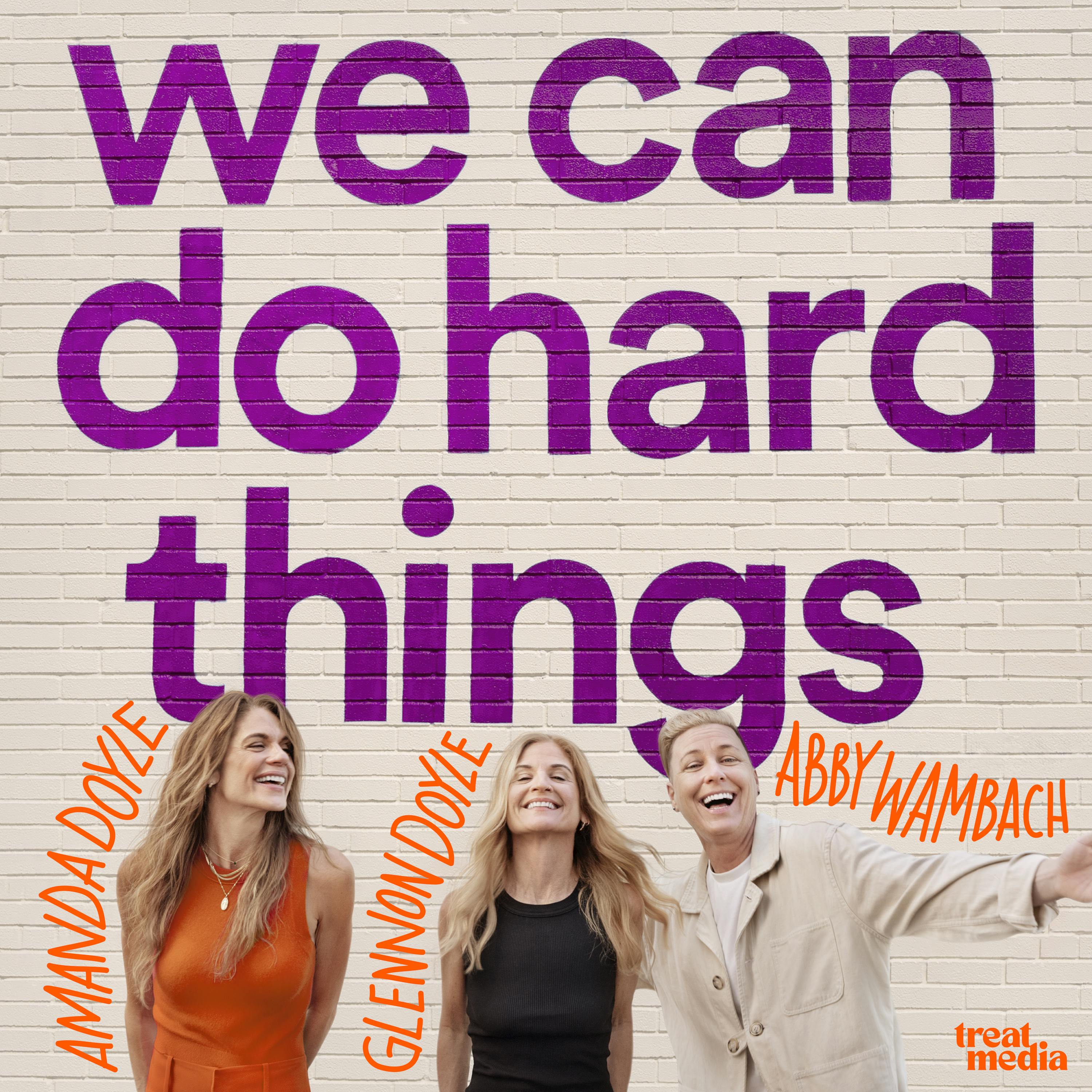
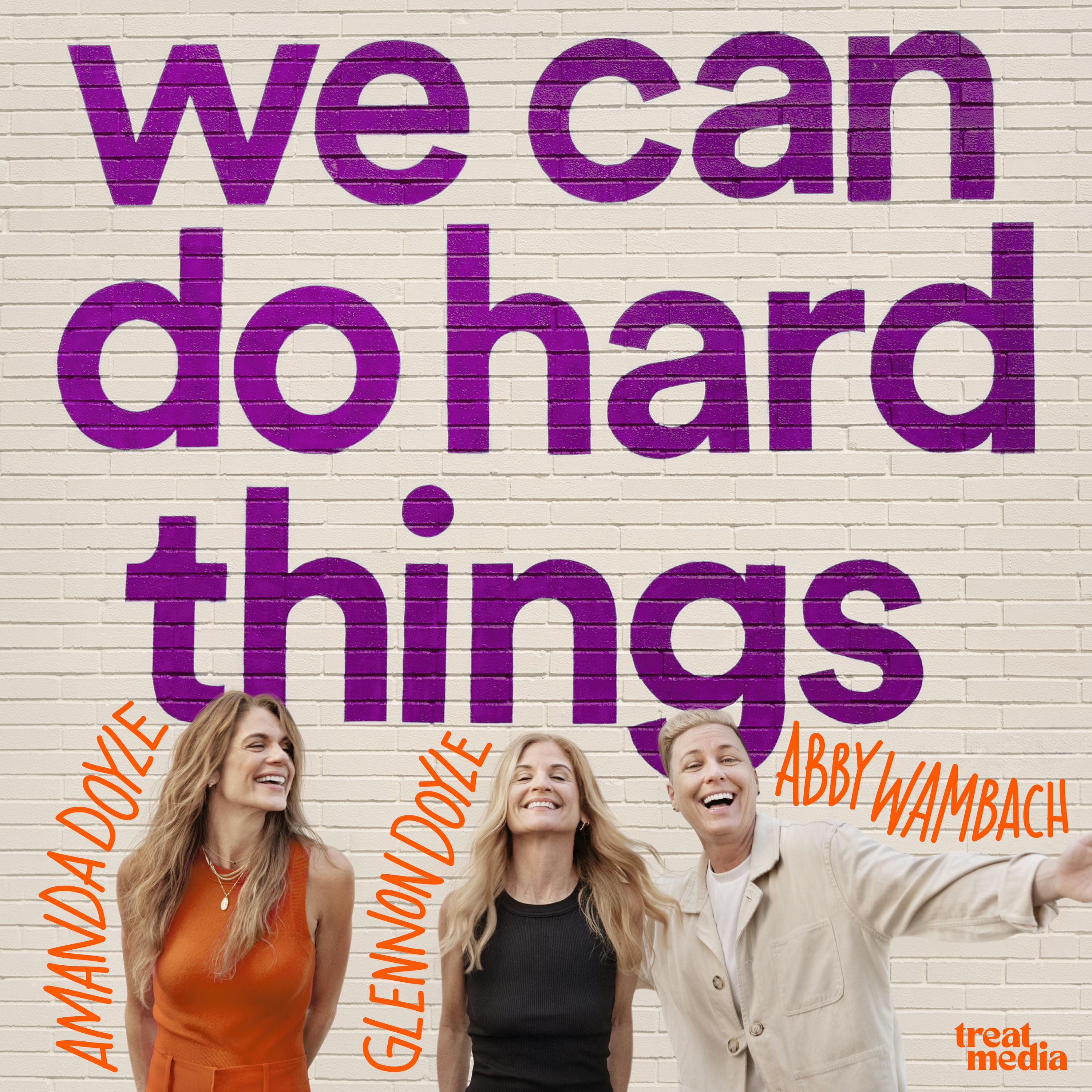
Speaker 2 We Can Do Hard Things is created and hosted by Glennon Doyle, Abby Wambach, and Amanda Doyle in partnership with Odyssey.
Speaker 2 Our executive producer is Jenna Wise-Berman, and this show is produced by Lauren Lograsso, Allison Schott, Dina Kleiner, and Bill Schultz.
Speaker 2 I give you Tish Milton and Brandi Carlisle.
Speaker 1 I chased desire,
Speaker 1 I made sure I got what's mine.
Speaker 1 And I continue
Speaker 1 to believe
Speaker 1 that I'm the one for me.
Speaker 1 And because I'm mine,
Speaker 1 I walk the line
Speaker 1 because we're adventurers and heartbreaks on map.
Speaker 1 A final destination.
Speaker 1 We've stopped asking directions
Speaker 1 to places they've never been.
Speaker 1 And to be loved, we need to be known.
Speaker 1 We'll finally find our way back home.
Speaker 1 And through the joy and pain
Speaker 1 that our lives
Speaker 1 bring,
Speaker 1 we can do a heart again.
Speaker 1 I hit rock bottom, it felt like a brand new start.
Speaker 1 I'm not the problem,
Speaker 1 sometimes things fall apart.
Speaker 1 And I continue to believe
Speaker 1 the best
Speaker 1 people are free.
Speaker 1 And it took some time,
Speaker 1 but I'm finally fine.
Speaker 1 Cause we're adventurers, and heartbreaks are map.
Speaker 1 A final destination
Speaker 1 we lack.
Speaker 1 We stopped asking directions
Speaker 1 to places they've never been.
Speaker 1 And to be loved, we need to be known.
Speaker 1 We'll finally find our way back home.
Speaker 1 And through the joy and pain
Speaker 1 that our lives
Speaker 1 bring,
Speaker 1 we can do a heart pain.
Speaker 1 Adventurers and heartbreaks on that.
Speaker 1 We might get lost, but we're okay
Speaker 1 back. We've stopped asking directions
Speaker 1 to places they've never been.
Speaker 1 And to be loved, we need to be known.
Speaker 1 We'll finally find our way back home.
Speaker 1 And through the joy and pain
Speaker 1 that our lives bring,
Speaker 1 we can do hard things.
Speaker 1 Yeah, we can do hard things.
Speaker 1 Yeah, we
Speaker 1 can do
Speaker 1 hard
Speaker 1 things.