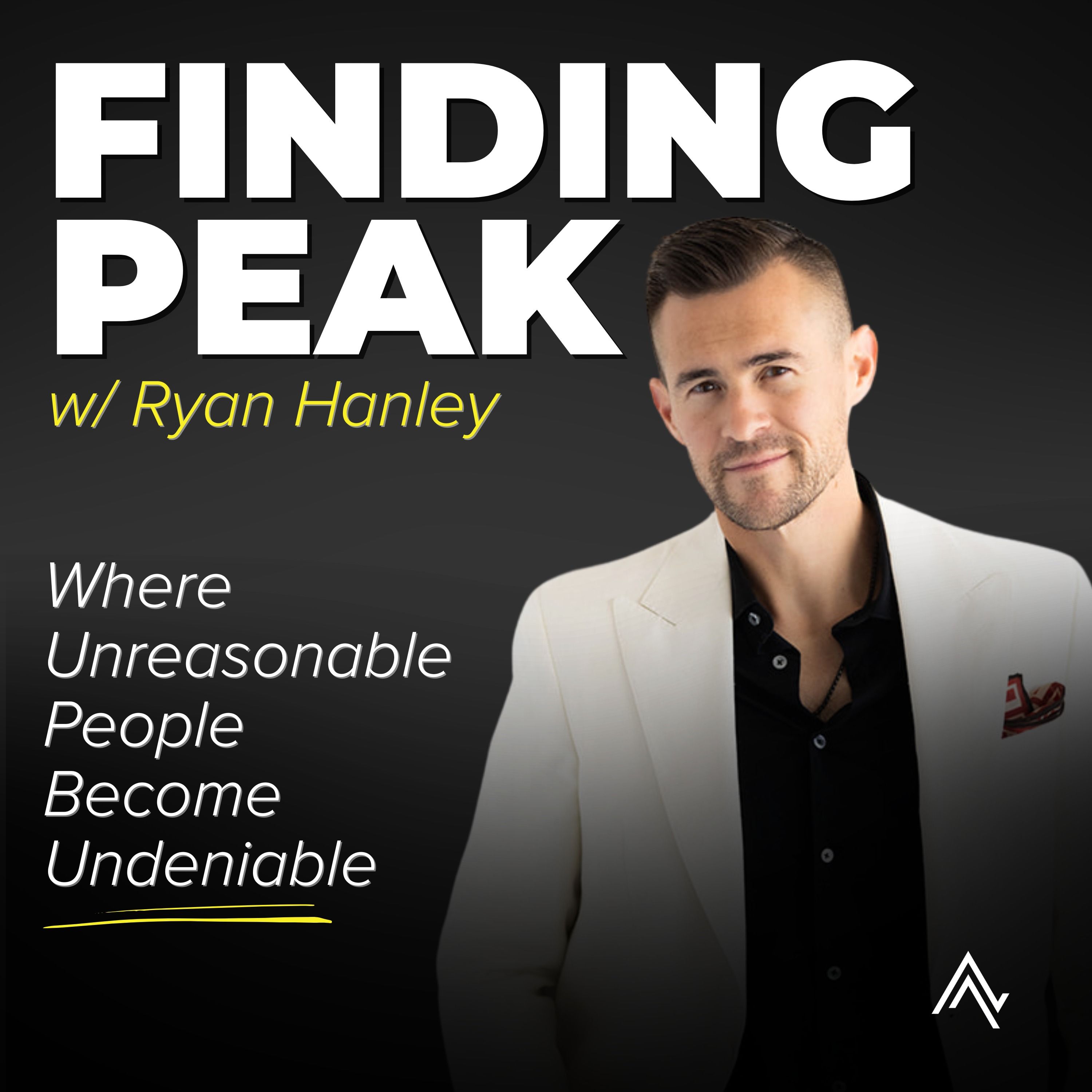
RHS 169 - The Keynote That Explains It All
In this keynote, we detail, with stories, the concept behind "How to Close 89% of Inbound Leads".
You do not want to miss this...
Resources Mentioned:
Reach out to Ryan Hanley
Rogue Risk
Finding Peak
One City World Tour
Press play and read along
Transcript
Speaker 1
This episode is brought to you by Progressive Insurance. You chose to hit play on this podcast today.
Smart Choice. Progressive loves to help people make smart choices.
Speaker 1 That's why they offer a tool called Auto Quote Explorer that allows you to compare your progressive car insurance quote with rates from other companies.
Speaker 1 So you save time on the research and can enjoy savings when you choose the best rate for you. Give it a try after this episode at progressive.com.
Speaker 1
Progressive casualty insurance company and affiliates. Not available in all states or situations.
Prices vary based on how you buy.
Speaker 2 Running a business is hard enough, so why make it harder with a dozen different apps that don't talk to each other? Introducing Odo, the only business software you'll ever need.
Speaker 2 It's an all-in-one fully integrated platform that makes your work easier. From CRM, accounting, inventory, e-commerce, and more.
Speaker 2
And the best part, Odo replaces multiple expensive platforms for a fraction of the cost. That's why over thousands of businesses have made the switch.
So why not you? Try Odo for free at Odo.com.
Speaker 2 That's Odoo.com.
Speaker 4 Here for the Lowe's early Black Friday deals? You're right on time for some of our biggest savings.
Speaker 4 We're talking up to 50% off select major appliances, plus up to an extra 25% off when you bundle select major appliances. Holiday lights going up soon? Select ladders are up to 50% off right now.
Speaker 4
Get Black Friday prices without the Black Friday crowds. Lowe's, we help.
You save. Valent through 1119.
Selection varies by location. Select locations only.
While supplies last.
Speaker 4 See Lowe's.com for more details.
Speaker 3 In a crude laboratory in the basement of his home.
Speaker 3 Hello, everyone, and welcome back to the show.
Speaker 5 Today we have an absolutely tremendous episode for you. It is a special episode.
Speaker 5 It is the audio version of a recording of a recent keynote that I did at the One City World Tour, which is an event held by the insurance guys, my boys Bradley Flowers and Scott Howell, and also
Speaker 5 the entire team over at
Speaker 5 Glovebox, Andy Matheson, Ryan Matheson, all the crew over there.
Speaker 5 Absolutely tremendous event. Tons of movers and shakers, tons of people with an open mind, looking to do amazing things.
Speaker 5 A couple hundred people there.
Speaker 5 And if you want to watch watch this episode go over to finding peak go to findingpeak.com that's my uh peak performance uh kind of blog that i put together where i'm writing free articles every friday and then every tuesday i'm doing articles specifically uh videos articles resources specifically breaking down the things that i'm learning at rogue risk and sharing them with you every tuesday so every tuesday you get um you know something like what we got came out with uh uh like like sharing the video recording of this talk uh but you can listen to the audio right here because you are a subscriber to this podcast, which means that I love you.
Speaker 5 If you do enjoy this episode,
Speaker 5
I hope you share it. I hope you leave us a rating review.
That just helps us find more insurance professionals, more people interested in this content.
Speaker 5 And I would love it if you, you know, took a second if you're driving or doing something. I know you always can't, but you jump over to Finding Peak.
Speaker 5 And if you're interested in that content, subscribe.
Speaker 5 Putting a lot of effort in there as we try to share what we're learning at Rogue Risk and how you, you know, kind of, you know, build a mindset, build a body,
Speaker 5 build, build habits and routines that allow you to operate in a peak performance state, and then actually share what we're doing from a tactical standpoint in the insurance industry to help you get where you want to be.
Speaker 5 It's lots of fun.
Speaker 5 One thing I will say, guys, this episode is not safe for work.
Speaker 5 This is me doing a keynote. And when I do keynotes, oftentimes I curse.
Speaker 5 So if that makes you uncomfortable in any way, shape, or form, please know that this is not a safe for work episode of the show, although most of the episodes are not safe for work.
Speaker 5 So you probably know that by now. Before we get there though, big shout out to Tivley, T-I-V-L-Y.
Speaker 5 T-I-V-L-Y used to be known as Commercial Insurance.net. They are the largest provider of warm, qualified commercial insurance leads
Speaker 5
to independent insurance agencies. They basically take a phone call and they survey someone.
And if that survey meets what you're interested in, they warm pass that call to you live.
Speaker 5 So, you know, hi, Mr. Agent, I'm from Tivly.
Speaker 5
I have a five-person manufacturer with $750,000 in revenue. Is this something that you want? Yes, I would love it.
And then they connect you with that business owner. We love Tivney.
Speaker 5 Tivly Tivoli has been a huge part of our growth strategy and we continue to become more and more embedded into Tivly and partnering deeper with them.
Speaker 5 I highly recommend if you're looking to, if you're looking to create a foundational stream of qualified leads that consistently comes in every week, every month that you can count on, that are going to be good clients, Tivly is the place to go.
Speaker 5 Highly recommend it. We've been a client of theirs for it's going to, we're going on two years now, and I have no intentions of stopping.
Speaker 5 Love Tivly, love that they decided to be a partner of this show and sponsor it. And love sharing companies like Tivly with you.
Speaker 5 So, with that, we're going to get on to my keynote titled How to Close 89% of Inbound Leads.
Speaker 5
Sounds familiar. It's a topic I've been kind of unpacking slowly in different venues.
This is the keynote.
Speaker 5
And guys, if you like this keynote and you have an event and you want me to bring it to your event, just reach out to me, Ryan at Rogeris.com. That's Ryan at Rogeris.com.
All right.
Speaker 5 With that, let's get on to this episode.
Speaker 3 Thank you. Guys, what's up? I'm Chris Langilly, according to Ryan Haley.
Speaker 3 Or Linguine, as I was called in high school.
Speaker 3
Great seeing you guys. Great event.
Thank you you guys.
Speaker 3
I'm the chief cook and bottle washer at Advisory Evolve. We build really cool websites for independent insurance agents.
Yes, sir. Thank you.
Speaker 3
Appreciate you guys. We also handle digital marketing services as well.
So SEO, pay-per-click, retargeting, landing page creation, basically full funnel.
Speaker 3 digital advertising similar to what the big guys do on a scale-down level for independent agents.
Speaker 3
Anybody's interested? I have a QR code over there. I don't want to talk too much about myself.
I'd rather talk about this guy who really needs no introduction.
Speaker 3
Funny story, Bradley asked me to bring him up on stage. He messaged me last week.
Can you bring Ryan up on stage? I was in the middle of replying back to emails, and I'm thinking,
Speaker 3 like, piggyback? Like,
Speaker 3 How am I going to lift this dude up on stage? I don't understand. Do I drag him off stage?
Speaker 3
But no, Ryan's one of my good friends in the industry. 2014, 2015, I was an agency owner.
I created a blog on my website. Blogging all the time, create some good content.
Speaker 3 Started getting a lot of traction. Was really proud of myself.
Speaker 3 And somebody said, oh, yeah, yeah,
Speaker 3 check out Ryan Hanley.
Speaker 3 So I go to his website, Content Warfare.
Speaker 3 And I'm like,
Speaker 3 son of a bitch.
Speaker 3
This dude had a podcast, blog articles. He was five years ahead of me.
And we became good friends. And Ryan, in my opinion, is one of the true OGs in our space.
Speaker 3 Been on the independent side, been on the corporate side, back on the independent side.
Speaker 3 And I think everybody in the room at some point in their journey in this industry has either stolen ideas from him without giving credit or maybe rightfully given him credit.
Speaker 3
I know I've borrowed an idea or two from him. So without further ado, please welcome my close friend, Mr.
Ryan Hanley.
Speaker 3 Dude, you mind bringing that over there? All right, guys,
Speaker 3
it's a pleasure to be here. I am not going to stand up on stage.
I'm going to come down there, but I just want to set some ground rules real quick. This is meant to be a conversation.
Speaker 3
I hope that you guys have questions. I hope that you'll raise your hand.
I hope you'll shout out at me, especially if you disagree.
Speaker 3 I'm going to share with you my experience and I hope that you will question me where things don't make sense to you. That's how we have the best conversation.
Speaker 3 I'm not going to use slides, so you just have to look at me for the rest of the time. In 2006, I was at a Christmas party at my then-girlfriend, now ex-wife.
Speaker 3 And her father,
Speaker 3 her father pulled me out of the Christmas party, tapped me on the shoulder and said, hey, will you come into my office?
Speaker 3 And he sat me down, and this is like one of those old school offices that is so uncomfortable that nothing actually gets done there, but all you rich f ⁇ ers have it in your house anyways, right?
Speaker 3 You like just need to waste the square footage, so you put this really uncomfortable office that looks nice in there.
Speaker 3 So I'm sitting there, and we're in high-leather back chairs, and this is like out of a freaking mafia movie. And he kind of like makes me an offer that I can't refuse.
Speaker 3 I think ultimately he didn't want his daughter to be married to a bum and he wanted to like keep his eyes on me.
Speaker 3 So he essentially said, hey i know you're not really doing anything with your life right now i want you to come sell insurance for me and since at the time uh i thought marrying his daughter was a good idea um
Speaker 3 i said yes to that offer and that's essentially how my insurance career began i was a boots on the ground um kind of ground and pound guy i was putting 50 000 miles on my car driving strip mall to strip mall you know dropping off business cards which which is like
Speaker 3 why we would ever think that that would work. I have no idea, right? You walk in,
Speaker 3 you start at the end of the strip mall, and you look at the signs, you go, my name's Ryan, I'm the best Chinese food insurance guy in Albany.
Speaker 3 And then you walk out and you walk into the next one and you go, I'm the best subway sub shop insurance guy in Albany. And you just do that over and over again.
Speaker 3 And like now it seems silly, but at the time I'd like be in the parking lot of my car with like Metallica, like trying and get jacked up to go drop my business card off, which is just insane to think about today.
Speaker 3
But it took me a lot of work to cold call. I hated it.
Like I would have like a physical reaction to it.
Speaker 3 And after all that time, all I really learned was not how to prospect, but I learned all the best places to take a dump in Albany when you're on the road because, you know, you're out there for eight hours.
Speaker 3 Sometimes it's nature calls, you know? So
Speaker 3 yeah, anyone who's ever done it knows.
Speaker 3
Your buddies will call you. They'll be like, oh man, that Duncan over on Main Street, whoo, that's a good one.
Always clean, you know?
Speaker 3 So
Speaker 3 at night,
Speaker 3
we would do personalized cold calling. So daytime was for commercialized prospecting.
At night, we did personalized prospecting. What that looked like was cold calls.
Speaker 3 And how my father-in-law, I think because he hated me and probably still does,
Speaker 3
he literally put a phone book. This is like a fucking movie.
Put a phone book on my desk and was
Speaker 3
there's your prospecting list. I mean, it's bananas.
Like, really thinking about that today, and some of you are still doing it, and God bless you. But
Speaker 3 I would just call people. Hey, I know you weren't expecting my call, blah, blah, blah.
Speaker 3
And I hated it. And frankly, I was really terrible at it.
And 18 months into that work, he called me into his office and basically fired me. And I did what any guy would do.
Speaker 3 I got down on my knees, like a little,
Speaker 3
and I, please, for the love of God, don't fire me. Like, I gotta go home to your daughter.
You know what I mean?
Speaker 3 And, and, you know, I don't know if you've ever been almost fired by an in-law, but it is, it's a humbling experience, let's put it that way. And
Speaker 3 I said, I'll do anything, I'll change, I'll work harder, I'll hit my numbers, I promise. And
Speaker 3 he thankfully said, okay, but I knew something had to change. I knew something had to change.
Speaker 3 This, you know, the way business had always been done, although is a perfectly fine way to do business, for me, it did not work.
Speaker 3 I just, whatever, we were just talking about it over there in the room with Scott and Justin. And just, we, we,
Speaker 3
some of us can cold call, some of us can't, I couldn't. I knew that.
Okay, so I had something that had to change. So at that time, the internet still really wasn't a thing.
Speaker 3 Like, some of you are pretty young. There was a time, like, I'm unfortunately old enough now to say there was a time when the internet like wasn't really a big deal.
Speaker 3 Like, people still believed, like, you couldn't do business on the internet. Hopefully, none of us here believe that today, or at least we're going to change that by the end of my talk.
Speaker 3 So I just started researching online, and there were people,
Speaker 3 like Chris had said,
Speaker 3 there were people online who were writing articles, and LinkedIn was kind of a thing a little bit, and Twitter. And
Speaker 3 I had this moment, and I don't want to call it brilliance, but I have been accused of that.
Speaker 3 Where I just said, holy shit, I'm two years into this, and I barely barely understand this product I'm selling How the hell do the people that we sell insurance to know anything about this?
Speaker 3 Like I'm like licensed I think about this every day I talk about it every day and I can still barely explain Underinsured motorist coverage, right?
Speaker 3 Like how do the people who purchase our product actually know so What I started doing around 2008 2009 was I started writing blog articles answering common questions to our industry.
Speaker 3 Now, today, that is a standard practice. In 2008, I was like literally ostracized by the industry for doing this.
Speaker 3 Like, there would be people out in the crowd when I would do talks who would yell, not in my town, not here.
Speaker 3
They don't use the internet in Connecticut. It is, it's not the real thing.
You know, and I would get heckled for this talk that I'm giving you, which, by the way, this talk I've given over 350 times.
Speaker 3 And the best part is, I'm going to give you every secret I have, and I know none of you motherfuckers are going to do anything with this information. So, that's why I love doing this.
Speaker 3 So,
Speaker 3 I started writing these articles. Now, one little caveat was
Speaker 3 my father-in-law and my brother-in-law at the time would not allow me to do it on their website, so I did it on my own, RyanHanley.com, which now has the podcast or whatever.
Speaker 3 But at the time, when it was started, I branded myself the Albany Insurance Professional, and I wrote these articles. And for six months, nothing happened.
Speaker 3 At the nine-month mark,
Speaker 3 Right, or around six months, we started get a little bit of traction. I could see like in Google Analytics a little bit.
Speaker 3 And at nine months, months, a woman called me and it changed the course of my career. Her name was Virginia, and she was from a town called Clifton Park.
Speaker 3 Clifton Park is 25 minutes north of where our agency was in Gilgaland. I share that piece of information to you only so you know this wasn't someone who drove by our office all the time.
Speaker 3
Okay, she didn't know us from any other business in the area. She never even came to our town, right? She found me online.
So the phone rang, Ryan, you know, you got someone's calling for you, okay?
Speaker 3
Hi, my name is Virginia. You don't know me.
I've been reading your blog for a few months, which means she's crazy.
Speaker 3 And
Speaker 3
I want you to do my insurance. And I said, oh, you want a quote? She goes, no, no, no.
I don't want a quote. I'm going to send you what I have.
Speaker 3 I want you to take a look and then just send me what I need. And I'll just purchase, I'll just, whatever you tell me to buy, I'll just buy it.
Speaker 3 And that's exactly what I did. Now, here's the weird part, and some of you will remember this.
Speaker 3 I had to physically mail her accord forms, which she signed, put a check in a paperclip, back in another envelope, and mail it back to me so that I can process it.
Speaker 3 So it tells you, you know, this is how business was done, even as short a time ago as 2008, 2009.
Speaker 3 So here's the key.
Speaker 3 She was already sold.
Speaker 3 Guys, this is the power of inbounding content marketing, of putting your message out, of everything else, all the other bullshit I'm going to talk about today.
Speaker 3 The power is that people already trust you.
Speaker 3 They've done their own research.
Speaker 3 They've taken the time, whether it's at 7 p.m., 9 p.m., noon, whenever, right?
Speaker 3 They've decided you are the person
Speaker 3 before they ever talk to you.
Speaker 3 Most of them, like you guys, they think I'm short, right? Because I do the sub all of you and say, oh, you're taller than I thought I was, right?
Speaker 3 So these are people who couldn't pick you out of a lineup, but they trust you because they've heard you talk on a video or a podcast or they've read something that you wrote or
Speaker 3 the way you interact and share in social media or through an email or however you're creating your content and putting it out in the world. And there is no really right or wrong answer.
Speaker 3
It's whatever tactics work for you and your market. I want to be clear about that.
Although I'm happy to share any questions you have on my feelings on particular topics.
Speaker 3 But the idea here is, if we do this work and
Speaker 3
we do it right, yeah, go ahead, man. Sit right there.
I had this really good bit and you guys weren't there so you weren't part of it so um
Speaker 3 no let's go so so the the whole point is to be already sold that's what we want that's the whole goal right when we create content think you know I think of every blog post every video I do right every single one is a salesperson working for me 24 hours a day seven days a week How many agency owners are in the room?
Speaker 3
Agency owners. How f ⁇ ing awful are producers? They're just the worst.
They're the worst. They bitch about stuff.
They constantly need days off. They want their commission split updated.
Speaker 3 Oh, I didn't get paid for this.
Speaker 3 It's terrible, right? They're terrible.
Speaker 3 That's only half a joke.
Speaker 3 Our content, our videos, our articles, whatever we create and put out online, is a producer.
Speaker 3
Our website is a producer working for us 24 hours a day, seven days a week. That is how I want you to think about it.
It is a revenue-generating mechanism.
Speaker 3 I do not create all the videos that I create because I like to waste my time sharing information about insurance online. I don't.
Speaker 3 There are plenty of other things that I would rather spend my time doing.
Speaker 3 But I do it because people who have a need search online for things and I want them to find me and none of you.
Speaker 3 Honestly, I mean, I hope we're we're clear that while I'm going to give you everything that I have, I want to dominate all of you all the time.
Speaker 3 And I hope that you are sitting there thinking the same thing. We are friendly competitors, right? James and I have talked about this before, right?
Speaker 3
That he, he, I operate in states that he operates in. I create content.
Well, some of the stuff. I don't do a lot of the real estate investment stuff, but like, you know.
Speaker 3
But I would give him everything that I do, every tactic, and I'll do the same for all of you. But we are friendly competitors.
You have to want to grow and sell, and that's what this work is about.
Speaker 3
This content work is about growing our business. If you do not want to grow, do not do this.
It is a pain in the ass. It is a lot of thought.
It is time, right?
Speaker 3 There are other ways to maintain where your business is. But what I'm going to share with you is how you grow your business.
Speaker 3 And to me, today, there is no better way to create a foundation of consistent revenue in your agency than creating content.
Speaker 3 And then there are some tactics you can use that actually will help you scale.
Speaker 3 But the way I look at content and the the inbound leads that we get in particular, so much of the work I do is not about referrals, it's not about outbound cold calling, it is about generating inbound, warm leads to the agency.
Speaker 3 And I think of that as our baseline. Because if I'm doing my job right, then I know every day I'm getting 10, 15, 20 leads in the door, and that I can then track what's our conversion ratio on there.
Speaker 3 And then I know and can count on every day
Speaker 3
that coming in. Every single day.
Boom, boom, boom, boom, boom. That's what we're trying to do here.
Speaker 3 So
Speaker 3 I told you I was creating on RyanHanley.com and I was getting some calls. More Virginias, right? More people like Virginia are calling.
Speaker 3
And we had a sales meeting every Monday morning. And every Monday morning you would talk about the business you got and where it came from.
And I kept saying, my website. My website.
Speaker 3 How many of you agency principals out there would be super happy if
Speaker 3 one of your producers kept going, yeah, I got it from my website and not your agency's website?
Speaker 3
We're a little ego-driven. I get that.
I've been known to have an ego once in a while. I wouldn't love that.
It was his fault. Yes, yeah.
So,
Speaker 3
so what James said was it was their fault. That's true.
But, and they were very nice about it. They came to me and said, hey, we know you're doing this for your website.
Speaker 3 Would you do it for the agency's website? And I said, fine.
Speaker 3 And actually, there was kind of a weird disconnect in brand between why do I have this like RyanHaley.com brand, but I really work for another agency, so I was okay with it. And
Speaker 3 so we redid the whole website and we you know nice clean WordPress website it was nice and built for conversion and all that was great and
Speaker 3 and then we got to the economics and that's where everything fell apart they wanted me to do all the work and take none of the leads and so so so staff went on strike staff staff went on strike and I do have one slide that I wish I had brought it basically shows
Speaker 3 we launched a new website in April of 2011 and you see a little bump where we emailed our clients and then just this flat line that goes across across like this.
Speaker 3 72 hits a week to our contact us page and our homepage. Why those two pages?
Speaker 3 We only had seven pages on the website, but only two of them were getting traffic. Why our contact us page and our home page? I know you're not going to answer because I've done this 350 times.
Speaker 3 The reason for that was that
Speaker 3 those were people who already knew us.
Speaker 3 They were just trying to figure out how to get a hold of us. Now, what did we just talk about a few minutes ago?
Speaker 3 Our website is a new business revenue generating tool that works for us 24 hours a day, seven days a week.
Speaker 3 How useful or optimized is that tool if only people who already know us and already pay us are the only ones coming to our site?
Speaker 3 If we're not creating content, Google,
Speaker 3 the internet gods, they're not going to send any new people, okay?
Speaker 3 So if you are not creating today and you went and looked at your traffic, it would be this nice, neat, flat death line where only people who already know you are contacting you, which means every dollar you spend on your website, which if you have a website, it should be through Chris.
Speaker 3 He's the best.
Speaker 3 Every dollar you spend on that website is wasted. Every dollar, the $150 a month, it's wasted if you're not creating, because only people who already know you are using it.
Speaker 3 And the goal of the internet, of our online properties, of our website, of our blog, of our YouTube, of all of our social channels, the goal is to grow our business.
Speaker 3 It's to attract people and have them call us.
Speaker 3 Yeah, that's what Ryan Haley looks like. RyanHaley.com looks like now.
Speaker 3 It's the
Speaker 3 podcast page. You can go to rogueRisk.com, whoever did that, and you can see that thing now.
Speaker 3 So we have this death line, right? This flat line going across.
Speaker 3 Well, finally, management and staff came together, we had a little negotiation, and I said, hey, since I'm going to be doing all the work, just give me my standard commission split on the leads that come in, I'll write them, just like I did if I were going out and getting referrals or whatever.
Speaker 3 They agreed. So,
Speaker 3 you know,
Speaker 3 my brain sometimes, like,
Speaker 3
works in odd ways. I had this image flash in my head.
How many people know the movie Pulp Fiction?
Speaker 3 What's the one lesson that you take from Pulp Fiction? Do not snort heroin.
Speaker 3
Right? There's a lot of cool things you can shove up your nose. Heroin should not be one of them.
That's just, that's what I take from that movie.
Speaker 3 Well, if you guys remember, there's a scene where Uma Thurman, who unfortunately didn't learn that lesson, she snorts heroin, she's dying on the ground right here.
Speaker 3 And John Travolta's character takes this adrenaline needle and he jabs it in her heart and she comes bursting back to life.
Speaker 3 That's what I wanted to do with our website. That's how my brain is f ⁇ ed up.
Speaker 3 I am not shitting you when I say that is the image that came to my head.
Speaker 3 I needed this thing that had this flat death line to come bursting back to life. So what I did was...
Speaker 3 In the month of December 2011, every customer, client, prospect, every human that I bumped into, I said, if you could have one question answered about insurance, what would it it be? Just one.
Speaker 3
No question is too silly, too stupid, too big, too large. Just tell me what it was.
And I got 137 questions. Some of them were a little nutsy, like how do you insure a spaceship or whatever.
Speaker 3
I threw those ones out. I pared it down to a list of 100 that seemingly were like in our sweet spot.
And starting on January 2nd
Speaker 3 of 2012, I started answering those questions every day via video in two minutes or less.
Speaker 3 And I did it with a five-meta-megapixel non-HD camera at a time when uploading a two-minute video to YouTube took about five hours.
Speaker 3 Like literally, you had to be like, I'm using the computer for the afternoon. Don't touch it.
Speaker 3 You know, because if, you know, if my wife comes,
Speaker 3
if she came over and fucked with the computer, you could mess the whole download up. Like, you know, today it's like, whoop, uploaded.
You know, that's not the way the internet worked back then.
Speaker 3 So every day, two minutes or less, you know, and basically,
Speaker 3 I would stand in my office and I hold my phone up. They're still all online.
Speaker 3
You know, I'd, hey, my name is Ryan Hanley. I work with the Murray Group Insurance Services.
Today we're going to answer the question: what is underinsured motors coverage?
Speaker 3 And I'd barf out the answer. That was it, right? That was it.
Speaker 3 And what's amazing, and again, I should have brought this slide.
Speaker 3 I was a little hungover this morning, so I didn't
Speaker 3
kind of. And I also knew half of people were going to leave because I'm not really the draw I used to be.
So
Speaker 3 You thought that one was funny, I dare.
Speaker 3 So, so
Speaker 3
what you see is starting on January 2nd of 2012, that the Google Analytics shoots up like this. It just, it literally goes to the moon.
Why?
Speaker 3 Because what is Google's purpose? What are all these things, all the LinkedIn,
Speaker 3 Google, Bing, if you're a weirdo and you use that, right? Like, like, I still sometimes see Yahoo search come through on my Google Analytics.
Speaker 3
Like, I don't want people that use Yahoo search as my clients. That is a weird thing.
So,
Speaker 3 so, so, so all, the purpose of all of these, right, is they need you to stay in their ecosystem so they can serve you ads. So, what I was doing was literally feeding Google exactly what they needed.
Speaker 3 I was giving them answers to commonly asked insurance questions, which kept people coming back to Google. So, what did they do? They just rewarded me with more and more traffic, right?
Speaker 3 They just rewarded me more and more traffic.
Speaker 3 And during that time period of 100 days the accounts that came in we made $100,000 in revenue at the Murray Group Insurance Services like 97,000 and whatever right
Speaker 3 from those 100 videos during a 100-day period the leads that were associated with those videos when they came in we made a hundred thousand dollars in 2012
Speaker 3
that's found revenue Two minutes or less. It technically took me 22 minutes to post a video.
Two minutes to record, upload. I was making a joke about the five hours to upload a video.
Speaker 3
It took, but it did take like 20, 20-ish minutes. And then once it was uploaded, I put a title, simple description with a link and our phone number, and bam, it would go up.
It wasn't sophisticated.
Speaker 3 It's not how I would necessarily do it today. I would go probably richer and deeper with the content and do, you know, but at the time, that's what I did.
Speaker 3 So it took me about 22 minutes a day, and we made, for 100 days, we made $100,000 in revenue.
Speaker 3 That is why I do what I do.
Speaker 3 The beauty of it.
Speaker 3 After eight years at the Murray Group,
Speaker 3 and this just continued, right? The month that I was fired at the Murray Group,
Speaker 3 we generated 96 inbound leads on $100 in total spending.
Speaker 3
These videos, they're working 24 hours a day, right? So this just kept growing. We just kept getting more and more and more leads.
And it just, I could take a month off, it didn't matter. It's there.
Speaker 3 They're working for me.
Speaker 3 That's the beauty of creating content.
Speaker 3 so
Speaker 3 I get fired from the from the Murray group and I go and work for trustedchoice.com
Speaker 3 and I launched the agency nation platform which was a lot of fun some of you I know you from that time period we met during that time period which was one of the most fun times of my life
Speaker 3 and I got to meet all of you right I got to I lived eight years in a bubble in that grinding world and I got to understand at my core what it means to be a traditional agent the power why the insurance industry is not broken, all the things that we talk about, right?
Speaker 3
Like, I got to learn that. I'm blessed to have learned that.
And then I got the opposite experience. I got to come out and talk to all you and learn your problems are a little different.
Speaker 3 Some of them are the same, some things you do differently.
Speaker 3 And I got this really deep breath and understanding of what our industry is and how amazing it is that we get to literally choose our own destiny.
Speaker 3 There are not very many professions that you can have where you can build anything that you want.
Speaker 3 That's what's the beauty and the challenge of our space space is that you can literally turn this business into anything that you want it to be. You can go after, you know, I have one producer
Speaker 3 in my agency.
Speaker 3
She wants her niche when she's ready. She hasn't graduated to have a niche yet.
That's a different topic for a different time. When she does, she wants it to be adult toy stores.
Speaker 3 One, I think that's amazing because sex is awesome. And two,
Speaker 3 what's really interesting about it is when you dig into the niche, it's actually a really interesting niche. There's 3,700 of them nationally.
Speaker 3 Most of them are absolutely crapped on by their agents because no one, you know, us uptight conservative types don't really want anyone to know that we're insuring an adult toy store because God forbid we get freaky in the sack, right?
Speaker 3 So
Speaker 3 there's no real, so no one owns it, there's no programs available, and there's like four carriers that write it. So when you actually break it down as a niche, it's a pretty wonderful niche, right?
Speaker 3
So she could literally build her business on adult toy stores. And I think it's amazing that she can do that.
It's not the business I want to write personally, you know, whatever, but
Speaker 3
I think it's amazing that she has that ability and we all have that. Okay.
So I learned that lesson at trustedchoice.com and Agency Nation and then ultimately was fired from that business as well.
Speaker 3
I am difficult to work with and don't do well as an employee. So if any of you are thinking about hiring me, just be careful.
You will get exactly what you think you're going to get.
Speaker 3 And then I went and worked for Bold Penguin for a a time, which taught me
Speaker 3 the mentality of the people that hate us.
Speaker 3 And I'm not saying the people at Bold Penguin hate us, but they are cut from their method was we're humans.
Speaker 3 They're in that ecosystem where the humans are the problem.
Speaker 3 Humans are the problem.
Speaker 3 And
Speaker 3 that was interesting.
Speaker 3
It wasn't a great fit. I was basically fired from there too.
And
Speaker 3 essentially what happened was I had a family member get sick, terminally ill, unfortunately, and I couldn't travel. And Bull Penguin was a three-week job, three-week-a-month travel job.
Speaker 3 And when I told them I couldn't travel anymore because of my family member, essentially they said, you have to travel or you can't work here, right? And I don't want to cut them in a bad mold.
Speaker 3 It was just, it didn't work.
Speaker 3 So I became a CEO of a fitness franchise because Albany is not a bastion of insurance opportunities and the Murray Group would not have me back. So
Speaker 3 I did that for nine months and learned some more lessons, whatever. Mostly I got fired from there, too.
Speaker 3 And
Speaker 3 that happened at this motherfucker. So
Speaker 3 I started there. I worked out at this gym
Speaker 3 for
Speaker 3
like five years. And I loved the workout.
And I knew the owner. And when he heard that I was looking for another opportunity, he said, hey, I'm a gym guy.
You're a business guy, which, you know.
Speaker 3 the joke was on him i don't really know shit about business so he said you're a business guy uh you know why don't you come be the ceo and i'll do the gym stuff and i said that sounds great and in nine months i doubled the membership from about you know, me and the team, doubled the membership from 2,100 members to 4,000 members.
Speaker 3 And at 8.36 a.m.
Speaker 3 on a Monday, I'm in Lululemon because the best part about being the CEO of a Finnish franchise is you literally wear like workout gear all day. Like part of your job is you have to work out,
Speaker 3
which for me was cool. And I'm sitting there, you know, chilling or whatever.
And he walks in and I can see him walk into the office, except he's in a suit with his attorney.
Speaker 3
And I was like, something's wrong. So, yeah, and then wrong was they fired me.
So,
Speaker 3 as I'm walking out from there to my truck,
Speaker 3 I decided that it was time to take all these amazing conversations with all the people that I knew in this industry, all the experiences I had,
Speaker 3 and put them into something that
Speaker 3 could actually be mine. And that was where rogue risk came from.
Speaker 3 Rogue risk, the very first thing that I wrote down, and I promise this has a point,
Speaker 3 is
Speaker 3 the very first thing I wrote down when I was thinking about rogue risk what was this concept that that you may or may not have heard me talk about which is human optimized
Speaker 3 when I say human optimized what I mean is humans are the most important part of our business but we often allocate them improperly okay if you have humans producing certificates of insurance you're wasting time and money So when I see someone in my agency, I track what they do.
Speaker 3 Not because I want to be a drill sergeant, because I want to find efficiencies and places where we can add value and remove the humans from the places that they do not add value.
Speaker 3 Our customers do not think a billing change, they don't see that as a value add for us. We are not, when they call us with a billing change, we're not adding value to their life.
Speaker 3 That's the barrier for entry.
Speaker 3 So when a human does a billing change in your agency, all I see is the freaking expense meter spinning. I mean, I just, you know,
Speaker 3
like this, because they're spending time on a task that the customer doesn't give a shit who does it. They just need to give you a new credit card.
That's all they need to do.
Speaker 3
They don't care if it's a system, if it's an app, they don't care if they text a message. They just need it done, right? Their old credit card expired.
They need to put a new credit card in.
Speaker 3 So, when I think human optimize, what I want to do is build an agency where the humans, the humans, are injected in the moments where they add the most value, which is in every moment that builds trust.
Speaker 3 Because our entire business is trust.
Speaker 7 What's up guys? Sorry to take you away from the episode, but as you know, we do not run ads on this show. And in exchange for that, I need your help.
Speaker 7 If you're loving this episode, if you enjoy this podcast, whether you're watching on YouTube or you're listening on your favorite podcast platform, I would love for you to subscribe, share.
Speaker 7
Comment if you're on YouTube, leave a rating review if you're on Spotify or Apple iTunes, etc. This helps the show grow.
It helps me bring more guests in.
Speaker 7 We have a tremendous lineup of people coming in, men and women who've done incredible things sharing their stories around peak performance, leadership, growth, sales.
Speaker 7
The things that are going to help you grow as a person and grow your business. But they all check out comments, ratings, reviews.
They check out all this information before they come on.
Speaker 7
So as I reach out to more and more people and want to bring them in and share their stories with you, I need your help. Share the show.
Subscribe if you're not subscribed.
Speaker 7 And I'd love for you to leave a comment about the show because I read all the comments or if you're on Apple or Spotify, leave a rating review of this show. I love you for listening to this show.
Speaker 7 And I hope you enjoy it listening as much as I do creating the show for you.
Speaker 5 All right, I'm out of here.
Speaker 7 Peace. Let's get back to the episode.
Speaker 3 Everything that I've learned about going online, I think the common misconception that people have most with my work is that I'm trying to remove the humans or I'm trying to bypass trust.
Speaker 3
And everything that I have learned marketing our business online is that trust, it's the whole business. It's the whole business.
You create the content to build the trust. That's why you do it.
Speaker 3 That's the whole purpose. If you're willing to watch me talk about insurance on YouTube,
Speaker 3 one,
Speaker 3 like I said, I still think all these people are weirdos.
Speaker 3 Two,
Speaker 3 you, whether you know it or not, are slowly starting to believe what I believe. You're starting to think the way that I think.
Speaker 3
And even though I am a terrible insurance agent, there are hundreds of thousands of people online that think I know what I'm talking about. And that's amazing to me, right? They trust me.
Now,
Speaker 3 you can't mess with that trust. You actually have to deliver on what you say you're going to do, which obviously I do that as often as we possibly can.
Speaker 3 But my point is,
Speaker 3 they are building trust with you, and that's the whole game. And that's what Human Optimize is about:
Speaker 3 I don't want to waste my people's time doing things that don't build trust, because the entire game is trust.
Speaker 3 So, the way that I thought about this in my head is: let's say you have a 20-minute block of time
Speaker 3
with someone. Someone calls, and you're gonna spend 20 minutes on the phone with them.
Okay, let's just, for purposes of this thought experiment, let's just say that's what's happening.
Speaker 3 The traditional way of doing business is that your,
Speaker 3 we call them CSAs, customer success associates, whatever, CSRs, traditionally, they're going to spend about five minutes on the phone with that person and then rush them off the phone because they know it's going to take 15 minutes for them to actually do the task that that person asked them to do.
Speaker 3 And my goal with Rogue Risk was to flip that on its head.
Speaker 3 I wanted them to be able to spend 15 minutes on the phone with that person, building trust, talking to them, cross-selling, asking for referrals, digging into coverage issues, the things that we're really good at that we all talk about wanting to do all day,
Speaker 3 and then making it so they only had to spend five minutes doing the processing.
Speaker 3 And my belief was: if I could do that in a digital manner, I could hit the holy grail, which is massive inbound new business growth accompanied with standard independent insurance agency-level retention.
Speaker 3 So,
Speaker 3 when you go digital, what you're going to find is that it is very difficult to break the mid-40s for retention.
Speaker 3 Most of the digital businesses that are primarily digital, these big box shops,
Speaker 3 they can't break 40% retention.
Speaker 3
They're all somewhere in the 40s. Geico's been in the 40s for 20 years.
That's why they have to spend so much on advertising. They can't break the 40s for retention.
Speaker 3 So when we look at all this new business production that they have,
Speaker 3 they're just feeding us. One of our largest sources of business is Next Insurance.
Speaker 3 People go there up front, they see the ads, the ads are amazing, they see how easy it is to buy insurance, they buy insurance, then they have a question, can't get a hold of anybody, hate it, leave, and find us online.
Speaker 3 Okay? So I'm, and I'm going to, we'll talk a little bit more about how to get business, but
Speaker 3 getting business in the door is the easy part. Keeping the business is the hard part.
Speaker 3 And that was what I wanted to be different about Rogue, was we were going to both generate massive amounts of business, but by optimizing our humans, right, by creating this human-optimized business, this business where our humans, even though you were brought in digitally, you would still feel connected to our agency, right?
Speaker 3 The reason you guys all are probably 85 to 95% retention rates is because people believe in you or they believe in your people.
Speaker 3 They know that if something really shitty happens, there's a human they can call, and that's why they stay.
Speaker 3 When we generate business online, right, there's a little bit of a disconnect there. You've watched my video, sure, you trust me, you're willing to get a quote.
Speaker 3 but if you if we never take that next step and actually get connected somehow I'm not gonna stay I'm gonna leave at the next best opportunity so by by optimizing our humans by giving them the tools the resources the time the experience to to spend that moment and it could just be one moment You don't constantly have to be on the phone.
Speaker 3
I think that's a very big misconception. You have to constantly be touching people.
I don't think you need. You just need one moment.
Speaker 3 Think about whoever it is that you love in your life, whoever that person is, whoever that person is that you love.
Speaker 3 You didn't need 30 moments to love them.
Speaker 3 You had one moment and you f ⁇ ing knew.
Speaker 3 And then hopefully there was a bunch of good ones. Sometimes that's not always the case.
Speaker 3 I learned that 17 years later.
Speaker 3 But
Speaker 3 my point in saying that is you just need one good moment. With them and they will stick.
Speaker 3 But if your people don't have the time or the ability to have that moment, then
Speaker 3
they're not going to stick around. Okay, so we got that whole concept.
Alright, so
Speaker 3 being that I'm not very clever or smart, I literally just re-wracked the same game plan with Rogue Risk that I did with the Murray Group.
Speaker 3 I started Rogue Risk March 9th of 2020. The zombie apocalypse hit upstate New York seven days later, and our wonderful
Speaker 3 Governor Mario Cuomo shut the state down and
Speaker 3 I'm glad we feel the same about him. When I say wonderful, I actually mean the opposite of that, but I think that's being facetious.
Speaker 3 So
Speaker 3 I actually launched, I actually,
Speaker 3 my initial target market
Speaker 3 was to be a killing commercial guy.
Speaker 3 So I was going to take this human-optimized model, and I was going to use David's wonderful program, Killing Commercial, which is, which if you're not a part of it and you can still get in, it is one of the best sales training programs and agency building programs that exist.
Speaker 3 Not just giving a shout out to David because I like him. It is amazing.
Speaker 3 But
Speaker 3 during COVID, it was really hard to get people on the phone. So I just did what I did at the Murray Group, and I just started creating videos in my basement.
Speaker 3 And we now have 450 videos, and we did 135,000 views last year on our YouTube channel. Two years in.
Speaker 3 So it's never too late to start. This shit works no matter where you are, no matter what niche you have, right?
Speaker 3 I don't care if you're dealing with high-net worth personal lines, dynamite manufacturers, or adult toy store owners. Humans go on the internet to figure out answers to their problems.
Speaker 3 And if you create the content and answer the questions, then they're gonna find you. Alright.
Speaker 3 So, Bradley, what time are we done, man?
Speaker 3 We got
Speaker 3 15? Can I have 20? What, that's 1:30?
Speaker 3 Perfect. So
Speaker 3 here's what's going to happen.
Speaker 3 None of you are going to actually do this, but let's say you do, again, for the thought experiment.
Speaker 3 Let's say you do start creating content and answering the commonly asked questions of the people that you want to do business with. Your phone is going to start to ring.
Speaker 3 Here's the mistake I do not want you to make. You cannot treat inbound leads like referrals.
Speaker 3 This is a big, big mistake that a lot of us make and I made this mistake for a long time so I don't want you to think that somehow I knew this was the case.
Speaker 3 This is 17 years of dealing with digital marketing and inbound leads and also when I was at trustedchoice.com one of the things that they did was when a phone call went through that system we would record the phone call.
Speaker 3 So I listened to a lot of you answer inbound leads and you are f ⁇ ing terrible at it.
Speaker 3
It was, we would like play them while we were getting drunk after work. They're hilarious.
Some of the shit that we say to people when they call. Because we treat them like they're referrals.
Speaker 3
They're not. Inbound leads.
They may trust you a little bit, right? They've watched your videos, read your content, they may trust you a little bit, but the trust is, it's the beginnings of trust.
Speaker 3 It's the early bits of trust, right? It's not a referral, right? I tell you to go over and see my man over here about insurance.
Speaker 3
When you make that call, you're kind of already, you're there already, right? You're like, eh, you know, I trust Ryan. I'm going to call Heath.
You're kind of already there. You can be casual.
Speaker 3 You can filter him, whatever.
Speaker 3 If he just watched a video of Heath's online and he calls, he's still trying to figure out if you're actually the person that he saw online.
Speaker 3 We cannot treat them the same way that we treat referrals. Can't do it.
Speaker 3 So I think the title of this was like how I closed 89% of inbound leads or whatever.
Speaker 3 That number, so you know, and I'm going to give a shout out to the better agency guys. They didn't own the tool when I first started using it, but we use Neoteric Agent for video proposals.
Speaker 3 I think video proposals are the super secret masterpower of selling in the digital age. I f ⁇ ing love video proposals.
Speaker 3 And I'm going to explain exactly how I do them.
Speaker 3 But
Speaker 3 when I say that we closed 89% of the leads that came in, what I am telling you is that 89% of the time when I sent what is now better proposals than Neoteric proposals, when I would send one of those to my customers, nine out of every ten would close.
Speaker 3 Nine out of every ten.
Speaker 3 So let's talk about how we get there, okay?
Speaker 3 Sorry.
Speaker 3 I know you're not supposed to look at your watch, but I do a lot of things that you're not supposed to do too, so I hope you guys will just abide that.
Speaker 3 Technically, my speaking style is like an F minus, but I don't care. And you guys seem to be sticking around, so we're gonna keep going, except for her.
Speaker 3 And
Speaker 3 so
Speaker 3 that timing on that couldn't have been better. Holy shit.
Speaker 3 Okay,
Speaker 3 so here's how you do it.
Speaker 3 The key to closing inbound leads is setting expectations.
Speaker 3 Properly setting expectations throughout the process. Okay? That is probably not the super sexy answer that you were looking for, but I am telling you, we don't do it as an industry.
Speaker 3 I have listened to thousands,
Speaker 3 thousands a lot, that's an exaggerate. At least hundreds of phone calls when I was with Trusted Choice of people taking inbound leads.
Speaker 3 And what we don't do is set expectations because when you set an expectation and you hit it, what gets built? Trust.
Speaker 3
We're manufacturing trust. That's what we're doing.
So if I go to Taylor and I say, hey, man, I'm going to see you at 1 o'clock. We're going to go get a beer.
We're going to be there.
Speaker 3 And I show up at 1.30.
Speaker 3
Fucking Hanley. God, I can't trust this guy.
He tells me to be someplace. Doesn't show up.
What the hell? And then, like, I bring my girlfriend with me.
Speaker 3 And you're like, God, I didn't expect her to be there and I got a small talk bitch, you know I mean, it's like fucking what so so so
Speaker 3 but let's say I go dude Let's go get a beer at one o'clock and I show up and I already got a fucking beer waiting for you you sit down and there's a beer and I'm sitting there and you're like, oh,
Speaker 3 oh
Speaker 3 Next time he tells me I'm gonna I'm actually gonna ask for something more expensive next time. I know he's buying.
Speaker 3 No,
Speaker 3
you've built that trust. So you set expectations and then you hit those expectations.
And they can be little tiny expectations. But as long as you do that throughout the buying process,
Speaker 3 you are building trust so that when you send them the video proposal, they can just buy from you because they're so caught up in how much they love you and trust you and know that if you're actually going to take the time to put a video proposal together and pitch them insurance, that who else would do that?
Speaker 3
Why would I choose anybody else? I'd be an idiot. The psychology is that I've built all this trust with you.
I can't not pick you now.
Speaker 3 Every single time you've set an expectation, you've hit it. I now just assume that whatever you send to me is the absolute best insurance policy for me.
Speaker 3 Now, again, you can't abuse that with great power, it comes great responsibility or whatever, but you know,
Speaker 3 it just, that is how we do it. So, okay, so how does it, what does that look like? First, when an inbound lead calls,
Speaker 3 there is one question that I want you to ask them.
Speaker 3 Hi,
Speaker 3 how can I help? And shut the
Speaker 3 hand up.
Speaker 3 That's all I want you to say.
Speaker 3
Right? There's like some Chris Voss shit in here, like open-ended questions, right? Just let them talk. Let them, they'll tell you everything.
Hey, man, you know,
Speaker 3
I went to Next. It was super easy.
I love the coverage. I love the price, but I can't get anybody on the phone.
They're telling you exactly what you need to do.
Speaker 3
They're literally going to give you the game plan. This is like sales 101.
But instead, what we do is, oh, you want a workers' comp policy?
Speaker 3 What's the location? What's your address? What's your phone number? What's the best phone number? We get right into information gathering.
Speaker 3
You can't do that with an inbound lead. Because what it says is, you don't give a f ⁇ about me.
You just want my business.
Speaker 3 We think we're being super helpful.
Speaker 3 We're not doing it
Speaker 3
with bad intentions. We think we're being helpful.
We think that we're, oh, I want to get through this. I want to get this person's info.
I want to get this account.
Speaker 3 I want to take my wife out to Sizzler.
Speaker 3 You got to make that paper.
Speaker 3 But what happens happens is
Speaker 3 now
Speaker 3 you're starting to deplete that trust. You know, think of it like a video game, right? You get to max trust, you win the video game, right? You're starting to deplete that.
Speaker 3
Because you went right into business. Nope.
How can I help? Shut up. And they will literally just barf their problems on you.
And if they don't,
Speaker 3
they probably aren't a good lead for you. That's what I found.
If they are super like, eh, I don't want to give you info, they're starting to play in games, that's a really good filter to say, hey,
Speaker 3 I'm probably not the best person, and then send them to your competitor.
Speaker 3 That is what I have found. I don't know that that's being an absolute truth, but I have found that if someone does not immediately start barfing what is wrong on you when you ask them, how can I help,
Speaker 3
they're probably not ready to buy, or they're not a good lead. That's the initial filter that I use.
So once I get all that information, now I get to my expectation setting.
Speaker 3 You said that
Speaker 3
being able to call someone is really important. Okay, great.
I'm I'm going to give you a dedicated account manager. Do you want me to bring her on the phone? They always say no.
No. Okay, but
Speaker 3 her name is Melissa and you can call her whenever you need.
Speaker 3 Or, hey,
Speaker 3 I have this carrier, Hartford.
Speaker 3 And I just make all this shit up, by the way. I have this carrier, Hartford, and I think they're going to fit what you're doing really well.
Speaker 3 If I can get you into the Hartford program, I'm going to be super excited.
Speaker 3 Have you heard of the Hartford?
Speaker 3
Maybe I've heard of them. Okay, great.
I am going to send you an email as soon as we're done talking, right? I'm going to send you an email as soon as just about the Hartford. And then you'll know.
Speaker 3 Then you'll know this is a carrier I think you should be with.
Speaker 3 I don't give a fuck if they read it, but I'm going to send them that email because now they know when I say I'm going to do something, I do it.
Speaker 3
I literally have it on a template in my Gmail. Boop.
And I always use the Hartford and I don't even give a shit if it's a dynamite manufacturer.
Speaker 3 I send them that just so that they know that when I say I'm going to do something, I'm going to do it.
Speaker 3 Okay. So we do some expectation setting, and
Speaker 3 then once we get to the point where I think they're legitimate, right? They seem like they're willing to do business with us, this is how we set up, and this is the key.
Speaker 3 This is how we set up the video proposal, right? We're building trust, building trust, building trust.
Speaker 3 Little expectation setting, hitting, we're delivering on things that we say we're gonna deliver on, okay?
Speaker 3 I say to them,
Speaker 3 here's what happens next.
Speaker 3
These are the key phrase. Here's what happens next.
I want them to know exactly what's going to happen. Because I'm about to blow their minds.
And how I do that
Speaker 3 is I say,
Speaker 3
now that I have all the information I need, I'm going to go out and do my job. I think the Hartford is going to be right to carry, but then it might be.
It may be somebody else.
Speaker 3
But here's what's going to happen. Once I know where your insurance can go, you're going to get a video proposal from it.
It's going to have three parts.
Speaker 3 The top part is going to be in the body of the email, and that's going to have just general high-level stuff.
Speaker 3
There is going to be a video. I would really like it if you watch that video.
Because what it's going to do is explain that policy to you exactly why I chose that company, why I chose that coverage.
Speaker 3 I'm going to break it all down for you. And then
Speaker 3
I'm going to attach the company proposal. Never do for small business.
If you're doing middle market, proposals are great. For small business, never use your own proposal.
Speaker 3 Always use the company's proposal, and here's why.
Speaker 3 We all all think company proposals are complete garbage, right? They look ugly. They're usually the information is in weird spots, right?
Speaker 3
It's like a faux pas. Like you're kind of frowned upon in our space if you use company proposals.
Aaron knows, he makes fun of me for it all the time.
Speaker 3 I use the company proposal because what I say is, Taylor, I'm going to attach the the proposal from the company to the email.
Speaker 3 And the reason I do that is because I want you to have all the information that I have before we talk again. I said,
Speaker 3
use a used car. I hate, you know, buying cars because I don't know what the deal is.
I always feel like they have more information from me. They're always hiding shit, right? I hate that.
Speaker 3 So what I do in my business is I'm going to give you everything I have so that the next time we get on the phone together, we can have a productive conversation.
Speaker 3 That person feels like I just gave them the inside baseball. They don't know that company proposals are shit and people give them out all the time, whatever.
Speaker 3 They think they just got the behind the curtain look.
Speaker 3 they feel like i just threw that curtain open and now they're seeing everything i'm not hiding anything from them this i mean quite literally the company proposal is what we right that's how we know how much they're paying we print it out of their stupid system
Speaker 3 and by giving it to them what we're saying is i don't hide anything
Speaker 3 and we have a massive amount of trust for people that we believe that don't hide shit from them hide stuff from us right
Speaker 3 i may not agree with you but if i know that you're completely authentic and transparent with with me, I'm going to at least trust you, right?
Speaker 3 We could have completely different opinions, but if I know that when you talk to me, you tell me exactly what you think the way you think it, I'm going to trust you. And that's all we want.
Speaker 3 So by giving them this simple three-part video proposal, which does everything that we would do in person, I, one, do not have to try to schedule an appointment with them, which is the worst.
Speaker 3 No ghosting.
Speaker 3 Two, I am giving them everything they need to know to make that decision.
Speaker 3 Three, I have pulled the curtain on the insurance buying process and shown them absolutely every piece of information that I have from that customer.
Speaker 3 And what happens is I never have to schedule a follow-up, almost never.
Speaker 3 About 60% of the time, they'll watch the video. They'll watch it between three and five times.
Speaker 3 They'll forward it to somebody sometimes. Most of the time they watch it 7 to 11 p.m.
Speaker 3 Right? Majority of the time they're being watched 7 to 11 p.m.
Speaker 3 And then I'll get a simple email response that says, this looks good, let's do it.
Speaker 3 Never have to speak to them again. And I hate talking to people, so it's amazing for me.
Speaker 3 I'm also not a good salesman, so that was another opportunity for me to look it up.
Speaker 3 What I have done is everything that we do over the course of two, three, four meetings, right? You got to get back on the phone, answer more questions.
Speaker 3 I don't want to do any of that shit.
Speaker 3 I want to give them every piece of information I have and allow them to digest it on their time, at their pace, when they're ready, share it with whoever they want,
Speaker 3 and then just tell me when they're ready to buy from me.
Speaker 3 And yes? The video proposal, all right, are you talking over the background? Yes, I use Loom. I use Loom.
Speaker 3 Picture view. Yes.
Speaker 3 Yes, very good question. The question was about the
Speaker 3
video proposal. So I use Loom and it does a little circle and then I'll pull the company proposal that I'm also going to attach.
I'll pull it up on the screen. I'll just talk through it.
Speaker 3 And I always tell them whatever carrier, I'm so freaking excited that I was able to get you into this program every time.
Speaker 3 You know?
Speaker 3 Man,
Speaker 3
I am so glad that I got you into the Hartford. This is awesome.
Their pricing is amazing. You're going to love this.
Speaker 3 This doesn't happen every day, but man, when I can put somebody with Hartford, I feel good about it. And you can see right here, you need for your certificate.
Speaker 3 You told me you need a million dollars in liability. You can see right here, 1 million, 2 million.
Speaker 3 That's great and uh and i never explain all the packages in a bop or all the other coverages right it's just i show them the liability i show them the property any like add-ons that you know if there's like a site like a little cyber shmoogie or something you pop in there for a little extra commish you you put that in there i'll explain those big things and then i go and then there's just like a whole bunch of coverages at the bottom that you can look through I'm not going to explain them all.
Speaker 3 You probably won't use them, but I'll tell you, if you do have a really bad day, these are things you don't normally think about. If you have any questions, let me know.
Speaker 3 And it doesn't matter if you want to change them anyways because you can't.
Speaker 3
And that's how I explain it. Most of the time the proposals are done, unless there's like multiple policies, I'm done within five minutes.
And I try to kind of the number that I shoot for.
Speaker 3 I try to keep the video to five minutes or less, the video proposal. So when you think about scaling your business, when you think about scaling your business,
Speaker 3 You're creating this content, you're putting it out, you're putting it out into the world, and it's working for you all day long, right? People are filling out forms.
Speaker 3
They're calling you, texting, emailing, whatever your call to action is. They're coming in all day.
Boom, boom, boom, boom, boom. A lot of them come in at night.
Speaker 3 A lot of people watch videos and fill out our forms at night. When I go to sleep, a lot of times we wake up,
Speaker 3 five, six leads have come in that night.
Speaker 3 So then those come in at night, and they're coming in all the time. And if we're then,
Speaker 3
and this is my opinion, if we're then selling the traditional way by trying to get them on the phone, or God forbid, do a video, I can't stand loom meetings. I hate that.
Oh my God.
Speaker 3 So you're trying to schedule this.
Speaker 3
Who wants to pull time out of their day, you know, whatever. We gather the info as quickly as we can, and we pop out a video proposal and move on to the next one.
So yes? Sorry, I had to be nervous.
Speaker 3 No, you're good. As far as when you're gathering the info, do you have like a template or something that you send them, like, hey, we're going to need this, this, this?
Speaker 3 So depending on, so the question was, do I have a template of information gathering that I send them? So for
Speaker 3 standard stuff, like Main Street stuff, we do.
Speaker 3
If it's something a little more complicated, then we just get on the phone. So I still think this is a phone business.
I do think you're going to need one phone call.
Speaker 3 So what we track as a metric, aspirational metric, is one call closes, right?
Speaker 3 That doesn't mean one call close bound issued on that call. It means it only took one phone call to close that business.
Speaker 3 The minute you have to go to a second phone call, your conversion rate drops because now they're busy,
Speaker 3 when are they gonna make time, all this kind of stuff. So
Speaker 3 I've tried to set it up, again, going to the human optimize thing, where we're gathering as much as as we can on the front.
Speaker 3 For certain classes of business, we will send them a survey, but I'll tell you, people don't really like those that much.
Speaker 3 We do get a lot of pushback on the I'm calling you to help me. Why are you making me fill out all this shit? So, we kind of backed off that a little bit.
Speaker 3 So, it's we're doing all this digital capture, then we're trying to do one call to gather the info we need.
Speaker 3 And if we properly set expectations and next steps during that call, then the video proposal closes them, and we never have to speak to them again.
Speaker 3 For sales, obviously, for service and stuff, we will. But, okay, yes?
Speaker 3 Have you changed it so when Loom changed that where it used to have the little bottom thing that it would start at?
Speaker 3
How have you changed that so where it doesn't say like fucking free blah blah blah loom thing? I pay for it. Well, I know I do that, but I do but yeah, I do too.
Yeah, it's a hundred bucks.
Speaker 3 But it's like they change it. Yeah.
Speaker 3 So the cool thing about, and I'm not trying to sell better agents or whatever, but the cool thing about Neoteric Agent or better proposals now is that it embeds it so it doesn't take them to the loom page.
Speaker 3 It embeds it right in the thing.
Speaker 3
So and I found that people don't really care either. Yeah, you know, they're so blown away.
Half the time, I'll get, let's do it, this sounds great, and I've never seen anything like this before.
Speaker 3 So people really, again, and if you if you set the expectations up front of what, yeah, what they're gonna get, and then they get it, they're like, this is, I don't need to talk to him.
Speaker 3
He just explained exactly why. Okay, I got two minutes.
Any more questions?
Speaker 3 Yes?
Speaker 3
Do all of your agents do it, or do you just do the video? The ones that actually sell do it. The ones that don't tell me they can do it a different way for a while and then I fire them.
Yep.
Speaker 3 Yes. How did you turn 15 minutes of processing into five? How did I turn 15 minutes of processing into five? So we use a combination of self-service automation tools and low-cost virtual assistants.
Speaker 3 And then we have basically a scaled process considering our licensed Americans being our most expensive, client portal through Nexture being the least expensive.
Speaker 3 We kind of try to scale that as much as possible. I will say
Speaker 3 I'm still not to that ratio yet, if I'm being completely candid.
Speaker 3 That is still aspirational at this point, but we're using kind of that scaled service model with the licensed American being the last resort.
Speaker 3 That has seemingly got us a lot closer.
Speaker 3
I'm not great with VAs. I'm still working on getting better with them.
Just personally,
Speaker 3
I'm getting better with that. But I do think a combination of that and escalating depending on what the actual service needed is how you get there.
Yeah.
Speaker 3
Any Any other questions? No? Good? Okay, go bills. I love all of you.
Thank you.
Speaker 3 Thank you.
Speaker 3 Close twice as many deals by this time next week. Sound impossible?
Speaker 6 It's not. With the one-call close system, you'll stop chasing leads leads and start closing deals in one call.
Speaker 5 This is the exact method we use to close 1,200 clients in under three years during the pandemic.
Speaker 3 No fluff, no end-less follow-ups, just results fast.
Speaker 3 Based in behavioral psychology and battle-tested, the one-call close system eliminates excuses and gets the prospect saying yes, more than you ever thought possible.
Speaker 5 If you're ready to stop losing opportunities and start winning, visit mastertheclose.com.
Speaker 3 That's mastertheclose.com.
Speaker 5 Do it today.
Speaker 8 For adults with Crohn's disease or ulcerative colitis symptoms, every choice matters.
Speaker 8 Trimphaya offers self-injection or intravenous infusion from the start.
Speaker 8 Tremphaya is administered as injections under the skin or infusions through a vein every four weeks, followed by injections under the skin every four or eight weeks.
Speaker 8 If your doctor decides that you can self-inject Trimphaya, proper training is required.
Speaker 8 Tremphaya is a prescription medicine used to treat adults with moderately to severely active Crohn's disease and adults with moderately to severely active ulcerative colitis.
Speaker 8 Serious allergic reactions and increased risk of infections and liver problems may occur. Before treatment, your doctor should check you for infections and tuberculosis.
Speaker 8
Tell your doctor if you have an infection, flu-like symptoms, or if you need a vaccine. Explore what's possible.
Ask your doctor about tremphaya today.
Speaker 8 Call 1-800-526-7736 to learn more or visit Tremfayaradio.com.
Speaker 9 Are you ready to get spicy?
Speaker 6 These Doritos Golden Sriracha aren't that spicy.
Speaker 9 Sriracha?
Speaker 10 Sounds pretty spicy to me.
Speaker 6 Um, a little spicy, but also tangy and sweet.
Speaker 4 Maybe it's time to turn up the heat.
Speaker 6 Or turn it down.
Speaker 6 It's time for something that's not too spicy. Try Dorito's Golden Sriracha.
Speaker 10 Spicy.
Speaker 5 but not too spicy.
Speaker 9 At Capella University, learning online doesn't mean learning alone.
Speaker 9 You'll get support from people who care about your success, like your enrollment specialist who gets to know you and the goals you'd like to achieve.
Speaker 9 You'll also get a designated academic coach who's with you throughout your entire program. Plus, Career coaches are available to help you navigate your professional goals.
Speaker 9 A different future is closer than you think with Capella University. Learn more at capella.edu.
Speaker 10 This is the story of the one. As head of maintenance at a concert hall, he knows the show must always go on.
Speaker 10 That's why he works behind the scenes, ensuring every light is working, the HVAC is humming, and his facility shines.
Speaker 10 With Granger's supplies and solutions for every challenge he faces, plus 24-7 customer support, his venue never misses a beat. Call quickgranger.com or just stop by.
Speaker 10 Granger, for the ones who get it done.
Speaker 11 AI is changing by the minute, and cybercrime is changing with it. In the future, the businesses that thrive will be the ones prepared for both.
Speaker 11 MasterCard Cybersecurity and Fraud Prevention for Enterprise uses an advanced AI-powered network to assess over 32 million cybersecurity risk events every day, protecting your business in the moment and securing your tomorrow.
Speaker 11 Because a new era of growth demands a new standard of security. Get ready for what's next at mastercard.com/slash cybersecurity.