A 20-year record for job cuts
The firm Challenger, Gray & Christmas counted over 153,000 job cuts in this country last month — the most October layoffs since 2003. Are companies pivoting to save money in light of over hiring and AI, or we are we moving toward a more serious slowdown? Also in this episode: A training center in China narrows the gap between tech manufacturing labor supply and demand, the FAA orders flight cuts, and “green” data centers face expensive challenges.
Every story has an economic angle. Want some in your inbox? Subscribe to our daily or weekly newsletter.
Marketplace is more than a radio show. Check out our original reporting and financial literacy content at marketplace.org — and consider making an investment in our future.
Press play and read along
Transcript
Speaker 1 This podcast is supported by Odoo. Some say Odoo business management software is like fertilizer for businesses because the simple, efficient software promotes growth.
Speaker 1 Others say Odoo is like a magic beanstalk because it scales with you and is magically affordable.
Speaker 1 And some describe Odoo's programs for manufacturing, accounting, and more as building blocks for creating a custom software suite. So Odoo is fertilizer, magic beanstock building blocks for business.
Speaker 1
Odoo, exactly what businesses need. Sign up at odoo.com.
That's odoo.com.
Speaker 3 Introducing your new Dell PC with the Intel Core Ultra Processor. It helps you handle a lot, even when your holiday to-do list gets to be a lot.
Speaker 3 Like organizing your holiday shopping and searching for great holiday deals and customer questions and customers requesting custom things, plus planning the perfect holiday dinner for vegans, vegetarians, pescatarians, and Uncle Mike's carnivore diet.
Speaker 3
Luckily, you can get a PC with all-day battery life to help you get it all done. That's the power of a Dell PC with Intel inside.
Backed by Dell's Price Match Guarantee.
Speaker 3
Get yours today at dell.com/slash holiday. Terms and conditions apply.
See Dell.com for details.
Speaker 2 Tomorrow is going to make it to Count them two monthly jobs reports we ain't never gonna get back.
Speaker 2 From American Public Media, this is Marketplace.
Speaker 2
I'm Kyle Risnell. It is the 6th of November today, Thursday.
Good as always to have you along, everybody. Today being Thursday, the way it works is tomorrow is Friday.
Speaker 2 It will be the first Friday of the month in point of fact when, in ordinary times, the October jobs report would be forthcoming from the Bureau of Labor Statistics.
Speaker 2 Insert here the now overdone observation that these are not ordinary times. But the economy is gonna economy, whatever the politicians are saying and doing.
Speaker 2 So instead of comprehensive data from the federal government that we have become used to, we're having to make do with private sources.
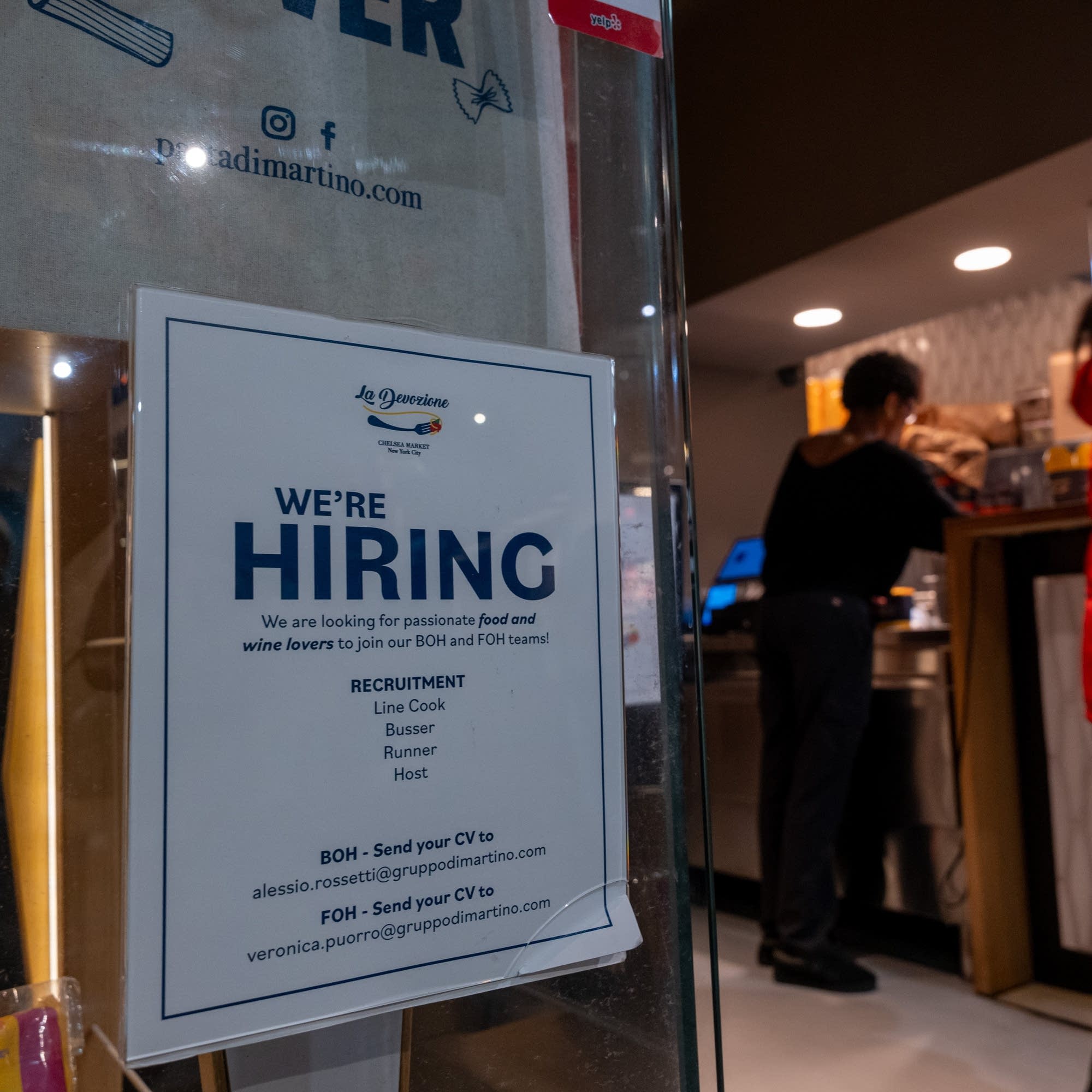
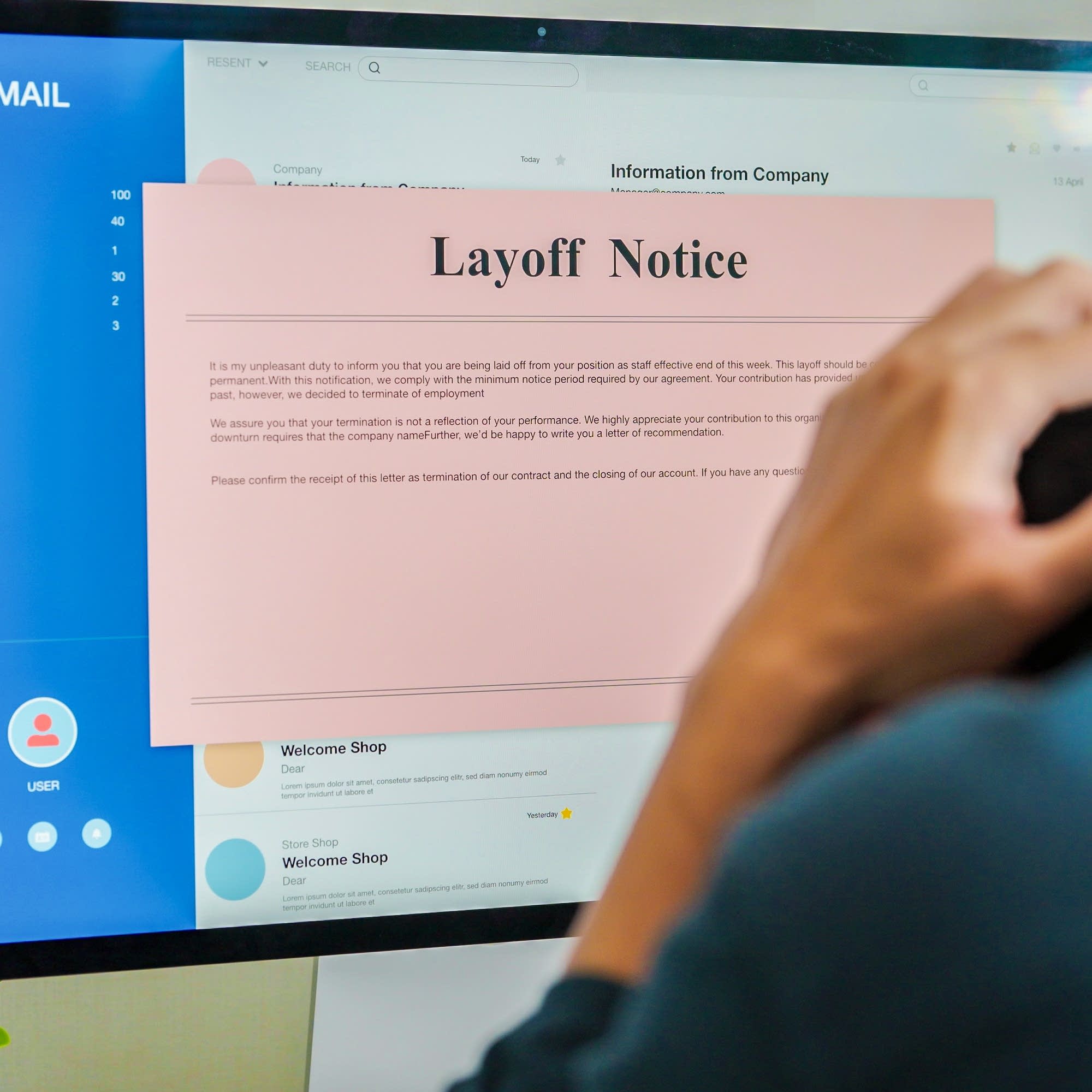
Speaker 2 And according to one of those sources, American companies announced more layoffs in the month that just ended than in any October since 2003.
Speaker 2 2003, before the pandemic, before even the Great Recession. The outplacement firm Challenger Green Christmas counted more than 153,000 publicly announced job cuts in this economy last month.
Speaker 2 Marketplace's Henry Epp dug into the details and what they might mean.
Speaker 5 There were the 14,000 cuts at Amazon, 48,000 at UPS, 1,800 at Target. A common thread in recent layoffs, says Andy Challenger, whose firm authored the report.
Speaker 6 Across all these industries and job cuts, it is notable that these are not entry-level positions exclusively that are being eliminated.
Speaker 5
And that's different from other times we've seen layoffs of this magnitude, Challenger says. Usually they occur during a recession with a certain amount of panic involved.
This time...
Speaker 6 It is deliberate. It is for cost efficiencies.
Speaker 5 In other words, companies want to save money right now, and an easy way to do that is to pay fewer employees.
Speaker 5 That's especially true in the tech sector, where job cuts have seemed inevitable for a while, says Rucha Vancoudre, senior economist at Talent Neuron.
Speaker 9 Because we still had that huge overhiring period from the pandemic, right?
Speaker 10 And I think we're still coming down from that a little bit.
Speaker 5 Plus, a lot of tech companies are adopting AI tools that can replace workers.
Speaker 5 But Pavlina Chernova, professor of economics at Bard College, says AI is not to blame for many of the layoffs we're seeing. Instead, the macroeconomic picture is worsening.
Speaker 11 So now the slowdown in hiring is turning into
Speaker 12 more layoffs.
Speaker 11 So I think basically we are slowly moving towards a vicious cycle in the labor market that is likely to get worse.
Speaker 5 But without jobs data from the federal government, it's hard to know for sure what trajectory we're really on.
Speaker 5 So far, we have not seen a rise in unemployment claims at the state level, and private data from the firm ADP this week showed companies added a modest number of jobs last month.
Speaker 5 Plus, workers actually report feeling pretty good about their current jobs, says Justin Heck, head of research at the nonprofit Opportunity at Work.
Speaker 5 That could mean we're all just really happy in our current roles, or.
Speaker 13
It also could reflect fears about entering the labor market. And a lot of the anecdotal data points to hiring is really slow.
Folks are applying for hundreds of roles and not getting any callbacks.
Speaker 5 When that's the alternative, Hex says, keeping your current job and hoping not to get laid off seems okay. I'm Henry App for Marketplace.
Speaker 2
Wall Street on this Thursday. So look, how do you feel about technology stocks? Because they were the proximate cause of the Ajeda today.
We will have the details when we do the numbers.
Speaker 2 2025 has been, if not the worst of times, then definitely not the best of times for home builders.
Speaker 2 On the supply side, there are the real or threatened tariffs on the stuff you need to actually build homes, lumber and gypsum and kitchen cabinets.
Speaker 2 On the demand side, well, far fewer people seem to want that new home smell.
Speaker 2 Nationally, there are now more unsold newly built homes on the market than at any time since 2009, which you might remember was very close to the worst of times for housing.
Speaker 2 Marketplace's Matt Levin explains what's going on there.
Speaker 15 The three town homes Justin Wood finished building this spring in Portland, Oregon should be pretty hot commodities. 1,200 square feet, three bedrooms, highly coveted off-street parking.
Speaker 16 Most of our homes typically sells within about three to four months of being completed. These ones are now pushing on, oh, gosh, what, or five months without any sales.
Speaker 15 Wood cut the price on his townhomes from $450,000 to $430,000 and is offering other incentives like covering closing costs.
Speaker 15 He thinks he got a buyer for one of the townhomes yesterday, but overall, it's slow.
Speaker 16 It's not as slow as I've ever seen it, but it's slow.
Speaker 15 High mortgage rates and high home prices are a big part of that slowness, but rates were high in 2023 and 2024, and new home sellers could still lure buyers with rate buy-downs and other discounts.
Speaker 18 I think the big, big difference that's weighed on 2025 is that consumer psyche.
Speaker 15 Kara Lavender is with John Burns Research and Consulting.
Speaker 18 We've seen the consumer psyche this year saying, okay, maybe I haven't lost my job, but maybe I'm scared I'm going to, or I know someone who has.
Speaker 15 The rising inventory of existing homes hitting the market this year has also meant more competition for new construction.
Speaker 15 You're most likely to find a glut of shiny new unoccupied homes where the post-pandemic building spree took place. Sunbelt markets like Austin and Tampa.
Speaker 15 But Midwesterners still have an appetite for new construction, says economist Robert Dietz at the National Association of Home Builders.
Speaker 17 We've seen strength in markets like Columbus and Dayton and Kansas City, markets that are relatively more affordable.
Speaker 15 Portland, Oregon builder Justin Woods says he's optimistic that once the government reopens and other sources of uncertainty end, he'll start getting more traffic on his properties.
Speaker 15 Until then, though, he's in a bit of limbo.
Speaker 16 I've got nine projects in for permits right now, and they're ready to go. And if we were selling product that we have in our pipeline right now a little faster, we'd probably be starting more stuff.
Speaker 15 For now, those new projects will have to wait. I'm Matt Levin for Marketplace.
Speaker 2 AI data centers, as you can't help but have heard, are popping up everywhere, near cities, out in the suburbs, and in the west on ranchland and wide open spaces.
Speaker 2 And with all that competition, being sustainable can be a competitive advantage. Data centers suck up energy and they suck up water, and some companies want to use less of both.
Speaker 2 But as the Mountain West News Bureau's Hannah Merzbach reports, even centers that want to go green are having a tough go.
Speaker 9 Stocky black cows graze amid yellow flowers in southwest Wyoming.
Speaker 9 Trenton Thornock's family has ranched this land for six generations.
Speaker 4 I spent most of my summers in Wyoming in one form or another, either riding north of the interstate here, moving cattle before the fence, a lot of the fence.
Speaker 9 But these rolling foothills could soon be home to a massive new AI data center from the company Prometheus Hyperscale, which happens to have been started by Thornock himself.
Speaker 9 He left Wyoming for a finance career, but now he has a new way to make money here, building data centers in the Wild West. And he's also finding ways to power them.
Speaker 4 So,
Speaker 4 right here,
Speaker 4 we're measuring the amount of sunlight that we get during the day.
Speaker 9 For solar panels that potential big tech customers like Google and Meta might want. Prometheus wants to be a sustainable net-zero carbon emissions data center.
Speaker 9 It'll recycle water, use efficient cooling systems, and take advantage of heat from servers to grow microgreens and farm shrimp, and produce all its own power.
Speaker 9 But Thornock says, not only from renewables.
Speaker 4 You've got gas pipelines on both sides for natural gas generation.
Speaker 9 The bulk of its electricity, at least for now, is slated to come from fossil fuels, natural gas, which is abundant in Wyoming.
Speaker 9 In the long run, the plan is for data centers like Prometheus to transition to small modular reactors, many nuclear plants. But the tech is still a ways off.
Speaker 9 So why not fill the gap with wind and solar?
Speaker 12 According to Mary Throne, a Prometheus lawyer, you know, a thousand megawatt wind farm does not provide the same capacity as a thousand megawatt coal plant or natural gas plant.
Speaker 9 Some data centers need as much power as a small city, especially hyperscale ones like Prometheus.
Speaker 9 Powering with renewables would also require giant costly batteries for when it's dark or there's no wind.
Speaker 12 I think we really need to be more forward-thinking and more open
Speaker 12 to taking advantage of all sources of energy. You know, technology is our friend.
Speaker 9
Technology like carbon capture. Prometheus plans to get to net zero by injecting CO2 from other sources into the ground nearby.
Amory Lovin says this sounds like a sketchy model.
Speaker 9 He's a Stanford energy professor.
Speaker 20 It's a lot more straightforward to make your own clean power on site.
Speaker 9 Lovin says carbon capture is also expensive and doesn't always store CO two at the rate promised.
Speaker 9 He says it is possible to power data centers and all renewables, like one outside Reno, Nevada that runs on solar and used electric car batteries.
Speaker 20 So I don't think you need to mess with offsets if you're making the power right in the first place.
Speaker 9 All big tech companies are saying they can be a leader in AI without destroying the climate.
Speaker 9 Google, Meta, and Microsoft promise to reach net zero by 2030, but their emissions have risen in recent years.
Speaker 9 Trenton Thornock says Prometheus, which means foresight in Greek mythology, will build the first net zero data center.
Speaker 9 He drives down a bumpy dirt road. He says the data center is another way to steward this sagebrush landscape.
Speaker 4 We hope to be here for many more generations.
Speaker 4 My nephews and nieces will someday inherit the ranch.
Speaker 9 Although they may find themselves to be daddy-wranglers rather than cowboys in the decades to come.
Speaker 9 In Wyoming, I'm Hannah Mersbach for Marketplace.
Speaker 2 Coming up.
Speaker 19 You know, I get to clean my house and I get to go and volunteer.
Speaker 2 What are you going to do when you retire, huh? First, though, let's do the numbers.
Speaker 2 Dow Industrial is down 397 today, 8 tenths percent, 46,913. The NASDAQ gave up 445 points, 1.9%,
Speaker 2 23,053. The SP 500 down 75 points, 1.10%,
Speaker 2 67, and 20 there. The the Wall Street Journal is reporting that Ford Motor Company is trying to figure out whether or not to keep making the F-150 Lightning Electric.
Speaker 2 It's already paused production of the model, blaming a shortage of aluminum for that. Ford, though, sped up a tenth of 1%.
Speaker 2 Tesla down 3.5% on the session, but after the close, shareholders did vote to approve that pay package for Elon Musk that could be worth up to $1 trillion,
Speaker 2 trillion with a T
Speaker 4 for that guy.
Speaker 2 Bonds up. Yield on the 10-year T-note down 4.08%.
Speaker 2 You're listening to Marketplace.
Speaker 21 This podcast is brought to you by WISE, the app for international people using money around the globe.
Speaker 21 With Wise, you can send, spend, and receive up to 40 currencies with only a few simple taps and save up to 55% compared to major banks.
Speaker 21 Whether you're buying souvenirs with pesos in Puerto Vallarta or sending Euros to a loved one in Paris, you know you're getting a fair exchange rate with no extra markups.
Speaker 21 That's what makes Wise the fast, affordable way to use your money around the globe.
Speaker 21 WISE offers 24-7 live support and runs over 7 million daily checks to catch and prevent fraud, so you know your money is where it's supposed to be. Be smart.
Speaker 21
Join the 15 million customers who choose WISE. Download the WISE app today or visit Wise.com.
Learn more by visiting WISE.com/slash US slash compare. T's and C's apply.
Speaker 1 This podcast is supported by Odo. Some say Odo business management software is like fertilizer for businesses because the simple, efficient software promotes growth.
Speaker 1 Others say Odoo is like a magic beanstalk because it scales with you and is magically affordable.
Speaker 1 And some describe Odo's programs for manufacturing, accounting, and more as building blocks for creating a custom software suite. So Odoo is fertilizer, magic beanstock building blocks for business.
Speaker 1
Odoo, exactly what businesses need. Sign up at odoo.com.
That's odoo.com.
Speaker 14 This marketplace podcast is supported by Wealth Enhancement, who ask, do you have a blueprint for your money?
Speaker 14 Wealth Enhancement can help you build the right blueprint for investing, retirement, tax, and more.
Speaker 14 With offices nationwide, there's an advisor who's ready to listen and craft a blueprint for your future. Find out more at wealthenhancement.com/slash build.
Speaker 21 Fifth Third Bank's commercial payments are fast and efficient. But they're not just fast and efficient, they're also powered by the latest in payments technology built to evolve with your business.
Speaker 21 Fifth Third Bank has the big bank Bank Muscle to handle payments for businesses of any size, but they also have the FinTech Hustle that got them named one of America's most innovative companies by Fortune magazine.
Speaker 21
That's what being a Fifth Third Better is all about. It's not about being just one thing, but many things for our customers.
Big Bank Muscle, FinTech Hustle.
Speaker 21 That's your commercial payments, a Fifth Third Better.
Speaker 2
This is Marketplace. I'm Kai Rizdahl.
I got back into town this morning from an event out in in Iowa. Thank you, Iowa Public Radio and Drake University.
Speaker 2 But I got to tell you, I kind of feel like I made it by the hair on my chinny chin chin, because no sooner had I gotten back to the office, on time, by the way, than I saw the news that United is canceling 10% of its flights tomorrow after the FAA ordered it to do that.
Speaker 2 Delta is doing its same. Other carriers will surely follow suit, though they do say long-haul international flights ought to be unaffected.
Speaker 2 All of that, though, notwithstanding, there will be disruptions aplenty in travel, time, and in this economy, as Marketplace's Carla Javier reports.
Speaker 10 Security lines may be longer than usual, but for most of the shutdown, flights themselves have largely been departing on time, according to airline industry commentator Mike Arnett.
Speaker 8 In recent days, there has been a bit of a slowdown at major airports, like at Newark and Orlando, and pockets of disruption in California as well. But they've also bounced back.
Speaker 10 That's according to data from aviation analytics firm Sirium. Arnett says usually cancellations are weather-related, so airlines don't have as much time to plan.
Speaker 10 But with this much heads up, Arnett expects airlines to prioritize long-haul flights, which carry a lot of people and make a lot of money.
Speaker 8 There's a lot of business travelers that rely on those flights, and so they'll try to protect those operations at the expense of smaller regional jets, which carry less passengers.
Speaker 10 Disruptions in regional flights could trickle elsewhere, says Sharkey Laguana of the American Car Rental Association.
Speaker 8 If you're a car rental operator, you're going to have a bunch of cars in an airport and no customers there to pick them up.
Speaker 10 He says rental companies may attempt to move their fleets to places where travelers will be, and where car supply exceeds passenger demand, rates may drop.
Speaker 10 Airlines are trying to get ahead of any disruptions by offering flexibility for proactive passengers, including refunds or the opportunity to change their flights.
Speaker 10 And if travelers do get stuck, Sean Cuddahy at The Points Guy says, don't worry about lines or phone calls.
Speaker 7 A lot of times you can rebook yourself with just a few taps in the app. Airlines have said they're going to try and accommodate as many passengers as possible.
Speaker 7 It's possible your airline may go ahead and just rebook you on another flight.
Speaker 10 Cuddahy recommends nervous travelers consider non-stop or refundable backup flights and check to see if their credit cards offer travel insurance, which may be able to cover costs, including hotels and meals.
Speaker 10 I'm Carla Javier from Marketplace.
Speaker 2 You might have missed this in the rush of domestic news, but China published its latest five-year plan at the end of last month.
Speaker 2 It's going to steer the world's second biggest economy from next year till 2030, and Communist Party leaders want to boost manufacturing over there. They want to boost it some more.
Speaker 2 The problem is, and this is from the Chinese Ministry of Education, there are tens of millions of skilled manufacturing jobs in that economy that are unfilled.
Speaker 2 There's a mismatch between labor demand and labor supply. Marketplace Jennifer Pack reports now on a program that's trying to change that.
Speaker 9 Inside a training center called Jinnanchu, a workshop is lined with robotic arms. About 10 students, all young men, stroll in.
Speaker 9
Three to a group, says robotics instructor Pan Junkang. He's given them papers printed with rectangles and circles.
Today's task, program the robotic arms to trace the shapes.
Speaker 9 Here, students get hands-on experience with industrial robots found in many Chinese factories. These factories have been automating as the labor pool shrinks.
Speaker 9 And, says the training center's founder, Liu Zhenglong,
Speaker 4 many young people don't want to do basic factory jobs, so manufacturing is turning from labor-intensive to technology-intensive.
Speaker 9 So, the school is training automation engineers.
Speaker 4
Take the iPhone, for example. It's manufactured in China by Foxconn.
But who built the production line for the iPhone?
Speaker 4 It was another company with automation engineers, like the ones we train.
Speaker 4 And once the production lines arrive at Foxconn, they need someone to calibrate, operate, and repair the machines.
Speaker 4 We also train those folks.
Speaker 9 Jinanchu has three branches in eastern China with over 200 students, among them Tang Jing, who had been working as an electrical engineer for a couple of years.
Speaker 22
I was maintaining machines at a natural gas well. The job was hard.
It wasn't what I wanted. So I quit and came to this training center.
Speaker 9 And he's optimistic about his job prospects. Many graduates here have gone on to work with auto manufacturers such as Kia, BYD, and battery companies like CATL.
Speaker 22 My ideal job is to be an automation engineer, specializing in electrical design.
Speaker 22 It is a stable job and it doesn't require a lot of business trips.
Speaker 9 Automation engineers used to be trained on the job through apprenticeships, but those were the old days when people would stay with the same employer for, say, 10 years, says Liu Zhenglo.
Speaker 4 New people change jobs very quickly.
Speaker 4 If a worker joins a company for a year or two,
Speaker 4 will the company spend six months to a year to train them?
Speaker 9
Likely not, he says. So now it's it's up to schools like his to get workers ready.
But they don't train just anyone.
Speaker 4 We only take people who have a background in computer science, mechanical, or electrical engineering.
Speaker 9 That's a big obstacle for most Chinese. Some 62% of adults in China lack a high school degree, according to the latest statistics from 2020.
Speaker 9 And the ones who do have post-secondary education aren't that attracted to factory work, says instructor Wang Shun.
Speaker 23 The automation sector is desperate for people who can calibrate and debug PLC,
Speaker 23 which are industrial computers.
Speaker 23 There's a huge shortage in the sector because the work environment isn't great and the workload is big.
Speaker 9 But as China's economy becomes sluggish, Wang Shun is starting to see a shift.
Speaker 23 In 2019, many of my students were working and wanted to retrain in automation. But now I have more students who are college graduates who don't have good job prospects.
Speaker 9
The youth unemployment rate is high. It was nearly 18% in September.
But at the end of the three-month course, Wang Shun says more than 95% of their graduates get a job.
Speaker 9 In Nanjing City, I'm Jennifer Pack for Marketplace.
Speaker 2 Back in 2014, I started talking to a woman named Alana Furco.
Speaker 2 She was the manager of the Butte Plaza Mall in Butte, Montana.
Speaker 2 And we would talk every six or eight months, maybe, about whatever was happening, problems her tenants were having, doing her job during and after after the pandemic, what the retail vibe was, whatever.
Speaker 2 Last time we talked, end of last year, the mall had been sold and developers were going to tear part of it down. And Alana was thinking maybe it was time for her, too.
Speaker 2 We got her back on the phone the other day to see how things are going.
Speaker 19 I intended to be out of the mall and finish cleaning out my office and the storage, but one month turned actually turned into three months. So
Speaker 19 I got a little behind on my self-imposed out schedule. So I've been in the mall these past couple weeks.
Speaker 19 People from the outside looking in, they're just
Speaker 19
a building. But it was a good building.
And the reason I know I love that building is because it took good care of all the people I cared about inside of it.
Speaker 19 I will be involved in an event that they'll be holding in December.
Speaker 19 Our community does a clothing drive and they'll be hosting that in the old call center space, which was very gracious of the new owners to do. So I think I'll be involved in that and then
Speaker 19 I'll be able to go ahead and walk away and feel good about it.
Speaker 19 You know, I get to clean my house and I get to go and volunteer. You know, I've been with the food bank for a while and right now
Speaker 19
there's just a lot of stress. So they do need somebody to come in and pick up a few extra shifts and hours.
So I will try to do that. But there's other things
Speaker 19 like reading at the kindergarten classes and maybe helping with a literacy program or something at the library.
Speaker 19 I just have to pay attention to what I'm spending on my credit cards because I'm usually a cash girl. But since I'm not working, I'm not filling my pockets with cash every week.
Speaker 19
So I've been using my credit cards a little more. I just got to pay attention to that.
But
Speaker 19
like I say, my husband is still working. I think I've got a year out before I think about taking Social Security.
But we'll be okay for a couple years with our money.
Speaker 19 My number one thing that I'm looking forward to in true retirement is not worrying about everybody and everything
Speaker 19 underneath that big roof at 3100 Harrison Avenue. I will be able to relax.
Speaker 19
I will be able to be at the becking call for my children and my grandchildren. That's what I'm looking forward to.
I guess it's just that freedom.
Speaker 2 Alana Furco almost fully retired after 40 years at the Butte Plaza Mall.
Speaker 2 This final note on the way out today, in which I will confess to not having thought even for a second about holiday shopping, because it's barely November.
Speaker 2 But the National Retail Federation is clearly of a different mind. The group said today it figures holiday spending this year is going to top a trillion dollars, 1 trillion American dollars.
Speaker 2
And if you're thinking right now, but Kai, you always tell us consumers are cranky and inflation is still a thing. Well, yes, I do because it's true.
But here is the money quote from the NRF.
Speaker 2 American consumers may be cautious in sentiment, they say, yet remain fundamentally strong.
Speaker 2 We expect consumers will continue to seek savings in non-essential categories to be able to spend on gifts for loved ones.
Speaker 4 So there you go.
Speaker 2 Our daily production team includes Livy Burdett, Andy Corbin, Nicholas Guillong, Mia Hollenhorst, Sarah Leeson, Sean McHenry, and Sophia Terenzio. And I'm Kyle Rizdahl.
Speaker 2 We will see you tomorrow, everybody.
Speaker 2 This is APM.
Speaker 10 Your business is one of a kind, so your website should be too. With Wix, it's easy, almost too easy, to create a website that's perfectly yours.
Speaker 10 Just tell AI what kind of site you want to build or choose from thousands of templates. Change whatever you want whenever you want, and get everything you need to start running your business your way.
Speaker 10 No matter what you sell or what you aspire to be, you can do it all yourself on Wix.