Too little, too late?
China's purchase of 1 million tons of U.S. soybeans ends a trade war freeze. And while it's better than nothing, it's still far below typical November numbers. With no confirmation of more big shipments, and cheaper suppliers like Brazil and Argentina ready to fill in, how are U.S. farmers reacting? Plus: What to expect in September's jobs report, how the rise of gambling might change political media, and why tech giants are issuing debt to fuel expansion.
Every story has an economic angle. Want some in your inbox? Subscribe to our daily or weekly newsletter.
Marketplace is more than a radio show. Check out our original reporting and financial literacy content at marketplace.org — and consider making an investment in our future.
Press play and read along
Transcript
Speaker 1 Introducing your new Dell PC with the Intel Core Ultra Processor. It helps you handle a lot, even when your holiday to-do list gets to be a lot.
Speaker 1 Like organizing your holiday shopping and searching for great holiday deals and customer questions and customers requesting custom things, plus planning the perfect holiday dinner for vegans, vegetarians, pescatarians, and Uncle Mike's carnivore diet.
Speaker 1 Luckily, you can get a PC with all-day battery life to help you get it all done. That's the power of a Dell PC with Intel inside, backed by Dell's Price Match Guarantee.
Speaker 1
Get yours today at dell.com/slash holiday. Terms and conditions apply.
See Dell.com for details.
Speaker 3 This marketplace podcast is supported by Wealth Enhancement, who ask, Do you have a blueprint for your money?
Speaker 3 Wealth Enhancement can help you build the right blueprint for investing, retirement, tax, and more.
Speaker 3 With offices nationwide, there's an advisor who's ready to listen and craft a blueprint for your future. Find out more at wealthenhancement.com/slash build.
Speaker 2 Hey, raise your hand if you're excited to get the jobs data tomorrow, huh?
Speaker 2 Yeah, Yeah, not so fast. From American Public Media, this is Marketplace.
Speaker 2
In Los Angeles, I'm Kai Risdall. It is Wednesday, today 19 November.
Good as always, to have you along, everybody. We are going to begin today with the calendar.
Speaker 2 We had been expecting the Bureau of Labor Statistics to grace us with the monthly September unemployment report tomorrow, six or so weeks delayed. Thank you, government shutdown.
Speaker 2 Alas, that is not to be.
Speaker 2 The BLS told us this morning, not only are we not getting that September data tomorrow, the October data, the part of it that they can pull together anyway, and the November data isn't going to be ready until mid-December.
Speaker 2
None of that is good news in any way, shape, or form. So we've done what we do when we need a little bit of perspective.
We've We've called Heather Long.
Speaker 2
She's the chief economist at Navy Federal Credit Union. Also, as you know, a Friday regular here.
Heather, it's good to have you on.
Speaker 6 Great to be here with some data.
Speaker 2 Well, or not, what do you make of the news? First of all, that the October report's going to be delayed and some of that data may not ever show up. What was your first reaction?
Speaker 6 Honestly, my first reaction was we're going to get more than I thought we were going to get.
Speaker 6 So no unemployment rate, but at least they're going to try to do the business survey, now the establishment survey that gives us a little bit of information.
Speaker 6 And I'm in the belief something is better than nothing.
Speaker 2 Well, fair enough, I suppose, at this particular moment.
Speaker 2 Let me ask you, though, as I do sometimes and you don't always like it, to put yourself in Jay Powell's shoes because the chair now is going to be running this meeting on 9-10 December without data that he thought he was going to have, right?
Speaker 2 The next installment that we're going to get from the good people at the BLS doing the hard work is going to be after that meeting. So what do you think the Fed's going to do now?
Speaker 6 Well, it seems like they're going to say we're still in this fog and our best option is to stay put until the fog lifts. And
Speaker 6 I've been one of the economists saying I think they need to cut, but honestly, I am a little bit more sympathetic.
Speaker 6
It doesn't really make that much difference if they have to do the next interest rate cut in January versus December. Maybe that is right.
to hold a little bit for more data.
Speaker 2 Well, you know, that's interesting because it makes me think of this word choice that we're starting to see a lot, which is a skip, which is to say they skip a meeting and don't do anything and wait till January, or a pause, which implies longer.
Speaker 2 Do you have do you have thoughts on that?
Speaker 6
I would be surprised if they call it a pause because you're right. That's a big mindset shift.
And it also seems like a huge U-turn, right?
Speaker 6 We're supposedly been cutting interest rates to support the labor market and suddenly we're going to hit the pause button. So to me, it's leading up to skip, but time will tell.
Speaker 2 Time always does tell.
Speaker 2 A word here about
Speaker 2 the politics, the criminology of the Fed, if I might.
Speaker 2 It does seem like those who are going to dissent from whatever the chair and the majority decide to do are becoming more vocal, and tea leaves are being read about what that means for the Fed now and perhaps for the Fed after Chair Powell leaves.
Speaker 2 Do you have thoughts on that?
Speaker 6 Dissent is healthy, particularly where we are right now. I think the more interesting question is, you know, the next Fed share and who's this person going to be?
Speaker 6 How much of a dramatic U-turn are they going to take? But honestly, from the White House perspective, the White House wins either way in 2026.
Speaker 6 Either they're going to get the interest rate cuts that they want by installing their new Fed share, or the economy is going to look so good.
Speaker 6 that everyone's going to agree that we don't need more rate cuts.
Speaker 6
So I don't know. That's kind of the way I think politically it really shakes out.
Economically speaking, is there a lot they can do in a K-shaped economy to help the bottom of the K?
Speaker 6 That's really the big, big debate. And I'm not sure there's a whole lot, unfortunately, that they can do for the bottom.
Speaker 2 Yeah, let me ask you the macro question there in the 45-ish seconds we have left. The K does seem to be getting steeper, right? The bottom half, as we know, the bottom part,
Speaker 2 is struggling ever more. The top half is doing all the better.
Speaker 6
It certainly seems that way. And I've been saying for months, the middle-class squeeze is coming.
And I think we're basically hitting it now. The unemployment rate is rising a little bit.
Speaker 6
Whether it rises in September to 4.4, I don't know. But it will eventually hit 4.4, 4.5.
And at the same time, we're seeing inflation rise, as you know well, and been chronicling well.
Speaker 6
And so wage gains are coming down. Inflation's coming up.
And you do the math.
Speaker 6 It's less money in the middle class pockets right now, and people are feeling it.
Speaker 2 Heather Long, chief economist at Navy Federal, also has a side hustle with us on Friday sometimes. Thanks, Heather.
Speaker 6 Thanks, guy.
Speaker 2 Wall Street today, a little choppy as pretty much everybody was hanging fire on NVIDIA's earnings. We will have the details when we do the numbers.
Speaker 2 Artificial intelligence is, of course, all over the stock market. See also the aforementioned NVIDIA, also Alphabet, Amazon, Microsoft, and all the rest.
Speaker 2
But AI is starting to show up in the bond market, too. A couple of weeks ago, Meta sold $30 billion worth of debt, its biggest auction ever.
Alphabet raised $17.5 billion on Monday.
Speaker 2 Amazon offered $15 billion in the debt market, all of them using the money to build and invest in AI infrastructure, which fine, I hear you saying, but what, Kai, is that going to mean for the actual economy?
Speaker 7 My name is Winnie Cesar, and I'm the global head of strategy at Credit Site.
Speaker 8 My name is Matteo Eroina, and I'm a professor of finance at Marquette University.
Speaker 7 One thing that has been a big theme this year has been a big increase in tech-related spending.
Speaker 8 Now, the question is, what if these investments continue at this pace and if these companies will keep issuing bonds?
Speaker 2
What if indeed? First of all, you're going to have a whole lot of debt. That's what bonds are, right? Debt, IOUs.
You're going to have a ton of it tied up in one place.
Speaker 7 You know, a lot of these tech companies are very highly rated, but that doesn't necessarily make them immune to reality and, you know, some questions around return on investment and growth of cash flows.
Speaker 2 Questions like, what if AI winds up not being as profitable as Amazon et al. would like? Answer, all that, that starts to look more and more like a problem.
Speaker 7 Anytime there's a specific sector or a specific issuer who needs to raise a lot of capital, that oftentimes means that it comes at the detriment of other issuers or it just kind of raises the cost of capital.
Speaker 9 So if you have higher cost of capital to higher borrowing costs, the cost of debt, that would reduce the number of investments the company will make.
Speaker 8 And that would have repercussions for the economy.
Speaker 2 Investments, of course, is another word for corporate spending. Now,
Speaker 2 what's the next thing to look out for, do you suppose?
Speaker 7 The AI, quote, value chain. is really like quite staggering.
Speaker 7 If you think about the data center construction, the utility infrastructure construction, you know, to power up all those data centers, go on.
Speaker 7 Utilities are already one of the biggest sectors in the corporate bond market, and they've had to issue a lot more bonds. Sometimes I'm kind of like, well, we're all looking at Meta and
Speaker 7 Amazon and Apple, but like we should actually be looking over here too.
Speaker 2 Lots to look out for in the AI economy.
Speaker 2 There's a certain circularity when it comes to the world's food supply and climate change.
Speaker 2 About a third of the planet's greenhouse gas emissions come from food and agriculture and all of the systems and infrastructure that surround it.
Speaker 2 At the same time, though, the climate change that's happening because of those emissions is making it harder to produce some of our food.
Speaker 2 That includes staple crops like wheat and corn and rice, crops that provide about half of the world's calories. So feeding a growing population on a hotter planet is of not insignificant interest.
Speaker 2 That's why that's the topic of the latest season of our climate podcast, How We Survive. Here's Marketplace's Amy Scott.
Speaker 10 I'm in Dodge City, Kansas, where a sign commemorates the 100th Meridian, the invisible longitudinal line that cuts through the Great Plains.
Speaker 10 The Meridian passes through the city approximately one mile east of this marker between avenues L and M.
Speaker 10 The 100th Meridian has long symbolized the dividing line between the arid west and the humid east.
Speaker 10 But several years ago, Richard Seeger, a climate scientist at Columbia University, discovered that the dry line appeared to be moving.
Speaker 11 The psychological 100th meridian is moving east.
Speaker 10 East of the 100th meridian, he says, is gradually getting more arid. And that could have huge implications for farmers, the economy, and the global food supply.
Speaker 10 About half of the wheat grown in Kansas is exported to countries including Mexico, Japan, and Nigeria.
Speaker 11 Climate change in the central U.S.
Speaker 11 is of enormous importance to food security across the world.
Speaker 10 To see how farmers are adapting, I drive 170 miles across Kansas from west to east to visit Penner Farms in Hillsboro, Kansas.
Speaker 10 I pull into a driveway and see an explosion of small cats come from beneath a parked pickup truck, barn kitties that keep the mice at bay.
Speaker 12 Oh, hi, kitties. Yeah, you think I'm getting food.
Speaker 10 Paul Penner steps out of the truck.
Speaker 10 I've come to meet him because Richard Seeger's research suggests the dry line once represented by the 100th meridian now lies around here, closer to the 98th meridian.
Speaker 10 I wondered what changes Paul had seen in the 50 years he's been farming. Today, he grows wheat, corn, soybeans, and a little bit of grass hay on about a thousand acres.
Speaker 10 We head out in his truck to take a look. Over time have you seen yields go up with the modern seed breeding and that kind of thing?
Speaker 15 I have but you know what also I've I've seen yields drop because of drought
Speaker 13 and and believe me boy have I seen them drop.
Speaker 10 According to US drought monitor data going back to 2000 Paul's County has experienced more frequent and severe droughts over the past 15 years.
Speaker 15 You do it for the love of farming, but also, you know what?
Speaker 13 I'm a businessman too.
Speaker 15 I got to make money. And I get really angry at myself when I don't make money, you know.
Speaker 10 To try to keep making money in drier conditions, Paul has adapted. Around 20 years ago, he started practicing no-till farming.
Speaker 10 After a harvest, instead of turning the soil over for the next crop, he leaves the stubble, reducing erosion and evaporation and preserving the moisture in the soil.
Speaker 10 We drive out to one of his cornfields to check how close it is to harvest.
Speaker 12 And
Speaker 12 you see all the evidence of, you can see.
Speaker 10 Yeah, that's wheat stubble under our feet, right?
Speaker 12 And you see corn cobs
Speaker 12
from the previous corn crop. Yep.
And in between, I don't know, maybe you can look.
Speaker 12 Here's a soybean stock.
Speaker 10 Paul believes this practice of planting in layers of stubble has saved his crop during times of extreme drought. This year, though, Paul says, has almost been too wet.
Speaker 10 He pulls up a rainfall app on his phone.
Speaker 15 You see that line?
Speaker 15 That line is average for 30 years.
Speaker 10 The average is about 36 inches.
Speaker 15 And this year we've already done 42.
Speaker 10 Much of it has come in short, intense bursts where only a fraction soaks in, leaving crops stressed. But one wet year doesn't change the trend line toward a hotter, more arid future.
Speaker 10 So, if Kansas gets a lot drier or just has a lot more wide swings and variability,
Speaker 10 how does that impact the rest of the world and our ability to feed a growing population?
Speaker 5 Number one, it's going to impact the amount of wheat available or production.
Speaker 5 It could impact quality depending on how the rainfall patterns are.
Speaker 5 We have to have a consistent form of moisture so that the nutrients that are needed can be absorbed and taken up by the roots and produce a crop.
Speaker 10 But for Paul, there's a challenge more immediate than climate change. To break even, he needs to bring in about $7.50 a bushel for wheat.
Speaker 10 But when I met Paul in mid-September, the market was offering less than $5.
Speaker 10 What is causing the low prices?
Speaker 12 Tariff. Trade war.
Speaker 12 I could use some other expletives, but I won't.
Speaker 10
Before the tariffs, Kansas had a rhythm. Roughly half the wheat moved overseas.
China bought a lot of the soybeans, as well as corn and Milo.
Speaker 10
But in late summer, those markets were drying up in response to U.S. tariffs.
And all that turbulence has Paul worried about the sustainability of farming in Kansas.
Speaker 10 In Hillsboro, Kansas, I'm Amy Scott for Marketplace.
Speaker 2
There is a whole season's worth of stories to be had from Amy and the team. How we survive is the name of the podcast.
Follow it on the app of your choice.
Speaker 2 Coming up.
Speaker 14 It's interesting to talk about, maybe interesting in a different way to live through.
Speaker 2 I'm interested. But first, let's do the numbers.
Speaker 2
Dow Industrials down, up, rather. Dow Industrials are up 47 points, a 10th percentile, 46,138.
The NASDAQ up 131 points, added 6 tenths percent, 22,564.
Speaker 2 SP 500 added 24 points, about 4 tenths percent, ending things at 66, and 42.
Speaker 2 Shares of the AI chip company NVIDIA up 2.8% before reporting its third quarter results after the closing bell.
Speaker 2 Once said bell rang, CEO Jensen Huang said demand for its newest chips is, and this is a quote, off the charts.
Speaker 2 Home improvement retailer Lowe's, the one with the blue color scheme, popped 4% today. It reported financial results that were better than analysts were expecting.
Speaker 2
The orange-ish home improvement, Chan Hone Depot, lost about six-tenths of 1% on the day. Bond prices, well, they went down.
When that happens, the yield goes the other way.
Speaker 2 Yield on the tenure treasury today, 4.13%.
Speaker 2 You are listening to Marketplace.
Speaker 3 Today's numbers segment is presented by Intuit QuickBooks. Transform your cash flow, transform your business.
Speaker 16 When it comes to running your business, the number that usually matters most is cash flow. When that's out of sync, decisions get delayed, bills pile up, and opportunities may pass you by.
Speaker 16 QuickBooks is a powerful platform that brings your money and books together, giving you real-time insight into your cash flow.
Speaker 16 QuickBooks Money Management Tools help you get paid faster, pay bills smarter, and even secure funding. With QuickBooks Money Tools, your books update automatically with every payment and every bill.
Speaker 16
No more juggling spreadsheets or logging into different systems. Run your business with confidence.
Learn more at quickbooks.com/slash money. That's quickbooks.com/slash/money.
Speaker 16 Terms apply, money movement services are provided by Intuit Payments Inc., licensed as a money transmitter by the New York State Department of Financial Services.
Speaker 17 It's time for
Speaker 17 Earn Dell rewards and enjoy many other benefits like free shipping, expert support, price match guarantee, and flexible financing options.
Speaker 17 They also have the biggest deals on accessories that pair perfectly with your Dell PC, improving the way you work, play, and connect.
Speaker 17 Whether you just started holiday shopping or you're finishing up, these PCs and accessories make perfect gifts for everyone on your list. Shop now at dell.com slash deals and don't miss out.
Speaker 17 That's dell.com/slash deals.
Speaker 3 This marketplace podcast is supported by Justin Wine. Get the celebration ready with Justin Wine.
Speaker 3 Since 1981, Justin has been producing world-class Bordeaux-style wines from Paso Robles on California's Central Coast.
Speaker 3 Justin offers curated gift sets, library wines, magnums, and even custom-etched bottles. Visit JustinWine.com and enter Market 20 for 20% off your order.
Speaker 3 Justin offers the perfect holiday gifts for clients, colleagues, friends, or family. Be sure to check them out at justinwine.com to receive 20% off your order for a limited time.
Speaker 2
This is Marketplace. I'm Kai Rizdahl.
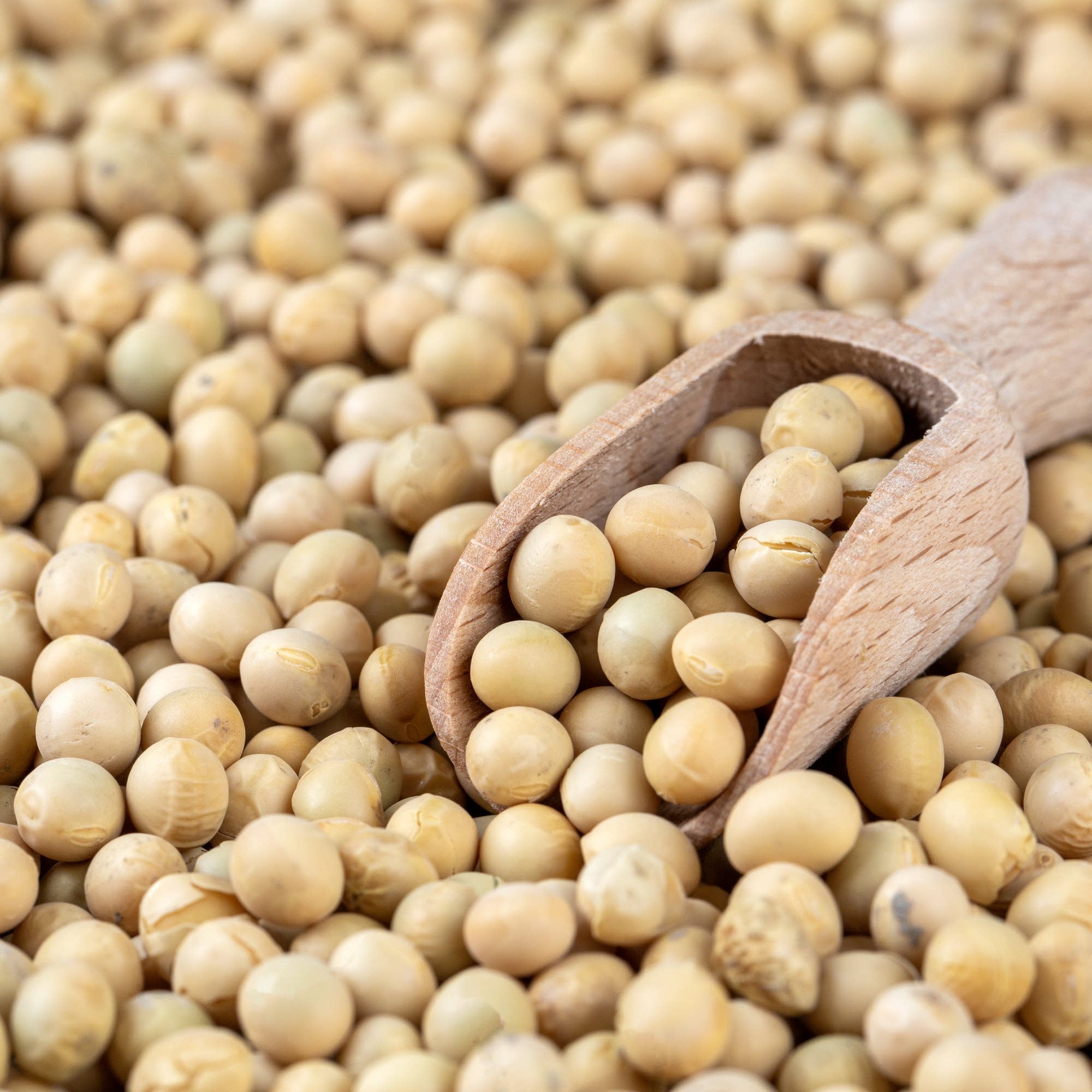
Consider the humble soybean, a staple crop, a great source of protein, also a flashpoint in President Trump's trade war with China.
Speaker 2
Chinese buyers put in a big order for U.S. beans this week, bringing the total volume for the year up to almost a million tons.
Marketplace's Savannah Peters has more now on the state of U.S. soy.
Speaker 18 A million tons of U.S.
Speaker 18 soybeans is a fraction of what China would normally have purchased by November, but it's more than zero tons, which is what we were looking at before President Trump and Chinese President Xi started talking.
Speaker 19 It's also psychologically good for the market because the markets look at this and going, oh, this is the first of more to come.
Speaker 18
That's Steven Nicholson with Rabbobank. But he says there's reason to be skeptical.
President Xi hasn't actually confirmed that commitment to ramp up orders by the end of the year.
Speaker 18 Plus, the supply chain won't reboot overnight.
Speaker 19 By the time you get all the buying done, the logistics, the vessels in place, get it loaded, it's just going to be really tough.
Speaker 18 And China's track record of sticking to trade war promises is rocky, according to Kristen Owen with Oppenheimer.
Speaker 20 We've seen this playbook before, where there is a commitment, and ultimately China becomes a price-sensitive buyer.
Speaker 18 And you know who's gearing up for a bumper crop of cheap soybeans? Brazil and Argentina, the countries that have been stepping in to supply the Chinese market.
Speaker 18 Meanwhile, American farmers have to make decisions.
Speaker 19 Yes, it is always stressful.
Speaker 18
Soybean farmer Brian Warpup in northeast Indiana stored most of this year's harvest when prices were subdued. Now that the U.S.
and China are talking, prices are rallying.
Speaker 19 I feel that it is at a profitable level, so I might as well start selling at a profitable level.
Speaker 18 Warpup will use that revenue to buy seeds for 2026, which he'll plant around April, hopefully, with a clearer sense of where U.S. soybean growers stand with their most important buyer.
Speaker 18 I'm Savannah Peters for Marketplace.
Speaker 2 Gambling just keeps on getting bigger in this country. And the big prediction markets and sports gambling platforms aren't just financial powerhouses.
Speaker 2
They're quickly turning into media conglomerates, too. That's the case John Herman makes in New York Magazine.
John, welcome to the program. Good to have you on.
Speaker 14 Thanks for having me.
Speaker 2 Online betting is, as we know,
Speaker 2 huge and growing. I want you to give me sort of the
Speaker 2 elevator pitch, the 30-second version of the thesis of the piece, which is that it's kind of pervading all of culture now.
Speaker 14 Yeah.
Speaker 14 I mean, anyone who follows sports has some version of this story that they're familiar with, where 10 years ago, sports betting was still a little bit of like a marginal activity, something that you could do if you wanted to, but you had to kind of try.
Speaker 14
And in the years since then, it's absolutely everywhere. It's in the coverage, it's in conversations with friends.
It has completely pervaded the culture of sports.
Speaker 14 It's causing new scandals in sports beyond what it used to.
Speaker 14 And what's interesting now is that we're starting to see similar things happening around world events, politics, other things happening in the world that aren't arranged competitions, you know, between people or teams.
Speaker 2 Right, keep going. And look, I'll preface the question here by saying that we've all heard about prediction markets and we've done stories and work on the prediction markets on this program.
Speaker 2 You say, though, in this piece,
Speaker 2 you can make a case for a new betting-centric political media. Go ahead, make the case.
Speaker 14 During the last presidential election, betting markets were front and center. You were hearing about the Cauchy odds, odds, the polymarket odds, and in retrospect, they were pretty accurate.
Speaker 14 Now, in the mayoral election, we saw something sort of more advanced. We saw prediction markets like Calci and Polymarket kind of participating in the conversation.
Speaker 14
They were playfully getting in the mix with the news. And it just sort of crystallized for me in that moment that these companies are also media companies.
I work in media. I see.
Speaker 14
prediction markets all around me. I see people quoting them alongside polls.
I see people feeling kind of threatened as pundits by, you know, this new tool.
Speaker 14 But you also just sort of see people talking about them as their own sort of thing. They're no longer primarily interested in who's going to be the next mayor of New York City.
Speaker 14 They might not live in New York City. They might have no interest in New York City, aside from this intense interest in the bet that they've placed on whether or not Soran Lamdani was going to win.
Speaker 14 And that's just a completely different way to engage in politics.
Speaker 2 Well, look, let's talk more about that, right?
Speaker 2 Because as you alluded to up at the top of this interview, and as has been in the news the last couple of days, there are more more betting scandals now in sports than there have been.
Speaker 2 I mean, there are guys literally like betting per pitch and all that jazz. So is it necessarily a good thing if media becomes
Speaker 2 financed by gambling versus media financed by, I don't know, advertising and sort of, or as we call it here in public radio, underwriting, you know?
Speaker 14
Right. Well, I don't want to be precious about ad-supported media.
It's got a ton of obvious problems right on the surface.
Speaker 14 But I think it's also pretty easy to pick out what the new types of problems would be with a prediction market information system around politics.
Speaker 14 You have people who know non-public information who might use it.
Speaker 14 You have people interested in swaying public opinion who can now do so in this indirect but powerful way by placing maybe a big bet on an outcome that they want to happen, that they want people to believe will happen.
Speaker 14
And that's just, again, in a... totally zoomed out way, very interesting, very strange, kind of sci-fi, kind of dark.
But in a very direct way, that is financialized democratic process.
Speaker 14 And so, I don't know, I don't don't think you have to get too creative to see how this could go wrong.
Speaker 2 As we gird ourselves now for 2026,
Speaker 2 and I apologize in advance for the pun, what's your bet on all this?
Speaker 14 I think that the momentum that prediction markets have in general is kind of unstoppable.
Speaker 14 It happened over a period of 10 years with sports betting where the industry went from kind of squeamish about it to embracing it to being sort of taken over by it.
Speaker 14
There's less squeamishness now, 10 years later, in political media. We're just going to be hearing about odds.
We're going to be talking about candidates in terms of odds and bets.
Speaker 14 And I do think that that changes how people think about the political process, the people who are making the bets for sure, but also the people who are sort of hearing about this.
Speaker 14
This is really crystal clear and extreme. This is making politics into a financial market.
It's interesting to talk about, maybe interesting in a different way to live through.
Speaker 2
Yeah. A lot of choices on interesting there.
John Herman, tech columnist at New York Magazine. John, thanks a lot.
I appreciate your time.
Speaker 14 Thanks for having me.
Speaker 2 This final note on the way out today, in which we harken back to that chat I had with Heather Long 25 or so minutes ago, the bit about interest rate disagreement among Fed officials.
Speaker 2 The minutes of the central bank's October meeting came out this morning. Here for you is the relevant quote.
Speaker 2 In discussing the near-term course of monetary policy, the minutes say, participants expressed strongly differing views about what policy decision would be most likely appropriate at the committee's December meeting.
Speaker 2
End of quote. Dissent is good, Heather said.
And I'll tell you what, looks like we're going to get some.
Speaker 2
Our media production team includes Brian Allison, John Fokey, Montana Johnson, Drew Jostad, Gary O'Keefe, and Charlton Thorpe. Jeff Peters is the manager of media Production.
And I'm Kylie Risdall.
Speaker 2 We will see you tomorrow, everybody.
Speaker 2 This is APM.
Speaker 4 I like things my way. My coffee, my schedule, and my treatment.
Speaker 4 So I talked to my doctor about self-injecting with the Vivgard Hydrulo pre-filled syringe, which contains F-gar Tigamide Alpha and Hyaluronidase QVFC. It's injected under your skin subcutaneously.
Speaker 4
It means I can inject in my space on my time. It's my treatment, my way.
Visit VivGuardMyWay.com. That's VYVGARTMYWAY.com and talk to your doctor about Vivgard Hytrullo, brought to you by Argenix.